

Next Article
News
Recap: Conference on Recruitment and Training of Probation Practitioners
“Harmonize probation training in Europe, share good practice and highlight new initiatives.” This was the goal of the CEP conference held in Agen, France on 17th and 18th December organized in conjunction with the École Nationale d’Administration Pénitentiaire. Throughout the conference there were presentations and discussions about the training and selection of probation practitioners in Europe. Dr Brian Stout, Associate Head of School of Applied Social Scienes at De Montfort University (DMU), provided the concluding presentation at the end conference and is looking back at these two days.
Since the quick developments in Europe, like the implementation of the framework decision on probation and the implementation of the BaMa structure at higher education level, the possibilities on working in the probation sector in another European country are increasing. Therefore there was a need to come together among CEP members, to discuss and learn more on the training throughout Europe. It was also an opportunity to talk about the development of a European Curriculum in the training of probation practitioners. According to Dr Stout, who is in his work involved in the teaching of probation students and the shaping of the probation curriculum in the UK, it is of great importance to create a common training framework. “The framework could contribute in the achievement of a consolidating, effective and human probation service in Europe. It would also be of great benefit to those countries where probation work is in an early stage of development, providing a strong foundation for developing a training programme. In addition, a common training programme will increase opportunities for staff movement around Europe and the sharing of learning and best practice.”
The presentations during the conference made clear that probation is delivered in a wide variety of ways in EU Member States. In addition, there’s also diversity in the influence of the educational system in probation across Europe. DMU is one of three universities providing probation training in England and Wales and Dr Stout plays a key role in the liaison and communication between the university and probation employer partners. “In my view, greater unity is the correct aim, rather than standardisation”, notices Dr Stout. “Standardisation implies similarities in structures, levels and relationship to other disciplines that I think would be almost impossible to achieve, due to the differences in each jurisdiction. For example, in some countries probation training is located in social work, in others it is located in the prison service, and in others it is stand-alone. There are national, political reasons for these differences and it is difficult to imagine those changing.”
Mainly the discussions to initiate debate as how greater unity could be achieved, pointed out among other things how complex standardisation might be. Dr Stout thinks there are three big obstacles in obtaining a European Curriculum: “One obstacle is that national training providers will tend to develop curricula with a view to national considerations, rather than European considerations. In some instances it will be important to remind trainers to consider the European dimension. Another obstacle might be a temptation to focus on points of difficulty or difference, rather than to look positively at what could be achieved and the benefits of a European Curriculum. A third obstacle is that change is always difficult; countries where a curriculum is already established may be disinclined to reflect on its content.
Nonetheless greater unity is achievable through setting some clear principles and benchmarks, and by promoting best practice.” For that reason some of the participants met toward the end of the conference and agreed the need to develop a project group. This project group is an important output of the conference, which should be carrying out five initial tasks:
- Design framework units.
- Acquire funding for pilot projects.
- Build in training in the relevant regulations, rules and protocols.
- Discuss the level at which the curriculum should be located.
- Spread the project beyond the initial small group of participants.
According to Dr Stout the general conclusion of the conference was that a European Curriculum is a significant goal and one that would be possible to achieve. Next to that, everyone left the conference with a greater sense of what is happening in other European countries, and some key contacts that could be followed up. “It is important to build upon the successes of the conference and build an enduring network. In continuation, CEP could be driving the agenda of curriculum development, and reminding all of us of the importance of the European element of probation training.” Personally I think that the atmosphere was an extremely positive one, that all speakers were heard respectfully and that there were a lot of good discussions both within and outside the sessions. “So it was an honour to be asked to offer the closing observations and summarise the main points of the conference. But it was a challenging role too, as it was difficult to summarise the content of two days into 30 minutes, without missing any key points.
“Having looked back on the conference, it was difficult for me not being confronted by the bad memory of my journey home”, recalls Dr Stout. “I spend fourteen hours stuck in a tunnel on the Eurostar train! Nevertheless, I was very satisfied with the conference itself, both with the opportunity to meet people and with the high quality of the presentations. The conference provided a strong foundation for future work that I can do on the European Curriculum.”
Presentations
Conference based documents
Plenary sessions – presentations:
- What Europe means for Training & Education in Probation and What Training & Education in Probation can mean for Europe (by Leo Tigges)
- Education of probation officers in Finland (click here for the presentation in Word) (by Heli Niskanen)
- Recruitment & Training of Probation Practitioners in England & Wales (click here for the presentation in Word) (by Martin Smith)
- Le recrutement et la formation des Conseillers d’insertion et de probation en France (by Geneviève Dantras)
- Training of probation officers in Latvia (by Imants Jurevičius)
- Recruitment & Training of Probation officers in Slovenia (by Slavi Novak)
- Cooperation between the probation service and universities of applied sciences in the Netherlands (click here for the presentation in Word)(by Anneke Menger)
- European Curriculum in Probation? Exploring the possibilities (by Valentin Schiascu and Ioan Durnescu)
- Summary of the main points of the conference (by Brian Stout)
Workshops – presentations:
- Recruitment and Selection by the Probation Service Ireland (by Ita Burke)
- Recruiting and Training in Austia (by Mira Pirker)
- La formation initiale des assistants de justice en Belgique (by Henri Waterval)
- Mental Health Awareness Training (click here for the presentation in Word) (by Coral Sirdifield)
- It matters what you do – Working with competencies (by Casper Jansen)
- Probation and prison staff training in Sweden (by Cathrin Ahlgren)
- Revision of Danish training scheme for training of prison- and probation officers (click here for the presentation in Word)(by Jens Holm Madsen)

Related News
Keep up to date with the latest developments, stories, and updates on probation from across Europe and beyond. Find relevant news and insights shaping the field today.
New

Others
Applications for the Cambridge MSt in Applied Criminology, Penology and Management are now open
16/09/2026
The Institute of Criminology, Cambridge, have opened up applications for the MSt in Applied Criminology, Penology and Management in the next academic year.
Recap
Probation in Europe
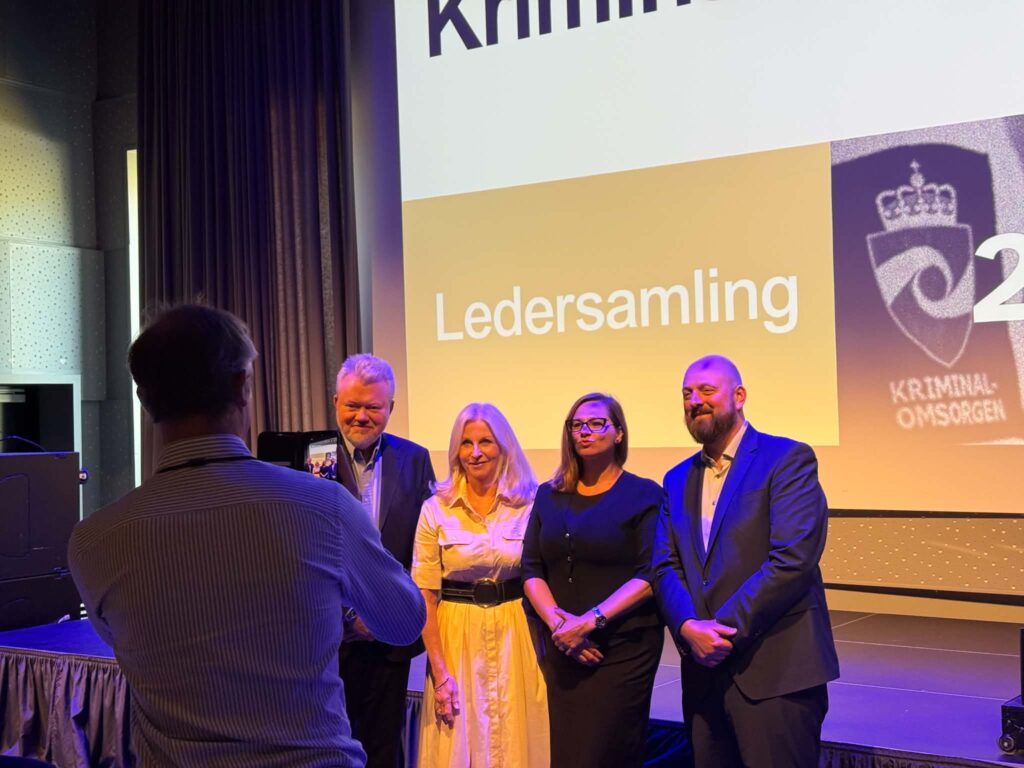
CEP at the Leadership Conference 2026
14/09/2026
CEP Secretary General Jana Špero Kamenjarin was delighted to participate in the Leadership Conference 2026 of the Norwegian Correctional Service, held on 9–10 September in Oslo.
Recap
Foreign Nationals in Prison and Probation
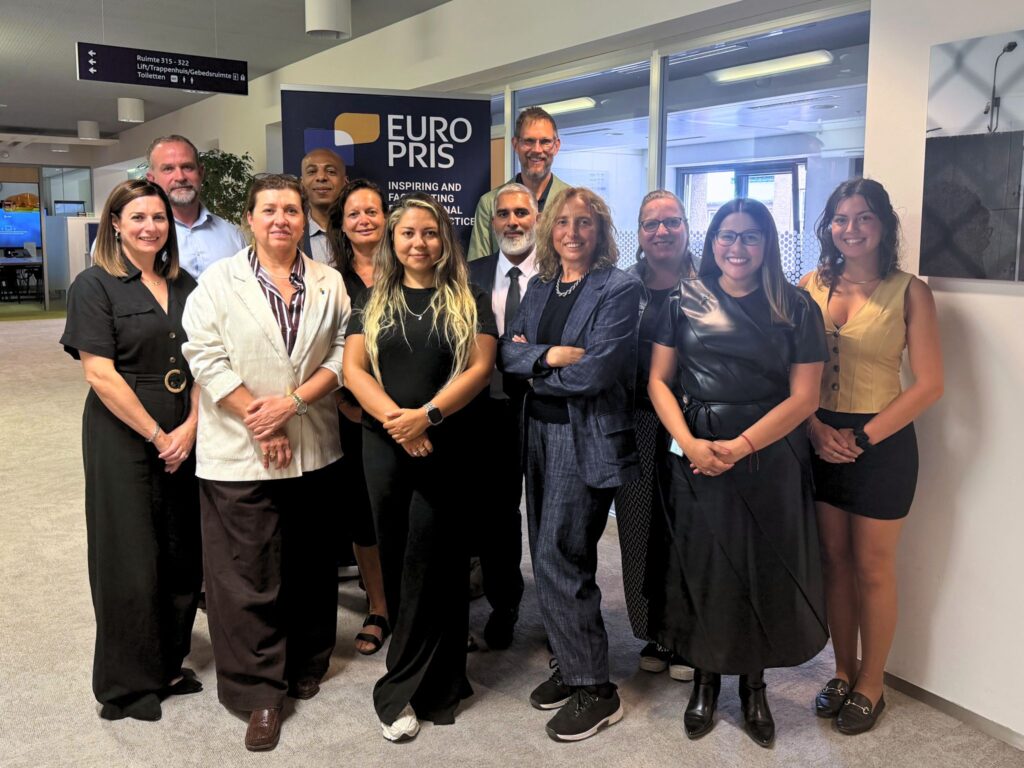
Recap: Expert Group of CEP and EuroPris, on Foreign Nationals in Prison and Probation (FNPP)
14/09/2026
On 7 and 8 September 2026 the joint Expert Group of CEP and EuroPris, on Foreign Nationals in Prison and Probation (FNPP), came together in The Hague for a valuable exchange of ideas, experiences, and expertise on one of the most important challenges facing prison and probation services across Europe.
New

CEP
Newsletter August 2026 out now
27/08/2026
CEP’s latest newsletter is out now! It includes:
- Approaching deadlines for upcoming events (ITSCCS26, 14th EM and DG leadership training) and the Mental Health curriculum pilot)
- Call for European Probation Journal on the topic of Workload in Probation
- EU documents like SPACE II, revised Victims’ Rights directive and so on
- and much more!
New

Caseload and workload
Do you work in probation? We need your voice!
24/08/2026
As part of its long-standing cooperation with research, CEP invites its members to contribute to a special edition of the European Probation Journal on the topic of Workload in Probation.
New

Alternatives to pre-trial detention, Foreign Nationals in Prison and Probation, Gender Equality, Probation in Europe
SPACE II report is now available
24/08/2026
The use of community sanctions and measures that allow individuals to remain in the community – also known as alternatives to imprisonment – continues to grow overall in Europe, although at a moderate pace, according to the latest Council of Europe annual penal statistics on persons under the supervision of probation agencies (2025 SPACE II survey).
Subscribe to our bi-monthly email newsletter!
"*" indicates required fields
- Keep up to date with important probation developments and insights.