

Previous Article
News
Narratives of experts by experience: A journey from criminal to expert
This study focuses on the narratives of participants of a long-term expert-by-experience training programme for people with a history of crime about their past, and how they use their life experience in their work as experts by experience. The research data was collected during interviews of respondents with a history of crime (N=19). The interviews were analysed using a narrative identity framework, and the data further examined in light of various studies focused on a desistance from crime.
New journal has been published by Janika Lindström, Teemu Rantanen, and Timo Toikko.
>>Read full paper
>>Read full paper
This study focuses on the narratives of participants of a long-term expert-by-experience training programme for people with a history of crime about their past, and how they use their life experience in their work as experts by experience. The research data was collected during interviews of respondents with a history of crime (N=19). The interviews were analysed using a narrative identity framework, and the data further examined in light of various studies focused on a desistance from crime.
Findings
The transformation process from service user or client to expert by experience provided people with a history of crime with a chance to come to terms with their past, and to and gain a sense of closure. Expertise by experience gave their difficult life experiences a new meaning, and thus promoted their overall rehabilitation and offered them opportunities through which they could gain the appreciation and acceptance of other people. The new relationships presented to them as experts by experience also paved the way to a new kind of self-concept that strengthened the desister’s self-confidence and optimistic outlook on the future.
Applications
This study offers perspectives on how people with a history of crime can re-enter society. Through their survival stories and their journey to become experts by experience, desisters can earn the acceptance and approval of others and gain a more positive perception of themselves. The new identities of people with a history of crime are dependent on society’s approval as they continue to desist from crime and re-enter mainstream society.

Related News
Keep up to date with the latest developments, stories, and updates on probation from across Europe and beyond. Find relevant news and insights shaping the field today.
Recap
Framework Decisions
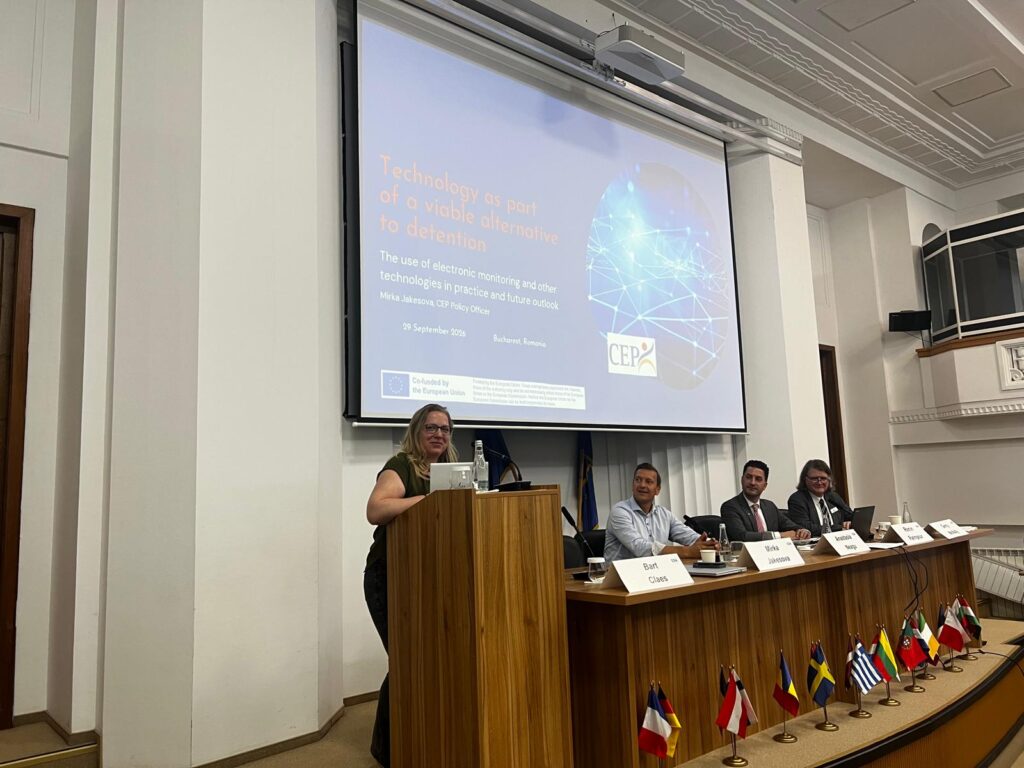
Recap: ERA workshop on Framework Decisions 829 and 947 in Bucharest
02/10/2026
CEP Vice-President Daniel Danglades, Ambassador Gerry McNally and Policy Officer Mirka Jakesova participated in the Seminar on Framework Decisions 829 and 947 and their Impact on Alternatives in the EU organized under the EU project run by the Academy of European Law on 28-29 September in Bucharest, Romania. The seminar brought together judges, prosecutors, probation practitioners, academics, and policy experts to discuss the growing role of alternatives to detention within European criminal justice systems.
New

CEP
CEP and Catalan justice leaders reaffirm longstanding cooperation
29/09/2026
Representatives of the Confederation of European Probation (CEP) met with senior officials from the Catalan Department of Justice and Democratic Quality in Barcelona on 28 September 2026, alongside the opening of the sixth International Training School on Core Correctional Skills. The meeting offered an opportunity to recognise a longstanding partnership and discuss its continued development.
Updated
Mental Health
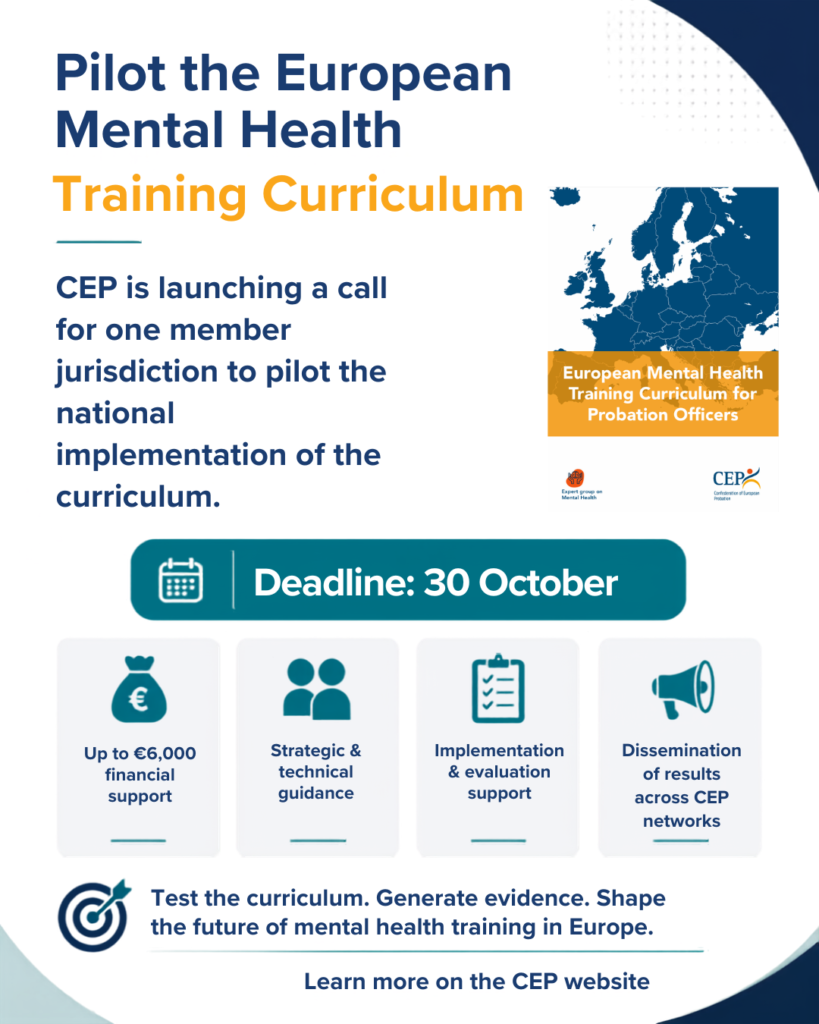
DEADLINE EXTENDED: Call for Pilot Implementation of the European Mental Health Training Curriculum
29/09/2026
Good news for CEP members! Following requests from our members, CEP has extended the deadline to apply for the pilot implementation of the European Mental Health Training Curriculum for Probation Officers.
Recap

ITSCCS, Technology
6th International Training School opens in Barcelona with a focus on digital probation
28/09/2026
How can probation professionals use new technologies in their interactions while building trust, showing empathy and supporting change? This question is at the heart of the sixth International Training School on Core Correctional Skills, which opened in Barcelona on 28 September 2026.
Recap

Probation in Europe
CEP at 42nd PC-CP Working Group Meeting
23/09/2026
The Council for Penological Co-operation (PC-CP) Working Group held its 42nd meeting from 15–17 September 2026 in Strasbourg. CEP was represented by Secretary General Jana Špero Kamenjarin.
New

Probation in Europe
New Division episode: Bernd Kammermeier on Supervision of Conduct
23/09/2026
The 22nd episode of Division_Y features Bernd Kammermeier from Rostock, Mecklenburg-Western Pomerania.
Bernd is a unionist, practitioner and academic expert on supervision of conduct (Führungsaufsicht) in Germany. His recent PhD thesis examines the development and legal framework of this important instrument.
Subscribe to our bi-monthly email newsletter!
"*" indicates required fields
- Keep up to date with important probation developments and insights.