
Skip to content

News

new CEP member: The Probation Service of Armenia

In recent weeks, CEP has interviewed individual members and representatives of the new member organisations that joined CEP at the beginning of 2024. In these interviews, the new member organisations or individual members will share information on why they decided to become members, how they would like to contribute to the development of CEP and many more. Enjoy reading!


Aram Nikoyan (Head of the RA MOJ Probation Service), Pavel Grigoryan (Deputy Head of the RA MOJ Probation Service) and Gurgen Afrikyan (Deputy Head of the RA MOJ Probation Service)

The Probation Service in Armenia was established not long ago in September 2016 acting under the Ministry of Justice of the Republic of Armenia.

The issues of the Probation Service, the basics of organization and operation, the special features of the Probation Service as a state service, as well as the powers of the Probation Service are defined by the Law of the Republic of Armenia “On Probation Service”, Law “On Probation” and other legal acts.

The main objectives of the RA MOJ Probation Service are

  1. prevention of possible unlawful behavior of the accused during the criminal proceedings and the implementation of measures to ensure the fulfillment of the obligations imposed on him by the court, through the enforcement of alternative measures;
  2. restoration of social justice through the execution of punishment and other compulsory measures against a person recognized guilty of a crime, re-socialization of the person subjected to punishment as well as ensuring normal physical and mental development for the probation minor adults beneficiaries, their upbringing and the protection of others from the negative influence;
  3. ensuring public safety by preventing and reducing recidivism;
  4. Mediation between the probation beneficiary and the victim (victim’s successor);
  5. assistance in the implementation of criminal justice.
Yerevan city department

Why did your organisation decide to join CEP? 

We chose to be a part of the European Probation family as we find it very important to widen our scope of cooperation with the probation services of different countries, as well as to form an effective partnership in the field of criminal justice in Europe, as Criminal justice is the central element of any national system of human rights protection. We are united by the belief that probation can provide punishment that is more constructive than prison.

Resocialization and Rehabilitation Department

How do you envision contributing to the development of CEP, its projects, actions, and work programme?

The contribution of the RA MOJ Probation Service may vary depending on the program’s needs. We are committed to aligning with CEP’s vision and mission and supporting any initiatives it undertakes. We are prepared to share relevant knowledge and skills with the organisation and its members, recognizing that each CEP member brings a unique set of skills and talents to address various challenges.

What are the main priorities, topics, or themes you would like CEP to address more frequently, and how would you leverage your knowledge to support and participate in developing its actions and work programme? 

We are particularly interested in exploring the following topics:

  • Mediation
  • Re-socialization and reintegration programs for probation beneficiaries,
  • Implementation of Electronic monitoring,
  • Risk and needs assessment tools

With the adoption of the new Criminal Procedure Code in 2022, the RA MOJ Probation Service has implemented several alternative preventive measures, resulting in a subsequent reduction in the prison population. We are eager to share our experiences and practices in home arrest, administrative supervision, and the supervision of released parolees.

Why do you think it is so important to promote alternative sanctions and measures and what is the state of play in your country in this?

Head and Deputy head working atmosphere

Promoting alternative sanctions and measures is essential for reducing imprisonment, lowering the prison population, ensuring a cost-effective system, having a greater impact on re-offending, and adopting a human rights-based approach towards vulnerable groups in the community.

Criminal justice reforms in Armenia, initiated in the late 90s, aimed to align legislation with the requirements of modern democratic society. The changes in the law focus on expanding the scope of non-custodial punishment measures. The adoption of new Criminal and Criminal Procedure Codes has led to a revision of the punishment system, expanding the list of penalties serving as alternatives to imprisonment, including new alternative types of punishment such as restriction on liberty, home arrest, administrative supervision, and security measures like bans on visiting certain places and obligations to receive psychological assistance.

Related News

Keep up to date with the latest developments, stories, and updates on probation from across Europe and beyond. Find relevant news and insights shaping the field today.

Recap

Electronic monitoring, Technology

14th Electronic Monitoring Conference, Electronic Monitoring in a Changing World – Perception vs Reality

08/10/2026

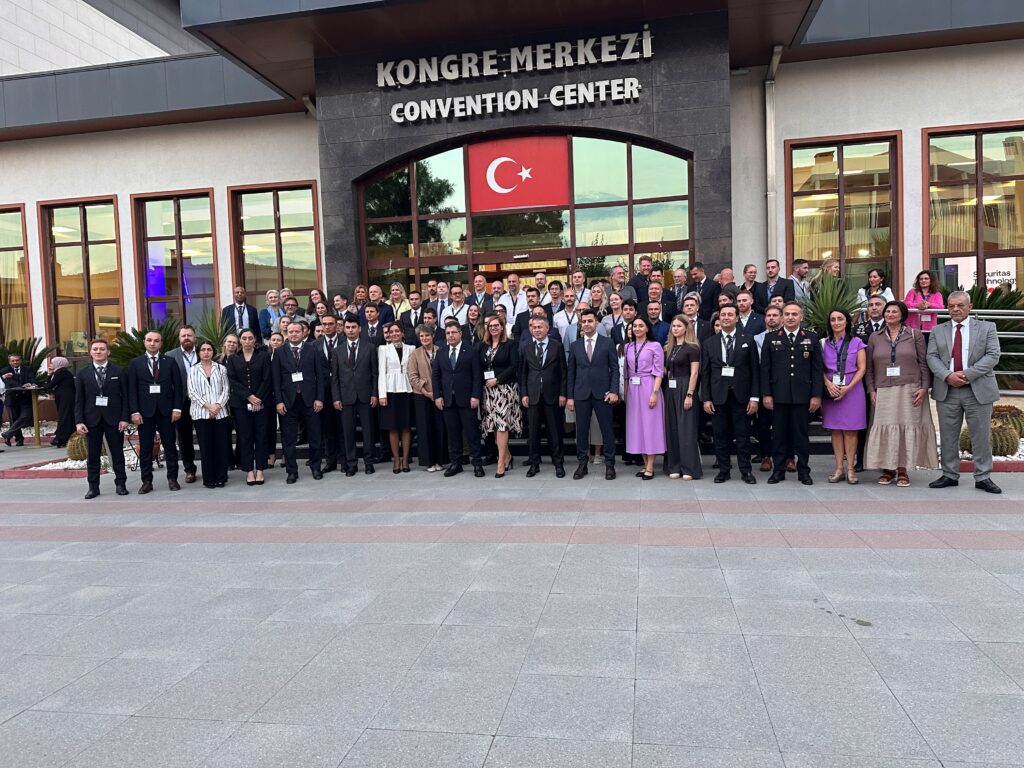
On 6-8 October 2026, Antalya hosted the 14th Electronic Monitoring Conference “Electronic Monitoring in a Changing World – Perception vs Reality”. More than 350 participants coming from 30 countries across Europe and worldwide representing probation services, Ministries of Justice, victims´ services, EM providers, researchers as well as local participants representing the Turkish Prison and Probation Service gathered to discuss how electronic monitoring (EM) is understood by all stakeholders involved including the victims and the public, and how these perceptions compare to the evidence and experiences of those affected. While the gap between perception and reality in electronic monitoring has been recognised for over a decade, the rapid expansion of EM into areas such as victim protection, high-risk supervision and digital innovation has brought new challenges and questions to the forefront.

Recap

ITSCCS

Core Correctional Skills in Digital Probation: highlights from the 6th ITSCCS in Barcelona

05/10/2026

The sixth International Training School on Core Correctional Skills (ITSCCS) took place in Barcelona from 28 September to 2 October 2026, bringing together 26 participants for a week of learning, practical training and international exchange. Organised by the Confederation of European Probation (CEP) and the Centre for Legal Studies and Specialised Training (CEJFE), the programme focused on “Clicks and Empathy: Core Correctional Skills in Digital Probation.”

Recap

Framework Decisions

Recap: ERA workshop on Framework Decisions 829 and 947 in Bucharest

02/10/2026

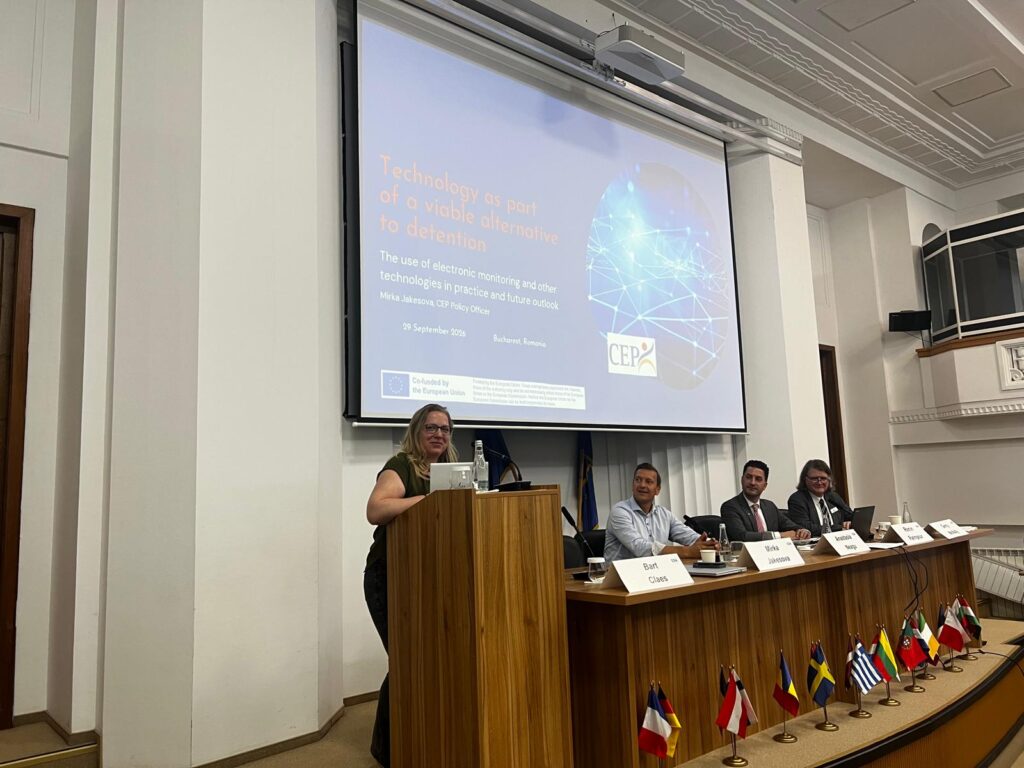
CEP Vice-President Daniel Danglades, Ambassador Gerry McNally and Policy Officer Mirka Jakesova participated in the Seminar on Framework Decisions 829 and 947 and their Impact on Alternatives in the EU organized under the EU project run by the Academy of European Law on 28-29 September in Bucharest, Romania. The seminar brought together judges, prosecutors, probation practitioners, academics, and policy experts to discuss the growing role of alternatives to detention within European criminal justice systems. 

New

CEP

CEP and Catalan justice leaders reaffirm longstanding cooperation

29/09/2026

Representatives of the Confederation of European Probation (CEP) met with senior officials from the Catalan Department of Justice and Democratic Quality in Barcelona on 28 September 2026, alongside the opening of the sixth International Training School on Core Correctional Skills. The meeting offered an opportunity to recognise a longstanding partnership and discuss its continued development.

Updated

Mental Health

DEADLINE EXTENDED: Call for Pilot Implementation of the European Mental Health Training Curriculum

29/09/2026

Good news for CEP members! Following requests from our members, CEP has extended the deadline to apply for the pilot implementation of the European Mental Health Training Curriculum for Probation Officers.

Recap

ITSCCS, Technology

6th International Training School opens in Barcelona with a focus on digital probation

28/09/2026

How can probation professionals use new technologies in their interactions while building trust, showing empathy and supporting change? This question is at the heart of the sixth International Training School on Core Correctional Skills, which opened in Barcelona on 28 September 2026.

Subscribe to our bi-monthly email newsletter!