

Previous Article
News
The European Commission’s mapping criteria for Help Seeker
The European Commission’s mapping criteria for Help Seeker and Perpetrator Prevention Initiatives in Child Sexual Abuse and Exploitation
By Kieran McCartan, Ph.D., and David S. Prescott, LICSW
Earlier this week, the European Commission published a new document titled “Help seeker and Perpetrator Prevention Initiatives – Child Sexual Abuse and Exploitation.” Its aim is to support initiatives for Child Sexual Abuse (CSA) help-seeker and perpetration prevention. The idea is that by creating a common taxonomy of prevention programs for several different stakeholders, we can collectively understand and share best practices around CSA prevention initiatives. The report is a step towards the creation of a European Union (EU) knowledge platform on CSA prevention initiatives, which will support EU Member States to develop and roll out tailor-made prevention policies according to their respective cultural and societal environments and needs.
On May 11, 2022, the European Commission published a proposal to prevent and combat CSA, with a strong emphasis on prevention; but even though preventing and combatting child sexual abuse is a priority of the European Union, there has been no common EU-wide approach or concrete framework to highlight what member states had already accomplished. A plethora of different terminologies and taxonomies exist to describe prevention programmes (a common issue across the EU in general), making the information about such initiatives limited, unclear, and unstructured.
Collectively the JRC, DG HOME, members of the EU Prevention Network, and a number of interviewed practitioners and experts reached a common consensus on the idea that to raise awareness of existing prevention programmes for people at risk of committing sexual offenses it was necessary to categorize and evaluate them. For this purpose, a dedicated working group was established, and the output of this common effort are 14 classification criteria that will support EU Member States to develop, implement and research prevention work in different countries. The 14 agreed classification criteria are:
- TARGET identifies to whom the initiative is addressed, such as people who fear they may offend.
- CONTEXT refers to the environment in which the intervention is given.
- METHODS refers to the tools, treatments, support opportunities and programmes proposed to the targets.
- INITIATIVE PROVIDER refers to the nature and main activities of the entity or initiative provider that is offering the program and/or treatment as well as the one that implemented it.
- FUNDING refers to the money allocated to the program and/or treatment.
- COSTS refers to the costs that would be sustained by the entity proposing/setting up the program
- THE FOUR PREVENTION STAGES (Primary, Secondary, Tertiary, Quaternary, described in previous blog posts and the extant literature).
- EVALUATION aims to capture the outcomes of the initiatives.
- ACCOUNTABILITY of the programmes refers to the processes and mechanisms put in place by the initiative provider to appraise the programme at different stages to ensure that the programme remains accountable, and that it is working towards the goals.
- LEGISLATION refers to the legal national framework under which the specific programme/intervention is being deployed.
- COLLABORATION refers to the synergies and complementarities that can be established with different entities involved in the prevention of CSA.
- DISSEMINATION refers to the actions taken to raise awareness about the prevention initiative among (potential) stakeholders.
- TARGETS’ RIGHTS are explored in terms of privacy, anonymity, and safety to preserve and assure confidentiality, assurance of empathy, etc.
- ACCESSIBILITY refers to several elements of the preventive programme that can be related to: the language of the resources, the availability of complementary tools to the traditional text-based ones, the standardisation of tools provided, and he cultural responsivity factors.
The 14 classification criteria were then applied to five case studies (PedoHelp – France; Parafilik – Czech Republic; Out of the Net – Spain; Sexual Aggression Control – Spain; Circles of Support and Accountability (CoSA) – European union-united kingdom) to see how they aligned. The results indicated that the five case studies did align and that the criteria were useful in the development and implementation of prevention programs. Additionally, the report goes on to discuss a series of international prevention mapping tools (i.e., INHOPE prevention initiative report, Eradicating Child Sexual Abuse (ECSA), PedoHelp, Helplinks (a Europol website as part of the Police2Peer project) and the UNICEF promising programmes to prevent Child Sexual Abuse and Exploitation report. The report finishes off with a series of smaller sections describing relevant information on several programmes for people who fear they may offend, for people going through criminal proceedings and post criminal proceedings, as well as those for minors.
This is an invaluable resource for policy makers, practitioners, and researchers alike. The report demonstrates the development of good practice available in developing interventions for people at risk of committing a sexual offence or those who have. I would strongly recommend looking at it and learning from its findings.

Related News
Keep up to date with the latest developments, stories, and updates on probation from across Europe and beyond. Find relevant news and insights shaping the field today.
Recap
Gender Equality
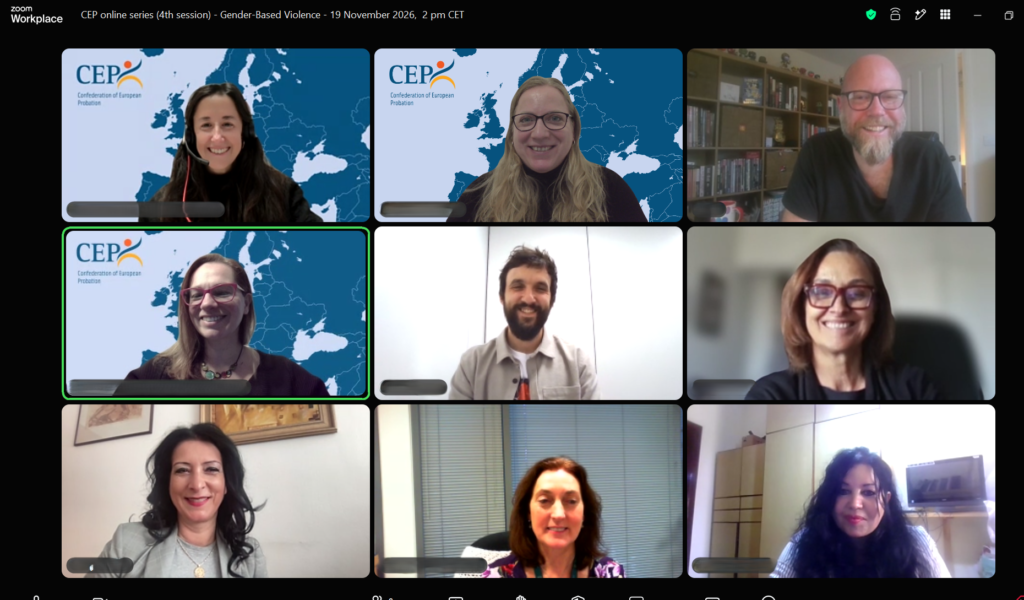
Gender-based violence in probation: CEP Expert Group presented its work
19/11/2026
On 19 November 2026, the Confederation of European Probation (CEP) hosted the webinar Gender-Based Violence in Probation: Presenting the Expert Group’s Outputs. The event drew more than 35 participants from Europe and beyond. It focused on three questions for probation services: how to engage people in treatment, how to challenge common myths about gender-based violence, and how to prevent burnout among staff working with people who have committed gender-based violence.
New
CEP Board
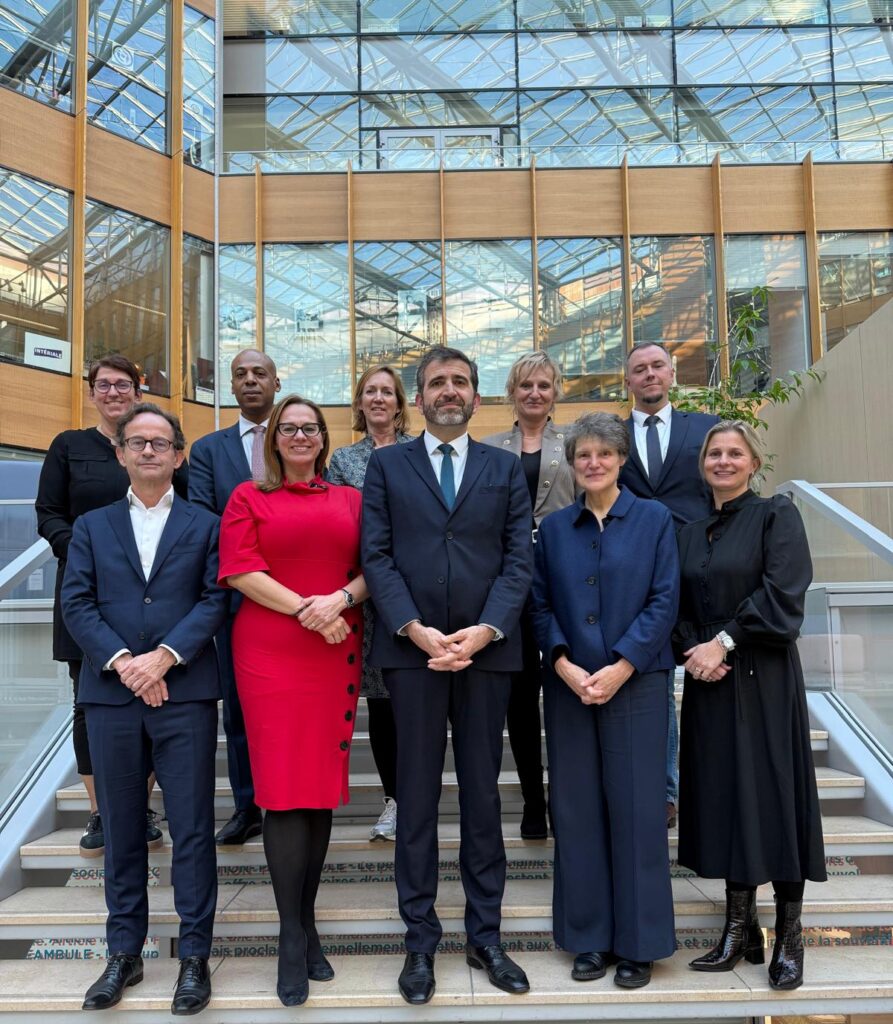
CEP board visit France
16/11/2026
On 13 November 2026, the CEP Board visited its French member organisation, the Direction Générale de l’Administration Pénitentiaire of the French Ministry of Justice. The visit coincided with the final CEP Board meeting of the year, hosted by CEP Vice-President Mr Daniel Danglades, who represents the French institution.
Recap
Framework Decisions
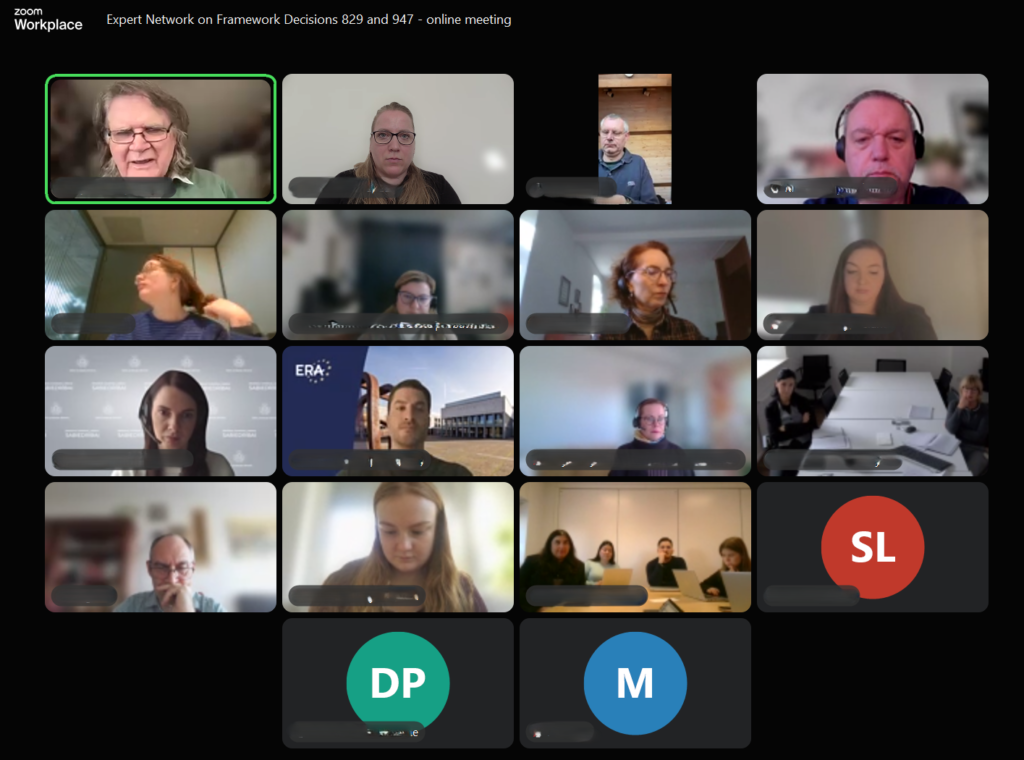
Recap: annual meeting of the Expert Network on Framework Decisions 829 and 947
09/11/2026
On Thursday 5 November an annual meeting of the Expert Network on Framework Decisions 829 and 947 took place online. Bringing together 20 participants from 12 EU jurisdictions including representatives of the Academy of European Law and European Judicial Network, the meeting provided an opportunity to exchange experiences, discuss current implementation challenges and identify priorities for enhancing cross-border cooperation in the application of the two Framework Decisions.
New

Education and Training, Probation in Europe
Justice programme: the judicial training call is open for applications!
09/11/2026
Are you ready to help address the training needs of justice professionals from different EU countries in the fields of civil law, criminal law and fundamental rights? This call supports cross-border training projects contributing to the effective and consistent application of EU law. In line with the new European Judicial Training Strategy, the call also supports the digitalisation of justice. Don’t miss this opportunity! Apply by 4 March 2027, 17:00 Brussels time.
Recap

CEP Board, Foreign Nationals in Prison and Probation, Probation in Europe
CEP at the 16th Plenary Meeting of the Council for Penological Co-operation
06/11/2026
From 3 to 5 November 2026, representatives of the Confederation of European Probation (CEP) participated in the 16th Plenary Meeting of the Council for Penological Co-operation (PC-CP).
New

CEP
Newsletter October 2026 out now
29/10/2026
CEP’s latest newsletter is out now! It includes:
- Deadline approaching for the Workshop on Technology and Alternatives to Detention
- Recap of the 14th EM and CEP Excellence Leadership Training
- New publications from Expert Groups on Technology and Expert Group on Violent Extremism
- Call for Proposals: Evaluation of CEP Expert Groups
- Engaging with Research – a new section in our newsletter
- and much more!
Subscribe to our bi-monthly email newsletter!
"*" indicates required fields
- Keep up to date with important probation developments and insights.