

Previous Article
News
They know what it takes!
The International Desk (Buitenlandbalie) occupies a unique position within Europe. Willem van der Brugge and Ioan Durnescu, both leaders in the European field, shed their light on the importance of the work of the International Desk.
“24 percent of all prisoners in Europe live in another country than where they come from,” says Willem van der Brugge. “That is a lot. And the more prosperous the country, the more detainees from abroad. Many eventually want to return to the country they came from. With the CEP we bring together probation directors and policy officers in Europe to link policy and practice for transfers. That often turns out to be more effective than working at the ministerial level.” The Netherlands was one of the first countries in the world to have a probation service: the probation scheme dates back to 1910. Our country is therefore a good example for other European countries. Willem explains: “Along with the establishment of the CEP, many countries introduced community service from 1980, which existed in the Netherlands for ten years. It is designed everywhere similar to our system. But the momentum came after the fall of the Berlin Wall in 1989. After that, many Eastern Bloc countries developed probation activities and became members of the CEP.”
The best informed
With that background, it is not surprising that the Netherlands has something as unique as the International Desk. “We are the only country with an international probation agency, International Office(Bureau Buitenland). And that for more than 40 years, with specialized people. Ten years ago, the Foreign Office was added with dedicated specialists on supervision and community service.” Willem praises the Dutch decision to bundle all knowledge in one central authority. “In Poland, for example, all judges must be aware of the framework decisions, but they rarely have to deal with them. So that’s where it goes wrong. Our experience is that the Dutch Public Prosecution Service is by far the best informed in Europe.” Willem explains the leading position of the Netherlands not only from a historical point of view: “We are a polder country, which makes a difference, and we don’t have federated states like Germany has. There is also much difference in experience between probation organisations. In the former Yugoslavia, for example, it only exists for about ten years. They are often still developing probation activities and less with, for example, framework decisions.”
Duplications, not yet!
Although foreign countries are enthusiastic about the International Desk, it has not yet been duplicated. Ioan Durnescu would like to see it differently. “Unfortunately, the policymaking process is not always as rational as we would like. Penal systems and procedures also differ per country. In most countries, Framework Decision 947 involves the judges, and not the public prosecutor, as in the Netherlands. The system is simply not compatible. International cooperation mechanisms have a history and not all countries have a central authority. Such a central authority is useful. But the philosophy behind the Framework Decisions is to promote direct contact between the judiciaries of EU Member States and thus reduce intermediaries, such as a central authority. With direct contact, less time would be spent on procedures and bureaucracy. We will see whether the benefits of the lack of such a central authority are invalidated when it comes to competence and trust between the member states.”
No big bang
Besides the mentioned differences, Ioan notices something else. “There is a big difference in trust between countries. The transferring country must trust that measures are being implemented in the other country and that the client will not flee. A transfer must be carried out in a short time, which also makes it difficult because international cooperation requires time for consultation and advice.”
He does see change. “It’s starting to work. For example, under Framework Decision 829, there have been 20 incoming cases in Romania alone, mainly from France. We should see this Dutch example as the start of a long process, we should not expect a big bang. But everyone involved learns a lot from each case, they don’t make the same mistakes again.” Willem adds: “That is why the expertise of the International Desk is so important. Because we know that practice differs from theory. Even in matters that seem easy, for example between the Netherlands and Belgium, all kinds of issues play a role.”
Step-by-step
Ioan is researching transfers, but still on a small scale to make statements, he says. “The experiences are generally positive, but there are still misunderstandings and errors that need to be corrected. This can be achieved with a greater understanding of each other’s system and philosophy so that it can benefit rehabilitation, the ultimate goal of all instruments. We must remain positive and open to cooperation. Then we can find solutions for non-matching systems. If you are willing to apply the principles, you will be fine. I can already see progress.”
Valuable conference
An international network meeting is held annually, where the International Desk also gives presentations. It is always organized in Brussels. There is a good reason for this, according to Willem: “Then the legal advisers of the EU can also participate. That is valuable because they hear from experts from the field how things work.”
Partly thanks to these meetings, some countries are considering a comparable desk. But first, they need to build expertise and mutual trust, says Ioan. “Mutual trust is not about procedures, but about people. When they get to know each other, you can take steps. It helps if you talk to specific people individually. I remember that during a conference there was a misunderstanding between Germany and the Netherlands about community service. They were able to solve that well on the spot.”
Willem adds: “ International Office with their 40 years of experience is important for that trust, and the International Desk now has the same status within it. What we do in policy, they do in practice. In order to inform the European Commission, I can also ask them: how does it really work? They know that.”
Ioan Durnescu, Sociology and Social Work Professor at the University of Bucharest, Romania. He teaches and conducts research, especially in the field of probation. He has been involved in transfers for ten years. He is also part of the expert group of the Confederation of Europe Probation (CEP) that has a manual and e-learning around drafting Framework Decisions, the PONT project. He also studies the experiences of offenders with their transfer.
Willem van der Brugge is the retiring secretary general of the Confederation of Europe Probation (CEP).
What is the International Desk (Buitenlandbalie)?
The International Desk of the International Office (Bureau Buitenland) carries out executive, coordinating and advisory activities for the transfer of criminal judgments within Europe and the Kingdom. International Desk has an important place in the judicial work process regarding European transfers and transfers with the Caribbean Netherlands. Transfers cannot be carried out properly without the advice, reports and expertise of the International Desk.
more info about International Office and International Desk
Source: 10-year anniversary of the International Office magazine.
Editorial: Melinda Lewis, Gisella Conrad and Leontien Kuijer.
If you have any questions about the International Desk, send an email to: buitenlandbalie@reclassering.nl

Related News
Keep up to date with the latest developments, stories, and updates on probation from across Europe and beyond. Find relevant news and insights shaping the field today.
New

Others
Applications for the Cambridge MSt in Applied Criminology, Penology and Management are now open
16/09/2026
The Institute of Criminology, Cambridge, have opened up applications for the MSt in Applied Criminology, Penology and Management in the next academic year.
Recap
Probation in Europe
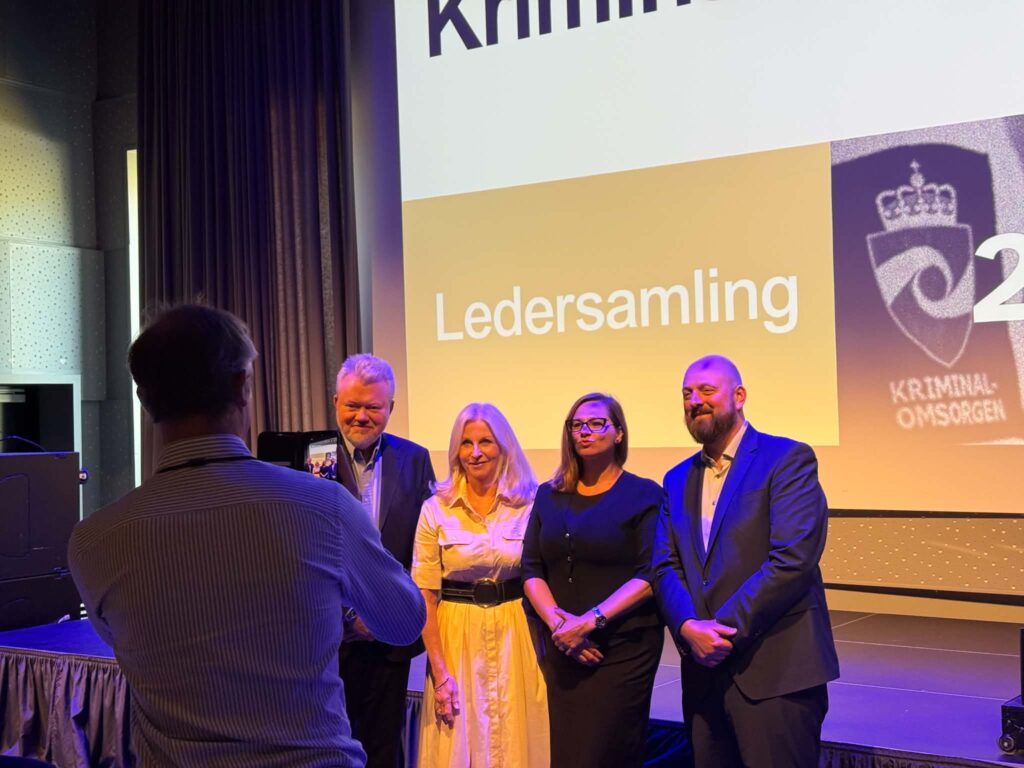
CEP at the Leadership Conference 2026
14/09/2026
CEP Secretary General Jana Špero Kamenjarin was delighted to participate in the Leadership Conference 2026 of the Norwegian Correctional Service, held on 9–10 September in Oslo.
Recap
Foreign Nationals in Prison and Probation
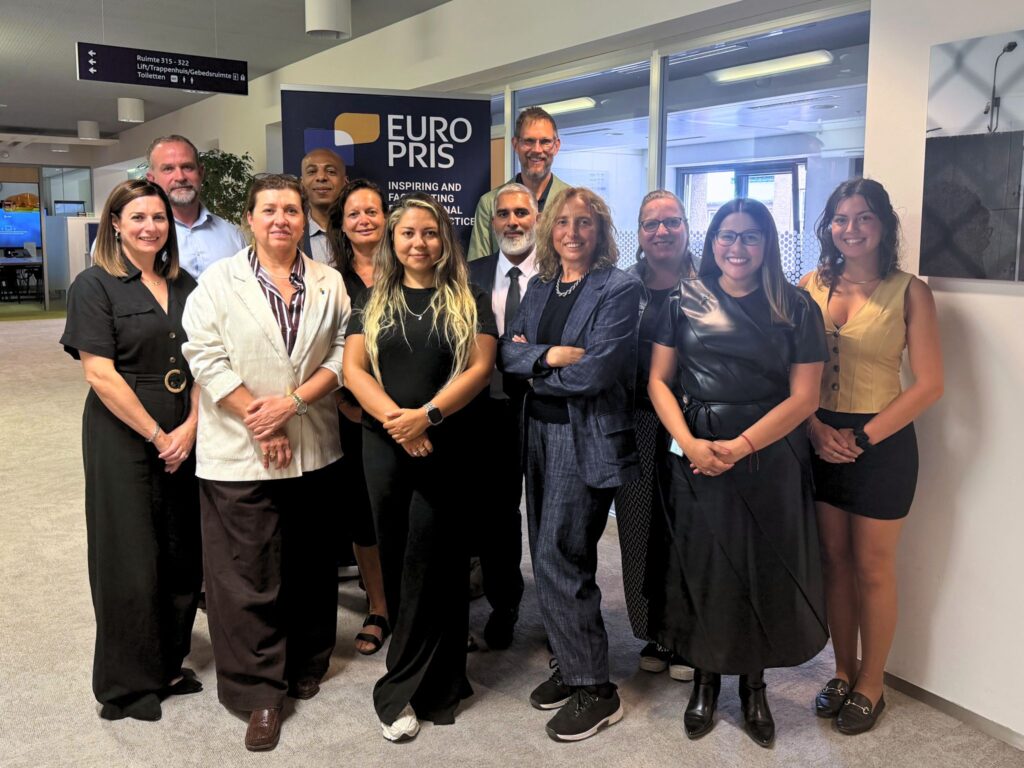
Recap: Expert Group of CEP and EuroPris, on Foreign Nationals in Prison and Probation (FNPP)
14/09/2026
On 7 and 8 September 2026 the joint Expert Group of CEP and EuroPris, on Foreign Nationals in Prison and Probation (FNPP), came together in The Hague for a valuable exchange of ideas, experiences, and expertise on one of the most important challenges facing prison and probation services across Europe.
New

CEP
Newsletter August 2026 out now
27/08/2026
CEP’s latest newsletter is out now! It includes:
- Approaching deadlines for upcoming events (ITSCCS26, 14th EM and DG leadership training) and the Mental Health curriculum pilot)
- Call for European Probation Journal on the topic of Workload in Probation
- EU documents like SPACE II, revised Victims’ Rights directive and so on
- and much more!
New

Caseload and workload
Do you work in probation? We need your voice!
24/08/2026
As part of its long-standing cooperation with research, CEP invites its members to contribute to a special edition of the European Probation Journal on the topic of Workload in Probation.
New

Alternatives to pre-trial detention, Foreign Nationals in Prison and Probation, Gender Equality, Probation in Europe
SPACE II report is now available
24/08/2026
The use of community sanctions and measures that allow individuals to remain in the community – also known as alternatives to imprisonment – continues to grow overall in Europe, although at a moderate pace, according to the latest Council of Europe annual penal statistics on persons under the supervision of probation agencies (2025 SPACE II survey).
Subscribe to our bi-monthly email newsletter!
"*" indicates required fields
- Keep up to date with important probation developments and insights.