

Previous Article
News
Probation work during corona: “My contact with clients is more frequent and intense than ever”
An article written by Fréderique, behavioral trainer and supervisor at the Dutch Probation Service for Addicted Offenders (SVG)
To carry out probation work during the corona pandemic requires creativity and adaptability. Fortunately there are many colleagues who were able to adapt themselves extremely quickly to the new situation and to continue their work in an innovative way, or even help out others in places where support was urgently needed.
“Before the corona virus came to the Netherlands I had just begun giving the BORG training (on stopping violence in relations, red.) to four clients”, Fréderique starts. “A small, nice group. However now because of the Covid-19 measures the group trainings cannot take place I try my best to keep in touch with all four participants. Especially in these times there is an increased risk of domestic violence, so I do not want to lose sight of them. I regularly call them by phone and remind them of the tools we used in the BORG trainings. During these moments of contact I can feel that they do not experience this as “control”, but appreciate the support very much.”
From the attic
Besides BORG Fréderique also gives Lifestyle trainings. “I regularly deliver these sessions individually and tailor-made”, she explains. “Like recently for a client who had just started and was very motivated to make something out of it. After talking to the supervisor in charge I asked this client if he would be willing to follow the training online? His answer was positive so I now give these video-call trainings from my – fortunately classically styled – attic at home.”
Keep motivated
“I have a flipchart here and a small desk – in that way I can make notes for him. I send my instructions via email or whatsapp and that goes really well. The giving of online trainings is quite intensive – you constantly see yourself and have to invest in keeping the conversation going. But on the other hand it gives me a lot of satisfaction, because by doing so I can keep my client’s motivation alive – something that might not have been possible if the training would have stopped for a long period. My client is now able to keep his drug and alcohol abuse under control even during this difficult time.”
Hotline via telephone
“Also regarding supervision matters I am in frequent contact with clients. Every Monday morning I have a telephone hotline with them as they all want to talk. These are very difficult times for them, with the risk of falling back on drugs or alcohol again. They speak to me openly about this – in fact during this period my contact with clients is more frequent and intense than ever. Where normally I spoke them once every two weeks, we are now in contact via telephone twice a week. It really brings you closer to one another.”
Working alliance
“Even though we work from home there is fortunately still a lot of contact between colleagues. We discuss our work cases and share questions and experiences. Naturally there are also whatsapp groups for more light-hearted things and jokes.
My advice to best deal with the actual situation would be: keep in mind your own needs and feel grateful for small things like a “thank you” from a client. And ask others something like “Hey, are you still holding on?” . Also in a difficult time like this the working alliance is of great importance – even though we are not sitting physically together.”

Related News
Keep up to date with the latest developments, stories, and updates on probation from across Europe and beyond. Find relevant news and insights shaping the field today.
Recap
Electronic monitoring, Technology
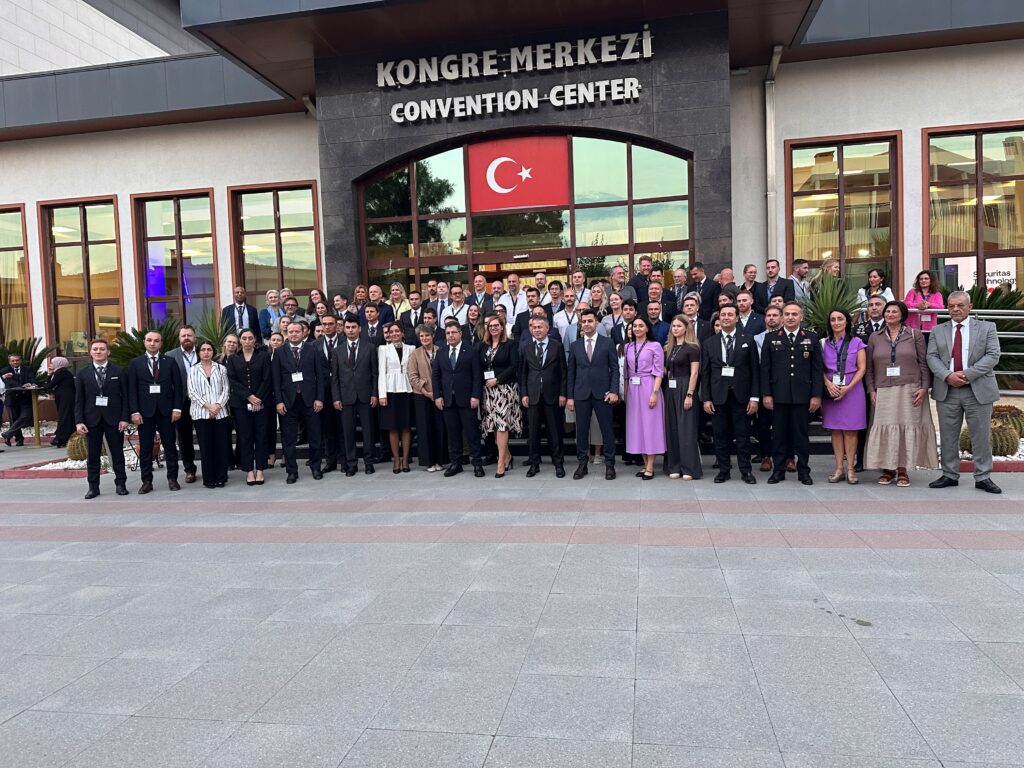
14th Electronic Monitoring Conference, Electronic Monitoring in a Changing World – Perception vs Reality
08/10/2026
On 6-8 October 2026, Antalya hosted the 14th Electronic Monitoring Conference “Electronic Monitoring in a Changing World – Perception vs Reality”. More than 350 participants coming from 30 countries across Europe and worldwide representing probation services, Ministries of Justice, victims´ services, EM providers, researchers as well as local participants representing the Turkish Prison and Probation Service gathered to discuss how electronic monitoring (EM) is understood by all stakeholders involved including the victims and the public, and how these perceptions compare to the evidence and experiences of those affected. While the gap between perception and reality in electronic monitoring has been recognised for over a decade, the rapid expansion of EM into areas such as victim protection, high-risk supervision and digital innovation has brought new challenges and questions to the forefront.
Recap
ITSCCS
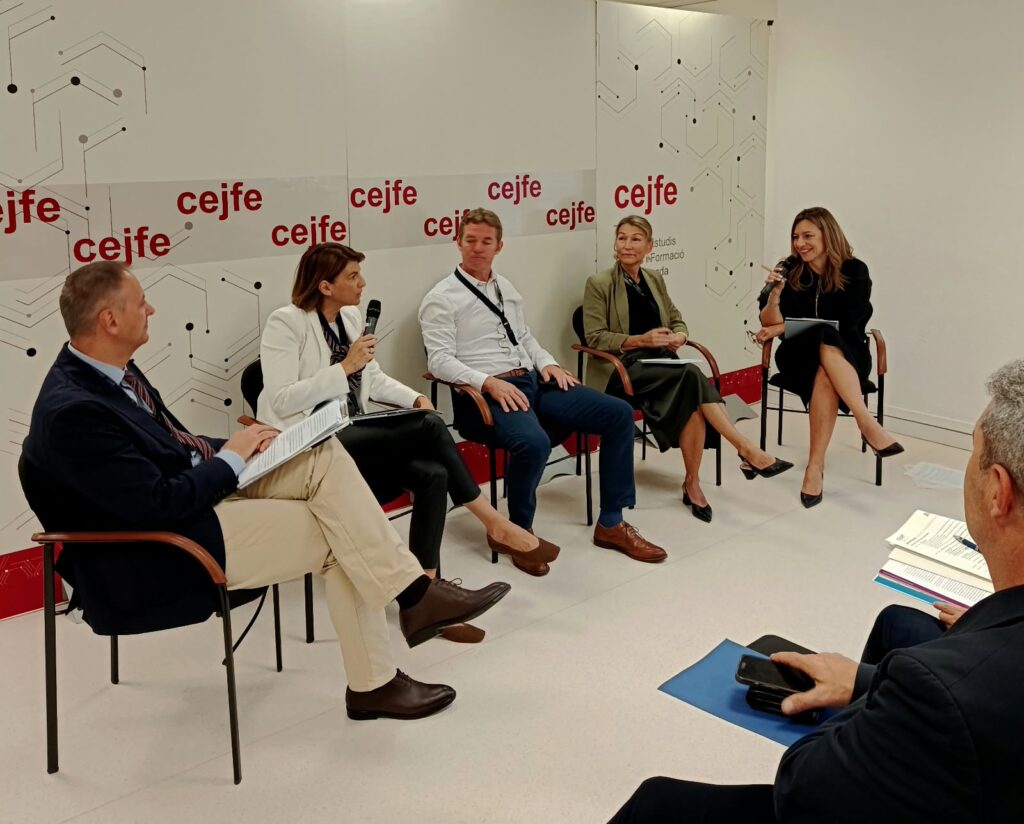
Core Correctional Skills in Digital Probation: highlights from the 6th ITSCCS in Barcelona
05/10/2026
The sixth International Training School on Core Correctional Skills (ITSCCS) took place in Barcelona from 28 September to 2 October 2026, bringing together 26 participants for a week of learning, practical training and international exchange. Organised by the Confederation of European Probation (CEP) and the Centre for Legal Studies and Specialised Training (CEJFE), the programme focused on “Clicks and Empathy: Core Correctional Skills in Digital Probation.”
Recap
Framework Decisions
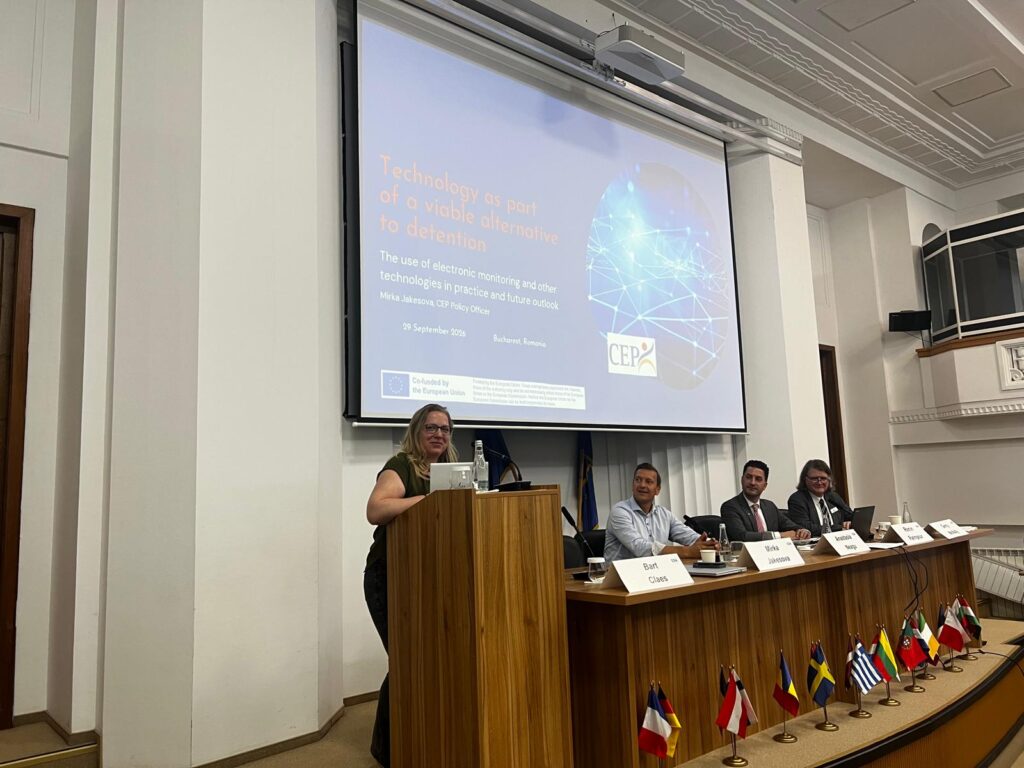
Recap: ERA workshop on Framework Decisions 829 and 947 in Bucharest
02/10/2026
CEP Vice-President Daniel Danglades, Ambassador Gerry McNally and Policy Officer Mirka Jakesova participated in the Seminar on Framework Decisions 829 and 947 and their Impact on Alternatives in the EU organized under the EU project run by the Academy of European Law on 28-29 September in Bucharest, Romania. The seminar brought together judges, prosecutors, probation practitioners, academics, and policy experts to discuss the growing role of alternatives to detention within European criminal justice systems.
New
CEP
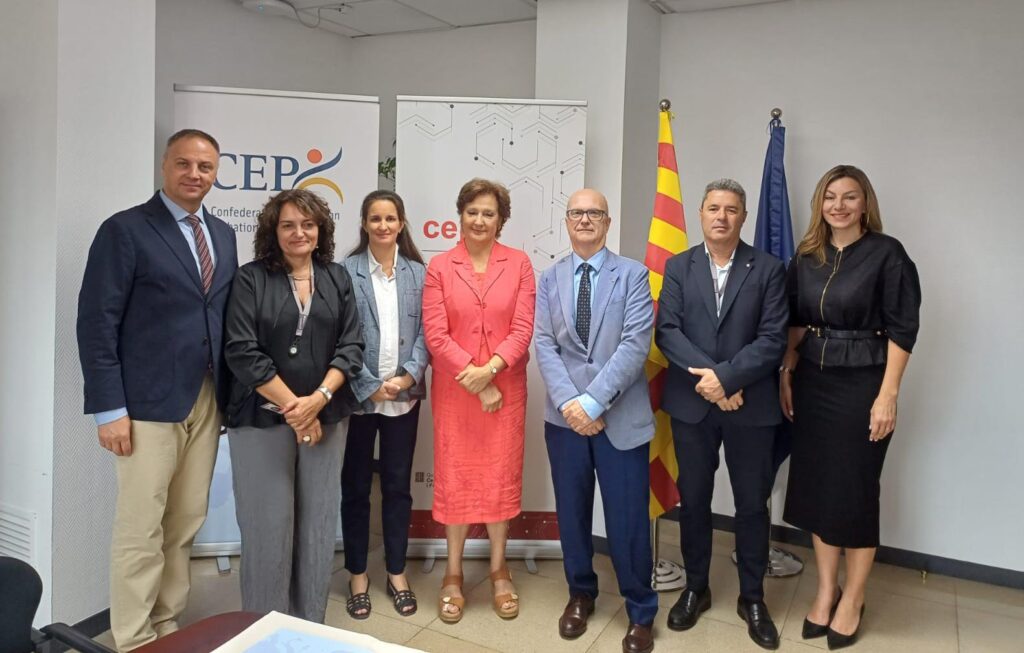
CEP and Catalan justice leaders reaffirm longstanding cooperation
29/09/2026
Representatives of the Confederation of European Probation (CEP) met with senior officials from the Catalan Department of Justice and Democratic Quality in Barcelona on 28 September 2026, alongside the opening of the sixth International Training School on Core Correctional Skills. The meeting offered an opportunity to recognise a longstanding partnership and discuss its continued development.
Updated
Mental Health
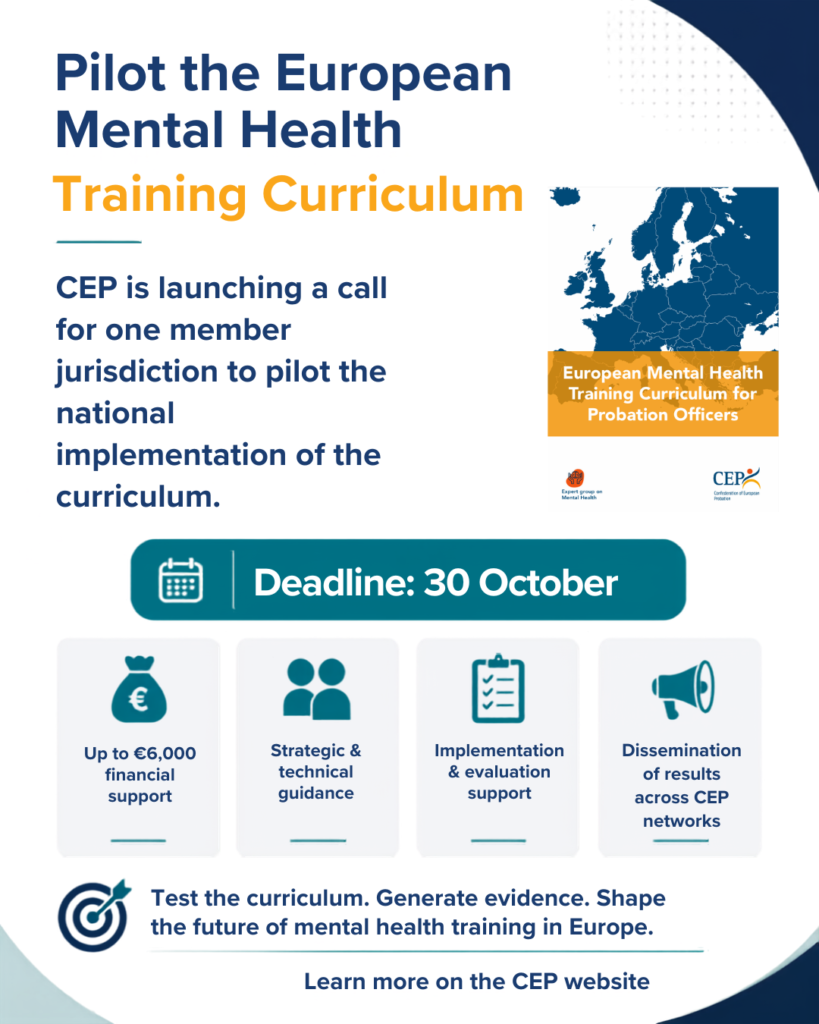
DEADLINE EXTENDED: Call for Pilot Implementation of the European Mental Health Training Curriculum
29/09/2026
Good news for CEP members! Following requests from our members, CEP has extended the deadline to apply for the pilot implementation of the European Mental Health Training Curriculum for Probation Officers.
Recap
ITSCCS, Technology
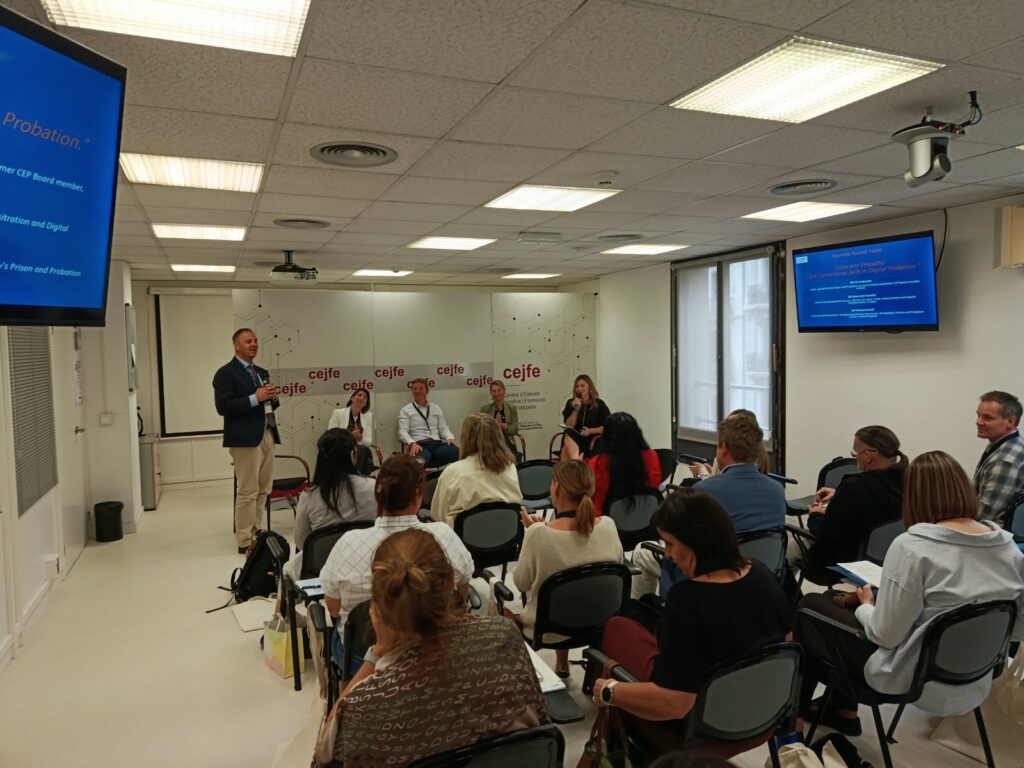
6th International Training School opens in Barcelona with a focus on digital probation
28/09/2026
How can probation professionals use new technologies in their interactions while building trust, showing empathy and supporting change? This question is at the heart of the sixth International Training School on Core Correctional Skills, which opened in Barcelona on 28 September 2026.
Subscribe to our bi-monthly email newsletter!
"*" indicates required fields
- Keep up to date with important probation developments and insights.