

Previous Article
News
Training of the Trainers: a course covering different topics on radicalisation
The three European projects J-SAFE, MINDb4ACT and JPCOOPS have decided to join forces and organise Training of the Trainer courses covering different topics on radicalisation prevention and investigation. The courses take place in Italy, Germany, Spain, Bulgaria and Malta.
A Training of the Trainers (ToT) is a 4-day face-to-face training course entirely in English, with the purpose of giving the participants the tools and knowledge they need in order to replicate the course in their own country or with any audience they want.This means that those participants interested in organizing a 1-day training course in their own country and in their own language will have the full assistance of the JPCOOPS project.
Training topics
- Radicalisation as a relational phenomenon – To understand the complexity of radical phenomena through a multi-disciplinary approach at the EU-level.
- Radicalisation in prison – To develop advanced and specialised competencies and abilities for LEAs, judges, prosecutors, intel agencies, lawyers and vetted NGOs working in CT/CVE to identify different types of information within radical mechanisms, classify and transmit it within the procedural justice framework at MS and EU levels as part of the counter-radicalisation measures.
- Legal Aspects of Preventive Procedures and Agency Attributions – To differentiate procedures, their applicability and agency attributions.
- Digital Forensics for the Prevention of Radicalisation – To improve know-how, competencies, and abilities of different LEAs, prison and justice operators to 1) detect cases of radicalisation; 2) understand the dimension of the issue and solutions to deal with it; 3) integrate digital and cyber data into the mechanisms of observation of radicalisation as part of new preventive and investigative models.
- Exit Strategies – To develop knowledge of the new models of exit strategies applied in several EU countries in case of radicalisation, with a specific focus on the transition from prison to external life.
- Prevention and Management of Radicalisation in Schools – To improve know-how, competencies, and abilities of school staff and local police in preventing violent radicalisation in school and eventually address cases; improve teachers and school staff capability to raise students’ awareness of radicalisation.
- Early Intervention and Awareness at Local Level – To improve know-how, competencies, and abilities of operators to understand the phenomenon of radicalisation; improve their capabilities in early detection; train operators on the multi-agency approach.
Is the training of the trainers for you?
Do you have a background in one of the following professions?
- Prison and probation management as a juvenile and/or adult prison guard
- Intelligence officers and related staff active in prison environments
- Probation officers, both for juveniles and adults
- Prison educators
- Judges
- Prosecutors
- NGOs and local welfare services specialised in rehabilitation and alternative measures to prisons
- Prison and court experts (psychologists, criminologists, Middle-East experts, cultural mediators, etc.)
More information about the Training for the Trainers is available via their website.

Related News
Keep up to date with the latest developments, stories, and updates on probation from across Europe and beyond. Find relevant news and insights shaping the field today.
Recap
Electronic monitoring, Technology
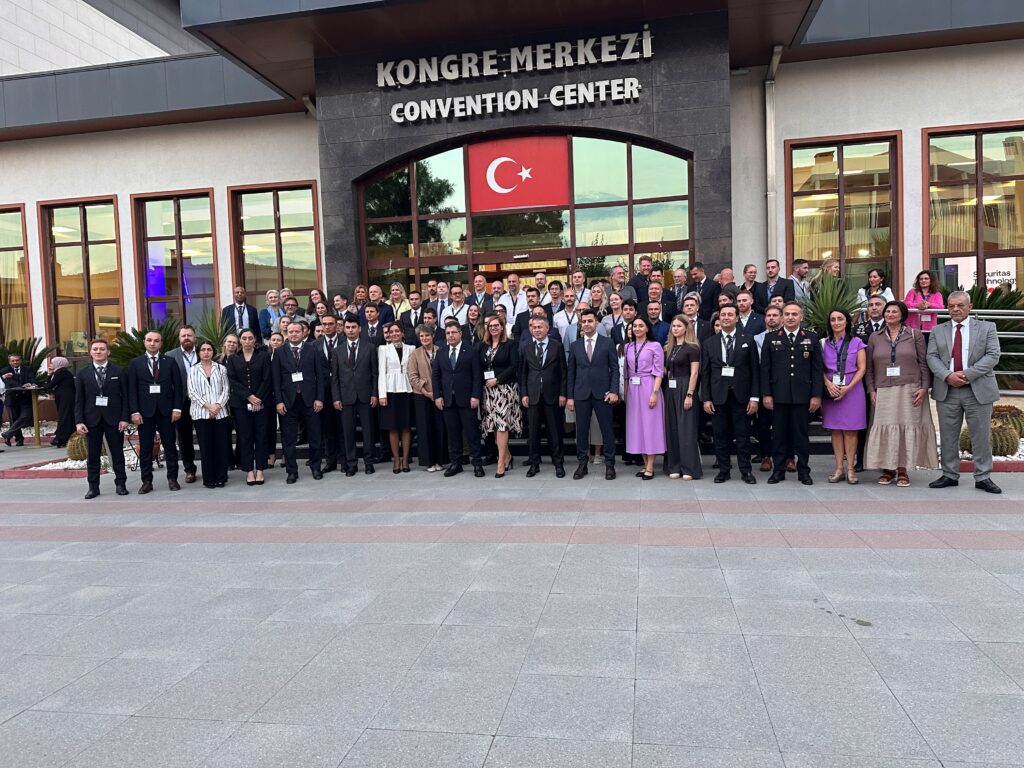
14th Electronic Monitoring Conference, Electronic Monitoring in a Changing World – Perception vs Reality
08/10/2026
On 6-8 October 2026, Antalya hosted the 14th Electronic Monitoring Conference “Electronic Monitoring in a Changing World – Perception vs Reality”. More than 350 participants coming from 30 countries across Europe and worldwide representing probation services, Ministries of Justice, victims´ services, EM providers, researchers as well as local participants representing the Turkish Prison and Probation Service gathered to discuss how electronic monitoring (EM) is understood by all stakeholders involved including the victims and the public, and how these perceptions compare to the evidence and experiences of those affected. While the gap between perception and reality in electronic monitoring has been recognised for over a decade, the rapid expansion of EM into areas such as victim protection, high-risk supervision and digital innovation has brought new challenges and questions to the forefront.
Recap

ITSCCS
Core Correctional Skills in Digital Probation: highlights from the 6th ITSCCS in Barcelona
05/10/2026
The sixth International Training School on Core Correctional Skills (ITSCCS) took place in Barcelona from 28 September to 2 October 2026, bringing together 26 participants for a week of learning, practical training and international exchange. Organised by the Confederation of European Probation (CEP) and the Centre for Legal Studies and Specialised Training (CEJFE), the programme focused on “Clicks and Empathy: Core Correctional Skills in Digital Probation.”
Recap
Framework Decisions
Recap: ERA workshop on Framework Decisions 829 and 947 in Bucharest
02/10/2026
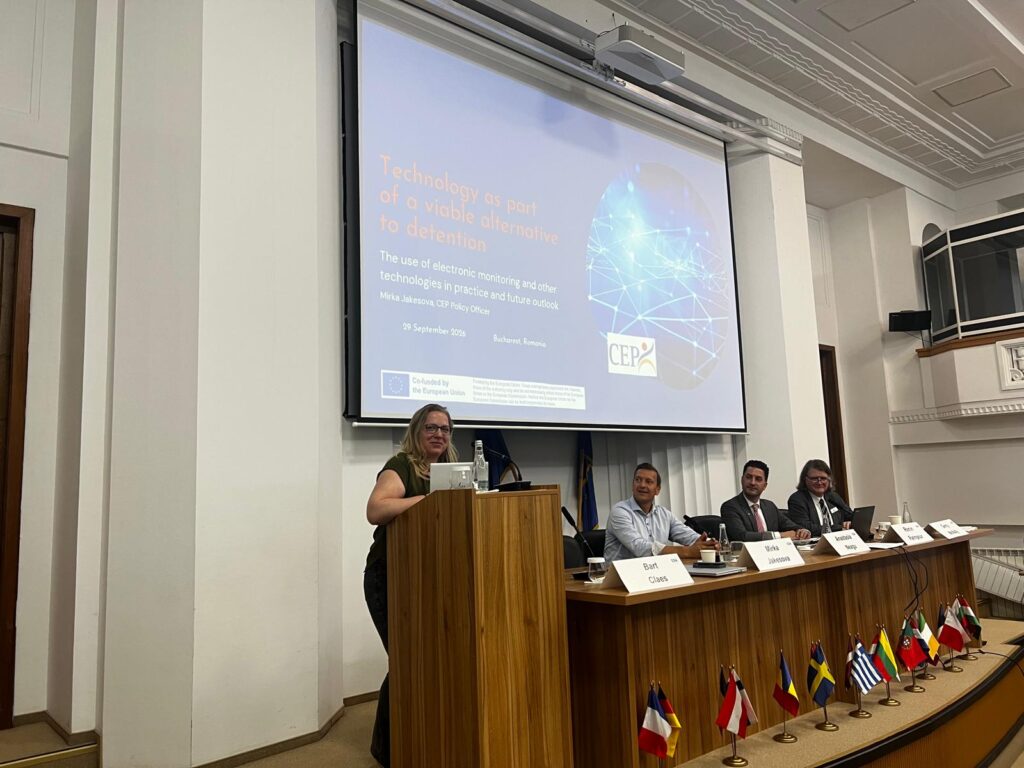
CEP Vice-President Daniel Danglades, Ambassador Gerry McNally and Policy Officer Mirka Jakesova participated in the Seminar on Framework Decisions 829 and 947 and their Impact on Alternatives in the EU organized under the EU project run by the Academy of European Law on 28-29 September in Bucharest, Romania. The seminar brought together judges, prosecutors, probation practitioners, academics, and policy experts to discuss the growing role of alternatives to detention within European criminal justice systems.
New

CEP
CEP and Catalan justice leaders reaffirm longstanding cooperation
29/09/2026
Representatives of the Confederation of European Probation (CEP) met with senior officials from the Catalan Department of Justice and Democratic Quality in Barcelona on 28 September 2026, alongside the opening of the sixth International Training School on Core Correctional Skills. The meeting offered an opportunity to recognise a longstanding partnership and discuss its continued development.
Updated

Mental Health
DEADLINE EXTENDED: Call for Pilot Implementation of the European Mental Health Training Curriculum
29/09/2026
Good news for CEP members! Following requests from our members, CEP has extended the deadline to apply for the pilot implementation of the European Mental Health Training Curriculum for Probation Officers.
Recap

ITSCCS, Technology
6th International Training School opens in Barcelona with a focus on digital probation
28/09/2026
How can probation professionals use new technologies in their interactions while building trust, showing empathy and supporting change? This question is at the heart of the sixth International Training School on Core Correctional Skills, which opened in Barcelona on 28 September 2026.
Subscribe to our bi-monthly email newsletter!
"*" indicates required fields
- Keep up to date with important probation developments and insights.