

Previous Article
News
“The Role of Mentoring in Desistance and Reentry”; an interview with José Cid
Rates of recidivism in Spain are higher for inmates that are released at the end of their prison sentence than for those that are released with a gradual transition to the community. During the EUROCRIM Conference 2018, José Cid presented his research “The Transition From Prison to Community: the Role of Mentoring in Desistance and Reentry”. Afterwards, we asked him some questions about his research.
What is the research about?
The research is a social experiment about the impact of mentors on desistance and resettlement. In Spain approximately 60 percent of the persons that are serving a prison sentence are released after having served the full sentence with no supervision in the period of transition into the community. The research is focused on these prisoners and provides them with a mentor during the time of one year (four months in prison and eight months in the community). One part of the group, 127 participants, participated without receiving the help of a mentor and the other part of the group, 118 did have a mentor. The results of both groups are compared in the research.
How did you conduct the research?
The research is based on a partnership between the Catalan Ministry of Justice (that granted access to prisons and provided the training of mentors); 8 non-profit organisations (that provided the mentors and one coordinator) and research teams from two universities (University of Barcelona, led by prof. Antonio Andrés-Pueyo) and Autonomous University of Barcelona, led by me), that planned the research, directed the execution of the research and evaluated the results.
We have conducted two follow-up meetings. One after two months in freedom and the second one after eight months in freedom. We have also obtained administrative data on reincarceration in the first year after release. The mentor was also required to write a diary after every mentoring session. We have reviewed these field diaries as well.
What is the difference between a mentor and a probation officer?
The main difference is that this is a voluntary reintegration programme, participants have no obligation and are not rewarded in any way for taking part in the project. The supervision aspect is not present and the mentor is a normal citizen, not a rehabilitation professional. However, some aspects may be similar. The probation officer and the mentor need to create a good bond with the participant and they also have common aims: to promote a desistance narrative and to help with resettlement problems.
What does a mentor do?
Every two weeks, mentors have a meeting with the participants (in the prison or in the community). Both the participant and the mentor need to agree on what the mentor needs to do to promote successful desistance. The mentors receive guidelines. The main principle of the guideline is that the mentor should create a good bond with the participant.
Can the mentors help with desistance from crime?
We think the mentor may have a good influence. He or she is providing voluntary support to another person and this support is aimed at promoting conventionality. Social support theory is a ground for expecting good results regarding mentoring: mentors may reduce the strain of participants, reduce labelling and promote feelings of reciprocity.
What is your most important finding?
We are now evaluating the results. Our preliminary results indicate that participants have increased their desistance narrative and have reduced their offending compared with the participants without mentor. These results are preliminary and should be contrasted in the following months
The research report is not available yet, but is expected in the beginning of 2019.

Related News
Keep up to date with the latest developments, stories, and updates on probation from across Europe and beyond. Find relevant news and insights shaping the field today.
Recap
Electronic monitoring, Technology
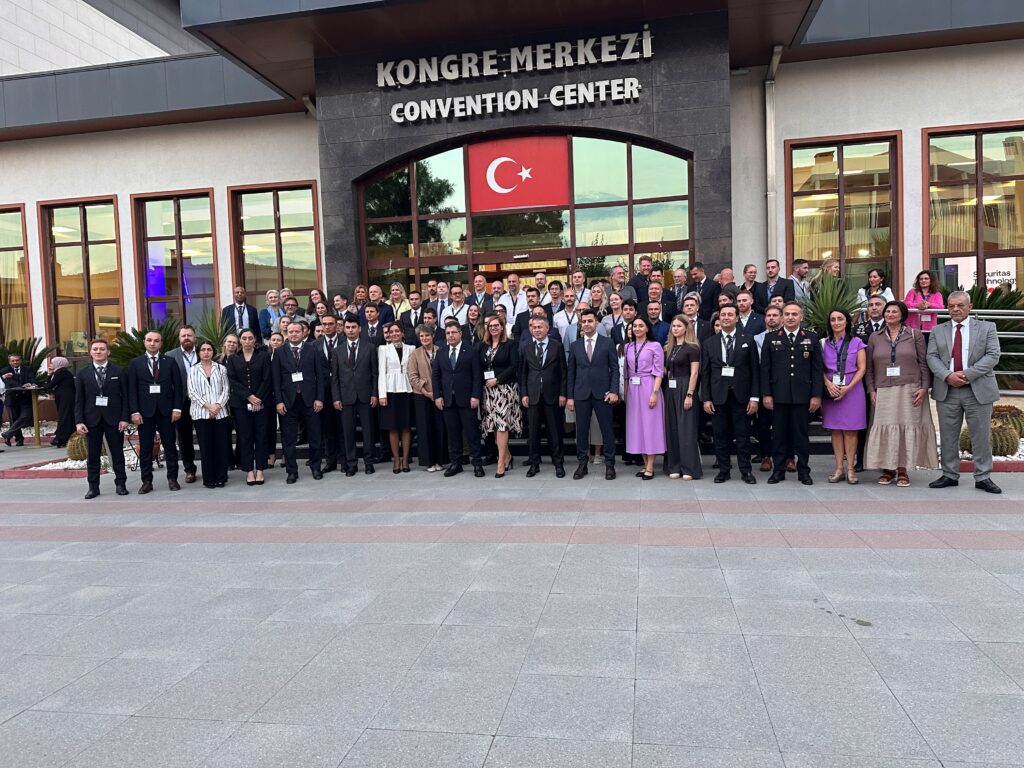
14th Electronic Monitoring Conference, Electronic Monitoring in a Changing World – Perception vs Reality
08/10/2026
On 6-8 October 2026, Antalya hosted the 14th Electronic Monitoring Conference “Electronic Monitoring in a Changing World – Perception vs Reality”. More than 350 participants coming from 30 countries across Europe and worldwide representing probation services, Ministries of Justice, victims´ services, EM providers, researchers as well as local participants representing the Turkish Prison and Probation Service gathered to discuss how electronic monitoring (EM) is understood by all stakeholders involved including the victims and the public, and how these perceptions compare to the evidence and experiences of those affected. While the gap between perception and reality in electronic monitoring has been recognised for over a decade, the rapid expansion of EM into areas such as victim protection, high-risk supervision and digital innovation has brought new challenges and questions to the forefront.
Recap

ITSCCS
Core Correctional Skills in Digital Probation: highlights from the 6th ITSCCS in Barcelona
05/10/2026
The sixth International Training School on Core Correctional Skills (ITSCCS) took place in Barcelona from 28 September to 2 October 2026, bringing together 26 participants for a week of learning, practical training and international exchange. Organised by the Confederation of European Probation (CEP) and the Centre for Legal Studies and Specialised Training (CEJFE), the programme focused on “Clicks and Empathy: Core Correctional Skills in Digital Probation.”
Recap
Framework Decisions
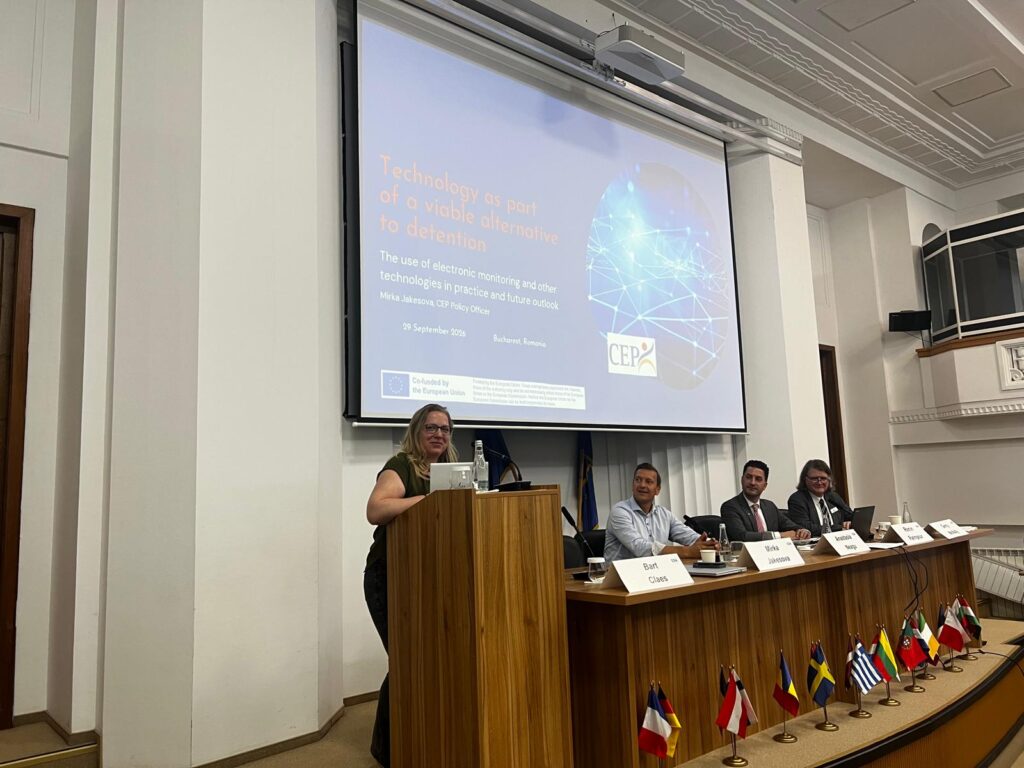
Recap: ERA workshop on Framework Decisions 829 and 947 in Bucharest
02/10/2026
CEP Vice-President Daniel Danglades, Ambassador Gerry McNally and Policy Officer Mirka Jakesova participated in the Seminar on Framework Decisions 829 and 947 and their Impact on Alternatives in the EU organized under the EU project run by the Academy of European Law on 28-29 September in Bucharest, Romania. The seminar brought together judges, prosecutors, probation practitioners, academics, and policy experts to discuss the growing role of alternatives to detention within European criminal justice systems.
New
CEP
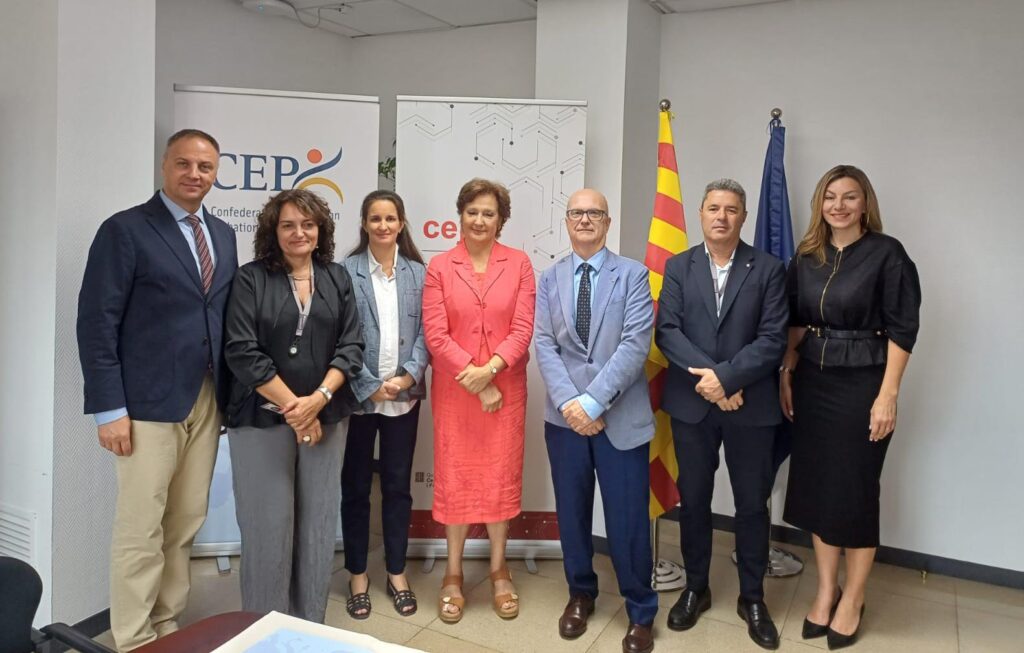
CEP and Catalan justice leaders reaffirm longstanding cooperation
29/09/2026
Representatives of the Confederation of European Probation (CEP) met with senior officials from the Catalan Department of Justice and Democratic Quality in Barcelona on 28 September 2026, alongside the opening of the sixth International Training School on Core Correctional Skills. The meeting offered an opportunity to recognise a longstanding partnership and discuss its continued development.
Updated

Mental Health
DEADLINE EXTENDED: Call for Pilot Implementation of the European Mental Health Training Curriculum
29/09/2026
Good news for CEP members! Following requests from our members, CEP has extended the deadline to apply for the pilot implementation of the European Mental Health Training Curriculum for Probation Officers.
Recap

ITSCCS, Technology
6th International Training School opens in Barcelona with a focus on digital probation
28/09/2026
How can probation professionals use new technologies in their interactions while building trust, showing empathy and supporting change? This question is at the heart of the sixth International Training School on Core Correctional Skills, which opened in Barcelona on 28 September 2026.
Subscribe to our bi-monthly email newsletter!
"*" indicates required fields
- Keep up to date with important probation developments and insights.