

Previous Article
News
The European Judicial Network on Detention and its Alternatives: about the Framework Decisions
The European Judicial Network (EJN) is a network of national contact points for the facilitation of judicial cooperation in criminal matters. It was created in 1998. In 2008 a new legal basis, Council Decision 2008/976/JHA of 16 December 2008 on the EJN, entered into force.
The EJN is composed of Contact Points in the Member States, defined in the EJN Decision as “active intermediaries”. The Contact Points are designated by each Member State amongst central authorities in charge of international judicial cooperation and the judicial authorities or other competent authorities. Their main role is to facilitate judicial cooperation in criminal matters between the EU Member States, particularly in actions to combat forms of serious crime. They assist with establishing direct contacts between competent authorities and by providing legal and practical information necessary to prepare an effective request for judicial cooperation or to improve judicial cooperation in general.
The EJN holds at least three plenary meetings every year. The purposes of the plenary meetings are to allow Contact Points to get to know each other and share experience, and to provide a forum for discussion of practical and legal problems encountered by the Member States in relation to the interpretation and application of the EU legal instruments.
Recent Discussions on Relevant EU Instruments
The 51st Plenary of the EJN took place in November 2018 in Vienna, under the Austrian Presidency of the Council of the EU. The aim of the discussions was to identify practical problems and possible solutions to the less used Mutual Recognition Instruments. Prior to the meeting, the EJN Contact Points were asked to complete a questionnaire on the aforementioned instruments, the results of which were discussed at the Plenary.
For the purposes of this article, particular attention will be paid to the conclusions in respect of Framework Decision 2008/947/JHA (Supervision of Probation Measures and Alternative Sanctions) and Framework Decision 2009/829/JHA (Supervision measures as an alternative to provisional detention). Other instruments discussed were Framework Decisions 2008/909/JHA Custodial Sentences or measures involving deprivation of liberty, 2005/214/JHA Financial Penalties, 2006/782/JHA Confiscation Orders and Directive 2011/99/EU European Protection Order.
General Conclusions
The EJN Contact Points stated that these legal instruments are not widely known amongst EU practitioners. The limited knowledge and the consequent lack of practical experience deter the judicial authorities from making use of these legal instruments.
Additionally, the lack of experience of using the instruments leads to delays in their execution, as sometimes it is necessary for the issuing authority to provide extra information and guidance to the executing authority. Furthermore, participants reported difficulties in identifying the right authority to address the orders/certificates, thus causing additional delays to the process.
In order to combat these issues, three main solutions were proposed: awareness raising and sharing of information, trainings on these legal instruments at the national and EU level, and continuous update of the EJN website to ensure the competent authorities can be identified.
In addition to the lack of knowledge of these instruments, the Contact Points noted that the differences between the legal systems and the differing national legislation pose an additional obstacle when applying the instruments. For example, the differences regarding the maximum penalty and different rules on pre-trial detention across the EU require steps of adaptation in the executing state.
The solutions proposed in this regard were involvement of the EJN during the EU legislative process, executive/legislative action via bilateral agreements and revision or amendment of national legislation, and assistance from the tools located on the EJN website.
Framework Decision 2008/947/JHA
In relation to the FD 2008/947/JHA on mutual recognition of supervision of probation measures and alternative sanctions, the Contact Points specifically noted difficulties in executing measures due to the different interpretations of measures/sanctions under each Member State’s national law. For example, regarding health-related measures (treatment of a drug addict), for most Member States treatment as an out-patient falls under the scope of FD 2008/947/JHA, whereas others would apply the FD 2008/909/JHA. According to some Contact Points, execution is not possible for these types of measures. In response to a question on community service, 3/5 of the Contact Points replied that community service is an alternative sanction according to national law, whereas 1/3 replied that it is considered a probation measure and the rest stated that both options are available. The proposed solution is to consider adding information to the EJN website on what probation measures and alternative sanctions are available in each Member State.
Framework Decision 2009/829/JHA
In relation to the FD 2009/829/JHA on mutual recognition to decisions on supervision measures as an alternative to provisional detention, the Plenary meeting addressed several issues caused by the lack of knowledge about supervision measures within the Member States both as an issuing and as an executing Member State. It was noted that different rules on maximum penalty and pre-trial detention in the Member States posed a problem as well as adapting/leaving out measures without consulting the issuing state. Moreover, a number of participants experienced the issue of applying more severe supervision measures than foreseen by the issuing state along with confusion about the types of measures listed in Article 8.1. The proposed solution to these issues is to consider adding an overview of the different types of supervision measures available in each Member State to the EJN website.
For more information, visit the EJN website.

Related News
Keep up to date with the latest developments, stories, and updates on probation from across Europe and beyond. Find relevant news and insights shaping the field today.
New

Communication and Awareness-Raising
Call to take part in the Yellow Ribbon Run in Prague
16/04/2026
As part of its ongoing cooperation and support for the Yellow Ribbon project, CEP is pleased to invite nominations to support two participants wishing to join the Yellow Ribbon Run, taking place on Thursday, 11 June 2026, in Prague, Czech Republic.
Recap
Probation outside Europe
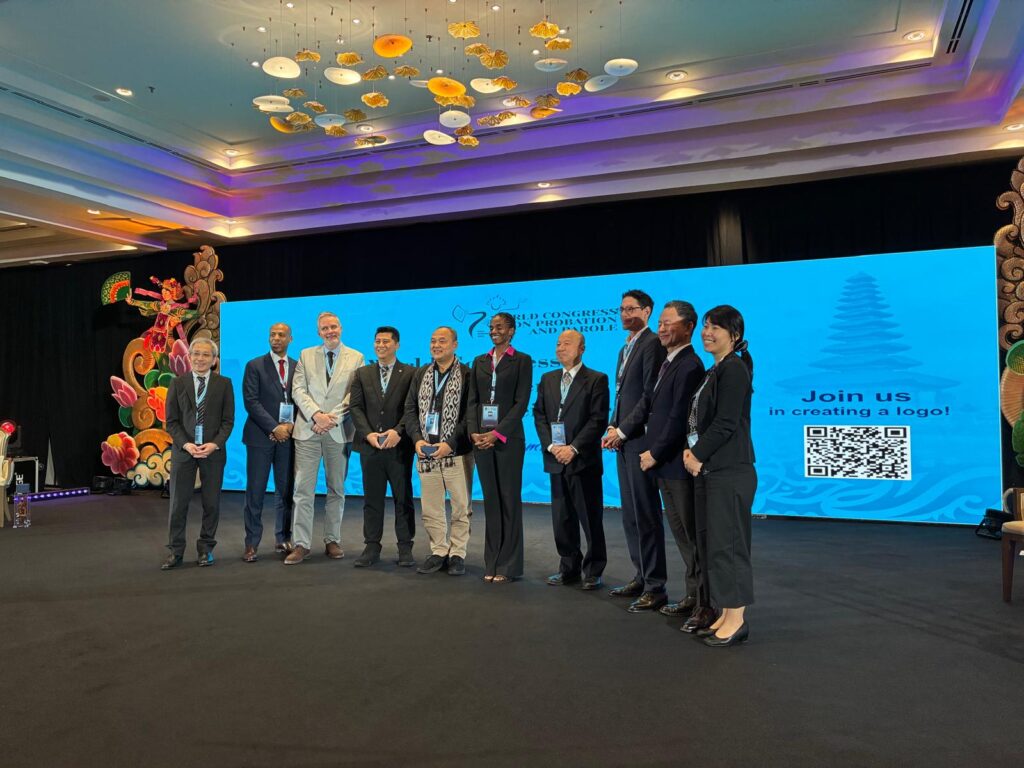
Day 2 of the 7th World Congress on Probation and Parole in Bali, Indonesia.
16/04/2026
brought further reflection and exchange on the role of probation and community-based approaches in supporting rehabilitation and social inclusion.
CEP President Annie Devos and Vice-President Daniel Danglades continued their daily coverage on Division_Y, sharing key insights from discussions at the Congress.
A central theme highlighted during Day 2 was the importance of focusing on what works in practice, and how effective integration requires active participation in society. As discussed, professional probation practice is not only about systems and structures, but about placing the person at the centre, responding to individual needs, and recognising rehabilitation as a journey within the community.
CEP Vice-President Daniel Danglades also reflected on the role of community-based approaches such as the Japanese Hogoshi system, underlining the value of strong volunteer engagement in supporting reintegration.
The World Congress on Community Volunteers, held as part of the World Congress on Probation and Parole in Bali, was also highlighted during the day, with the session moderated by CEP Vice-President Daniel Danglades. This further underlines CEP’s commitment to strengthening the role of community volunteers at an international level.
CEP continues to follow the Congress closely and will provide daily updates throughout the week until 17 April.
👉 Watch the English-language video here: https://youtu.be/VqfSwnvJQuw
👉 A German-language reflection from Day 2 by Laura Schneider (Bewährungs- und Gerichtshilfe Baden-Württemberg) is also available on the Referat_Y YouTube channel: https://youtu.be/GOSOogfHleo
More information about the Congress: https://www.wcpp2026.id/
Recap
Probation outside Europe
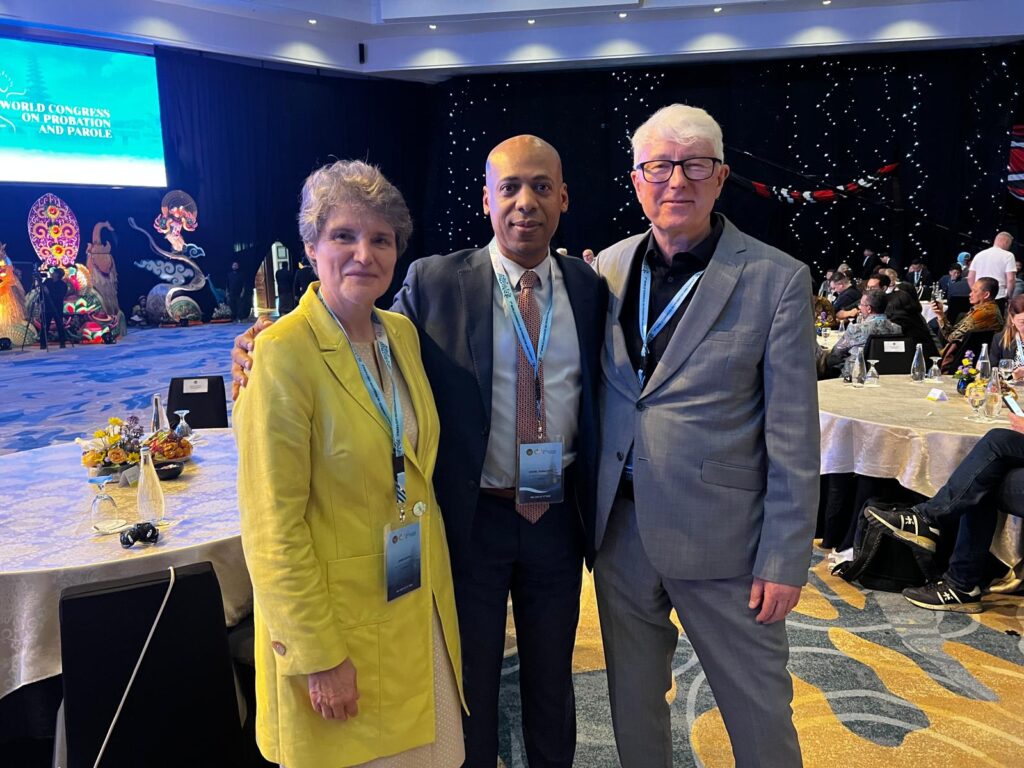
Day 1 of the 7th World Congress on Probation and Parole is underway in Bali, Indonesia
14/04/2026
Representing the Confederation of European Probation CEP, former board member Jo Tein, CEP President Annie Devos and Vice-President Daniel Danglades are on site, sharing insights and reflections from this global gathering of probation and parole professionals.
Recap

Mental Health
Recap: CEP Expert Group on Mental Health in Probation Meets
14/04/2026
On 8–9 April 2026, the Expert Group on Mental Health in Probation convened in Dublin, Ireland, hosted by the Irish Probation Service. The meeting brought together 7 expert members from 7 European jurisdictions, Portugal, Ireland, Türkiye, Germany, Poland, Northern Ireland, England and Spain (Catalonia), alongside distinguished external speakers from international and academic institutions.
Chaired by Ana Cristina Neves, Head of Service at the Directorate-General of Reintegration and Prison Services (DGRSP), Portugal, the meeting provided a focused and collaborative space to reflect on the group’s progress, consolidate key outputs, and define strategic priorities for the upcoming 2026–2028 mandate.
New

Mental Health
Webinar Announcement: Mental Health in Probation
13/04/2026
We are pleased to invite you to an upcoming CEP webinar on 21st of May titled: “The European Mental Health Curriculum for Probation Officers”
New
CEP
CEP annual report
07/04/2026
The Confederation of European Probation (CEP) has published its Annual Report 2025, showcasing a year marked by growth, cooperation, and continued commitment to strengthening probation across Europe.
Bringing together more than 100 member organisations across 42 countries and 59 jurisdictions, CEP continued to serve as a central platform for knowledge exchange, professional development, and collaboration within the European criminal justice field.
Subscribe to our bi-monthly email newsletter!
"*" indicates required fields
- Keep up to date with important probation developments and insights.