Skip to content

Projects

Strengthening Transnational Approaches to Reduce Reoffending (STARR)

Aim of the STARR project: to offer an EU-wide view on What Works in reducing offending, to identify and develop models of good practice, with an initial emphasis on 3 priority areas (youth crime, domestic violence, drugs& alcohol abuse), and to develop evidence-based processes for identifying and sharing good practice in future.


Countries involved: UK, Bulgaria, France, Hungary
EU funding programme: Prevention of and Fight against crime (ISEC)

Click on the link to read the  STARR final report.

Partner organisations

Our knowledge of Domestic Violence

A lot of European countries try to improve the work with domestic violence and share good practices, but there is still a lot to be done. It is important to identify those who are sentenced for other crimes, but possibly also have a background of problems with domestic violence. Attention needs to be paid to the differences in cultural and religious backgrounds and to increase the knowledge about this matter in order to tackle domestic violence in different contexts. Domestic violence is an issue that goes through both prison and probation.

Related News

Check out the latest news and updates on this project’s focus area.

New

CEP Board

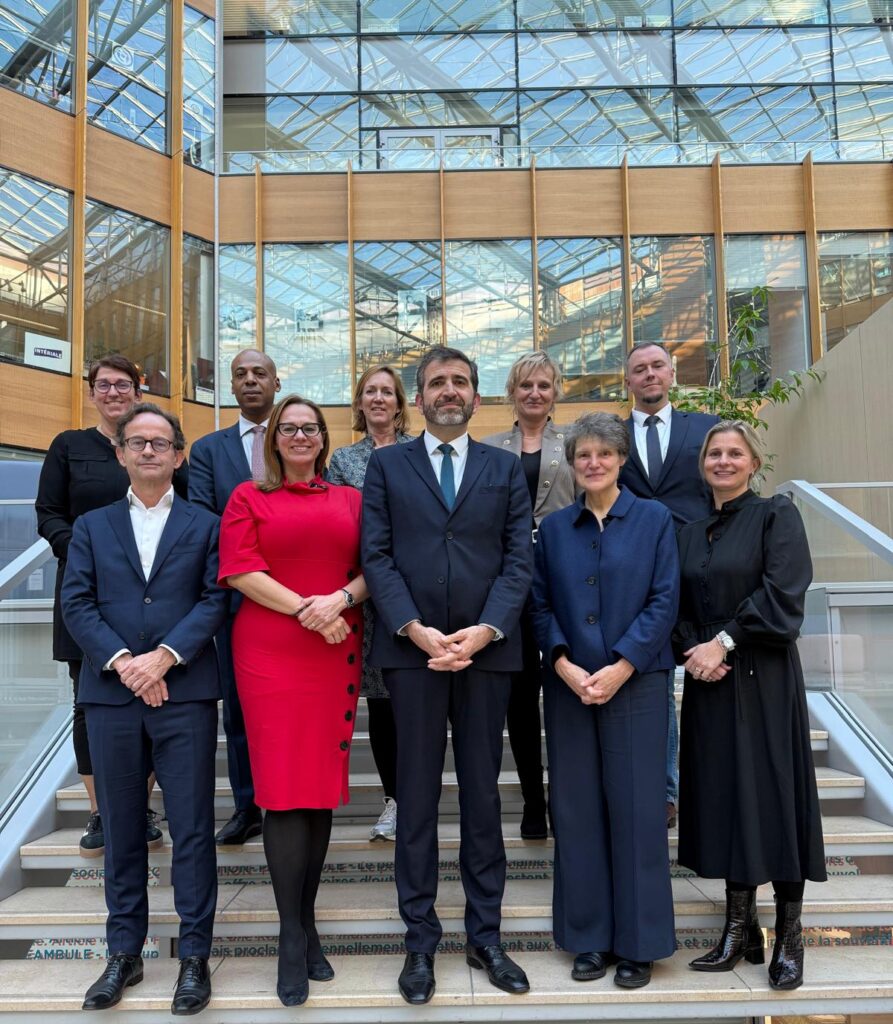
CEP board visit France

16/11/2026

On 13 November 2026, the CEP Board visited its French member organisation, the Direction Générale de l’Administration Pénitentiaire of the French Ministry of Justice. The visit coincided with the final CEP Board meeting of the year, hosted by CEP Vice-President Mr Daniel Danglades, who represents the French institution.

Recap

Framework Decisions

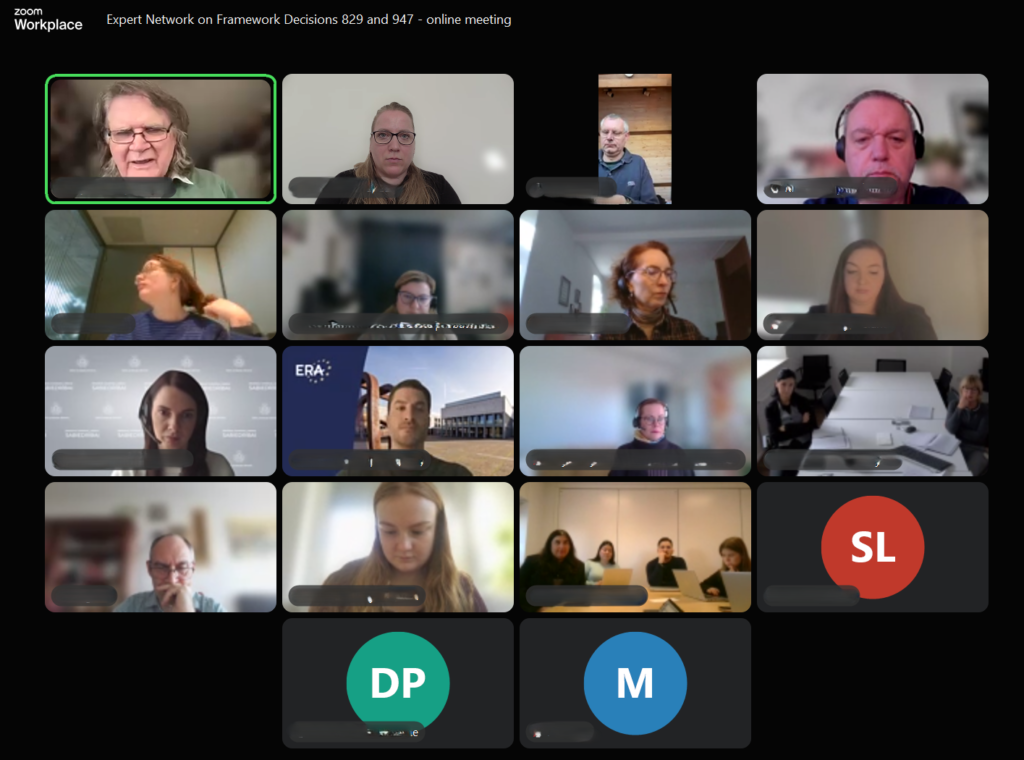
Recap: annual meeting of the Expert Network on Framework Decisions 829 and 947

09/11/2026

On Thursday 5 November an annual meeting of the Expert Network on Framework Decisions 829 and 947 took place online. Bringing together 20 participants from 12 EU jurisdictions including representatives of the Academy of European Law and European Judicial Network, the meeting provided an opportunity to exchange experiences, discuss current implementation challenges and identify priorities for enhancing cross-border cooperation in the application of the two Framework Decisions. 

New

Education and Training, Probation in Europe

Justice programme: the judicial training call is open for applications!

09/11/2026

Are you ready to help address the training needs of justice professionals from different EU countries in the fields of civil law, criminal law and fundamental rights? This call supports cross-border training projects contributing to the effective and consistent application of EU law. In line with the new European Judicial Training Strategy, the call also supports the digitalisation of justice. Don’t miss this opportunity! Apply by 4 March 2027, 17:00 Brussels time.

More info


Recap

CEP Board, Foreign Nationals in Prison and Probation, Probation in Europe

CEP at the 16th Plenary Meeting of the Council for Penological Co-operation

06/11/2026

From 3 to 5 November 2026, representatives of the Confederation of European Probation (CEP) participated in the 16th Plenary Meeting of the Council for Penological Co-operation (PC-CP).

New

CEP

Newsletter October 2026 out now

29/10/2026

New

Violent Extremism

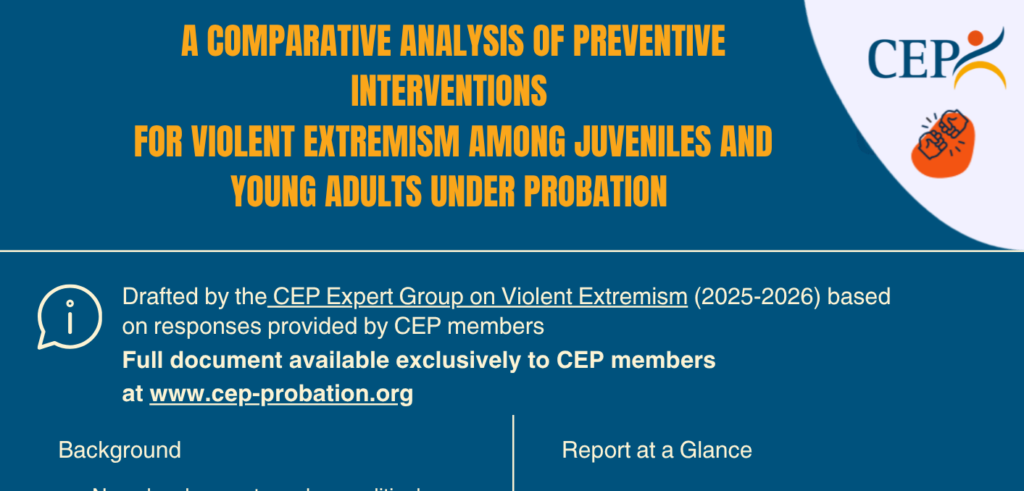
Understanding Youth Radicalisation: What Can Probation Services Do? | New Report from CEP’s Expert Group

27/10/2026

In recent decades, the violent radicalisation of juveniles and young adults has become a pressing concern for policymakers, researchers, practitioners, and communities worldwide. While considerable attention has been devoted to psychological vulnerabilities, socio-economic marginalisation, and community-level influences, the broader context in which violent radicalisation develops is often overlooked. At the same time, the increasing involvement of young people in violent extremist offences highlights the urgent need for effective prevention efforts. Addressing youth radicalisation has become a complex and evolving challenge for families, educators, mental health professionals, law enforcement agencies, probation services, and security authorities.

Subscribe to our bi-monthly email newsletter!