

Projects
LIAISE 2
The project “Local Institutions Against Violent Extremism II” (LIAISE 2) seeks to strengthen the capacities of local and regional European authorities to prevent and tackle the issue of radicalisation leading to violent extremism.
Co-funded by the European Union, the project “Local Institutions Against Violent Extremism II” (LIAISE 2) seeks to strengthen the capacities of local and regional European authorities to prevent and tackle the issue of radicalisation leading to violent extremism.
LIAISE 2 gathers European cities and regions and develops cooperation throughout Europe within a dedicated network. This approach is in line with the alliance of European cities against violent extremism that was initiated jointly by Efus and the Congress of Local and Regional Authorities of the Council of Europe.
Led by Efus, LIAISE 2 gathers 29 partner organisations in 10 countries, 18 cities and three regions, as well as four national Forums for urban security and three thematic non-governmental organisations.
Of a duration of 24 months, LIAISE 2 will organise five European conferences on different aspects of the issue of radicalisation. Furthermore, it will deliver training sessions to local authorities partner of the project and will help them to set up pilot projects in which they will apply locally the knowledge gained during the training sessions as well as develop innovative practices.
Project information
Local authorities in European and international guidelines (English)
The role of local authorities in national strategies (English)
The role of local authorities in national strategies (French)
Preventing and fighting radicalisation at the local level
Click on the link to visit the Efus project page of LIAISE 2.
Partner organisations

Our knowledge of Violent Extremism

Related News
Check out the latest news and updates on this project’s focus area.
Violent Extremism
Recap: Expert Group meeting on Violent Extremism
16/03/2026
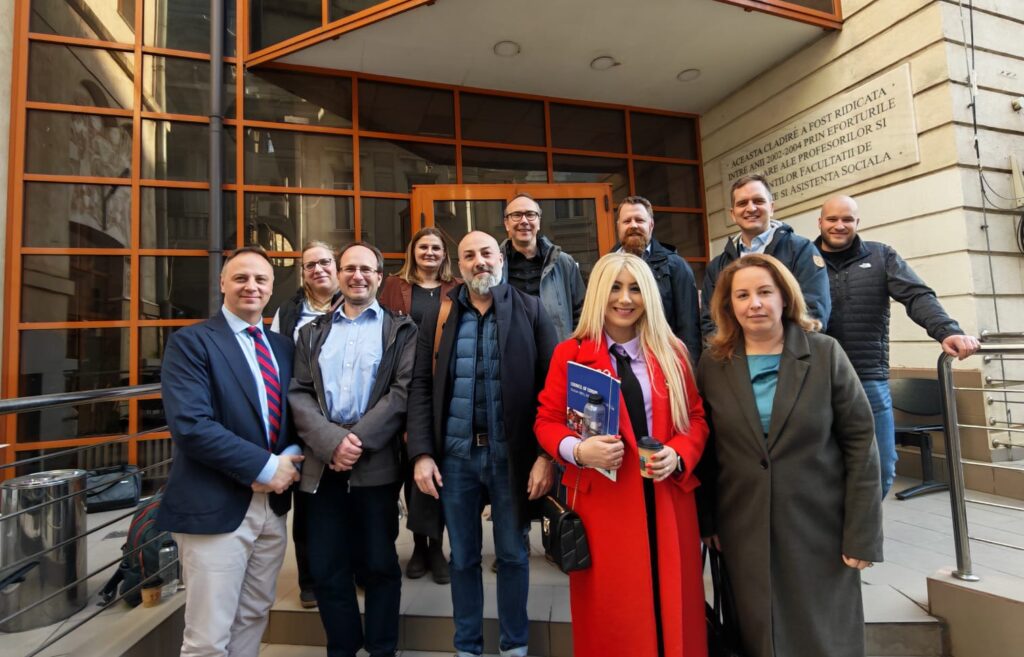
On 12–13 March 2026, the Expert Group on Violent Extremism convened for an in‑person meeting in Bucharest, Romania. Hosted at the University of Bucharest, the meeting brought together practitioners and representatives from across Europe to finalise the overview of best practices for preventive interventions targeting juveniles and young adults up to the age of 26 under probation. Building on the extensive discussions and progress made in 2025, the group worked collaboratively to bring the document to completion.
Electronic monitoring
Recap: CEP Expert Group meeting at ATGV Antalya
12/03/2026
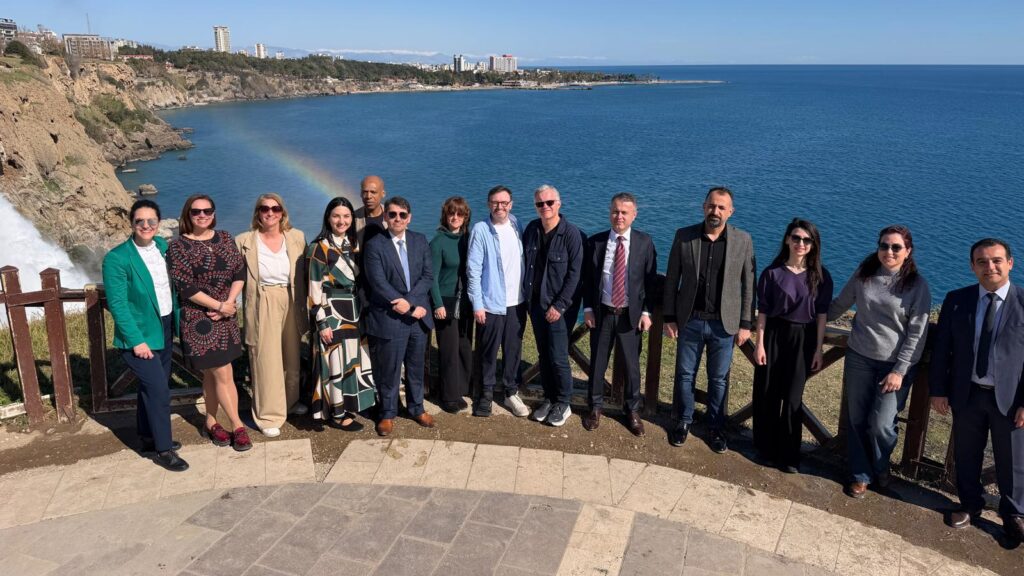
The CEP Expert Group on Electronic Monitoring, along with representatives of the CEP Office led by Mr. Daniel Danglades, CEP Vice-President, visited the Education and Social Facility of the Ministry of Justice in Türkiye – ATGV Antalya. The host country was represented by a high-level delegation, including Deputy Director General Mr. Fatih Güngör, Head of the Turkish Probation Department Dr. Hüseyin Şık, Member of the CEP EM Expert Group Ms. Elçin Kilecioğlu, as well as the Director and representatives of the ATGV facility, and officials from the courts, prosecution, and probation services in Antalya.
Education and Training
Recap: CEP Expert Network on Education and Training in Probation meets with the European Commission to discuss the EU Judicial Training Strategy
11/03/2026
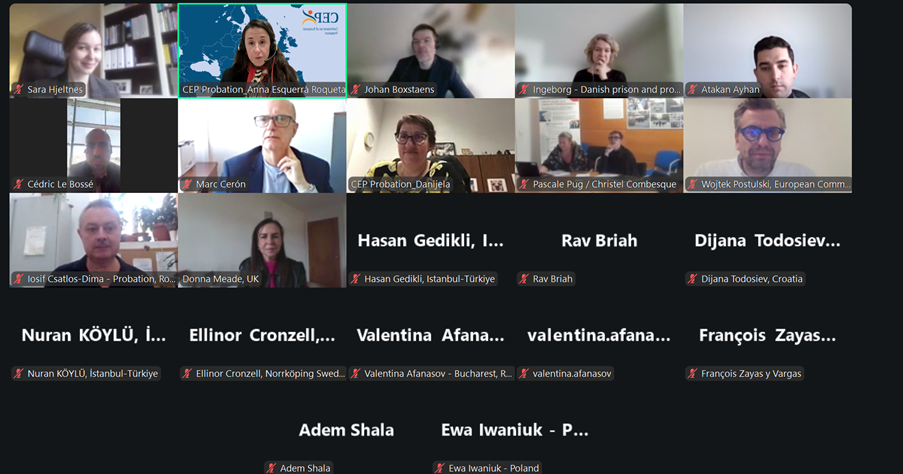
On 11 March 2026, the CEP Expert Network on Education and Training in Probation met online with more than 20 participants from Belgium, Denmark, Sweeden, France, Romania, Croatia, Catalonia, Poland, United Kingdom and Türkiye to exchange views with the European Commission on the newly adopted EU Judicial Training Strategy 2025–2030.
The meeting provided a valuable opportunity for representatives of probation training institutions across Europe to engage directly with European Commission officials and discuss how the strategy may impact the training of probation and prison staff in the coming years.

Women, youth
Understanding the needs of girls and young women in youth justice
10/03/2026
New research highlights the underlying needs that influence girls’ and young women’s contact with youth justice systems and calls for more gender responsive approaches in policy and practice. Drawing on a review of recent studies, the authors identify several factors shaping girls’ pathways into the justice system, including persistent abuse, trauma, gendered expectations, and systemic failures. Girls involved in youth justice are often affected by multiple forms of victimisation, such as sexual abuse, neglect, and domestic violence, with experiences frequently beginning in early childhood.

CEP Board
Interview with new CEP board member Ian Barrow
09/03/2026
During the General Assembly in Austria, a new CEP Board got elected for the upcoming three years. In the coming weeks we will publish interviews with all newly-elected board members where they will share information on their professional background, how they would like to contribute, what challenges lie ahead and many more.
Enjoy reading!

Gender Equality, Gender-based violence
Women’s Day
09/03/2026
Yesterday was International Women’s Day.
At CEP, this day closely reflects our core values and ongoing commitment to promoting gender equality and addressing gender-based violence within the context of probation and community justice.
Subscribe to our bi-monthly email newsletter!
"*" indicates required fields
- Keep up to date with important probation developments and insights.