

Projects
EMPRO project
EMPRO project
(Empowerment of the Framework Decisions 2008/947 and 2009/829 through EU Probation Services)
EMPRO aims to significantly strengthen the understanding and application of FD 2008/947 and 2009/829 within the European Union. It is further aligned with the overarching goals of the EU Charter of Fundamental Rights, contributing to a more humane and effective rehabilitation process. This encompasses highlighting the specific needs and rights of foreign nationals involved in pre-trial and post-trial phases, ensuring that justice and rehabilitation practices are equitable, effective, and respectful of fundamental rights.
To this end, EMPRO, which will be directly implemented in France, the Netherlands, Portugal, Romania, Germany, and Belgium, will deliver comprehensive hybrid training on the practical application of both FDs and the use of existing and forthcoming digital tools to assist professionals in streamlining the application of the instruments. In this way, EMPRO will capacitate justice professionals to fully understand and navigate the operational challenges in the effective application of these instruments. By embracing the use of existing and future digital tools EMPRO will contribute to streamlining effective cooperation between authorities, in full consideration of Directive 2023/2843 and Regulation 2023/2844. The activities will allow probation officers to explore their opportunities for action and leeway in promoting the application of FD 2008/947 and 2009/829.
Consequently, EMPRO will contribute to more frequent and faster recourse, when relevant, to alternatives to detention before and after the trial. It will also lay the groundwork for smoother communication among all relevant actors and enhanced cooperation at the national and European levels, particularly concerning the management of detainees from other member states. Such a new dynamic on the topic will facilitate a European-wide harmonisation of best practices and procedures within the justice and probation services sphere. The project will directly reach 600 stakeholders.
CEP is an Associated Partner to the EMPRO project.
Partner organisations

Our knowledge of Framework Decisions

Related News
Check out the latest news and updates on this project’s focus area.

CEP
Newsletter October 2026 out now
29/10/2026
CEP’s latest newsletter is out now! It includes:
- Deadline approaching for the Workshop on Technology and Alternatives to Detention
- Recap of the 14th EM and CEP Excellence Leadership Training
- New publications from Expert Groups on Technology and Expert Group on Violent Extremism
- Call for Proposals: Evaluation of CEP Expert Groups
- Engaging with Research – a new section in our newsletter
- and much more!
Violent Extremism
Understanding Youth Radicalisation: What Can Probation Services Do? | New Report from CEP’s Expert Group
27/10/2026
In recent decades, the violent radicalisation of juveniles and young adults has become a pressing concern for policymakers, researchers, practitioners, and communities worldwide. While considerable attention has been devoted to psychological vulnerabilities, socio-economic marginalisation, and community-level influences, the broader context in which violent radicalisation develops is often overlooked. At the same time, the increasing involvement of young people in violent extremist offences highlights the urgent need for effective prevention efforts. Addressing youth radicalisation has become a complex and evolving challenge for families, educators, mental health professionals, law enforcement agencies, probation services, and security authorities.

Probation in Europe
Reflections on the European Society of Criminology Conference 2026 | From Criminological Research to Probation Practice
26/10/2026
At CEP, we are fascinated by research from across Europe and beyond, and by helping it reach the people who can use it. Ruth Armstrong, CEP Research and Policy Officer, went to the 26th Annual Conference of the European Society of Criminology (EuroCrim 2026 – Working Group on Community Sanctions and Measures) that took place in Warsaw, Poland, from 9–12 September 2026.
Against a backdrop of overcrowded prisons and net-widening (with ever more people drawn into supervision), three questions kept coming up in the research: how time shapes justice, what we mean by success, and how we define harm.
Technology
Registration deadline approaching: Join CEP’s final workshop of 2026 on technology in probation
22/10/2026
📢 Have you registered yet? CEP’s final workshop of 2026 takes place on 24 November in Barcelona, bringing together professionals to explore how technology is being used across probation services in Europe.
The Workshop on Alternatives to Detention and Technologies: Deep Diving into New Trends will look beyond artificial intelligence to examine the different ways technology is shaping probation practice, from staff training to working with clients and collaborating with other criminal justice partners.
Directors General Meetings
CEP Leadership Excellence Training: strengthening leadership and cooperation across Europe
22/10/2026
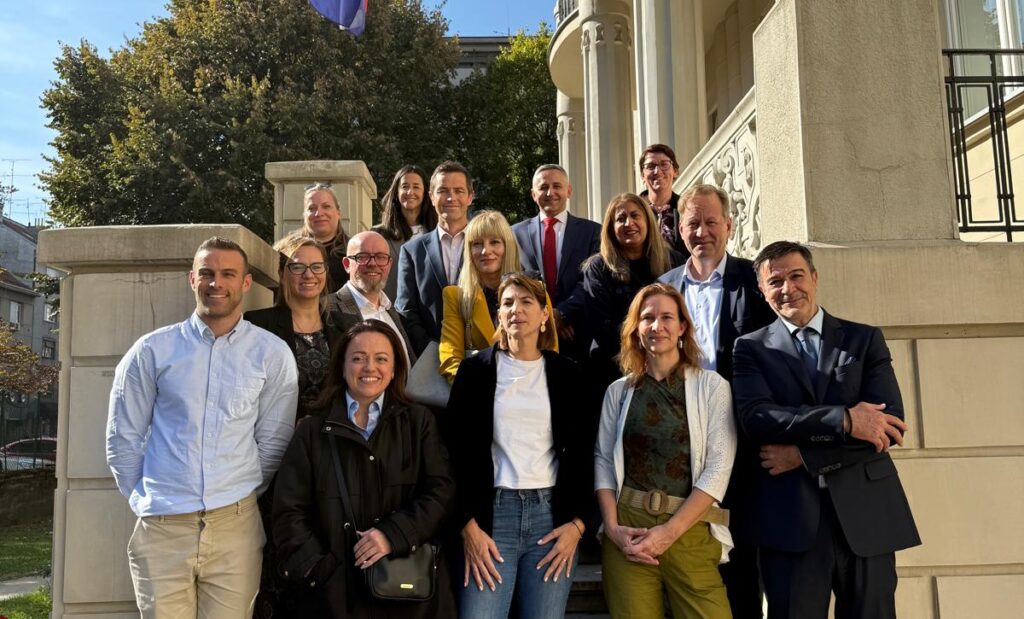
The CEP Leadership Excellence Training, held on 20–21 October in Zagreb, Croatia, brought together Directors General and senior probation managers from 11 European countries for a two-day interactive programme focused on leadership, communication, staff development, and international cooperation.

CEP
Call for Proposals: Evaluation of CEP Expert Groups
21/10/2026
On behalf of Ms. Jana Špero Kamenjarin, CEP Secretary General, it is my pleasure to invite you to submit a proposal to conduct an evaluation within the CEP work programme.
Subscribe to our bi-monthly email newsletter!
"*" indicates required fields
- Keep up to date with important probation developments and insights.