

Projects
Dialogue Trainer – CEP Simulations
CEP has launched the initiative to strengthen training and education of probation workers in the different EU member states. The CEP aims for a more permanent network of organizations to exchange expertise on pre-employment training and in-career further professional development in probation.
The general objective of the project
The general objective of the project was to develop one simulation per country, based on the principle of creating an effective working alliance between probation workers and clients. Effective in the sense that the working alliance matches the dual role of control and support that characterizes the work of community supervision of clients. The combination of counseling and control requires extra attention in establishing a working alliance.
In working with mandated (involuntary) clients, goals can differ, and clients can show reactance against the constraints. Therefore, one cannot presume the intention of the client to collaborate from the start. This is one of the key features of probation that is addressed in this project: how to learn to build an effective working alliance from the start of a professional-client relationship that fits the dual role of control and support that characterizes the work of community supervision.
Simulations were experienced as an effective training intervention, as they allow professionals to gain experience with the dynamics of building a working alliance in a safe learning environment that adds measurement.
Project execution
In the period from March to November 2022, a pilot project was done to create simulations on the DialogueTrainer platform with four European member states: Estonia, Romania, Finland and Catalunya.
The objective of this project was to:
- To create four online, playable conversation simulations in local languages, with English translations;
- To learn how online conversation training is appreciated by players and what they learn from playing.
To include local expertise, experts from the member states were trained to develop simulations on the platform, guided by professionals from the HU – Hogeschool Utrecht – and DialogueTrainer. These simulations were consecutively tested with 10-50 participants per local organization to evaluate effects and appreciation as a learning tool.
As a common context, the cases were defined as ‘getting to an agreement for a community supervision plan’ for a medium-risk client without predominating addiction or mental health problems. Combined with local expertise, two overarching principles were chosen which the simulations gave feedback about, namely:
- Building an effective working alliance;
- Using the principles of Motivational Interviewing.
As a result of the project, a learning module was created which includes the four local simulations including translations in English.
Do you want to try it for yourself? Play a scenario:
On 25th November 2022 the Dialogue Training meeting took place in Utrecht. The coordinators from the involved countries (Finland, Estonia, Spain-Catalonia, Romania) met to discuss the results and the future of the project.
You can find the final report here.
For more information please contact CEP Secretariat at secr@cep-probation.org.
Our knowledge of Education and Training

Related News
Check out the latest news and updates on this project’s focus area.
CEP
CEP annual report
07/04/2026
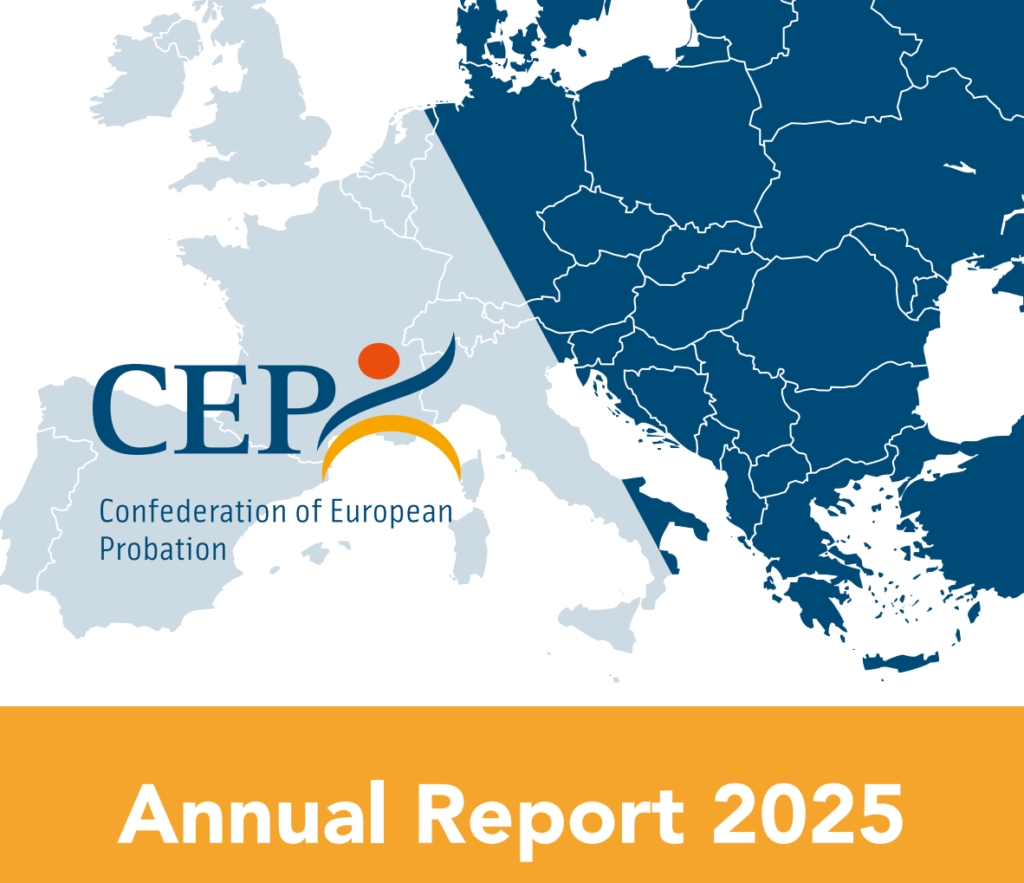
The Confederation of European Probation (CEP) has published its Annual Report 2025, showcasing a year marked by growth, cooperation, and continued commitment to strengthening probation across Europe.
Bringing together more than 100 member organisations across 42 countries and 59 jurisdictions, CEP continued to serve as a central platform for knowledge exchange, professional development, and collaboration within the European criminal justice field.

Uncategorized
ProtectEU: Commission presents new counterterrorism agenda
07/04/2026
On 26 February 2026, the European Commission presented ProtectEU, a renewed EU counterterrorism agenda aimed at strengthening the Union’s capacity to prevent, detect and respond to evolving terrorist threats.
Probation in Europe
New Vodcast Episode: Jana Spero Kamenjarin on the Confederation of European Probation (CEP)
07/04/2026
The 19th episode of Division_Y features Jana Spero Kamenjarin, Secretary General of the Confederation of European Probation (CEP), based in Utrecht, the Netherlands.

Electronic monitoring
Electronic Monitoring in Europe: Insights from the 13th Electronic Monitoring conference Questionnaire
30/03/2026
The 13th Electronic Monitoring (EM) conference Questionnaire has now been released, offering a comprehensive overview of how EM is applied across Europe today.ion.
CEP members
New CEP member: Guernsey Probation Service
25/03/2026
In recent weeks, CEP has interviewed individual members and representatives of the new member organisations that joined CEP at the beginning of 2026. In these interviews, the new member organisations or individual members will share information on why they decided to become members, how they would like to contribute to the development of CEP and many more.
Enjoy reading!
Probation outside Europe
Recap: CEP and APPA webinar
25/03/2026
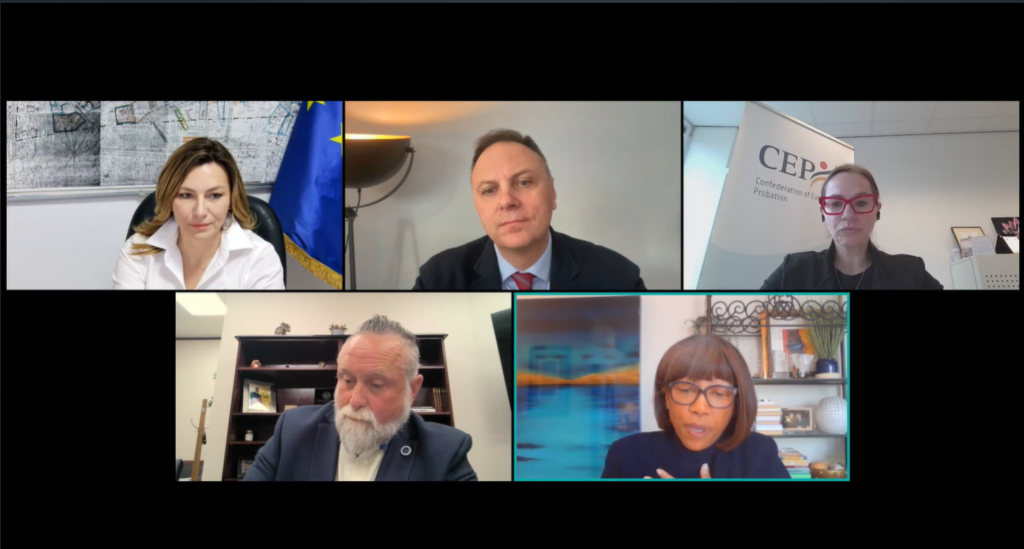
Confederation of European Probation (CEP) and American Probation and Parole Association (APPA) hosted the second joint webinar on 24 March 2026, this time on “Integrity of Performance: Ensuring Meaningful and Ethical Outcomes”.
The overarching theme of integrity of performance was explored through two distinct perspectives on this fundamental concept.
Subscribe to our bi-monthly email newsletter!
"*" indicates required fields
- Keep up to date with important probation developments and insights.