

Previous Article
News
Electronic court sessions: “In his own environment the client was able to better express himself”
An article written by Martine Koenders, probation officer and official contact for TBS ¹ at Tactus, one of the Dutch probation institutions for addicted offenders.
Digital court hearing
A digital court hearing: until recently this sounded like something for the future. However, the corona crisis has accelerated electronic working and Martine has already experienced twice what it is like to attend a TBS session via video calling. “It is special to do it this way and it was not really disappointing,” is her first opinion.
Seeing the client’s face
“We all tested the connection before holding the first official digital court hearing. Not unnecessarily as in the beginning things did not always work so well. However once the technical problems were solved, the system was actually quite pleasant to work with. Instead of traveling to court, I was now sitting in my daughter’s colourful room – of course with a neat white wall in the background. I have got used to cameras and feel no hesitation anymore to place myself in front of them. What immediately struck me compared to a normal session, was that I could now see everyone’s faces. Normally, for example, I sit next to my client and I can’t see his or her face properly, but now I could, and it made me realize much better how he or she was doing at that very moment. ”
Familiar environment
The new way of working also had advantages for clients. “One client has a mild intellectual disability and lives in an institution. Normally the trip to court would put him under a lot of stress, while now he could stay in his own familiar environment with two supervisors in the background. This was much easier for him and he was therefore able to better express himself. Another session had already been postponed twice due to Corona, so the client was extremely happy that it could now finally take place in this electronic way. This client was in the office of his lawyer during the hearing. The preventive custody was terminated without further conditions, so that ended well for him. ”
Miscommunication
Despite the advantages, such as less travel time, Martine thinks that not every case is suitable for digital treatment. “The specific TBS sessions that I attended were doable, but I think it might be less suitable for certain criminal cases. By sitting together in court everyone is in the same situation and there is more interaction. Now there was a case, for example, in which a client had misunderstood a question from the public prosecutor due to some noise on the line and this quickly led to miscommunication. These are things we need to be carefully aware of. ”
Conditions
“I think it is important to investigate whether the digital court sessions can be continued after corona times. It saves a lot of time not needing to travel all over the country, but it is of great importance that the frameworks and (pre)conditions are clear. What to do in what kind of cases and what to avoid? How to ensure a stable connection? How to guarantee safety? All those kind of things… However as far as I’m concerned, there is certainly a future in it.”
¹ TBS is a special measure that courts can impose on people who suffer from a personality disorder and/or a serious mental health illness and have committed a serious crime.

Related News
Keep up to date with the latest developments, stories, and updates on probation from across Europe and beyond. Find relevant news and insights shaping the field today.
Recap
Electronic monitoring, Technology
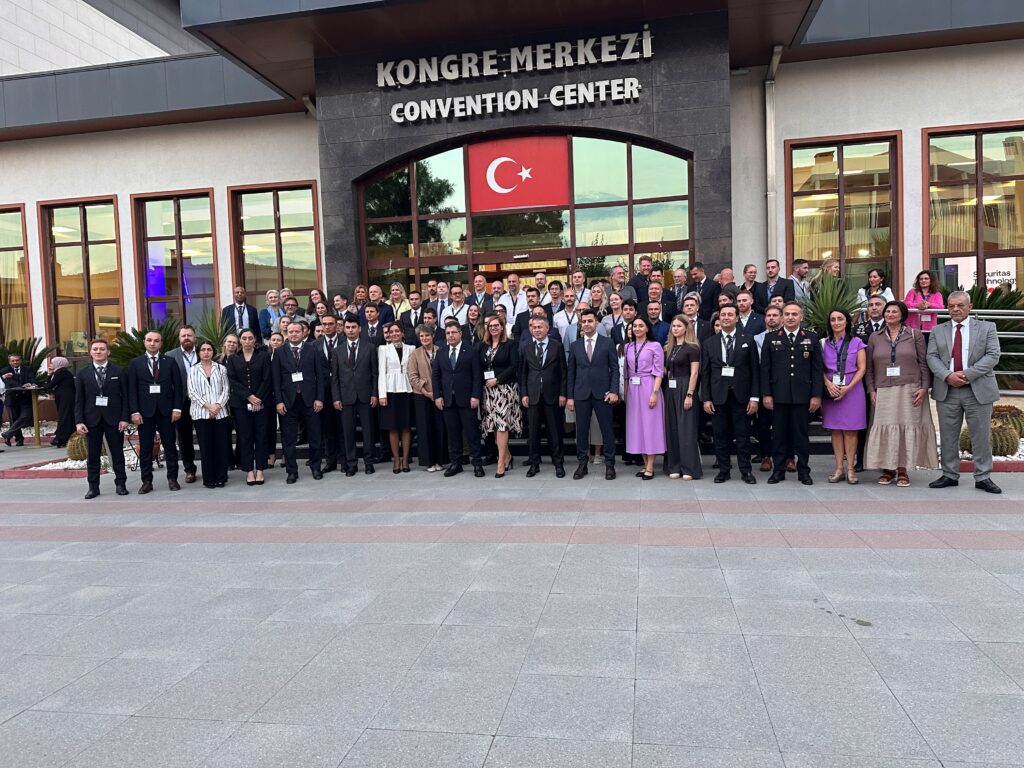
14th Electronic Monitoring Conference, Electronic Monitoring in a Changing World – Perception vs Reality
08/10/2026
On 6-8 October 2026, Antalya hosted the 14th Electronic Monitoring Conference “Electronic Monitoring in a Changing World – Perception vs Reality”. More than 350 participants coming from 32 countries across Europe and worldwide representing probation services, Ministries of Justice, victims´ services, EM providers, researchers as well as local participants representing the Turkish Prison and Probation Service gathered to discuss how electronic monitoring (EM) is understood by all stakeholders involved including the victims and the public, and how these perceptions compare to the evidence and experiences of those affected. While the gap between perception and reality in electronic monitoring has been recognised for over a decade, the rapid expansion of EM into areas such as victim protection, high-risk supervision and digital innovation has brought new challenges and questions to the forefront.
Recap
ITSCCS
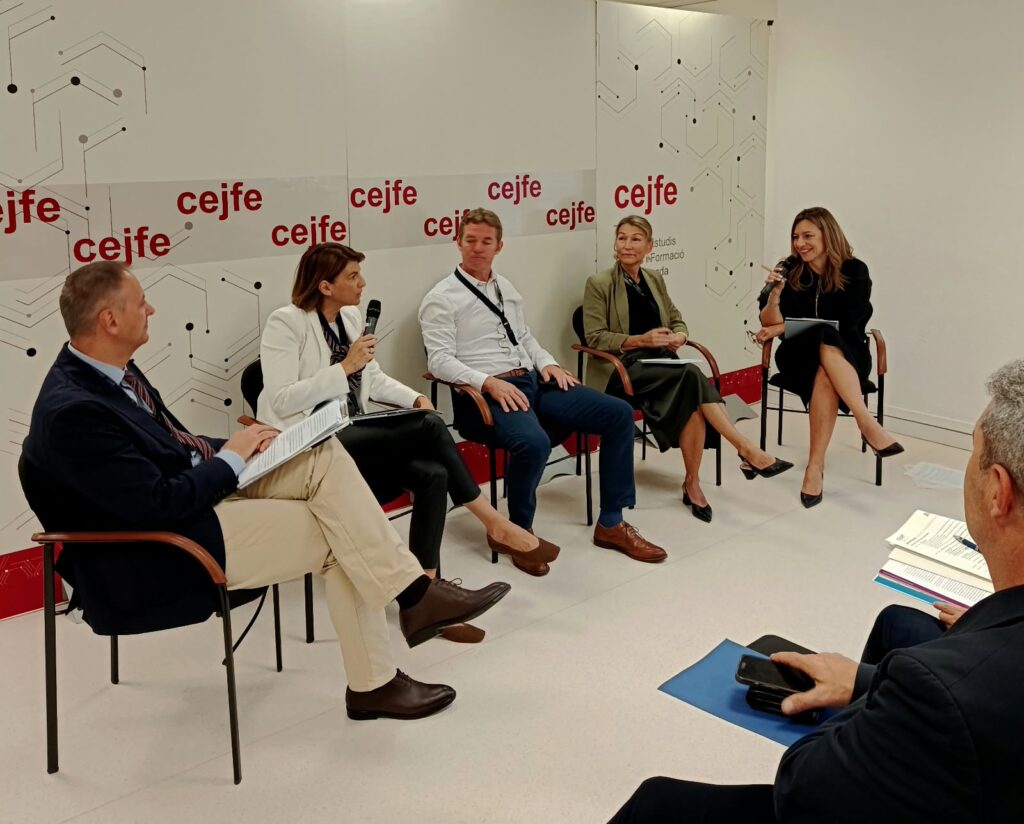
Core Correctional Skills in Digital Probation: highlights from the 6th ITSCCS in Barcelona
05/10/2026
The sixth International Training School on Core Correctional Skills (ITSCCS) took place in Barcelona from 28 September to 2 October 2026, bringing together 26 participants for a week of learning, practical training and international exchange. Organised by the Confederation of European Probation (CEP) and the Centre for Legal Studies and Specialised Training (CEJFE), the programme focused on “Clicks and Empathy: Core Correctional Skills in Digital Probation.”
Recap
Framework Decisions
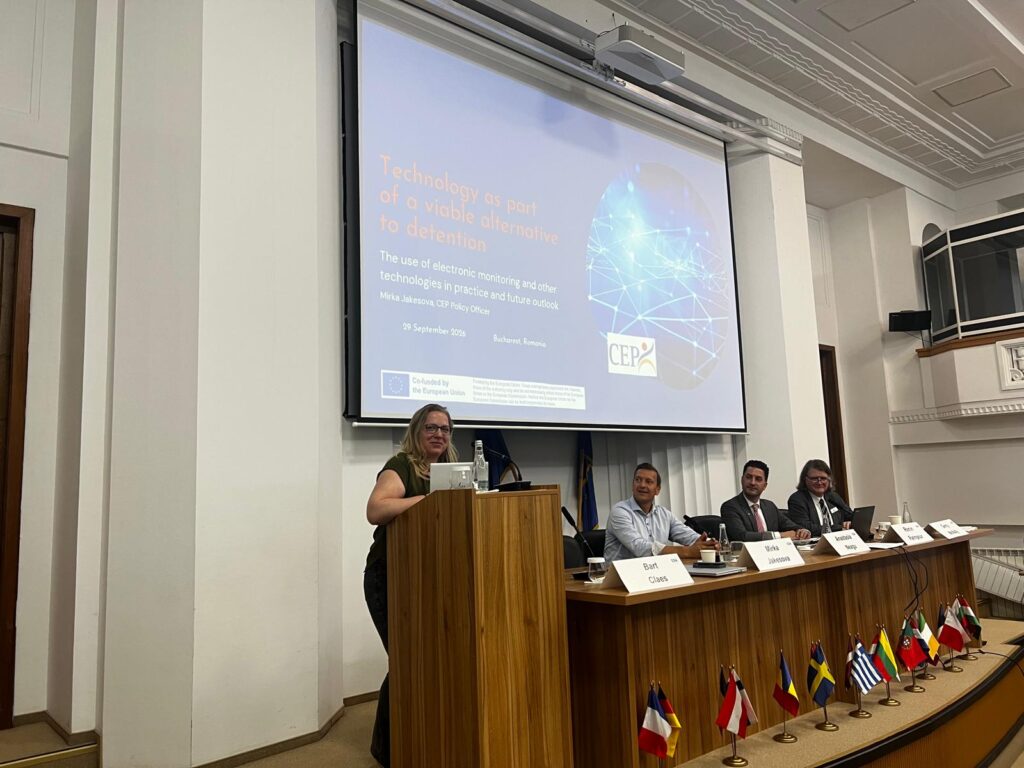
Recap: ERA workshop on Framework Decisions 829 and 947 in Bucharest
02/10/2026
CEP Vice-President Daniel Danglades, Ambassador Gerry McNally and Policy Officer Mirka Jakesova participated in the Seminar on Framework Decisions 829 and 947 and their Impact on Alternatives in the EU organized under the EU project run by the Academy of European Law on 28-29 September in Bucharest, Romania. The seminar brought together judges, prosecutors, probation practitioners, academics, and policy experts to discuss the growing role of alternatives to detention within European criminal justice systems.
New
CEP
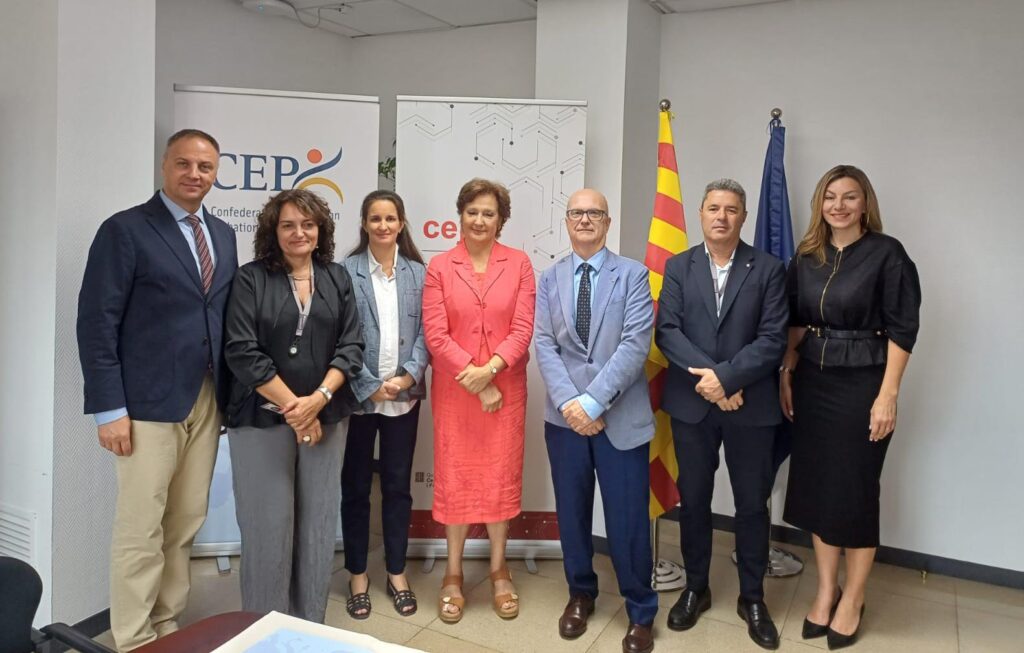
CEP and Catalan justice leaders reaffirm longstanding cooperation
29/09/2026
Representatives of the Confederation of European Probation (CEP) met with senior officials from the Catalan Department of Justice and Democratic Quality in Barcelona on 28 September 2026, alongside the opening of the sixth International Training School on Core Correctional Skills. The meeting offered an opportunity to recognise a longstanding partnership and discuss its continued development.
Updated

Mental Health
DEADLINE EXTENDED: Call for Pilot Implementation of the European Mental Health Training Curriculum
29/09/2026
Good news for CEP members! Following requests from our members, CEP has extended the deadline to apply for the pilot implementation of the European Mental Health Training Curriculum for Probation Officers.
Recap
ITSCCS, Technology
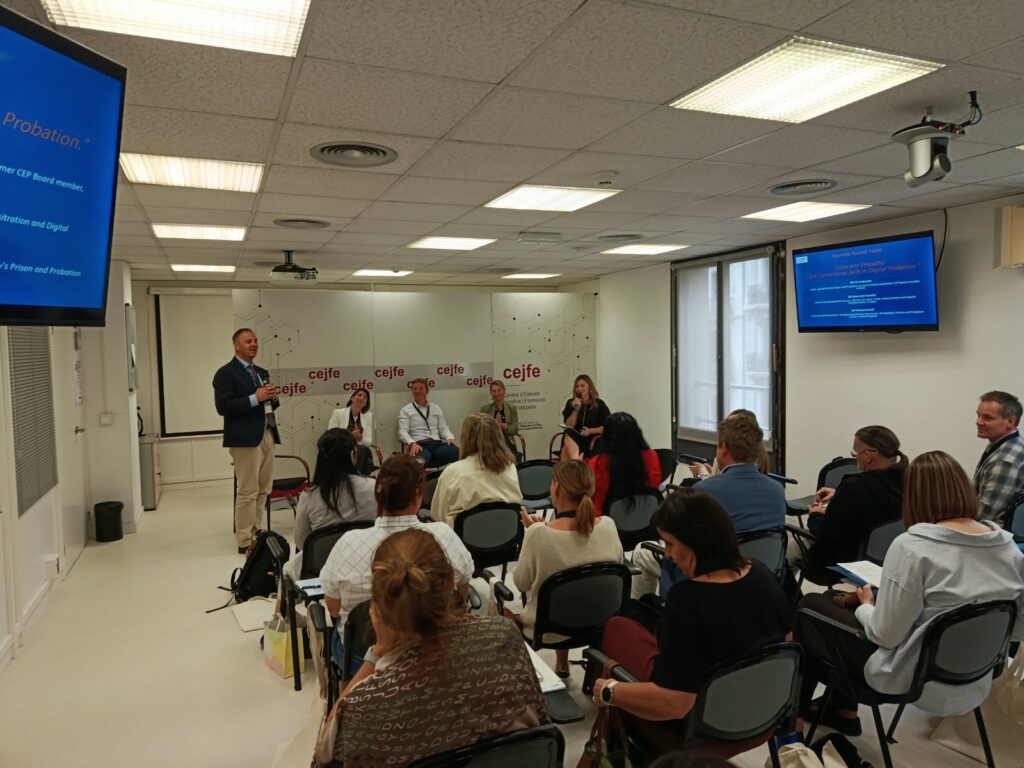
6th International Training School opens in Barcelona with a focus on digital probation
28/09/2026
How can probation professionals use new technologies in their interactions while building trust, showing empathy and supporting change? This question is at the heart of the sixth International Training School on Core Correctional Skills, which opened in Barcelona on 28 September 2026.
Subscribe to our bi-monthly email newsletter!
"*" indicates required fields
- Keep up to date with important probation developments and insights.