

Previous Article
News
CEP and EGPA team up
CEP and EGPA, the European Group for Prisoners Abroad, have joined forces. Since last March, EGPA goes on as the CEP Expert Group on Foreign Nationals. “Thanks to this structure, CEP has now a lot of specialist knowledge on an increasingly important matter in probation”, says Margareta Lindholm, CEP vice-president. “I think this topic will be an issue for all our member organisations in the coming years. Therefore we will focus attention on the specific needs of foreign national prisoners.”
The European Group for Prisoners Abroad (EGPA) was a network of independent organisations which support European citizens imprisoned outside their country of residence and away from their families. “In prison systems in many European countries, working with foreign national prisoners has already a very high priority. Without any doubt this soon will be the case for probation services as well”, predicts Pauline Crowe, Chief Executive of Prisoners Abroad in the UK and one of the members of the CEP Expert Group on Foreign Nationals.
Due to the increased mobility of EU-citizens, the number of foreign national prisoners is rising in every country in Europe. “As the vast majority of CEP member organisations are not active on this topic, I think this cross-national issue may add a new dimension to our probation work”, says Margareta Lindholm, who is the CEP liaison person for the Expert Group on Foreign Nationals. “Working with this new group of offenders prompts us to reflect on our strategy in prevention of re-offending. CEP can support this process now with its Expert Group on Foreign Nationals.”
Although foreign national prisoners are becoming an increasingly important group in the prison and probation sector, EGPA has been struggling to find exposure. “Our network consists of mainly small organisations”, explains Pauline Crowe. “We feel that we can strengthen the work of our network partners by sharing our knowledge more widely. By becoming the CEP Expert Group on Foreign Nationals, we can achieve that. If a member organisation of CEP has a request for information on foreign national prisoners, we are happy to respond it.”
The new expert group of CEP will make a name for itself when from the 16th until the 17th of October an international workshop will be held on foreign national prisoners. “The title of the workshop is ‘Foreigners in European prisons: sharing best practice’. It will be held in Nieuwersluis, in the Netherlands”, Pauline Crowe says. As soon as we know more about the workshop, we will inform CEP members through the newsletter.”

Related News
Keep up to date with the latest developments, stories, and updates on probation from across Europe and beyond. Find relevant news and insights shaping the field today.
New

Electronic monitoring
Electronic Monitoring in Europe: Insights from the 13th Electronic Monitoring conference Questionnaire
30/03/2026
The 13th Electronic Monitoring (EM) conference Questionnaire has now been released, offering a comprehensive overview of how EM is applied across Europe today.ion.
New
CEP members
New CEP member: Guernsey Probation Service
25/03/2026
In recent weeks, CEP has interviewed individual members and representatives of the new member organisations that joined CEP at the beginning of 2026. In these interviews, the new member organisations or individual members will share information on why they decided to become members, how they would like to contribute to the development of CEP and many more.
Enjoy reading!
Recap

Probation outside Europe
Recap: CEP and APPA webinar
25/03/2026
Confederation of European Probation (CEP) and American Probation and Parole Association (APPA) hosted the second joint webinar on 24 March 2026, this time on “Integrity of Performance: Ensuring Meaningful and Ethical Outcomes”.
The overarching theme of integrity of performance was explored through two distinct perspectives on this fundamental concept.
Recap
Communication and Awareness-Raising
Recap: Opening Doors to Second Chances: The Mission and Impact of Yellow Ribbon Run
25/03/2026
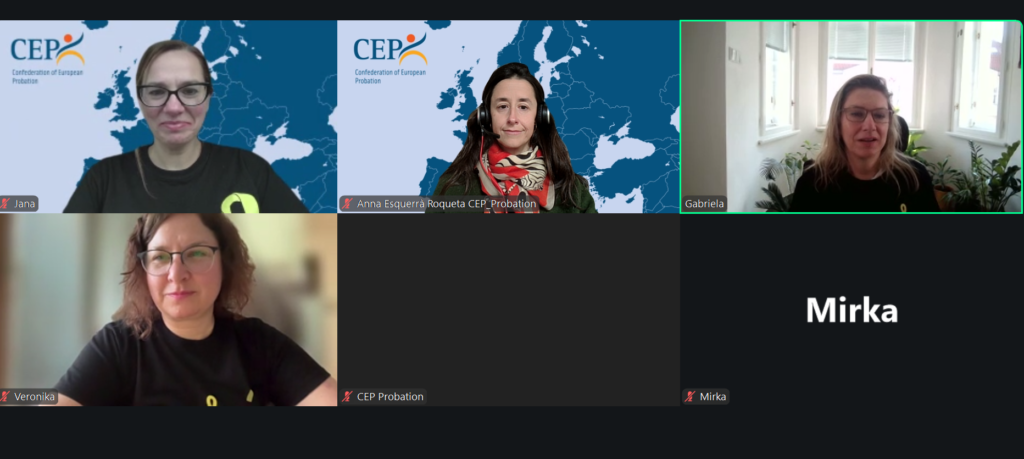
On Thursday 19 March, CEP hosted the second webinar of 2026 on the topic of Alternatives to Detention. The session led by Dr. Gabriela Slovakova from the Czech Probation and Mediation Service titled „Opening Doors to Second Chances: The Mission and Impact of Yellow Ribbon Run“ introduced the Yellow Ribbon project with a powerful message of second chances and fair opportunities.
New
CEP Board
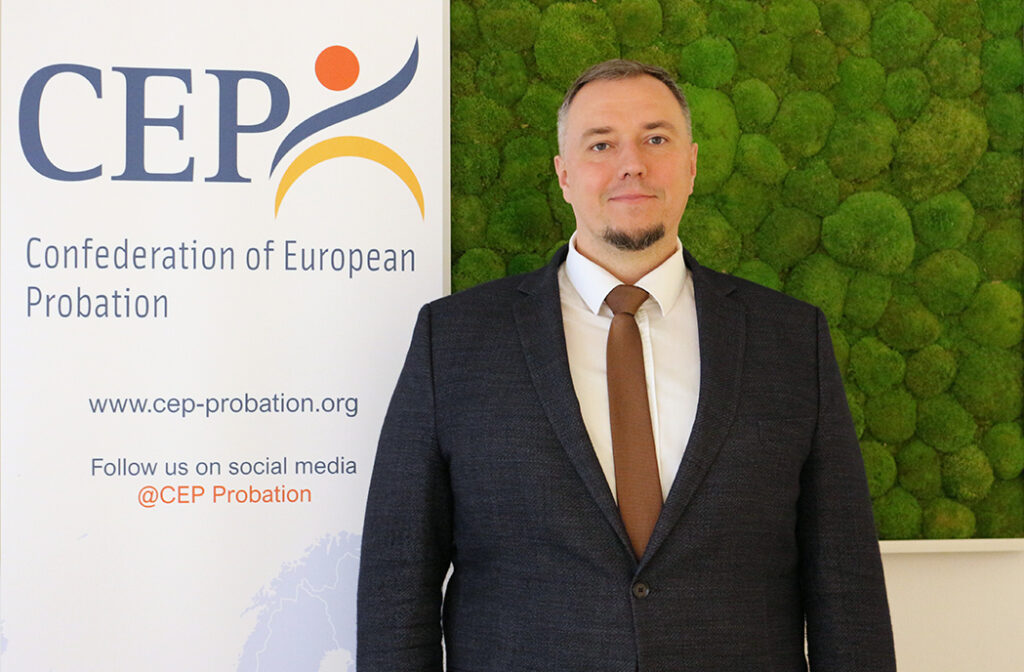
Interview with new CEP board member Žilvinas Miliauskas
17/03/2026
During the General Assembly in Austria, a new CEP Board got elected for the upcoming three years. In the coming weeks we will publish interviews with all newly-elected board members where they will share information on their professional background, how they would like to contribute, what challenges lie ahead and many more.
Enjoy reading!
Recap

Violent Extremism
Recap: Expert Group meeting on Violent Extremism
16/03/2026
On 12–13 March 2026, the Expert Group on Violent Extremism convened for an in‑person meeting in Bucharest, Romania. Hosted at the University of Bucharest, the meeting brought together practitioners and representatives from across Europe to finalise the overview of best practices for preventive interventions targeting juveniles and young adults up to the age of 26 under probation. Building on the extensive discussions and progress made in 2025, the group worked collaboratively to bring the document to completion.
Subscribe to our bi-monthly email newsletter!
"*" indicates required fields
- Keep up to date with important probation developments and insights.