

Previous Article
News
A successful international expert event on radicalisation and violent extremism
Radicalisation and the dangers caused by extremists to European countries are a paramount concern of the criminal justice system. This international conference for experts in the field offered an opportunity to review the development of interventions and set the agenda for future collaborative work.
Objectives
- To examine the learning from programmes to combat radicalisation in prisons and probation
- To consider the benefits of multi-disciplinary collaboration and restorative justice for future developments
- To identify the future priorities and needs of policy and practice.
Outcomes
- Learning points from specific programmes identified
- Examination of the benefits of integrating approaches through workshops involving different professionals (prisons, probation and restorative justice)
- Dissemination of the presentations, findings and recommendations via the CJPE members’ websites
- To propose next steps for the Criminal Justice Platform Europe’s contribution to the radicalisation agenda.
The Platform organised this event on radicalisation and extremist violence because the issue was becoming an urgent priority for its members and to provide an opportunity to review progress using expert perspectives.
Terrorist attacks within the EU territory over the last decades, combined with the still unresolved tensions in various parts of the globe, have sparked international concern about radicalisation processes and calls for a more incisive and concerted response from the Member States. International efforts have been focussing particularly on preventive measures to tackle the problem of radicalisation within prisons, as a fertile setting for indoctrination and recruitment of vulnerable subjects, and on efforts to manage foreign fighters coming back from combat zones to EU countries.
The creation of the EU Radicalisation Awareness Network (RAN) in 2011, an umbrella of practitioners and local actors involved in countering violent radicalisation, attests the strong commitment of EU bodies to tackle the problem of radicalisation and the negative consequences it poses to freedom, security and justice of the citizens in the EU. The European Agenda on Security of 28 April 2015 stresses the link between extremist violence and radicalisation processes, which may lead fighters from Europe to travel abroad to train, fight and commit atrocities in combat zones, jeopardising the internal security of the EU on their return. In addition to further research on the topic of radicalisation and programmes for the promotion of youth inclusion, the European Agenda on Security 2015 focuses in particular on strategies supporting de-radicalisation processes in prison settings.
In line with this growing international concern related to radicalisation and violent extremism and preceding the High-Level Ministerial Conference on radicalisation taking place in Brussels, the Criminal Justice Platform Europe (CJPE) organised a one-day conference entitled “RADICALISATION AND VIOLENT EXTREMISM – Disengagement, prevention, monitoring” at the Centre for Legal Studies and Specialized Training in Catalonia on Wednesday, 14 October 2015. In the three plenary sessions experts, policy-makers and practitioners from different EU countries reflected on the concept of radicalisation, exchanged national policies implemented to prevent further radicalisation processes within prison settings or probation and shared successful programmes facilitating disengagement strategies for radicalised people. The participants and speakers had the chance to discuss some of the issues raised during the plenaries sessions in more detail in two parallel workshop sessions. Participants and speakers engaged in very lively debates, sharing further details of experiences and practices in the different contexts. Before closing the event with the presentation of Mr Marc Ceron, President of CEP, the round table provided an additional space for dialogue, bringing in new ideas which had emerged during the event and stimulating participants’ further reflection.
Presentations and other documents:
Documents
Summary Report Radicalisation Experts’ Conference Barcelona October 2015
Radicalisation Plenary session 1
Radicalisation Plenary session 2
Radicalisation Plenary session 3
Notes of Radicalisation Workshop 1
Notes of Radicalisation Workshop 2
Notes of Radicalisation Workshop 3
Notes of Radicalisation Workshop 4
Presentations
‘Presentation Carys Keane ‘Provisions for Extremist Offenders and those of Concern’
Presentation Herald Fosker ‘Testimony’
Presentation Julia Reinelt ‘Violence Prevention Network. A successful approach to deradicalisation’
Presentation Rekha Grue Larsen ‘The Danish Prison and Probation Service’

Related News
Keep up to date with the latest developments, stories, and updates on probation from across Europe and beyond. Find relevant news and insights shaping the field today.
New

Technology
Registration deadline approaching: Join CEP’s final workshop of 2026 on technology in probation
22/10/2026
📢 Have you registered yet? CEP’s final workshop of 2026 takes place on 24 November in Barcelona, bringing together professionals to explore how technology is being used across probation services in Europe.
The Workshop on Alternatives to Detention and Technologies: Deep Diving into New Trends will look beyond artificial intelligence to examine the different ways technology is shaping probation practice, from staff training to working with clients and collaborating with other criminal justice partners.
Recap

Directors General Meetings
CEP Leadership Excellence Training: strengthening leadership and cooperation across Europe
22/10/2026
The CEP Leadership Excellence Training, held on 20–21 October in Zagreb, Croatia, brought together Directors General and senior probation managers from 11 European countries for a two-day interactive programme focused on leadership, communication, staff development, and international cooperation.
New

CEP
Call for Proposals: Evaluation of CEP Expert Groups
21/10/2026
On behalf of Ms. Jana Špero Kamenjarin, CEP Secretary General, it is my pleasure to invite you to submit a proposal to conduct an evaluation within the CEP work programme.
Recap

Uncategorized
CEP at UNODC: Contributing to the Development of Probation Services Worldwide
19/10/2026
The Confederation of European Probation (CEP) was represented by its Secretary General, Jana Špero Kamenjarin, at the Expert Group Meeting on the Establishment of Probation Services and Probation Practices, organised by the United Nations Office on Drugs and Crime (UNODC) and held at the Vienna International Centre (VIC) from 12 to 14 October 2026.
Recap
Electronic monitoring, Technology
14th Electronic Monitoring Conference, Electronic Monitoring in a Changing World – Perception vs Reality
08/10/2026
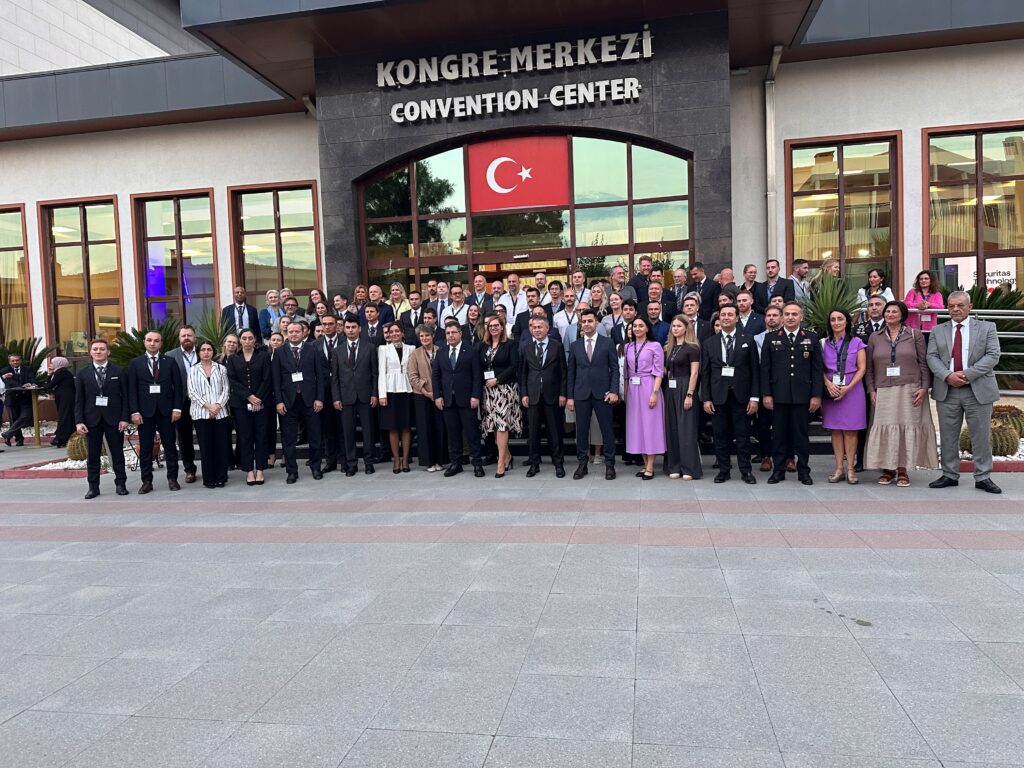
On 6-8 October 2026, Antalya hosted the 14th Electronic Monitoring Conference “Electronic Monitoring in a Changing World – Perception vs Reality”. More than 350 participants coming from 32 countries across Europe and worldwide representing probation services, Ministries of Justice, victims´ services, EM providers, researchers as well as local participants representing the Turkish Prison and Probation Service gathered to discuss how electronic monitoring (EM) is understood by all stakeholders involved including the victims and the public, and how these perceptions compare to the evidence and experiences of those affected. While the gap between perception and reality in electronic monitoring has been recognised for over a decade, the rapid expansion of EM into areas such as victim protection, high-risk supervision and digital innovation has brought new challenges and questions to the forefront.
Recap

ITSCCS
Core Correctional Skills in Digital Probation: highlights from the 6th ITSCCS in Barcelona
05/10/2026
The sixth International Training School on Core Correctional Skills (ITSCCS) took place in Barcelona from 28 September to 2 October 2026, bringing together 26 participants for a week of learning, practical training and international exchange. Organised by the Confederation of European Probation (CEP) and the Centre for Legal Studies and Specialised Training (CEJFE), the programme focused on “Clicks and Empathy: Core Correctional Skills in Digital Probation.”
Subscribe to our bi-monthly email newsletter!
"*" indicates required fields
- Keep up to date with important probation developments and insights.