

Previous Article
News
Inga Zandberga from Latvia about the COVID-19 challenges
Year 2020 for the State Probation Service of Latvia brought many challenges and changes. Reflecting on the past year and current working conditions probation officer and manager Inga Zandberga recognizes both drawbacks and gains.
Challenges and changes
Like most probation officers in Latvia, Inga is responsible for wide scope of activities, including preparation of pre-sentence and parole reports, managing supervision cases as well as coordination of community work service orders. Additionally, she has also responsibilities of group-work probation program facilitation and victim-offender mediation. At last, but not least, Inga is leading one of the divisions of the Kurzeme District Probation Office and is a manager of 6 probation officers. So, when COVID hit, she had to deal both with considerable shift in client case management as well as organizing work of her colleagues under new circumstances. Now, after eleven months of adapting to changing pandemic rules, Inga reflects on present situation at work.
Supervision
“In the first place it affected the supervision. At the moment I am managing 14 client cases in supervision. The face-to-face meetings are continued only with high, and sometimes – medium risk clients, if they have issues with violent behaviour. With other clients the contact is maintained via video- and phone calls. It requires a creative approach. Not always the video call is possible, but I am trying to organize it as often as possible. It is not only more personal and humane to see each other during conversation, but also more informative. Sometimes you can draw useful conclusions just by looking at client during the conversation. Meeting clients at their place of residence has been suspended as well, with only exception for clients of electronic monitoring programme (equipment installation). In every case I and my colleagues are reassuring the clients that supervision is going on and they are not left by themselves. The measures are taken to maintain the relationships built before. There are also other procedures largely unaffected by COVID restrictions. For instance, probation officer set forth their duty on checking for client’s compliance to curfew rules. Now we have to put on masks and carefully keep the distance, but otherwise it’s like before.”, says Inga. “I am also responsible for organizing community work service which was suspended, but now it is mostly executed as before. These works are organized outdoors and, as possible, avoiding close contact with other people.”
Volunteering program
By contrast, the volunteering program underwent serious changes. Inga is a coordinator of probation mentoring program, where volunteers are supporting young offenders. “Since November there are no more real-life meetings between volunteers and clients. Instead, the bond between mentors and mentees is kept by online conversations and chat. But not always it is enough as the client’s need for human interaction is growing. I got the impression that lately more clients feel depressed. Some had lost their jobs during pandemic and loneliness is becoming bigger problem. Mentor’s role is being support person who provides reliance and encouragement in dealing with daily problems. Now it is much more challenging to do it by phone and video calls.”
Another duty of Inga is facilitation of probation programs. During early autumn 2020 new annual series of probation programs for clients were launched. But the second wave of pandemics in November put an end to them. Now the programs are indefinitely suspended.
More difficult became managing the victim-offender mediation process. Being probation mediator, Inga recognizes that video conferencing in mediation is working as some kind of inferior substitute to face-to-face meetings. The remote conversation has serious drawbacks: “There are more potential issues with confidentiality requirements to deal with, including the identity of participants. The dynamics of online meeting is different and there is less room for sharing personal emotions”, says Inga.

Related News
Keep up to date with the latest developments, stories, and updates on probation from across Europe and beyond. Find relevant news and insights shaping the field today.
New

Others
Applications for the Cambridge MSt in Applied Criminology, Penology and Management are now open
16/09/2026
The Institute of Criminology, Cambridge, have opened up applications for the MSt in Applied Criminology, Penology and Management in the next academic year.
Recap
Probation in Europe
CEP at the Leadership Conference 2026
14/09/2026
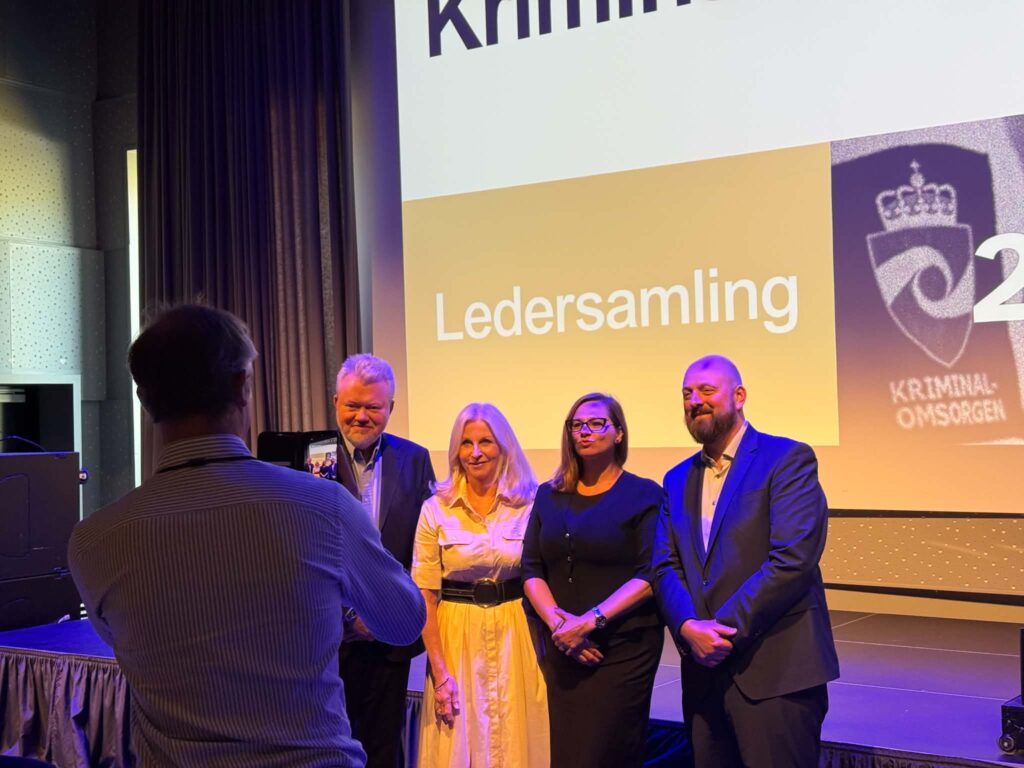
CEP Secretary General Jana Špero Kamenjarin was delighted to participate in the Leadership Conference 2026 of the Norwegian Correctional Service, held on 9–10 September in Oslo.
Recap

Foreign Nationals in Prison and Probation
Recap: Expert Group of CEP and EuroPris, on Foreign Nationals in Prison and Probation (FNPP)
14/09/2026
On 7 and 8 September 2026 the joint Expert Group of CEP and EuroPris, on Foreign Nationals in Prison and Probation (FNPP), came together in The Hague for a valuable exchange of ideas, experiences, and expertise on one of the most important challenges facing prison and probation services across Europe.
New

CEP
Newsletter August 2026 out now
27/08/2026
CEP’s latest newsletter is out now! It includes:
- Approaching deadlines for upcoming events (ITSCCS26, 14th EM and DG leadership training) and the Mental Health curriculum pilot)
- Call for European Probation Journal on the topic of Workload in Probation
- EU documents like SPACE II, revised Victims’ Rights directive and so on
- and much more!
New

Caseload and workload
Do you work in probation? We need your voice!
24/08/2026
As part of its long-standing cooperation with research, CEP invites its members to contribute to a special edition of the European Probation Journal on the topic of Workload in Probation.
New

Alternatives to pre-trial detention, Foreign Nationals in Prison and Probation, Gender Equality, Probation in Europe
SPACE II report is now available
24/08/2026
The use of community sanctions and measures that allow individuals to remain in the community – also known as alternatives to imprisonment – continues to grow overall in Europe, although at a moderate pace, according to the latest Council of Europe annual penal statistics on persons under the supervision of probation agencies (2025 SPACE II survey).
Subscribe to our bi-monthly email newsletter!
"*" indicates required fields
- Keep up to date with important probation developments and insights.