

Previous Article
News
CEP Awards winner in the spotlight part 2: Public Protection Award
In October 2016, CEP launched the CEP awards, a celebration of outstanding contributions to probation. The awards scheme reflects CEP’s vision: to contribute to safer communities by rehabilitating and reintegrating offenders and providing the best possible interventions to reduce re-offending and the impact of crime. Second of 4 categories is the Public Protection Award. Winner is the Resettle project – Intensive Intervention Risk Management Service by the National Probation Service in England.
Former offenders often need intensive coaching for issues like housing, education, training, employment and budgeting. But also to prevent the risk of re-offending, coaching is key. The project Resettle is a partnership between the National Probation Service, local police force and the local Health Trust in Liverpool, working intensively with male offenders on release from prison. All have complex, social and psychological needs and are at high risk of further offending. Typically they will have served long prison sentences having committed serious violent or sexual offences. They have a high level of interpersonal and social difficulties associated with personality disorder diagnosis. The overall aim of the project is to enhance public protection and risk reduction by engaging and working productively with a “hard to reach” group of men, many of whom have struggled to abide by licence conditions, spent significant periods in segregation and on release would have been recalled back to custody. The majority have had early experiences of neglect, abuse and trauma leading their struggle to trust others; to the extent that they often have highly conflictual prior relationships with authority.
Safe, supportive and optimistic relationships
The project has been operational since 2008 and has consistently demonstrated that it is possible to engage, safely manage and enhance the wellbeing and social integration of people with complex needs and risks. The service model emphasises the need for the development of safe, supportive and optimistic relationships which give the men a sense of their own ability to desist from offending and live fulfilling lives. Risk management is done alongside therapeutic work in the firm belief that these are equally important.
“Through the gate” service
Work with the men starts at least 6 months prior to their release from prison with a focus on relationship building, developing a personalised risk management and intervention plan to best meet their needs and mutually agreed goals. Once a participant agrees to come to the project, their attendance becomes a licence condition. The project adopts a “through the gate” service with participants picked up from the prison gate, with a high level of support offered on release. They attend for up to 4 days per week during which they participate in groupwork, individual keywork sessions and activities to support their social integration and steps to independent living. The project creates a strong sense of community which encourages the men to comply with their licences. They are encouraged and supported to take on new roles including participating in communal cooking of lunches, describing the project to visitors and looking after the garden. The week starts with a whole Community meeting at which aspects relating to safe running and maintenance of the project is discussed. Additonally progress and challenges of participants are discussed and men are encouraged to support each other in meeting their goals.
“People are there for me when I’m struggling”
Since the commencement of the project the Resettle team has received over 200 referrals and has worked with 68 participants. The project is funded to work with 20 men in the community and a further 25 in custody at any one time. The men attend for up to two years. Risk management and responsivity is enhanced through an out of hours crisis line. A recent review of the effectiveness of the crisis line found it had successfully managed to avert crisis, offer support to participants at pivotal moments and very little abuse of it’s use.
Recent feedback from a consultation group of service users highlighted comments such as “staff are there for me when I am struggling” “They trust you and you trust them” , “it is the first time I have had people around who you can ask for help, which is not easy to do ” and ” I am 47 years old, it can feel embarassing to admit you are struggling, but having support and being treated like an adult has helped me cope”.
Evaluation
The Resettle Team is very passionate about the work it undertakes to bring about change to an individual’s life and most importantly in the effective management of risk. This is demonstrated in the joint approach to delivering the sentence plan by the keyworker team, comprising of the Offender Manager and a Health worker through case consultation.
Resettle has been independently evaluated by a randomised control trial which completed in 2013. This lent the support to the level of intensity of the service delivery model, confirming that the population the project works with have a high level of need, risk and complex mental health difficulties. The research found a significant difference in the rate of self reported offending between those who attended Resettle, those in the control group (i.e those attending normal probation supervision) and those who were randomised into Resettle but never attended, e.g not being released prior to the research ending. The Resettle group reported significantly lower rates of further offending.
The CEP award for the category of Public Protection was handed at the CEP Conference on Alternatives to detention in Bucharest by Mr. Mihai Dima, General Director of the Romanian National Probation Directorate and Mr. William Rentzmann, board member of CEP and member of the CEP Awards Jury. The award received by Ms. Sandra Oluonye, Assistant Chief Officer at the National Probation Service.

Related News
Keep up to date with the latest developments, stories, and updates on probation from across Europe and beyond. Find relevant news and insights shaping the field today.
Recap
Electronic monitoring, Technology
14th Electronic Monitoring Conference, Electronic Monitoring in a Changing World – Perception vs Reality
08/10/2026
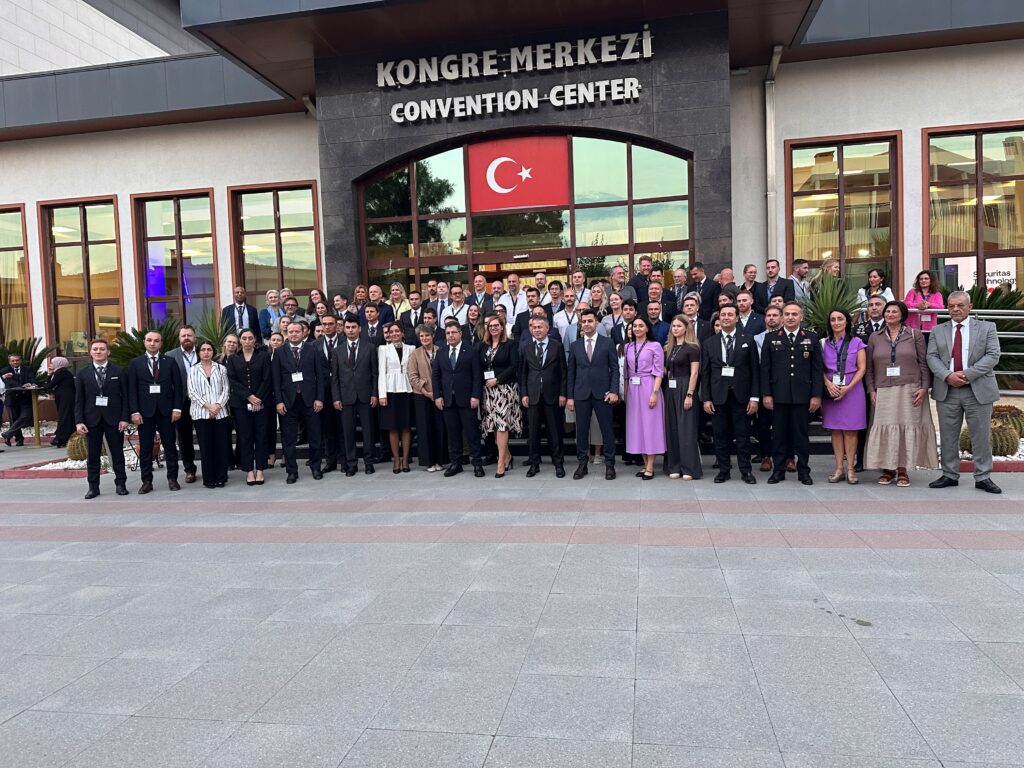
On 6-8 October 2026, Antalya hosted the 14th Electronic Monitoring Conference “Electronic Monitoring in a Changing World – Perception vs Reality”. More than 350 participants coming from 30 countries across Europe and worldwide representing probation services, Ministries of Justice, victims´ services, EM providers, researchers as well as local participants representing the Turkish Prison and Probation Service gathered to discuss how electronic monitoring (EM) is understood by all stakeholders involved including the victims and the public, and how these perceptions compare to the evidence and experiences of those affected. While the gap between perception and reality in electronic monitoring has been recognised for over a decade, the rapid expansion of EM into areas such as victim protection, high-risk supervision and digital innovation has brought new challenges and questions to the forefront.
Recap
ITSCCS
Core Correctional Skills in Digital Probation: highlights from the 6th ITSCCS in Barcelona
05/10/2026
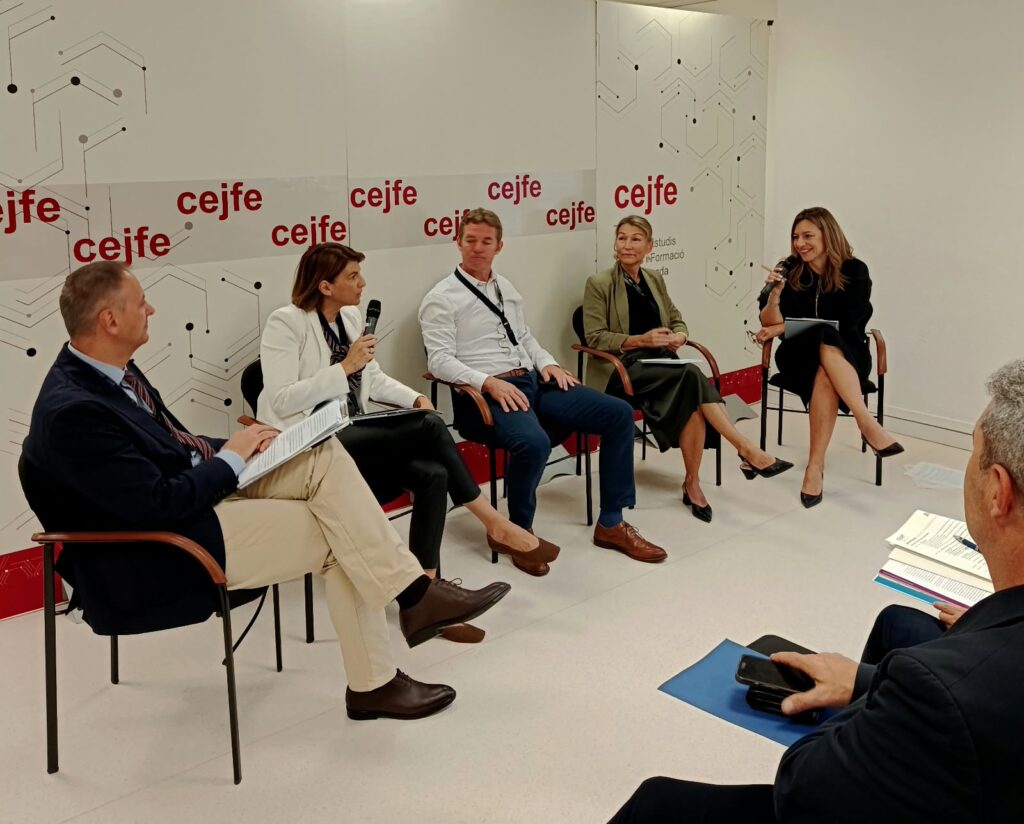
The sixth International Training School on Core Correctional Skills (ITSCCS) took place in Barcelona from 28 September to 2 October 2026, bringing together 26 participants for a week of learning, practical training and international exchange. Organised by the Confederation of European Probation (CEP) and the Centre for Legal Studies and Specialised Training (CEJFE), the programme focused on “Clicks and Empathy: Core Correctional Skills in Digital Probation.”
Recap
Framework Decisions
Recap: ERA workshop on Framework Decisions 829 and 947 in Bucharest
02/10/2026
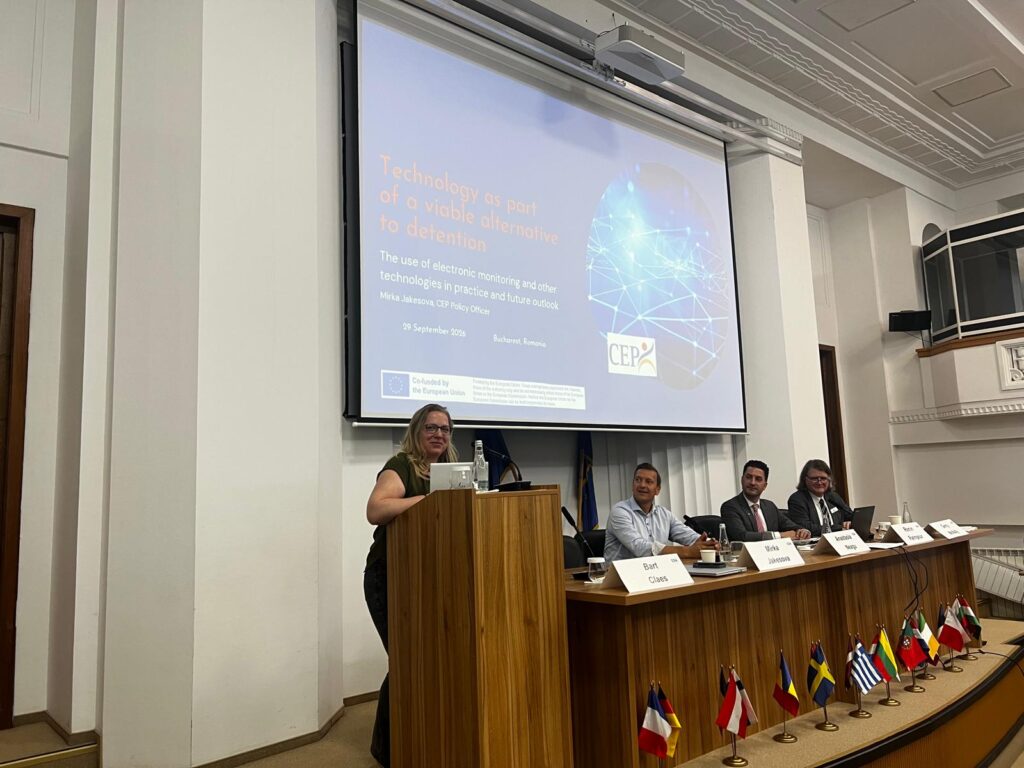
CEP Vice-President Daniel Danglades, Ambassador Gerry McNally and Policy Officer Mirka Jakesova participated in the Seminar on Framework Decisions 829 and 947 and their Impact on Alternatives in the EU organized under the EU project run by the Academy of European Law on 28-29 September in Bucharest, Romania. The seminar brought together judges, prosecutors, probation practitioners, academics, and policy experts to discuss the growing role of alternatives to detention within European criminal justice systems.
New

CEP
CEP and Catalan justice leaders reaffirm longstanding cooperation
29/09/2026
Representatives of the Confederation of European Probation (CEP) met with senior officials from the Catalan Department of Justice and Democratic Quality in Barcelona on 28 September 2026, alongside the opening of the sixth International Training School on Core Correctional Skills. The meeting offered an opportunity to recognise a longstanding partnership and discuss its continued development.
Updated
Mental Health
DEADLINE EXTENDED: Call for Pilot Implementation of the European Mental Health Training Curriculum
29/09/2026
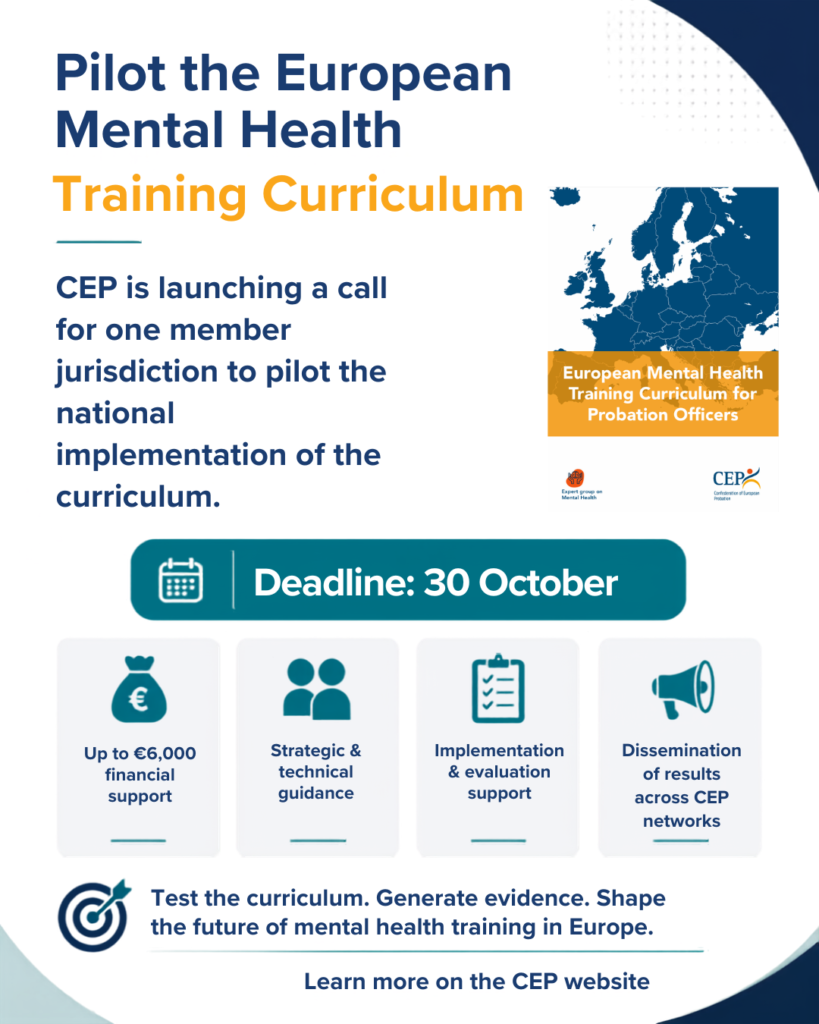
Good news for CEP members! Following requests from our members, CEP has extended the deadline to apply for the pilot implementation of the European Mental Health Training Curriculum for Probation Officers.
Recap
ITSCCS, Technology
6th International Training School opens in Barcelona with a focus on digital probation
28/09/2026
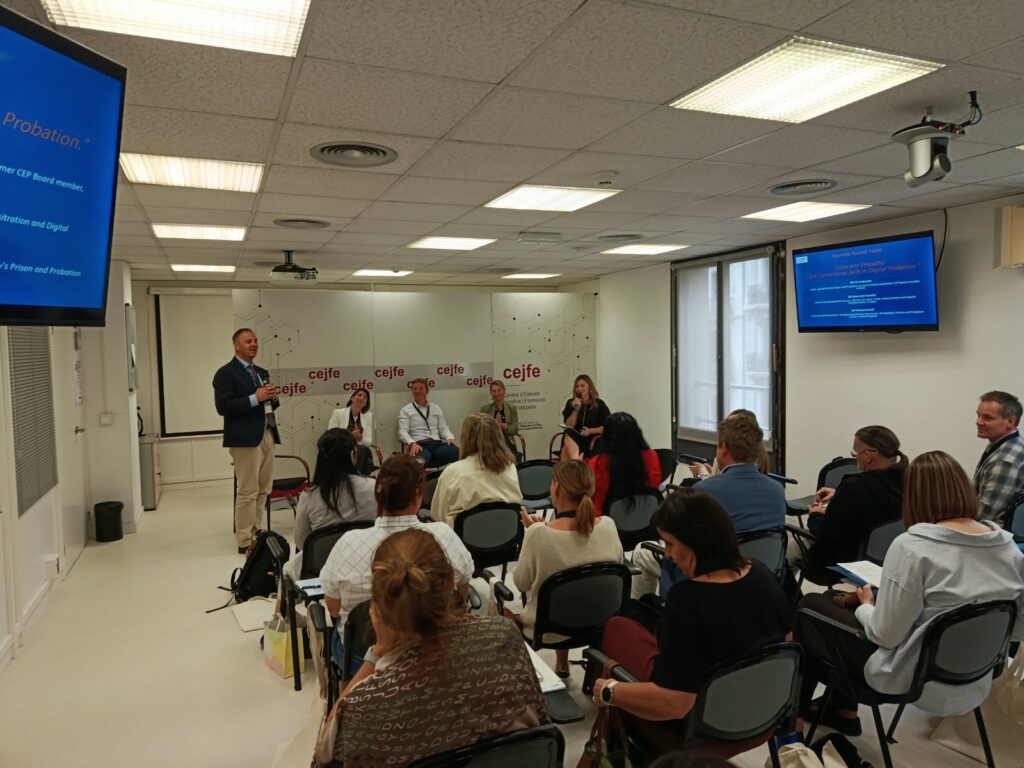
How can probation professionals use new technologies in their interactions while building trust, showing empathy and supporting change? This question is at the heart of the sixth International Training School on Core Correctional Skills, which opened in Barcelona on 28 September 2026.
Subscribe to our bi-monthly email newsletter!
"*" indicates required fields
- Keep up to date with important probation developments and insights.