

Previous Article
News
The Sexual Offender Special Interest Group: achievements, present and future
The CEP Sexual Offender Special Interest Group (SIG) held an expert meeting last October. Why? What was discussed? Time for an interview with chairperson Elizabeth Hayes on a planned European conference, prevention of sexual offences and what has been achieved by the SIG so far.
Why was the expert meeting held?
“I can and will answer that, but I think it is best if we first go back in time. The Sexual Offender SIG was set up in 2012 by then CEP Secretary General Leo Tigges. He asked me to chair it, because of my broad experience in working with sex offenders on strategic, operational and practical levels. We had two main initial goals. The first one was to share experiences between CEP-members, hopefully leading to co-operation and the funding of joint initiatives. The second one was to produce an overview of the assessment tools, risk management, treatment and other interventions for sex offenders across the different probation organisations throughout Europe.”
Did you achieve those goals?
“Yes. Let me start with the overview. Together with Bas Vogelvang, then working for Avans University of Applied Sciences in the Netherlands, I made a comprehensive questionnaire. It consisted of seven questions. The answers to those questions would show not only the current practice regarding sex offenders in the different member states, but also what CEP and the Special Interest Group could do to help these member organisations and improve their results.”
What came out of this overview?
“CEP had 36 members at that time. Twenty of them returned the questionnaire, 54%. A previous CEP questionnaire on probation and mental health had a response of 24%, so we were very pleased. On the other hand, important countries were missing. Some were too busy, it turned out. Others felt that they had not done much in this field and therefore couldn’t contribute enough, so they thought it was best not to participate. Still, the results we did get proved to be very valuable. The overview showed that there was a very diverse landscape. Some member organisations were very advanced in this field, some had only taken the first steps and others were somewhere in between those two categories.”
What about the other goal, setting up joint European projects?
“We did that as well. In Canada an approach had been developed and tested to put circles of volunteers around convicted sex offenders who were conditionally released from prison. It was called Circles of Support and Accountability, COSA in short. The idea is that those volunteers wear two hats. They have to support the sex offender continuously, also in the evening and during the weekends and holiday times, when probation services are not available. But they must also report to the probation service when they see or feel that something isn’t well.”
That sounds like a difficult position for those volunteers?
“Yes, but the volunteers are very well trained, especially in the balance on how to be supportive and on having to act like a policeman at the same time. They are also very well supervised by the Circles Coorrdinator, an employed position. I know of a situation in the United Kingdom where a sex offender’s behaviour became risky: he started following children again. The volunteers reported this and as a result he was recalled to prison. But the volunteers continued to visit him there and when he was released they again formed a circle around him. In the end he was very grateful to them and acknowledged that he needed this kind of external control as well as support.”
How was this COSA approach turned into a European project?
Circles of Support and Accountability was first adopted in the UK. SIG Sexual Offender member Bas Vogelvang then succeeded in securing funds to implement COSA in the Netherlands and also in Flanders. The next step was a bigger European project: Circles4EU. I helped Bas in writing the proposal, in order to include the required expert sex offending subject matter input and as bidding for EU funding is competitive and exacting. The EU funded the project. It involved six countries from Western and Eastern Europe. The project started at the beginning of 2013. Catalonia, Latvia and Bulgaria were the three ‘implementation countries’. Within their two year projects they had to ensure that three Circles had been established and run for at least six months at three different locations in each country. The three ‘orienting countries’ Hungary, Ireland and France, were looking over the shoulder of the three ‘implementation countries’ in order to learn from their experiences and to implement Circles next.”
Did all the ‘implementation countries’ succeed in setting up three circles?
“They did. The European Union, that we were constantly reporting to throughout the project about progress on and achievement of the deliverables and outcomes on all of our goals, told us they were highly satisfied with the Circles4EU project. In my experience, the EU doesn’t do that very often. Of course, when the project and the funding ended at the beginning of 2015, it became more difficult to know what happened in the six countries. There no longer was a project framework in which to discuss and report about this topic anymore. While the Circle4EU project ran, one of the goals was to help the participating countries to set up their own research mechanisms and methodologies, so they could continue to monitore the success of the implementation of the COSA approach and have their research findings inform future developments of COSA in their country. They were also expected within the project to set up funding from within their own country for the period after the EU funding, to sustain their Circles activity.”
What did the SIG Sexual Offenders do after the production of the overview and the Circles4EU project?
“CEP Secretary General Willem van der Brugge and I had contact earlier this year. We both felt we should try to have some follow-up after the successful projects. We wanted to set up a big European conference. But we needed to know how the CEP member organisations felt about this. That’s why we invited some fifteen member organisations to an expert meeting of the SIG Sexual Offenders in Utrecht last October.”
What was discussed at this expert meeting?
“In the first place we wanted to know whether the member organisations were interested in attending a larger European conference on probation and sexual offenders. They were, it turned out. Then we asked the representatives whether they were interested in involving themselves to help organising this event. Several representatives were willing to do so, luckily from different categories in the 2013 survey (very advanced on the subject, just taking the first steps, in between). Finally we sought ideas regarding the topics that should be covered in the conference and the best ways to approach coverage.”
So, what will the conference be about?
“That is too early to tell. We have agreed at the expert meeting to discuss this further by email and Skype. However, I think it is already clear practical applications will be emphasised. The content will address good practices regarding assessment appraoches, risk management, treatments and other interventions to reduce sexual offending. I think we will cover ‘newer themes’ related to prevention of sexual offending as well. At this moment, most of interventions made regarding sex offenders take place after the offence has happened. It is reactive more than proactive. There are promising newer approaches on the theme of the prevention. Also a newer theme in relation to sexual offending of restorative justice, which takes account of the victim and assists reintegration of offenders and coomunities.”
When will the conference take place?
“My guess now would be the spring of 2018. It will be quite a task for the Sex Offender Special Interest Group to make that happen, because it will be really a lot of work. However, I think it is important to share interventions that have been proven to be effective. Putting up signs at somebody’s house that a sex offender is living there, like happens in parts of the United States, is proven ineffective. People go into hiding and then there is no way to control their behaviour. What we really need is to disseminate what are effective and humane systems and methods and approaches. A European conference on sexual offenders can be a real step forward in doing this. It will also facilitate and enable CEP member organisations to adopt new interventions and approaches and advance their own practice.”
Here you can download the presentation of Elizabeth Hayes at the international COSA conference in October 2015.

Related News
Keep up to date with the latest developments, stories, and updates on probation from across Europe and beyond. Find relevant news and insights shaping the field today.
New

Others
Applications for the Cambridge MSt in Applied Criminology, Penology and Management are now open
16/09/2026
The Institute of Criminology, Cambridge, have opened up applications for the MSt in Applied Criminology, Penology and Management in the next academic year.
Recap
Probation in Europe
CEP at the Leadership Conference 2026
14/09/2026
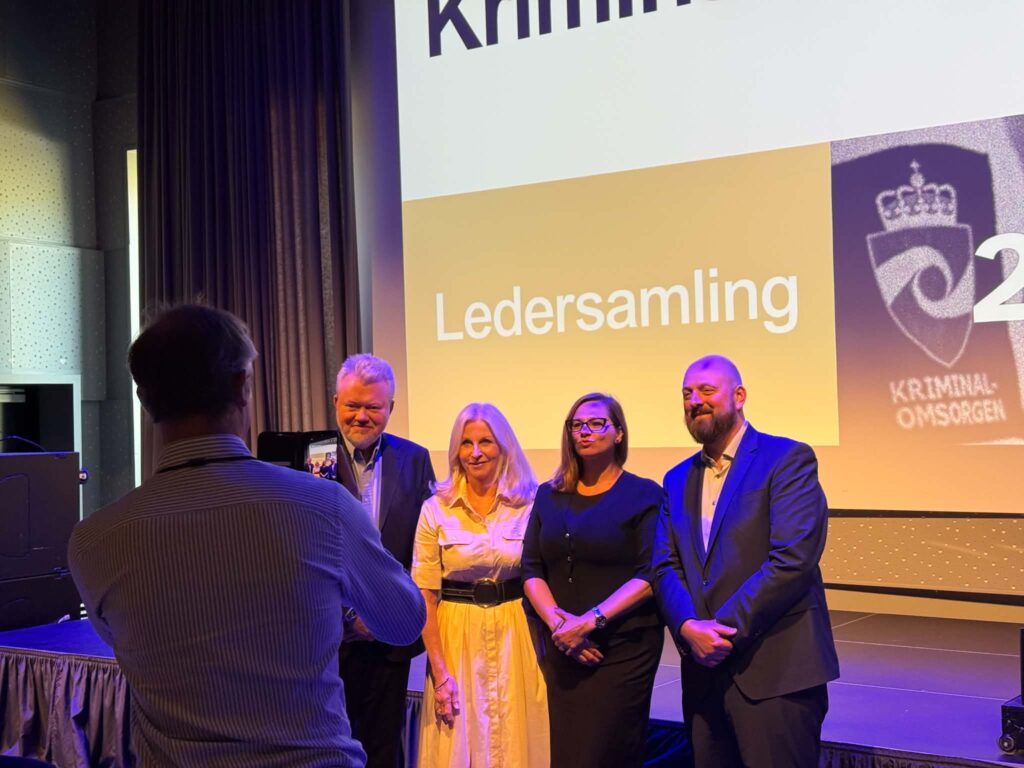
CEP Secretary General Jana Špero Kamenjarin was delighted to participate in the Leadership Conference 2026 of the Norwegian Correctional Service, held on 9–10 September in Oslo.
Recap
Foreign Nationals in Prison and Probation
Recap: Expert Group of CEP and EuroPris, on Foreign Nationals in Prison and Probation (FNPP)
14/09/2026
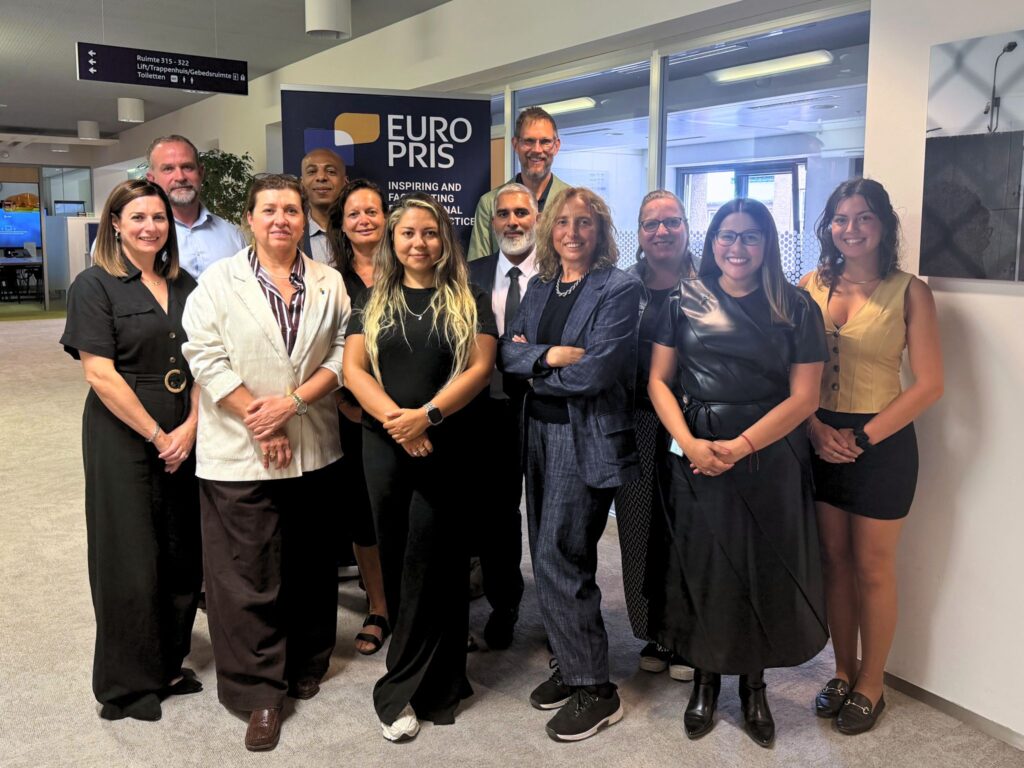
On 7 and 8 September 2026 the joint Expert Group of CEP and EuroPris, on Foreign Nationals in Prison and Probation (FNPP), came together in The Hague for a valuable exchange of ideas, experiences, and expertise on one of the most important challenges facing prison and probation services across Europe.
New

CEP
Newsletter August 2026 out now
27/08/2026
CEP’s latest newsletter is out now! It includes:
- Approaching deadlines for upcoming events (ITSCCS26, 14th EM and DG leadership training) and the Mental Health curriculum pilot)
- Call for European Probation Journal on the topic of Workload in Probation
- EU documents like SPACE II, revised Victims’ Rights directive and so on
- and much more!
New

Caseload and workload
Do you work in probation? We need your voice!
24/08/2026
As part of its long-standing cooperation with research, CEP invites its members to contribute to a special edition of the European Probation Journal on the topic of Workload in Probation.
New

Alternatives to pre-trial detention, Foreign Nationals in Prison and Probation, Gender Equality, Probation in Europe
SPACE II report is now available
24/08/2026
The use of community sanctions and measures that allow individuals to remain in the community – also known as alternatives to imprisonment – continues to grow overall in Europe, although at a moderate pace, according to the latest Council of Europe annual penal statistics on persons under the supervision of probation agencies (2025 SPACE II survey).
Subscribe to our bi-monthly email newsletter!
"*" indicates required fields
- Keep up to date with important probation developments and insights.