

Previous Article
News
Penal Reform International: the chains of vulnerable groups, radicalisation and prison
Penal Reform International (PRI) has over 20 years experience addressing the rights of suspects, offenders and prisoners in the context of the broader criminal justice system and has been aware for some time that prisons can play a critical role in both triggering and reinforcing the radicalisation process. It is against this background that PRI decided to organise an international roundtable entitled ‘Preventing Radicalisation in Prisons: Developing a Coordinated and Effective Approach’ in Jordan on 2 – 3 December 2015. The Roundtable brought together 30 participants from 15 countries representing the Middle East and North Africa, Sub-Saharan Africa, Europe, Central and South Asia.
By Nikhil Roy of the Penal Reform International (PRI)
Penal Reform International (PRI) has over 20 years experience addressing the rights of suspects, offenders and prisoners in the context of the broader criminal justice system and has been aware for some time that prisons can play a critical role in both triggering and reinforcing the radicalisation process. It is against this background that PRI decided to organise an international roundtable entitled ‘Preventing Radicalisation in Prisons: Developing a Coordinated and Effective Approach’ in Jordan on 2 – 3 December 2015. The Roundtable brought together 30 participants from 15 countries representing the Middle East and North Africa, Sub-Saharan Africa, Europe, Central and South Asia. The following is a very short summary of one aspect of the discussions: preventing in-prison radicalisation and pursuing criminal justice responses to violent extremist offences committed by children and women taking into account international law and standards, the particular vulnerabilities of women and children, and the gravity of the offences.
Further research is needed to explore whether radicalisation processes are the same for children in prison as they are in the community, and also the scale of radicalisation amongst children within prisons. However, we do know that children in many jurisdictions are still routinely held in detention alongside adults, which carries a multitude of risks, amongst them the risk of radicalisation. It is also hard to underestimate how frightening the experience of detention can be for children. We know that they are acutely vulnerable because they are isolated from family, friends, education and a normal social environment – associating with groups or strong individuals can be an opportunistic attempt to find security and safety. Although children can be particularly vulnerable, at the same time, the risk of radicalisation should not be overstated and normal feelings of insecurity, uncertainty and fear on arrival in prison should not automatically be viewed through the prism of radicalisation risk. Risk assessments must therefore be nuanced and avoid over-simplification.
Another vulnerable group are children who are detained because of their (alleged) involvement in violent extremism. Thousands of children around the world are enticed or forced by abduction or intimidation, to join terrorist groups. They join for a variety of reasons such as poverty, displacement, sense of identity, ideological attraction and lack of opportunities. They are often abused, beaten and exploited and as such they can be both victims and perpetrators who are arrested and charged with very serious offences for which they are tried in adult or military courts and deprived of crucial safeguards such as their right to a lawyer.
Even if a state of emergency has been declared, it is not possible to derogate from the UN Convention on the Rights of the Child and so all exceptional legal regimes responding to national security need to comply with its provisions explicitly and include diversion away from the formal justice system and alternatives to imprisonment as well as procedures for the rehabilitation and reintegration of children. When essential safeguards protecting the rights of children in conflict with the law are ignored in the name of national security, then we have to ask if this serves to create additional grievance and alienation amongst children and can in the end be counterproductive. Further research is needed to understand the scope and character of the issue but it is vitally important to ensure that all criminal justice responses are firmly grounded in international standards.
The Roundtable also considered the issue of women and responses to radicalisation. There was consensus that the numbers of women who are violent extremist prisoners is very low globally but this is seen as a growing issue where more focus is needed particularly since the gender-specific treatment of women engaged in violent extremism is not referred to in the United Nations Bangkok Rules, the Council of Europe Guidelines for Prison and Probation Services Regarding Radicalisation and Violent Extremism, nor the Rome Memorandum on Good Practices for Rehabilitation and Reintegration of Violent Extremist Offenders. The means of extremism used by women are not always different from those used by men, but it can be harder to monitor or oversee since they often operate in closed circles with very limited contact with the external world. If a woman has been convicted of an extremist offence, it can be very challenging to rehabilitate and reintegrate her owing to the stigma she is likely to face from her family and community. Classification is also an issue as women are held in mixed dormitories in some countries, with little classification.
It is important to be aware that women may be pressured into offending by male family members and that a defence of duress or self-defence should be available to them. For those women who are compelled to travel to marry (so-called sexual jihad), it is very important to understand that they are victims of sexual violence who are in need of psychological treatment, otherwise the trauma may lead to increased extremism and suicide attacks. Gender-sensitive rehabilitation and reintegration programmes should be developed that take into account the history behind women’s involvement in violent extremist acts, including personal experiences, such as if they have been subject to sexual or other abuse.

Related News
Keep up to date with the latest developments, stories, and updates on probation from across Europe and beyond. Find relevant news and insights shaping the field today.
New

CEP
Call for Proposals: Evaluation of CEP Expert Groups
21/10/2026
On behalf of Ms. Jana Špero Kamenjarin, CEP Secretary General, it is my pleasure to invite you to submit a proposal to conduct an evaluation within the CEP work programme.
Recap
Uncategorized
CEP at UNODC: Contributing to the Development of Probation Services Worldwide
19/10/2026
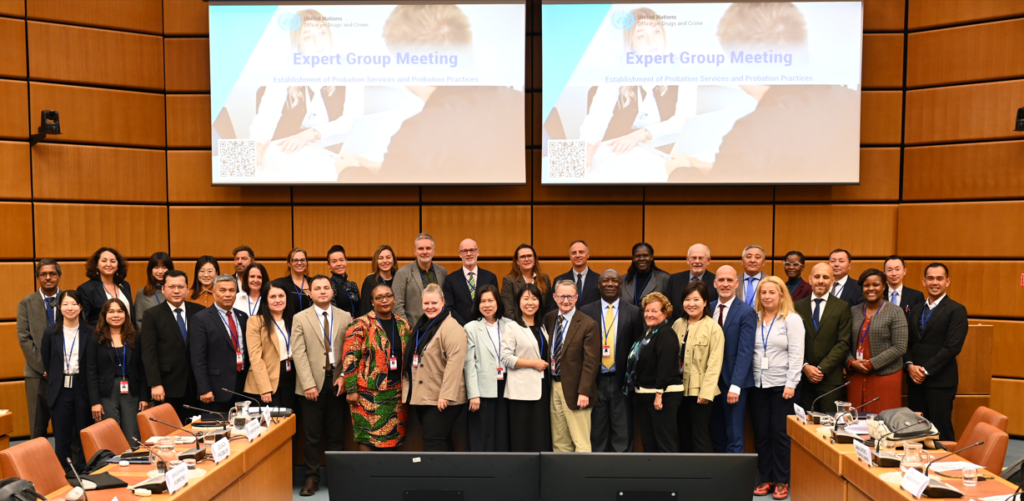
The Confederation of European Probation (CEP) was represented by its Secretary General, Jana Špero Kamenjarin, at the Expert Group Meeting on the Establishment of Probation Services and Probation Practices, organised by the United Nations Office on Drugs and Crime (UNODC) and held at the Vienna International Centre (VIC) from 12 to 14 October 2026.
Recap
Electronic monitoring, Technology
14th Electronic Monitoring Conference, Electronic Monitoring in a Changing World – Perception vs Reality
08/10/2026
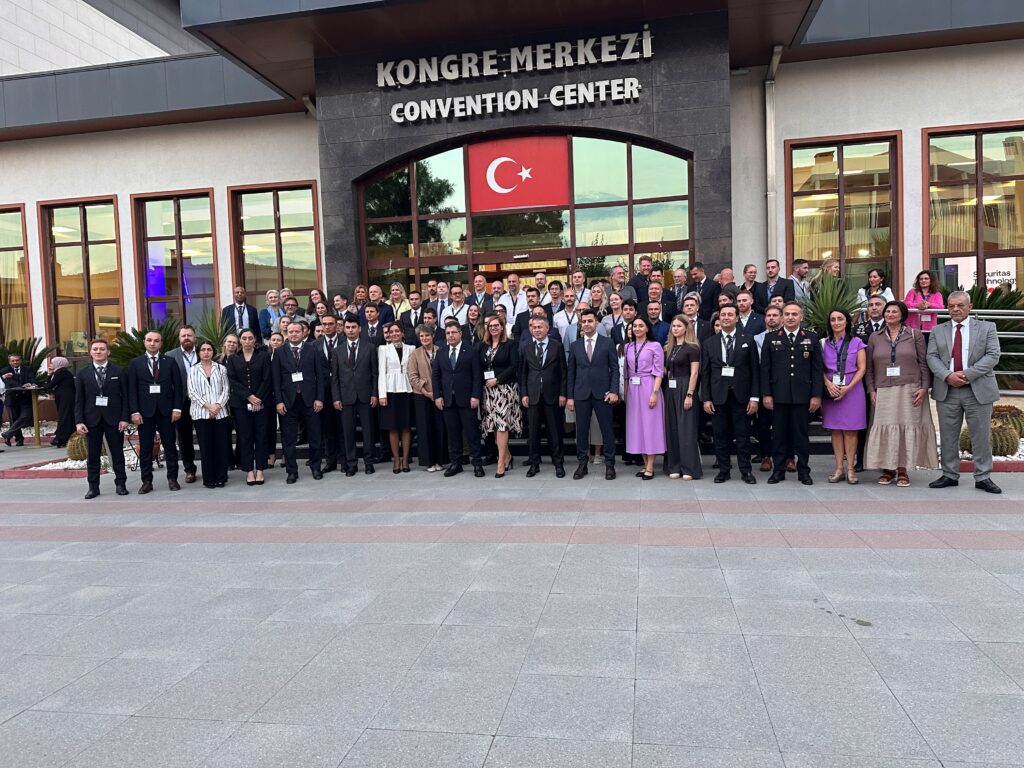
On 6-8 October 2026, Antalya hosted the 14th Electronic Monitoring Conference “Electronic Monitoring in a Changing World – Perception vs Reality”. More than 350 participants coming from 32 countries across Europe and worldwide representing probation services, Ministries of Justice, victims´ services, EM providers, researchers as well as local participants representing the Turkish Prison and Probation Service gathered to discuss how electronic monitoring (EM) is understood by all stakeholders involved including the victims and the public, and how these perceptions compare to the evidence and experiences of those affected. While the gap between perception and reality in electronic monitoring has been recognised for over a decade, the rapid expansion of EM into areas such as victim protection, high-risk supervision and digital innovation has brought new challenges and questions to the forefront.
Recap
ITSCCS
Core Correctional Skills in Digital Probation: highlights from the 6th ITSCCS in Barcelona
05/10/2026
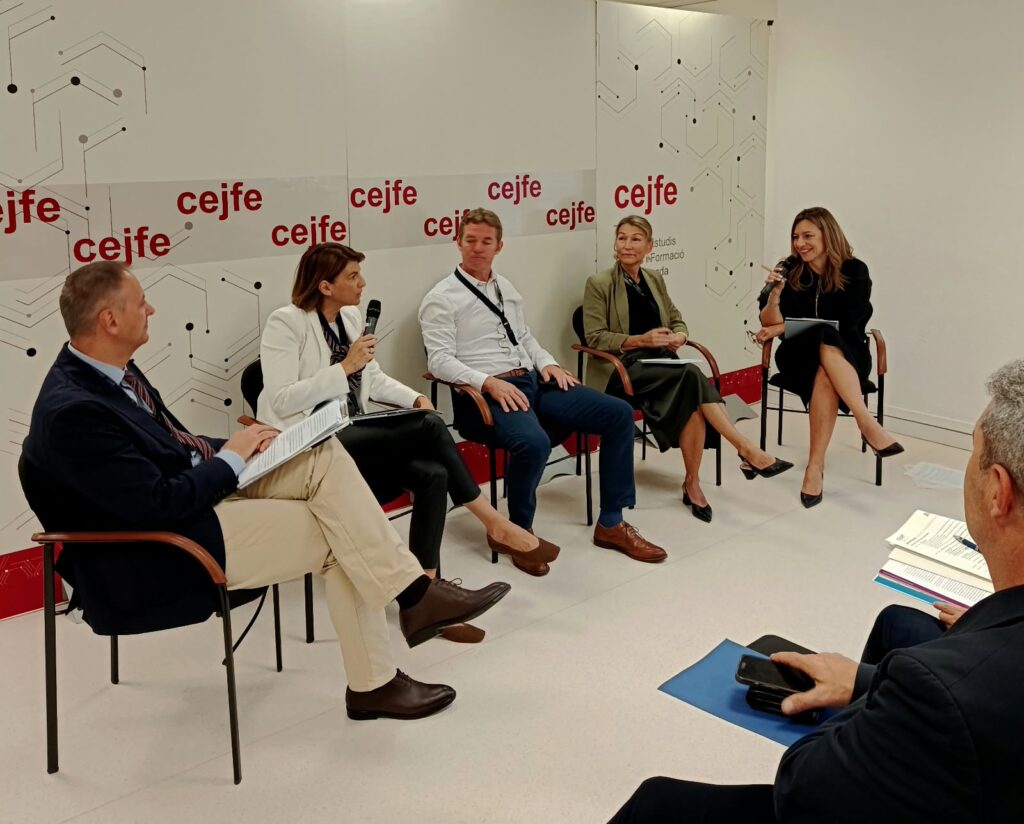
The sixth International Training School on Core Correctional Skills (ITSCCS) took place in Barcelona from 28 September to 2 October 2026, bringing together 26 participants for a week of learning, practical training and international exchange. Organised by the Confederation of European Probation (CEP) and the Centre for Legal Studies and Specialised Training (CEJFE), the programme focused on “Clicks and Empathy: Core Correctional Skills in Digital Probation.”
Recap
Framework Decisions
Recap: ERA workshop on Framework Decisions 829 and 947 in Bucharest
02/10/2026
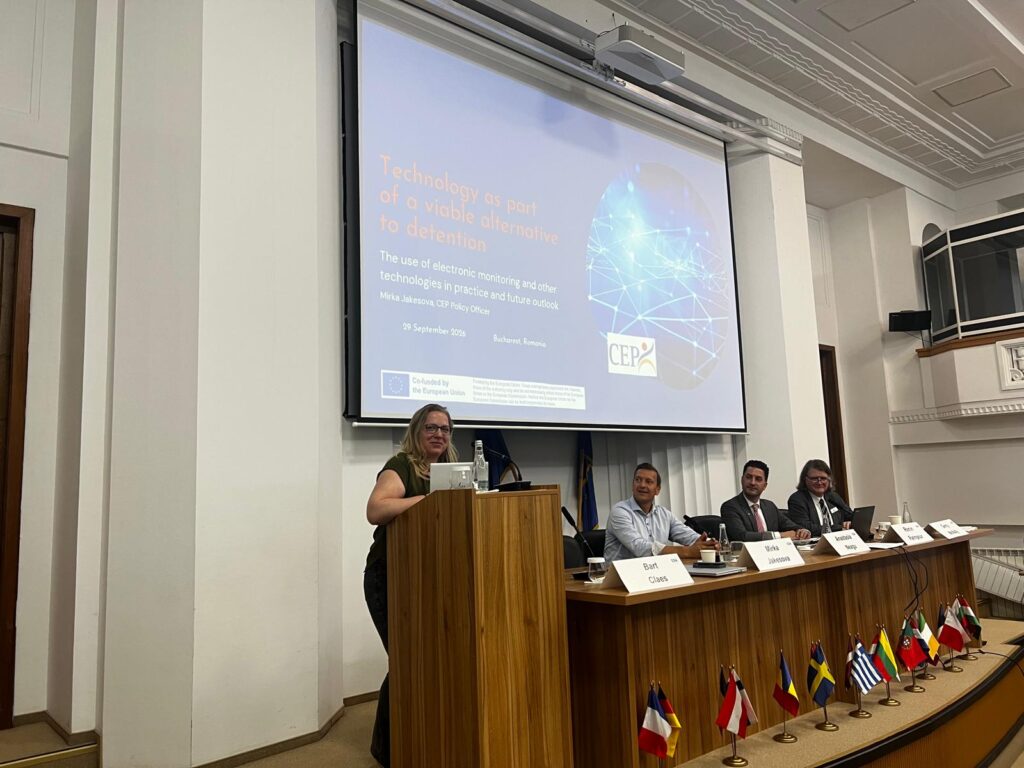
CEP Vice-President Daniel Danglades, Ambassador Gerry McNally and Policy Officer Mirka Jakesova participated in the Seminar on Framework Decisions 829 and 947 and their Impact on Alternatives in the EU organized under the EU project run by the Academy of European Law on 28-29 September in Bucharest, Romania. The seminar brought together judges, prosecutors, probation practitioners, academics, and policy experts to discuss the growing role of alternatives to detention within European criminal justice systems.
New
CEP
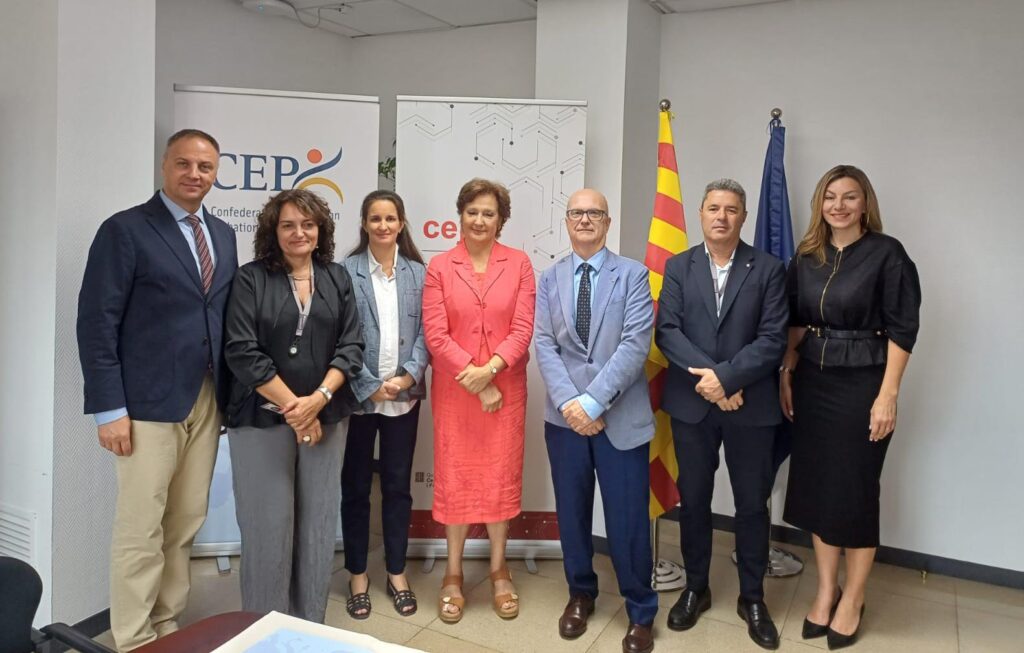
CEP and Catalan justice leaders reaffirm longstanding cooperation
29/09/2026
Representatives of the Confederation of European Probation (CEP) met with senior officials from the Catalan Department of Justice and Democratic Quality in Barcelona on 28 September 2026, alongside the opening of the sixth International Training School on Core Correctional Skills. The meeting offered an opportunity to recognise a longstanding partnership and discuss its continued development.
Subscribe to our bi-monthly email newsletter!
"*" indicates required fields
- Keep up to date with important probation developments and insights.