

Previous Article
News
Neustart Austria: private organization in public probation
Privatization is a much debated issue in every corner of public sector in Europe. In the sector of probation, the discussion focuses mainly on the extent in which the private sector can be involved in probation matters. But as a whole, there is no question that probation is, and should remain, deeply rooted in the public domain. Or is there? In Austria the entire probation service in is in the hands of one single private party, Neustart (literally: New Start). “We convince our opponents with our ethical and quality standards”, says Karin Waidhofer, Neustart’s General Manager Social Services. In 2007, the Austrian company expanded its services to the German State of Baden-Württemberg.
The idea of contracting probation to a private company encounters a lot of skepticism outside Austria. “When we were about to start in Baden-Württemberg, even legal proceedings were instituted in order to stop us”, says Karin Waidhofer. “At first, there was the fear that Neustart, as a private organization, would do anything to make money. Some people thought that we would cut wages, press for massive dismissal, and reduce the level of services. But Neustart didn’t do any of those things. Now that we have been working for over a year in the region, people in Baden-Württemberg see that Neustart is a reliable, integer party in probation.”
Waidhofer stresses that Neustart is non profit association working in an area which has to be financed by the public sector. “We are a value-driven and not a profit-driven organization. Neustart has a long tradition in social work and in developing social constructive methods. That might be an explanation why we are a little bit different as a company. Our priority is to provide quality services in probation. And look at our mission statement. This states that we work to the benefit of the society by reducing reoffending and improving the social situation of our clients. We aim to create a situation in the personal life of our clients in which they can reintegrate into society. We help them in acquiring more knowledge and skills and assist them in overcoming obstacles like health problems, financial trouble or other. Moreover, all our work is based on this ethical standard. Accordingly our philosophy on personnel management is that we should support our employees and enable them to achieve our quality level. So yes, we do work with quite good labour agreements.”
The origins of Neustart date back from 1957. At that time, Austria, which didn’t have a probation service, was struggling with problem youths in reception centers. “Frequently there were riots in these centers”, Waidhofer recalls. “On the other hand, there was a great shortage on the labour market, so young people were needed to go to work. The Austrian government was open to any solution facilitating the integration of these youths into society.” The climate thus being favorable, a group of psychologists with a background in psychoanalysis founded the predecessor of Neustart.
Despite an animated discussion in the Austrian Parliament on a ‘nationalization’ of the probation service at the end of the 1970′, the Austrian government always has strongly supported the private probation service carried out by a non profit organization. “And not only in the sense that it is our largest donor”, explains Neustart’s General Manager. “For instance, Austria still profits from a very progressive law on probation, which has been introduced in 1969. In this law, the maximum case load for probation officers has been limited at 30. The idea behind it is that if you have time for your clients, you are able to deliver good work. Also in the sixties, the Austrian government reinforced Neustart by adding government officials to our staff of probation officers. So they work with us, but they are being employed by the government. This experience in working with government officials and private staff in one organization has helped us a lot when starting in Baden-Württemberg, as we were used to working in the same constellation.”
So in many ways Neustart is very similar to its public counterparts in Europe. Then what makes Neustart different? Karin Waidhofer: “One aspect is our organizational structure. We have two General Managers: one for our social services, and one for personnel and economic affairs. The last one is also in charge of finding other funding streams than the Ministry of Justice. Maybe you could also say that we can act in a more flexible way than if we were falling under the law for public servants. Now we can develop and implement new services on the short term. We don’t have to ask high level staff in the Ministry of Justice for permission in case of rather minor problems. This also was apparent to the Austrian government. Until 1999 the probation service in one province of Austria was organized within a public system under the Ministry of Justice. Because of the reasons I mentioned the Ministry decided that Neustart should be responsible for all Provinces in Austria”.
For more information about Neustart, you can visit the website, which has a section in English.

Related News
Keep up to date with the latest developments, stories, and updates on probation from across Europe and beyond. Find relevant news and insights shaping the field today.
New

Others
Applications for the Cambridge MSt in Applied Criminology, Penology and Management are now open
16/09/2026
The Institute of Criminology, Cambridge, have opened up applications for the MSt in Applied Criminology, Penology and Management in the next academic year.
Recap
Probation in Europe
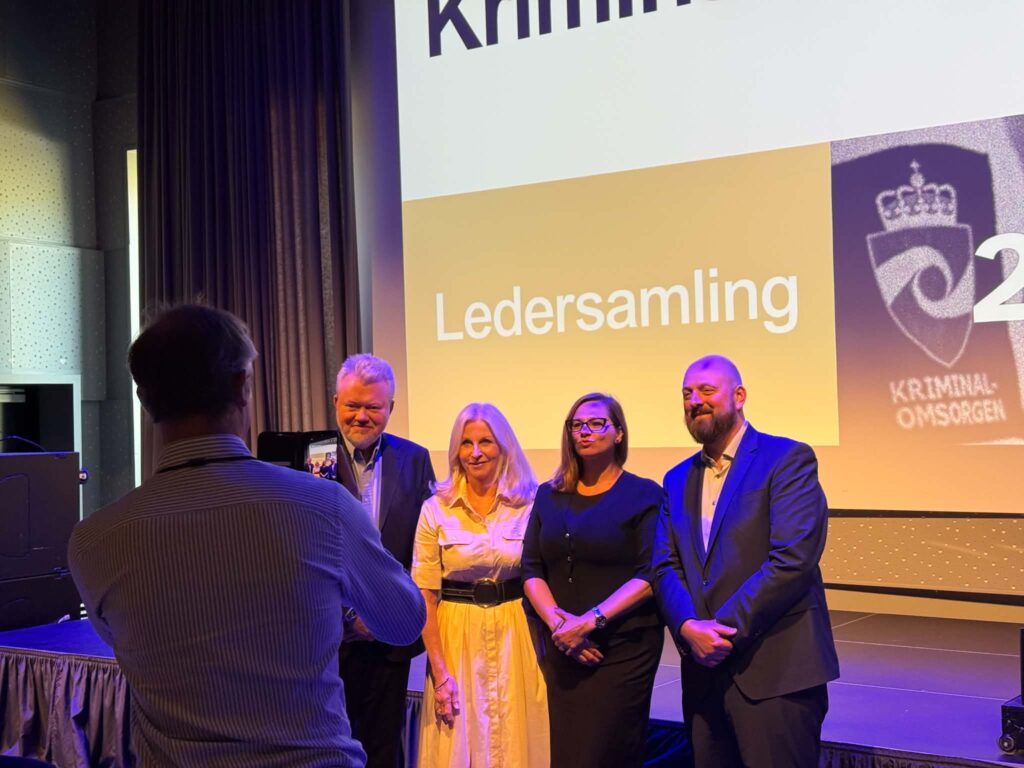
CEP at the Leadership Conference 2026
14/09/2026
CEP Secretary General Jana Špero Kamenjarin was delighted to participate in the Leadership Conference 2026 of the Norwegian Correctional Service, held on 9–10 September in Oslo.
Recap

Foreign Nationals in Prison and Probation
Recap: Expert Group of CEP and EuroPris, on Foreign Nationals in Prison and Probation (FNPP)
14/09/2026
On 7 and 8 September 2026 the joint Expert Group of CEP and EuroPris, on Foreign Nationals in Prison and Probation (FNPP), came together in The Hague for a valuable exchange of ideas, experiences, and expertise on one of the most important challenges facing prison and probation services across Europe.
New

CEP
Newsletter August 2026 out now
27/08/2026
CEP’s latest newsletter is out now! It includes:
- Approaching deadlines for upcoming events (ITSCCS26, 14th EM and DG leadership training) and the Mental Health curriculum pilot)
- Call for European Probation Journal on the topic of Workload in Probation
- EU documents like SPACE II, revised Victims’ Rights directive and so on
- and much more!
New

Caseload and workload
Do you work in probation? We need your voice!
24/08/2026
As part of its long-standing cooperation with research, CEP invites its members to contribute to a special edition of the European Probation Journal on the topic of Workload in Probation.
New

Alternatives to pre-trial detention, Foreign Nationals in Prison and Probation, Gender Equality, Probation in Europe
SPACE II report is now available
24/08/2026
The use of community sanctions and measures that allow individuals to remain in the community – also known as alternatives to imprisonment – continues to grow overall in Europe, although at a moderate pace, according to the latest Council of Europe annual penal statistics on persons under the supervision of probation agencies (2025 SPACE II survey).
Subscribe to our bi-monthly email newsletter!
"*" indicates required fields
- Keep up to date with important probation developments and insights.