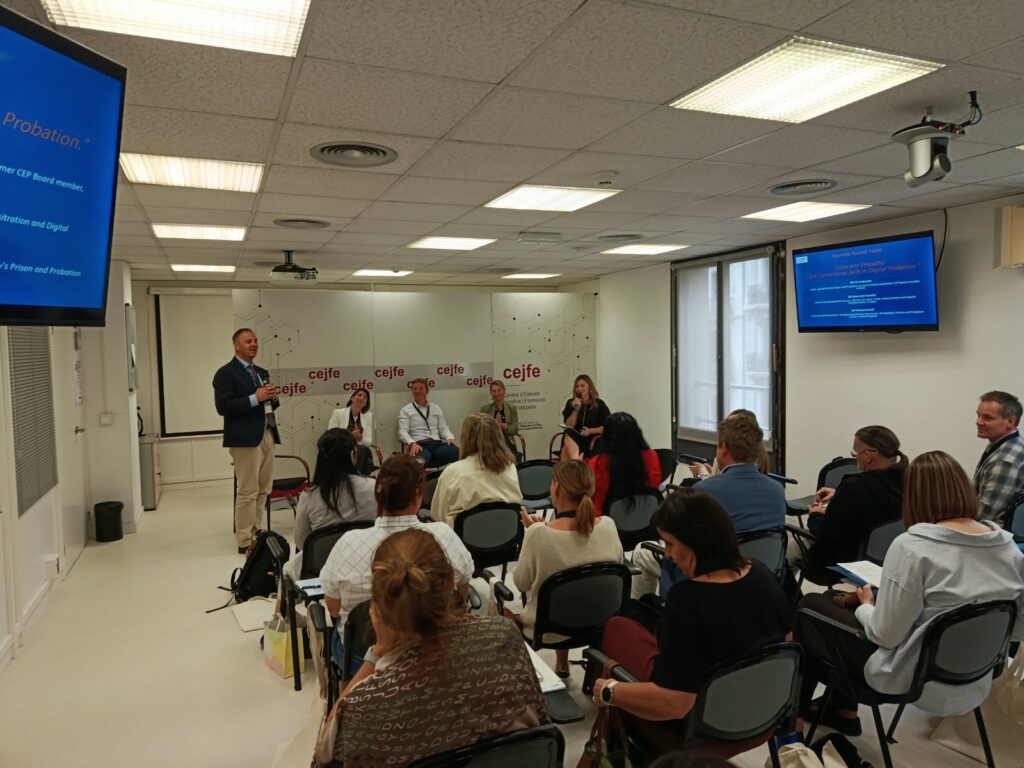
The workshop aimed at enhancing cross-border mutual legal assistance and recognition of decisions within the context of detention, also within the context of the European Arrest Warrant, as well as issues surrounding the proper use of Framework Decision 2008/947/JHA on probation and alternative sanctions and Framework Decision 2009/829/JHA on supervision measures as an alternative to provisional detention.
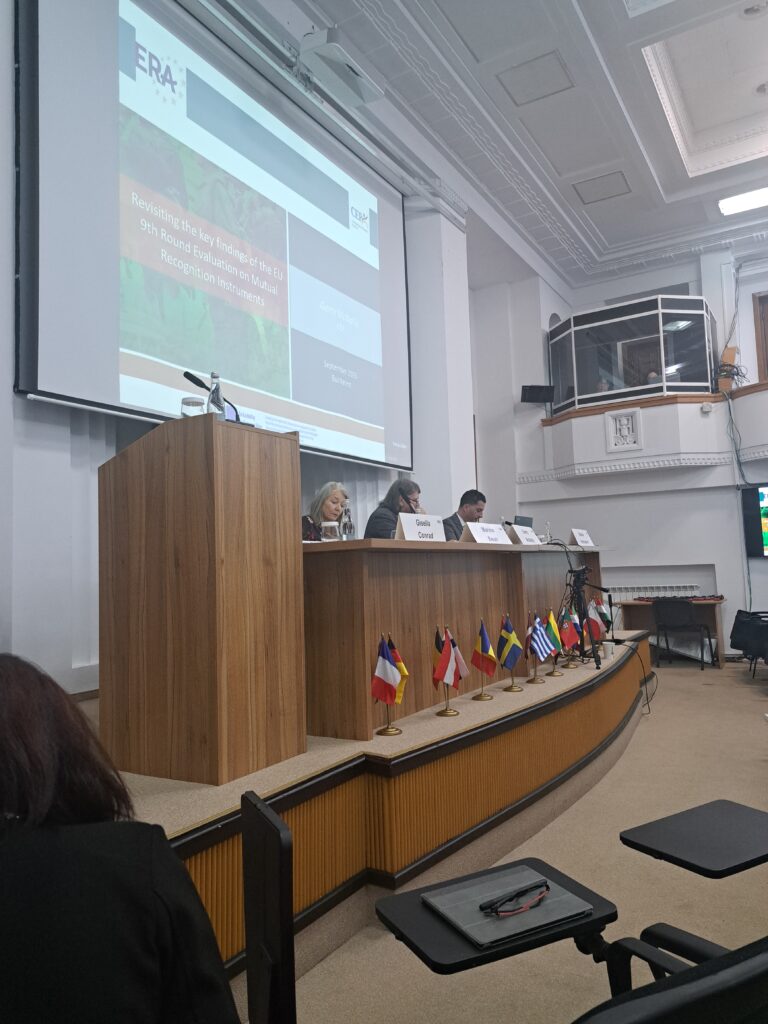
The event opened with a strategic overview from Gerry McNally and Jesca Beneder, who reviewed the implementation of both Framework Decisions across the European Union. Their presentation reflected on findings from the 9th round of mutual evaluations and considered future developments in European criminal justice policy. They highlighted the continuing importance of mutual trust, proportionality and rehabilitation-oriented responses when dealing with cross-border cases.
A practical perspective followed from Marina Beun and Gisella Conrad, who examined how Framework Decisions 829 and 947 operate in day-to-day practice. Drawing on Dutch experience, they explained transfer procedures, the roles of judicial authorities and probation services, recognition of supervision measures, and the supervision of probation measures once transferred to another Member State. Their contribution illustrated the practical cooperation required to make the instruments effective.
The role of innovation and digitalisation was explored by João Gomes, who presented the J-CAP and J-CAP NEXT projects. He demonstrated how digital tools can assist judges, prosecutors and lawyers in applying Framework Decision 947 and introduced developments relating to the European Probation Software, aimed at facilitating communication and information exchange between authorities across Europe.
National implementation challenges and opportunities were discussed by Dalina Groza and Alexandra Lăncrănjan. Using Romania as a case study, they examined legislative reforms and practical measures designed to strengthen alternatives to detention and improve the application of both Framework Decisions in cross-border judicial cooperation.
The importance of probation services was the focus of the presentation by Daniel Danglades. He emphasised the contribution of probation officers to preventing (re)incarceration through support during release from prison, conflict resolution, and cooperation with judicial and correctional authorities. His presentation highlighted probation’s central role in promoting rehabilitation and reducing reliance on custody.
The second day of the seminar broadened the discussion to specific alternatives to detention. Anastasia Neagu examined probation practice involving people with substance misuse problems and mental health needs, highlighting how tailored community-based responses can address individual risks and needs more effectively than imprisonment in many cases.
A presentation by Bart Claes focused on restorative justice as a viable alternative within criminal justice systems. He explored victim-offender-community mediation both inside and outside prison settings and discussed how restorative approaches can complement traditional justice responses while encouraging accountability, dialogue and reparation.
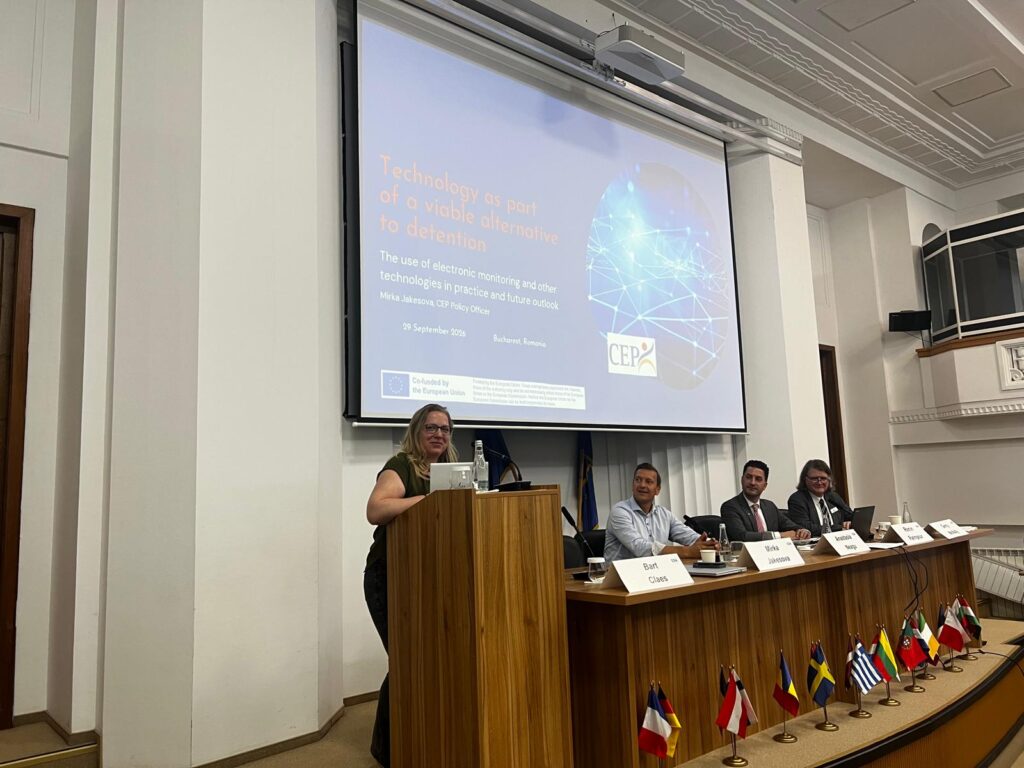
Technology and its growing role in probation practice were addressed by Mirka Jakesova. The presentation examined the use of electronic monitoring and other technologies as tools supporting community supervision and cross-border cooperation. Alongside the opportunities offered by technological developments, attention was given to ethical considerations, proportionality, data protection and the need to balance technological solutions with professional assessment and human decision-making.
The seminar concluded with interactive workshops covering the practical application of Framework Decisions 829 and 947, cooperation between probation services and judicial authorities, and effective implementation of restorative justice. Across all sessions, participants underlined that the success of alternatives to detention depends not only on legal frameworks but also on strong professional partnerships, effective communication and confidence in community-based measures.