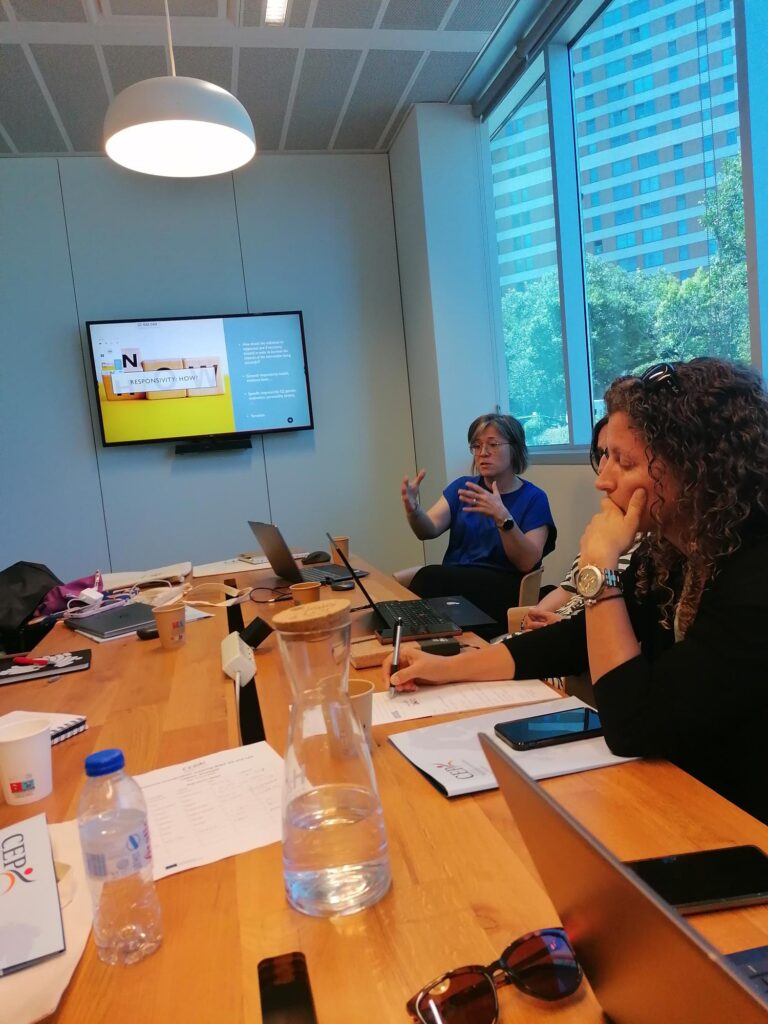
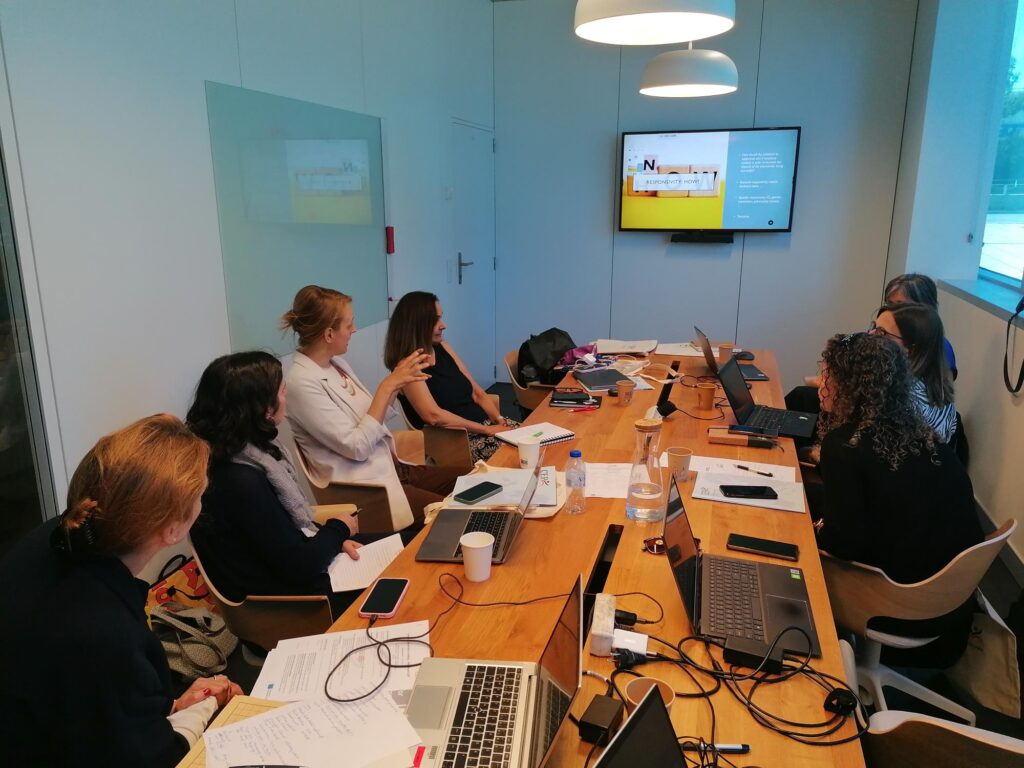
The first event was an internal coordination meeting between CEP and the Work With Perpetrators European Network (WWP EN), held at the Campus de Justiça in Lisbon, Portugal. The meeting explored opportunities for closer cooperation between the two organisations in the field of perpetrator interventions and probation practice. Participants discussed how to integrate a gender perspective within probation services while maintaining alignment with the Risk-Need-Responsivity (RNR) model, while maintaining alignment with the Risk-Need-Responsivity (RNR) model, a key framework for supporting rehabilitation and reducing reoffending.
Expert contributions were provided by Professor Kieran McCartan, Chair of the CEP Expert Group on Gender-Based Violence in Probation and Professor at the University of the West of England Bristol, and Professor Katarzyna (Kasia) Uzieblo from Vrije Universiteit Brussel. Their presentations and the subsequent discussions focused on the application of the RNR model in the context of gender-based violence, as well as the challenges and opportunities of incorporating a gender-responsive perspective into probation practice.
The meeting concluded with a shared commitment to continue the collaboration between CEP and WWP EN. Over the coming years, both organisations will continue working together to analyse the WWP EN’s standards and quality framework for programmes for individuals who have committed acts of domestic violence to probation settings, contributing to the development of effective, gender-responsive practices across European probation services.
Meeting of the Expert Group on Gender-based Violence in Probation
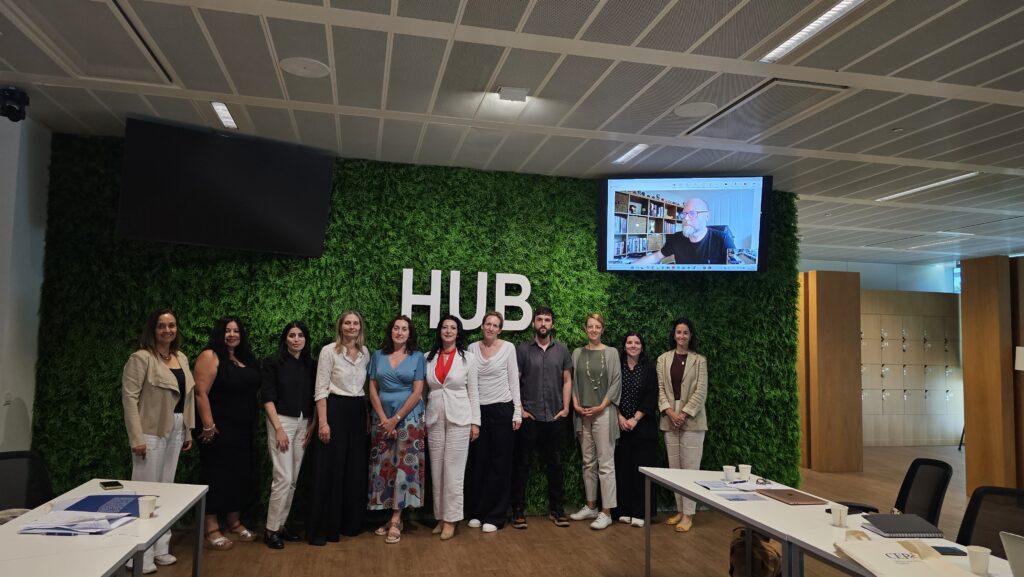
Building on this exchange, the following day CEP’s Expert Group on Gender-Based Violence in Probation held its final face-to-face meeting of the current mandate. The meeting brought together experts and practitioners from Armenia, Denmark, Germany, Ireland, Malta, North Macedonia, Portugal and Basque Country, reflecting a wide range of experiences and perspectives from probation systems across Europe. During the meeting, members of the Expert Group reflected on three years of intensive collaboration and knowledge exchange. Working through several thematic subgroups, under the umbrella topic of “Working with Gender-Based Violence in Probation: professional wellbeing, community awareness and client engagement to treatment” experts from across Europe developed a range of practical resources designed to support probation services in their responses to gender-based violence. These include:
- A work aid document on how to support staff working with gender-based violence cases from trauma informed perspective.
- 9 videos and narratives interviewing experts on gender-based violence. Breaking the Myths: interviews Promoting Evidence-Based Understanding of Gender-Based Violence and Feminism.
- A document understanding Individuals Who Engage in Interpersonal Violence (IPV) and the Pathways to Successful Treatment Intervention.
These tangible outputs, developed to be relevant and applicable across European jurisdictions, represent an important contribution to strengthening probation practice in this field. These main outcomes will also be presented during a CEP webinar on 19 November 2026, offering probation professionals and stakeholders across Europe an opportunity to engage with the group’s work and recommendations.
During the meeting, Jana Bewersdoff, CEP Board Member and Head of a Probation Division at the Ministry of Justice and Health of Schleswig-Holstein, Germany, delivered a presentation on the implementation of state legislation providing counselling support for individuals at risk of domestic violence, sharing valuable insights into current innovative developments and practice in Germany.
The afternoon session concluded with a presentation by Berta Vall and Sandra Jovanović Belotić from the WWP EN, who shared firsts insights from their work on mapping domestic violence treatment programmes across European probation systems and discussed joint work between CEP and WWP EN in the coming years.
CEP would like to thank all Expert Group members, expert speakers, partners and the Portuguese Directorate-General for Reintegration and Prison Services (DGRSP) for hosting these meetings and for their continued commitment to improving probation practice and enhancing community safety across Europe.
Members of the CEP Expert Group are:
- Kieran McCartan – Chair of the expert group and Professor at University West England Bristol, United Kingdom
- Carmel Donnelly – Assistant Principal Probation officer – Irish Probation Service, Ireland
- Lea Holst Reenberg – Head of crime prevention, Center for Sentence Enforcement Danish Prison and Probation Service – Danish Ministry of Justice, Denmark
- Ana Maria Lavado – Probation officer – DGSRP, Portugal
- Endika Biota – Practitioner with DV and SO cases – Basque Justice Department, Basque country
- Mary Anne Zammit – Probation officer Malta Probation Service, Malta
- Olja Ristova – Judge and lecturer at Academy for Education of Judges, North Macedonia
- Sirarpi Mughdusyan – Deputy Head at Probation Service, Armenia
- Jana Bewersdoff – CEP Board member, Ministry of Justice and Health of the State of Schleswig-Holstein, Germany
- Anna Esquerrà Roqueta – CEP Policy and Liaison officer, Catalonia – Spain