

Next Article
News
We need to talk about sexual violence
The forensic clinical field in the Netherlands has been shaken to its core several times in recent months by multiple serious incidents in psychiatric clinics following one another, including sexual and deadly assaults. Although serious incidents in these clinics are not a common occurrence, it is essential to reflect on the staff and patients affected and take further steps in trying to prevent such incidents.
By Kasia Uzieblo, PhD., David S. Prescott, LICSW, and Kieran McCartan, PhD.
When we learn that an incident has occurred in a forensic institution, we first assume that a patient has assaulted one or more staff members. Indeed, Dutch forensic clinical practice has faced very serious incidents in recent years, including a violent, sexual and deadly assault committed by a patient. Hence, such incidents occur and have a tremendous impact on the victim(s) and all those involved. Less often however, we hear about staff members mistreating or (sexually) abusing patients. Unfortunately, such cases occur as well. Without minimizing the seriousness of patients’ violent behaviors towards staff, we want to focus for a moment on sexually transgressive and violent behaviors caused by practitioners. We start with a recent case in the Netherlands.In September of this year, it became known that an employee of a high-security forensic psychiatric clinic had been fired after sexually assaulting a patient. This employee had forced a patient to perform sexual acts. In April, this came to light during an interview with the woman in question. The employee was a sociotherapist who helps patients train pro-social behaviour and learn to cope with their mental health problems. When this came to light, the man was suspended and later eventually fired. On top of that, other problems came to light. At the same clinic, a staff member was fired for having a sexual relationship with a patient and an internship was stopped because the intern had started a relationship with a patient.
Especially the first case, but certainly also the other cases raise a lot of questions and concerns, first and foremost with respect to the patients. The patients that are admitted to such clinics have committed serious offences, but often also have a very traumatic past. Frequently, they have been mistreated, neglected and/or abused by those they should have been able to trust. These patients do not only struggle with their own often- extensive criminal past but also with their own repeated victimization. During their stay in the clinic, we try to teach them a prosocial lifestyle, which also means that they have to learn to trust others and to get attached again. This is anything but obvious to them and requires considerable work. Attachment problems and a deep distrust of others are characteristic of this population. It then almost speaks for itself, when the (little) trust they finally gained, is damaged, especially by someone to entrusted with their care. It leaves very deep wounds, Not to mention the psychological and physical damage they suffer from the sexual violence. The house of cards, being the new prosocial life, that staff and the patient have tried to build on often very weak foundations, then threatens to fall apart or just collapses at once.
The reach of this cannot be underestimated. Not only is the direct victim seriously affected, but also fellow patients. The questions then become whether their trust and faith in staff, and broader, in others, are still recoverable and how we, professionals, best try to restore it. And the third group we should not lose sight of is the staff. They, too, are badly affected by such incidents. They struggle with questions like “how did I not see this?”, “couldn’t I have prevented this?”, and “what now?”. Moreover, as was observed in this specific case, staff members were also confronted with stigmatizing remarks from the public. For instance, when the abuse was disclosed, staff members were confronted with condemning remarks in the vein of “You’re all the same,” and “you’re all rotten apples.” Also notable was the ripple effect: Staff from other clinics were very concerned, scared, and angry, and clearly felt the need to talk at length about this with colleagues, among others. Hence, the consequences of such violent and transgressive incidents are thus not limited to the setting where the incident took place but are felt far beyond.
Protocols for violent incidents by patients are in place in most, if not all forensic clinics. But do we have a protocol ready for situations when a staff member exhibits transgressive behavior? How can we best respond to this as a patient, as colleague, as manager, as society?
It is not our aim to propose specific guidelines here. However, we would like to point out some points of importance. As in other cases of (sexual) violence, we should start with the beginning and that is acknowledging the violence and the suffering it has caused. Abuse is abuse, no matter who the perpetrator is, no matter what status he/she has, no matter what position he/she holds, and no matter who the victim is. When you observe that the Dutch media described the abuse not as abuse but as ‘sexual acts’, you realize that this seemingly obvious starting point is already not obvious to many.
In addition, we need to have difficult conversations with our colleagues, within forensic clinics or in any workplace. Thinking that such cases certainly can’t happen in your department implies closing your eyes to the fact that sexual violence can happen anywhere and that several characteristics of our work, e.g., relationships that are disproportionate in terms of power, are risk factors for (sexual) abuse. Increasing awareness and daring to ask difficult questions and engaging in not obvious conversations about prevention and identification of (sexual) abuse by professionals, (bystander) strategies when such abuse occurs, and rehabilitation after the abuse of all those involved, are already key starting points.
Another important question is how to involve patients and clients? Asking for help after a violent incident as a victim or a bystander is not easy, let alone when you are in a dependency relationship and vulnerable. Some organisations, for example, have started to develop guidelines for clients and patients. It would be useful to reflect within our field on this as well; to make suggestions available to our patients and to explore how we can make them more resilient within clinics or other settings.
So let’s have these conversations now, and let’s not wait until a complaint of abuse by a professional arrives at your own doorstep.

Related News
Keep up to date with the latest developments, stories, and updates on probation from across Europe and beyond. Find relevant news and insights shaping the field today.
New

Others
Applications for the Cambridge MSt in Applied Criminology, Penology and Management are now open
16/09/2026
The Institute of Criminology, Cambridge, have opened up applications for the MSt in Applied Criminology, Penology and Management in the next academic year.
Recap
Probation in Europe
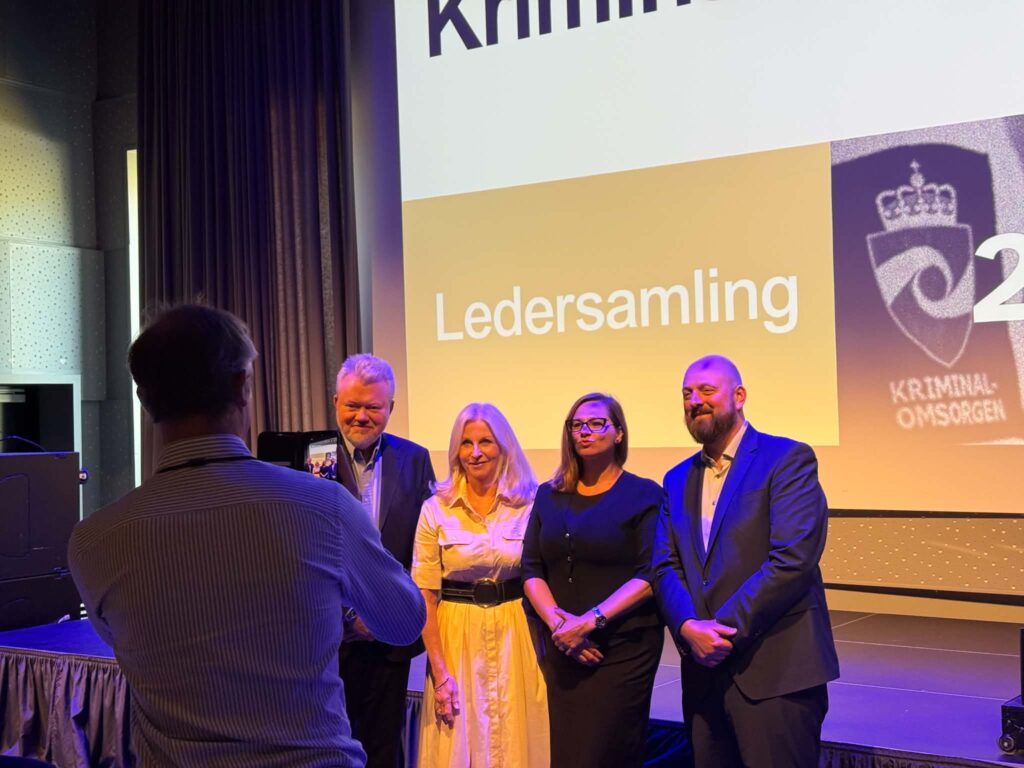
CEP at the Leadership Conference 2026
14/09/2026
CEP Secretary General Jana Špero Kamenjarin was delighted to participate in the Leadership Conference 2026 of the Norwegian Correctional Service, held on 9–10 September in Oslo.
Recap

Foreign Nationals in Prison and Probation
Recap: Expert Group of CEP and EuroPris, on Foreign Nationals in Prison and Probation (FNPP)
14/09/2026
On 7 and 8 September 2026 the joint Expert Group of CEP and EuroPris, on Foreign Nationals in Prison and Probation (FNPP), came together in The Hague for a valuable exchange of ideas, experiences, and expertise on one of the most important challenges facing prison and probation services across Europe.
New

CEP
Newsletter August 2026 out now
27/08/2026
CEP’s latest newsletter is out now! It includes:
- Approaching deadlines for upcoming events (ITSCCS26, 14th EM and DG leadership training) and the Mental Health curriculum pilot)
- Call for European Probation Journal on the topic of Workload in Probation
- EU documents like SPACE II, revised Victims’ Rights directive and so on
- and much more!
New

Caseload and workload
Do you work in probation? We need your voice!
24/08/2026
As part of its long-standing cooperation with research, CEP invites its members to contribute to a special edition of the European Probation Journal on the topic of Workload in Probation.
New

Alternatives to pre-trial detention, Foreign Nationals in Prison and Probation, Gender Equality, Probation in Europe
SPACE II report is now available
24/08/2026
The use of community sanctions and measures that allow individuals to remain in the community – also known as alternatives to imprisonment – continues to grow overall in Europe, although at a moderate pace, according to the latest Council of Europe annual penal statistics on persons under the supervision of probation agencies (2025 SPACE II survey).
Subscribe to our bi-monthly email newsletter!
"*" indicates required fields
- Keep up to date with important probation developments and insights.