

Previous Article
News
26th Annual conference of the Directors of Prison and Probation: The importance of critical discussion!
Over the last 18 months, many in our field have been homebound, working online. This is something that we have mostly gotten used to, even if we haven’t liked it. As we start to emerge from COVID-19, we look forward to being in a room together having conversations and learning together. While we are not at a place where live, in-person conferences are the norm we are starting the long path back to that place. It is important to note that while online or hybrid conferences are still taking place, and will quite likely remain post-pandemic, there is also the place, where possible, for in-person conferences. But what are the implications for critical conversations, being heard and respected, while also generating new ideas? Do we simply refine our processes or is it about starting over again to create a new dialogue?
By: Professor Kieran McCartan, Kasia Uzieblo, Ph.D., and David Prescott, LICSW
This week, Kieran and Kasia were in Madeira at the 26th Annual Conference of the Directors of Prison and Probation. his conference is typically an annual, in-person, event where the heads of Prison and Probation come together to discuss the major topics of the day. In the past, this has included electronic monitoring, incarnation data, and release programmes. This time, it included people within the criminal justice system with issues related to their mental health, people convicted of sexual offences, the impact of covid on prison and probation, as well as the implications of artificial intelligence for the criminal justice system. The conference had over 80 attendees, including experts, partner organisations (for example, EuroPris, the Confederation of European Probation), Council of Europe members and committee representatives, and the directors of prison and probation from 29 countries (including, Spain, Portugal, UK, Ireland, France, Sweden, Azerbaijan, Cyprus, Moldova, and Belgium). Although the conference was interesting, with topics directly and indirectly to those featured in this blog, we have decided to focus our attention on the session around people convicted of a sexual offence.
The reason for Kieran and Kasia’s attendance at the conference was to talk about and analyse the forthcoming “Recommendations on the assessment, treatment and management of people convicted or accused of sexual offences” by the Council of Europe. The development of these recommendations where lead by Kieran (UK) along with Marianne Fuglestved (Norway) and Harvey Slade (UK). In the coming months, we will write a more detailed blog on the recommendations, which ATSA as well as NOTA, IATSO, and NL-ATSA to name a few, were also involved as critical friends. The role of the recommendations is to create common and good practices across the Council of Europe (CoE) area. The CoE is 46 countries from across the boarder European landscape – it is important to note that the CoE, European Union, and European Commission are all separate organisations with different memberships. So, while the UK left the European Union, it has not left the Council of Europe or the European Commission.
The Council of Europe (CoE) started working on the recommendations in early 2018. Initial conversations at the PC-CP (the committee for penological co-operation), the committee handling the development of the recommendations for the CoE, revolved around what should recommendations focus on. It was discussed whether the recommendations should address definitions of sexual abuse, laws surrounding sexual abuse or the system that has developed to respond to sexual abuse. It was decided to focus on the process that people convicted or accused of a sexual offence would go through upon arrest, conviction, imprisonment, and release into the community. The recommendations would focus on risk assessment, treatment/rehabilitation, community integration, research, media engagement and data sharing. Previously to the conference the recommendations had been drafted and redrafted, this was their first public airing ahead of sign off and approval later in 2021. In their session, which took place twice, the three speakers touched on all these points.
- Kieran McCartan (UK) outlined the recommendations, why they were important and their context. Kieran highlighted that sexual abuse was an international issue, that was as much about communities as individuals and that we needed to look to a more holistic, public health approach. He argued that risk assessment was important as individuals needed the treatment that addressed their needs.
- Kasia Uzieblo (Belgium) built on Kieran’s presentation in arguing that while risk assessment is important, especially in terms of treatment, what as more important was that people understood and could communicate the risk assessment tools, and their outcomes, clearly. She argued that judges, as well as other experts who were not trained in risk assessment, did not always understand the results and this had challenges for treatment and management. Even apart from the communication issue, she stated professionals needed to tie their risk management strategies directly to the outcomes of risk assessments. She also argued that it is important to use established risk assessment tools, which not every country in the CoE does, and not simply use any Structured Professional Judgement tool just because it has a better feel to it, which some countries in the CoE do; a topic which was a debated topic in the development of the recommendations. Kasia used examples from the Netherlands and Belgium, who are at different points in their risk assessment and management journey, to highlight her points.
- Oscar Herres Mejis (Spain) started by introducing us to some of the new developments, particularly new treatment programmes, in the treatment of people convicted of a sexual offence in Spain. Oscar stated that risk assessments are not commonly done in Spain, which he felt was unfortunate and needed to change as all people convicted of a sexual offence, regardless of risk level, take part in the same 18-month program, which is challenging. He asked the audience to recognise that a balance that needs to occur between the evidence base, which at times in the treatment of people convicted of a sexual offence can be contradictory, and professional judgement and insight. As a practitioner, Oscar talked about how the recommendations are a useful compass in allowing him, and Spain, to orientate their national practice and improve treatment outcomes for their clients while making communities safer.
Throughout the two sessions, there was a great deal of audience participation and debate, which included conversations on the following issues:
- The role and the need for separation of individuals convicted of a sexual offence within the prison system.
- The role of risk assessment in treatment and who should do the assessment (is the professional delivering the treatment and/or someone else?).
- The role of denial in the treatment of people convicted of a sexual offence.
- What provision, if any there should be, for people convicted of a sexual offence of different risk levels.
- How we keep the human in treatment and rehabilitation and not simply make it’s a mechanised outcome.
The conference, and the sessions contained within, were a welcome return to “normal” with people being able to present and discuss freely, something that was rarely possible during online sessions. It was interesting as it was Kieran and Kasia’s first in-person conference since the pandemic started over 18 months and while it took us both a bit of time to find our feet it resulted in productive conversations and insights. So, while online training and conferences have their place, you cannot really take the human interaction out of the process.

Related News
Keep up to date with the latest developments, stories, and updates on probation from across Europe and beyond. Find relevant news and insights shaping the field today.
New

Electronic monitoring
Electronic Monitoring in Europe: Insights from the 13th Electronic Monitoring conference Questionnaire
30/03/2026
The 13th Electronic Monitoring (EM) conference Questionnaire has now been released, offering a comprehensive overview of how EM is applied across Europe today.ion.
New
CEP members
New CEP member: Guernsey Probation Service
25/03/2026
In recent weeks, CEP has interviewed individual members and representatives of the new member organisations that joined CEP at the beginning of 2026. In these interviews, the new member organisations or individual members will share information on why they decided to become members, how they would like to contribute to the development of CEP and many more.
Enjoy reading!
Recap

Probation outside Europe
Recap: CEP and APPA webinar
25/03/2026
Confederation of European Probation (CEP) and American Probation and Parole Association (APPA) hosted the second joint webinar on 24 March 2026, this time on “Integrity of Performance: Ensuring Meaningful and Ethical Outcomes”.
The overarching theme of integrity of performance was explored through two distinct perspectives on this fundamental concept.
Recap
Communication and Awareness-Raising
Recap: Opening Doors to Second Chances: The Mission and Impact of Yellow Ribbon Run
25/03/2026
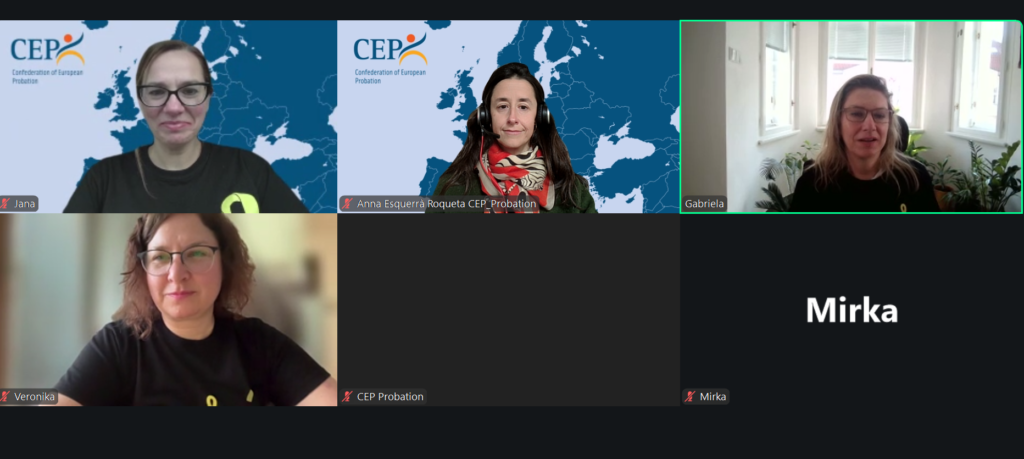
On Thursday 19 March, CEP hosted the second webinar of 2026 on the topic of Alternatives to Detention. The session led by Dr. Gabriela Slovakova from the Czech Probation and Mediation Service titled „Opening Doors to Second Chances: The Mission and Impact of Yellow Ribbon Run“ introduced the Yellow Ribbon project with a powerful message of second chances and fair opportunities.
New
CEP Board
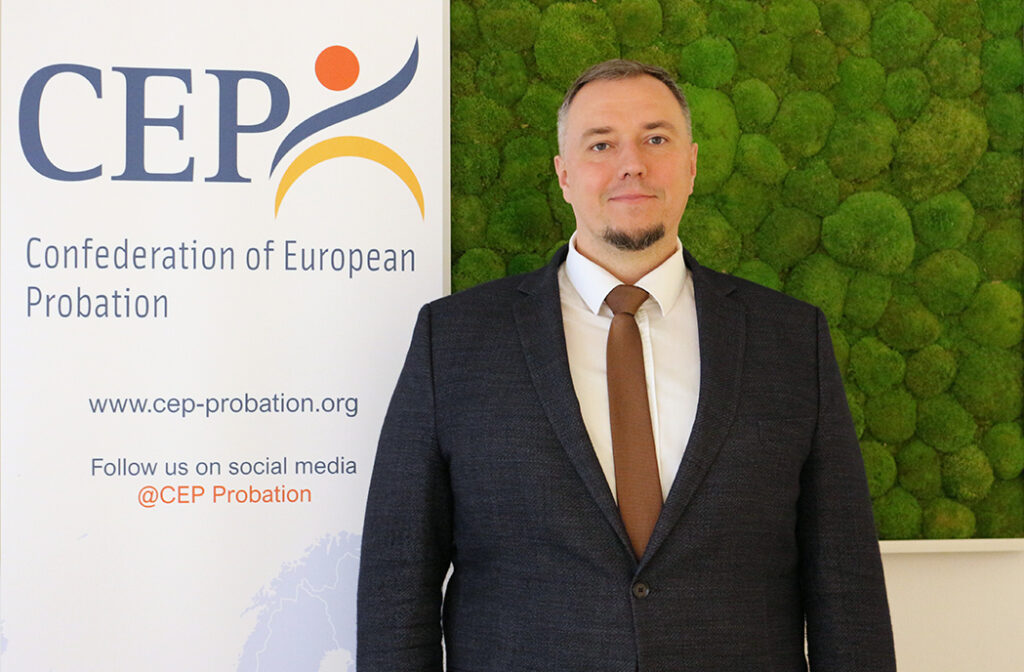
Interview with new CEP board member Žilvinas Miliauskas
17/03/2026
During the General Assembly in Austria, a new CEP Board got elected for the upcoming three years. In the coming weeks we will publish interviews with all newly-elected board members where they will share information on their professional background, how they would like to contribute, what challenges lie ahead and many more.
Enjoy reading!
Recap
Violent Extremism
Recap: Expert Group meeting on Violent Extremism
16/03/2026
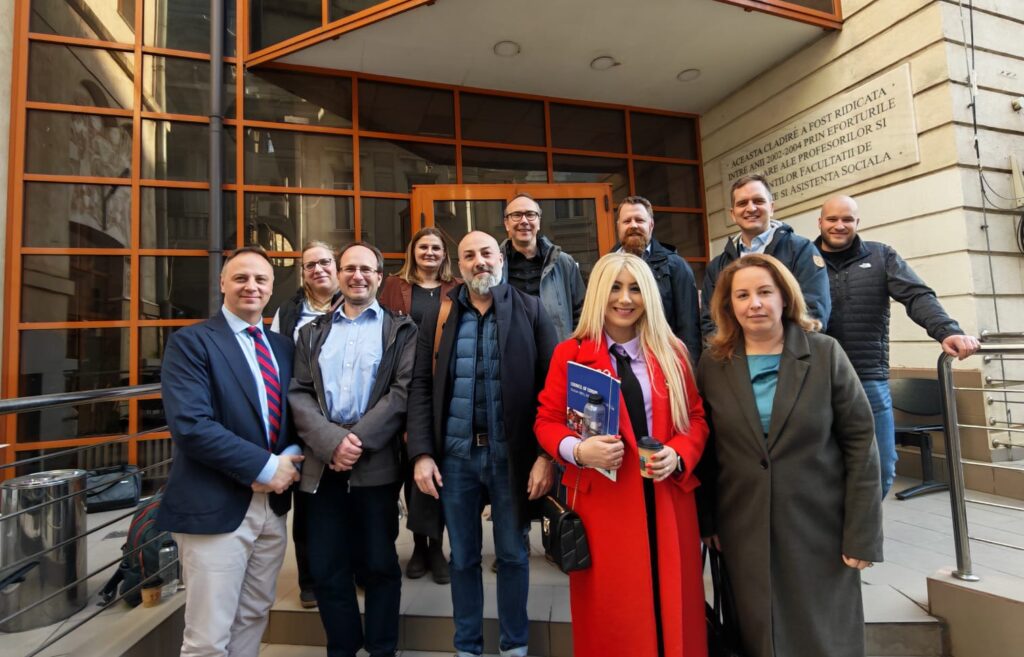
On 12–13 March 2026, the Expert Group on Violent Extremism convened for an in‑person meeting in Bucharest, Romania. Hosted at the University of Bucharest, the meeting brought together practitioners and representatives from across Europe to finalise the overview of best practices for preventive interventions targeting juveniles and young adults up to the age of 26 under probation. Building on the extensive discussions and progress made in 2025, the group worked collaboratively to bring the document to completion.
Subscribe to our bi-monthly email newsletter!
"*" indicates required fields
- Keep up to date with important probation developments and insights.