

Previous Article
News
Working during the corona pandemic: Electronic Monitoring coordinator Vera
Vera coordinates the execution of Electronic Monitoring sanctions (supervision of people wearing an ankle bracelet) and is supervisor on training processes of a cooperation project conducted together with the Dutch Custodial Institutions Agency. Besides this she is doing the master study ‘Forensic Social Professional’ and she is a mother of three young children. The corona period is quite a challenge for her – how does she manage to keep all these things going?
As Electronic Monitoring coordinator Vera is the point of contact for the so-called Electronic Monitoring specialists, colleagues who check if the people wearing an ankle bracelet comply with the conditions that are imposed on them. Vera optimizes the execution of the processes and often takes part in national meetings. Most of the coordinators are also supervising clients with ankle bracelets themselves. “Until last week I was responsible for two clients myself” says Vera. “But because of the double job I am doing now I handed them over to a colleague. It is good though to have your own clients as then you know and recognize what your colleagues are experiencing.”
Because of the corona situation the supervision processes go in a different way than normally. “The specialists mostly work from home”, explains Vera. “They are present when the ankle bracelet is connected, but then need to follow the rules and guidelines of the RIVM (Dutch National Institute for Health and Environment). At the beginning of a supervision process there are face-to-face contacts, but after that almost all the work is done electronically.”
Additional ankle bracelets
To reduce the risk of infections in prisons, the Dutch Custodial Institutions Agency under the Ministry of Justice has decided to allow a group of prisoners who were already in their last phase of detention and therefore spending most of their time outside prison, a temporary leave. They do however need to wear an ankle bracelet in order to be supervised. “All these additional ankle bracelets are quite something for us”, says Vera. “But fortunately our colleagues are willing to take up the extra work. Also supervisors and advisors who normally never work with Electronic Monitoring are now taking things over from us to help. It is extremely important to keep a good overview.”
Role rotation with colleagues
The work processes are different than normally. “There is a schedule for who can work at the office and on which days”, says Vera. “Always one of us has to stay at home for a week in order to minimize the chance of everyone falling ill at the same time.” But it is definitely a hard time, especially since she has to combine her work, master study and children. Vera: “In the first week I was really happy and proud when I had my son doing his school work, but then his teacher called me saying that he was doing the wrong tasks… That was a bit of a disappointment”, she adds laughing.
Contact with colleagues
Fortunately now and then she asks for help and also receives it. “When a colleague calls me to ask how I am doing that is really great. That is the beautiful thing in this period – the fact that everyone is willing to help each other and that you can just ring the bell if necessary. I really feel appreciated by my colleagues and that gives me positive energy.” The same for her team – on a regular basis Vera calls her colleagues to ask how they are doing. “People need to stay motivated and I closely monitor that. But everyone is very much involved.”

Related News
Keep up to date with the latest developments, stories, and updates on probation from across Europe and beyond. Find relevant news and insights shaping the field today.
Recap
Electronic monitoring, Technology
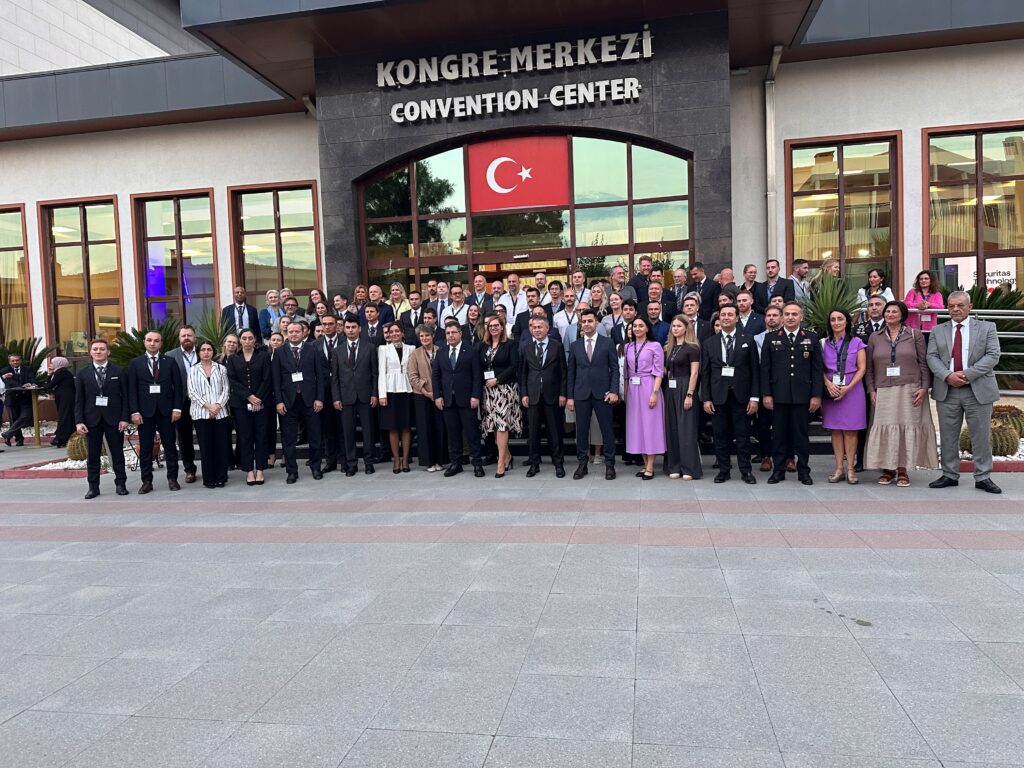
14th Electronic Monitoring Conference, Electronic Monitoring in a Changing World – Perception vs Reality
08/10/2026
On 6-8 October 2026, Antalya hosted the 14th Electronic Monitoring Conference “Electronic Monitoring in a Changing World – Perception vs Reality”. More than 350 participants coming from 30 countries across Europe and worldwide representing probation services, Ministries of Justice, victims´ services, EM providers, researchers as well as local participants representing the Turkish Prison and Probation Service gathered to discuss how electronic monitoring (EM) is understood by all stakeholders involved including the victims and the public, and how these perceptions compare to the evidence and experiences of those affected. While the gap between perception and reality in electronic monitoring has been recognised for over a decade, the rapid expansion of EM into areas such as victim protection, high-risk supervision and digital innovation has brought new challenges and questions to the forefront.
Recap
ITSCCS
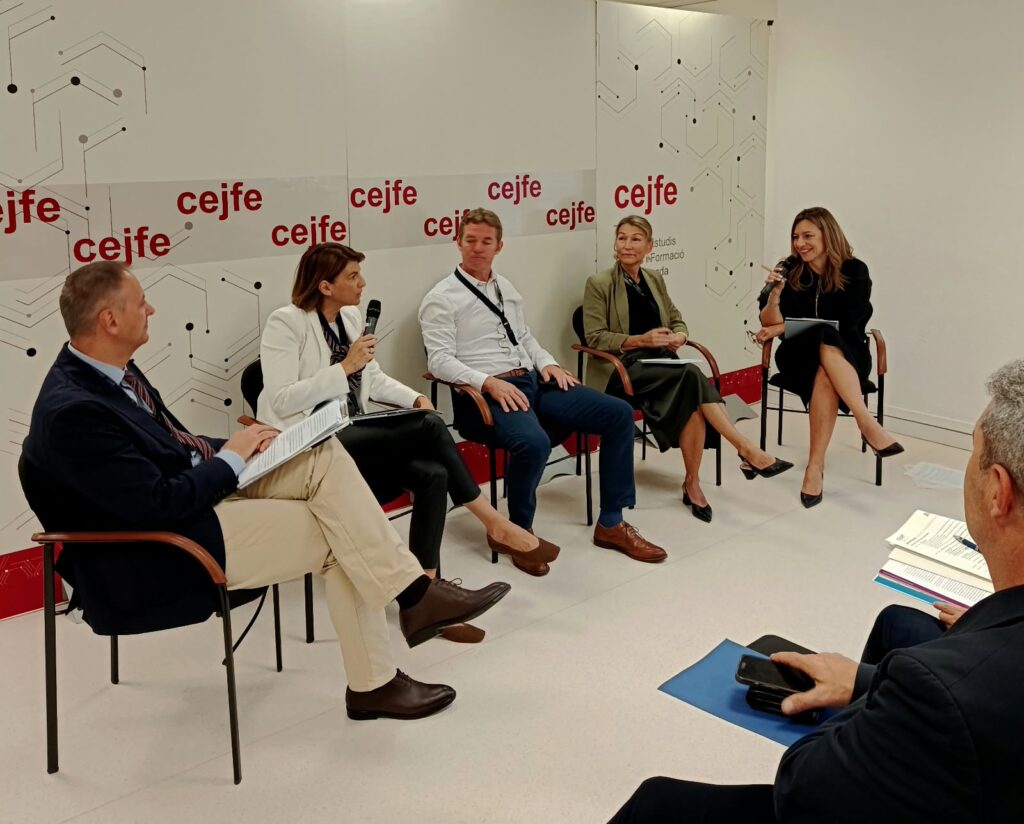
Core Correctional Skills in Digital Probation: highlights from the 6th ITSCCS in Barcelona
05/10/2026
The sixth International Training School on Core Correctional Skills (ITSCCS) took place in Barcelona from 28 September to 2 October 2026, bringing together 26 participants for a week of learning, practical training and international exchange. Organised by the Confederation of European Probation (CEP) and the Centre for Legal Studies and Specialised Training (CEJFE), the programme focused on “Clicks and Empathy: Core Correctional Skills in Digital Probation.”
Recap
Framework Decisions
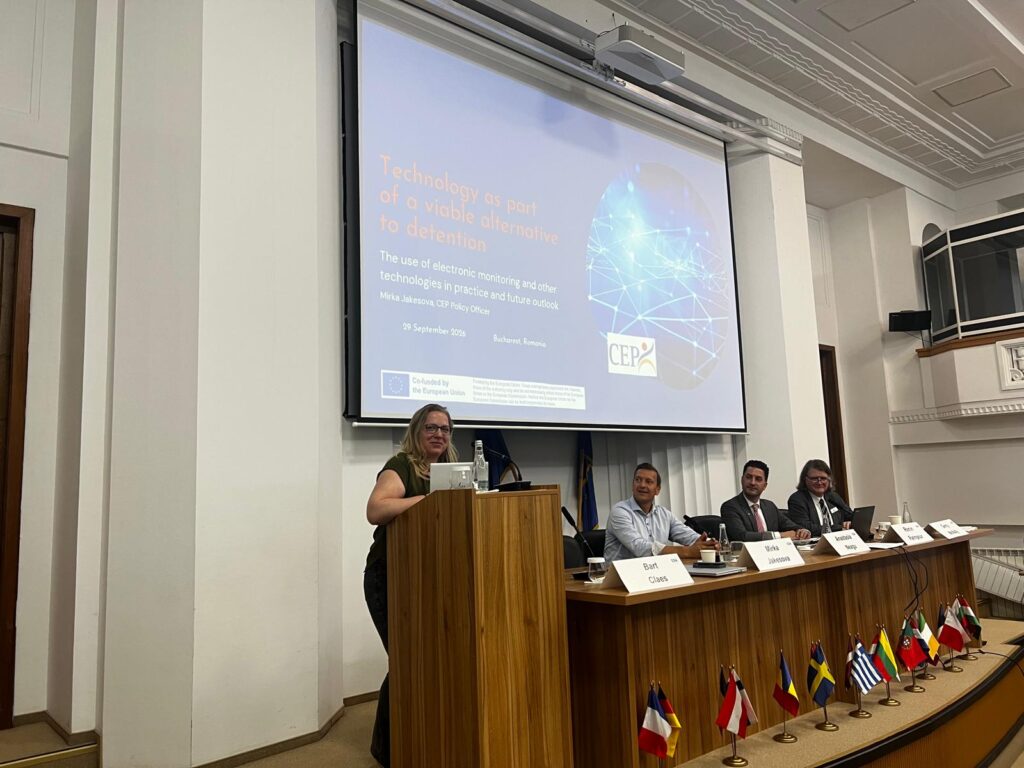
Recap: ERA workshop on Framework Decisions 829 and 947 in Bucharest
02/10/2026
CEP Vice-President Daniel Danglades, Ambassador Gerry McNally and Policy Officer Mirka Jakesova participated in the Seminar on Framework Decisions 829 and 947 and their Impact on Alternatives in the EU organized under the EU project run by the Academy of European Law on 28-29 September in Bucharest, Romania. The seminar brought together judges, prosecutors, probation practitioners, academics, and policy experts to discuss the growing role of alternatives to detention within European criminal justice systems.
New
CEP
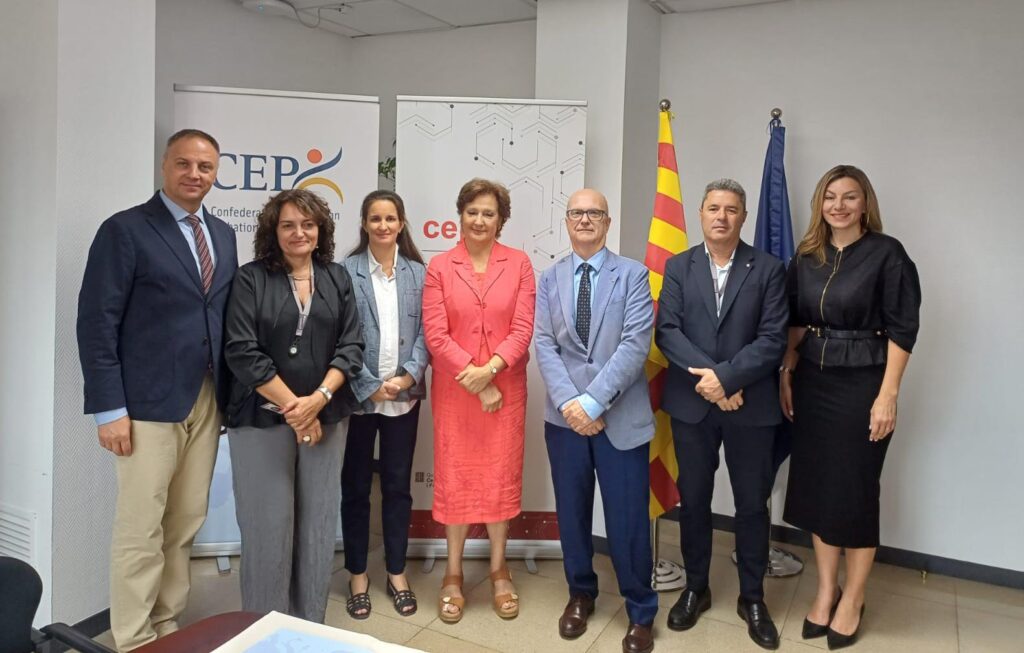
CEP and Catalan justice leaders reaffirm longstanding cooperation
29/09/2026
Representatives of the Confederation of European Probation (CEP) met with senior officials from the Catalan Department of Justice and Democratic Quality in Barcelona on 28 September 2026, alongside the opening of the sixth International Training School on Core Correctional Skills. The meeting offered an opportunity to recognise a longstanding partnership and discuss its continued development.
Updated
Mental Health
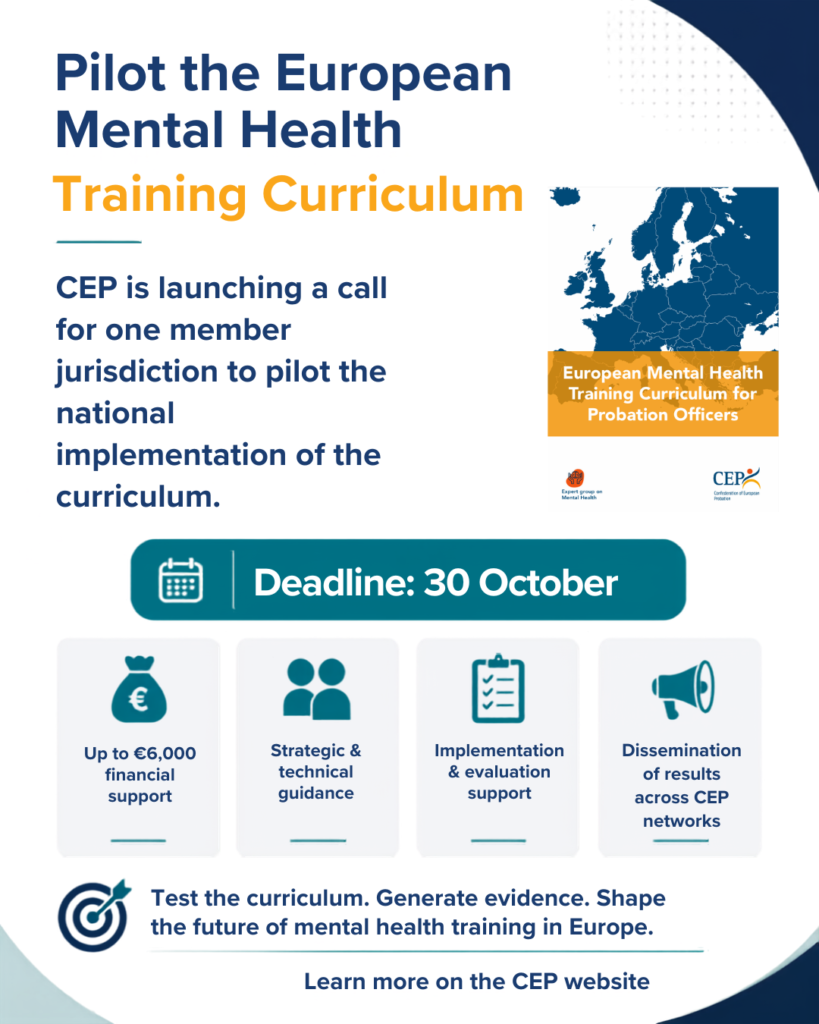
DEADLINE EXTENDED: Call for Pilot Implementation of the European Mental Health Training Curriculum
29/09/2026
Good news for CEP members! Following requests from our members, CEP has extended the deadline to apply for the pilot implementation of the European Mental Health Training Curriculum for Probation Officers.
Recap
ITSCCS, Technology
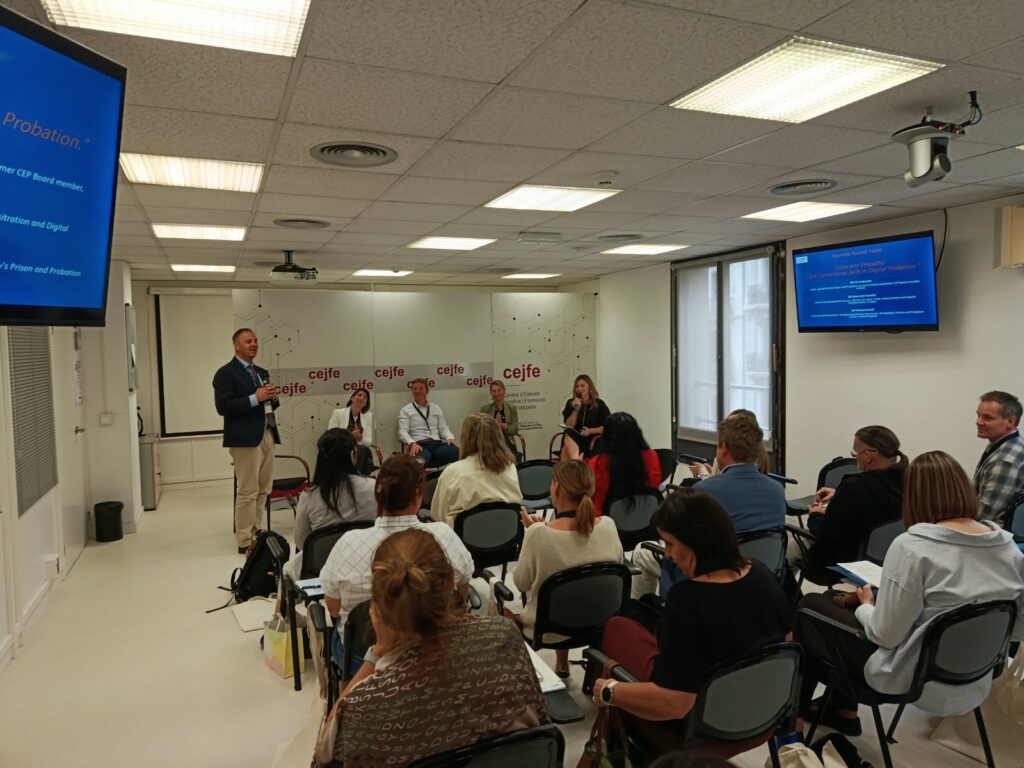
6th International Training School opens in Barcelona with a focus on digital probation
28/09/2026
How can probation professionals use new technologies in their interactions while building trust, showing empathy and supporting change? This question is at the heart of the sixth International Training School on Core Correctional Skills, which opened in Barcelona on 28 September 2026.
Subscribe to our bi-monthly email newsletter!
"*" indicates required fields
- Keep up to date with important probation developments and insights.