

Previous Article
News
The overuse of pre-trial detention as a public policy and human rights problem
Krešimir Kamber is Legal Officer at European Court of Human Rights
Introduction
There is a striking and inherently counterintuitive feature of the use of the prison as a preventive measure in criminal proceedings: a person presumed innocent in accordance with the law and the requirements of civic trust is deprived of liberty while it is still not, at least legally speaking, clear whether he or she has committed a criminal offence.[1] Thus, the person’s liberty or physical freedom – which is one of the most fundamental values of the European legal order enshrined in Article 5 of the European Convention on Human Rights and Article 6 of the Charter of Fundamental Rights of the European Union – is provisionally taken in relation to a criminal offence, which may have in reality not been committed by the person concerned.
This contrast between the importance of the values at stake and the possible outcome of the legal process requires that the use of pre-trial detention is strictly circumscribed in accordance with the rule of law and the protection from arbitrariness.[2] That action primarily commands the identification of risks and the associated adverse effects of pre-trial detention, some of which will be briefly outlined below.
The risks and effects of the overuse of pre-trial detention
There are many aspects of public policy in the criminal justice sphere and individual rights of those concerned that are affected by the overuse of pre-trial detention. Research has shown that in general three dimensions of system performance in corrections are particularly affected by the overuse of the prison: accountability, efficiency, and effectiveness of the system as a whole.[3]
The overuse of pre-trial detention adversely affects the occupancy rates in prisons and the global problem of prison overcrowding. While it is difficult to establish the exact extent to which the overuse of pre-trial detention causes prison overcrowding, it is clear that those held in pre-trial detention amount to a substantial number of detainees at any given time in prisons in Europe and across the world. In particular, it is considered that within the European Union (“EU”) area pre-trial detainees make up roughly one fifth of the prison population,[4] while at the level of the Council of Europe pre-trial detainees account for approximately one fourth of the overall prison population.[5] Similarly, globally, up to a third of the total prison population are pre-trial detainees.[6]
It is therefore safe to assume that overcrowding often occurs in connection with the overuse of pre-trial detention.[7] Moreover, it is not surprising that in its pilot and leading judgments[8] the European Court of Human Rights has addressed the issue of overuse of pre-trial detention and the related problem of prison overcrowding as systemic human rights issues, in respect of which it has indicated to Governments the solutions that needed to be taken in order to address the impugned situation.[9]
The pre-trial detention is also expensive. The costs of pre-trial detention affect the allocation of public resources within the criminal justice system and across other sectors of public expenditure. Globally the budget allocated to the prison system is considered to be largely inadequate.[10] At the European level, in 2018 the daily amount spent for the detention in custody of one person was 68 Euros.[11] This figure should also be viewed against the fact that at the EU level government expenditure for public order and safety in 2018 amounted to 1.7 % of the gross domestic product, out of which only 0.2 % was allocated to prisons.[12] At the same time, it is worth noting that according to some estimates the costs of non-custodial measures or sanctions are lower than the costs of detention.[13]
The overuse of pre-trial detention and the related problem of prison overcrowding are also capable of undermining the principles of mutual recognition and trust in the cooperation between states. Thus, in so far as relevant for the cooperation within the EU, the Court of Justice of the European Union has made it clear in the context of the European Arrest Warrant that the principles of mutual recognition and trust cannot be used to override the adverse effects of systemic problems of inadequate prison conditions.[14]
At the individual level, unwarranted pre-trial detention can have devastating effects on the person concerned and his or her family, and by extension, on the society as a whole. There is evidence showing that persons remanded in pre-trial detention experience serious and sometimes irreversible impacts on their livelihood, family, and health.[15] Suicide rates are also very high in pre-trial detention.[16] Studies have shown that the overuse of pre-trial detention in reality gives rise to greater risk of crime,[17] and is often associated with discrimination and prejudice against the most vulnerable groups in a society.[18]
Conclusion
It is clear from the above that the overuse of pre-trial detention is a public policy concern which is capable of causing different dysfunctions of the criminal justice and global social systems. These dysfunctions, in turn, undermine the rule of law and lead to various breaches of human rights.
It is therefore critical for national governments and the EU to further their efforts in developing alternatives to pre-trial detention. In that respect, the work should be done on promoting probation and empowering the probation services to take on a more important role in ensuring that through the supervision, guidance and assistance, the individual rights of those concerned and the community safety considerations are properly balanced.
* Lawyer, Registry of the European Court of Human Rights; Postdoctoral Fellow, Ghent University, Faculty of Law and Criminology. Opinions expressed are personal.
[1] See further, Duff, “Pre-Trial Detention and the Presumption of Innocence”, in Ashworth et al (eds) Prevention and the Limits of the Criminal Law (Oxford University Press 2013).
[2] S., V. and A. v Denmark (ECHR 2018), para 73 GC.
[3] Mears, “Accountability, Efficiency, and Effectiveness in Corrections: Shining a Light on the Black Box of Prison Systems”, (7) 2008 Criminology and Public Policy 143.
[4] Fair Trials International (“FTI”), A Measure of Last Resort? The practice of pre-trial detention decision making in the EU (2016), para 112.
[5] Aebi and Tiago, Prisons and Prisoners in Europe 2019: Key Findings of the SPACE I report (2020), p 6.
[6] C. Heard and H. Fair, Pre-Trial Detention and Its Over-Use: Evidence from Ten Countries (Institute for Crime & Justice Policy Research, 2019), p vii.
[7] European Parliamentary Research Service, The Cost of Non-Europe in the area of Procedural Rights and Detention Conditions (2017), p. 127; Preamble to the Recommendation Rec(2006)13 of the Committee of Ministers to member states on the use of remand in custody, the conditions in which it takes place and the provision of safeguards against abuse.
[8] See further Glass, “The Functioning of the Pilot-Judgment Procedure of the European Court of Human Rights in Practice”, 34(1) 2016 Netherlands Quarterly of Human Rights 41.
[9] The pilot judgments concern: Bulgaria (Neshkov and Others v Bulgaria 2015); Hungary (Varga and Others v Hungary 2015); Poland (Orchowski v Poland and Norbert Sikorski v Poland 2009); Romania (Rezmiveș and Others v Romania 2017); Russia (Ananyev and Others v Russia 2012); and Ukraine (Sukachov v. Ukraine 2019). The most relevant leading cases concern: Belgium (Vasilescu v Belgium 2014); France (J.M.B. and Others v France 2020); and Slovenia (Mandić and Jović v Slovenia 2011).
[10] Penal Reform International (“PRI”), Global Prison Trends (2020), p 7.
[11] Aebi and Tiago, n 5, p 14.
[12] Eurostat Prison Statistics (available at https://ec.europa.eu/eurostat/statistics-explained/index.php?title=Prison_statistics; last visited 26.09.2020).
[13] PRI, n 10, p 17.
[14] Aranyosi and Căldăraru, Joined Cases C-404/15 and C-659/15 PPU, 5 April 2016; ML, C‑220/18 PPU, 25 July 2018; Dumitru-Tudor Dorobantu, C‑128/18, 15 October 2019.
[15] FTI, n 4, para 12; PRI, n 10, p 18.
[16] Schönteich, The Scale and Consequences of Pretrial Detention around the World (Open Society Justice Initiatives, 2008), p 19.
[17] Heard and Fair, Pre-Trial Detention and Its Over-Use: Evidence from Ten Countries (Institute for Crime & Justice Policy Research, 2019), pp 7-8.
[18] PRI, n 10, p 18.

Related News
Keep up to date with the latest developments, stories, and updates on probation from across Europe and beyond. Find relevant news and insights shaping the field today.
Recap
Electronic monitoring, Technology
14th Electronic Monitoring Conference, Electronic Monitoring in a Changing World – Perception vs Reality
08/10/2026
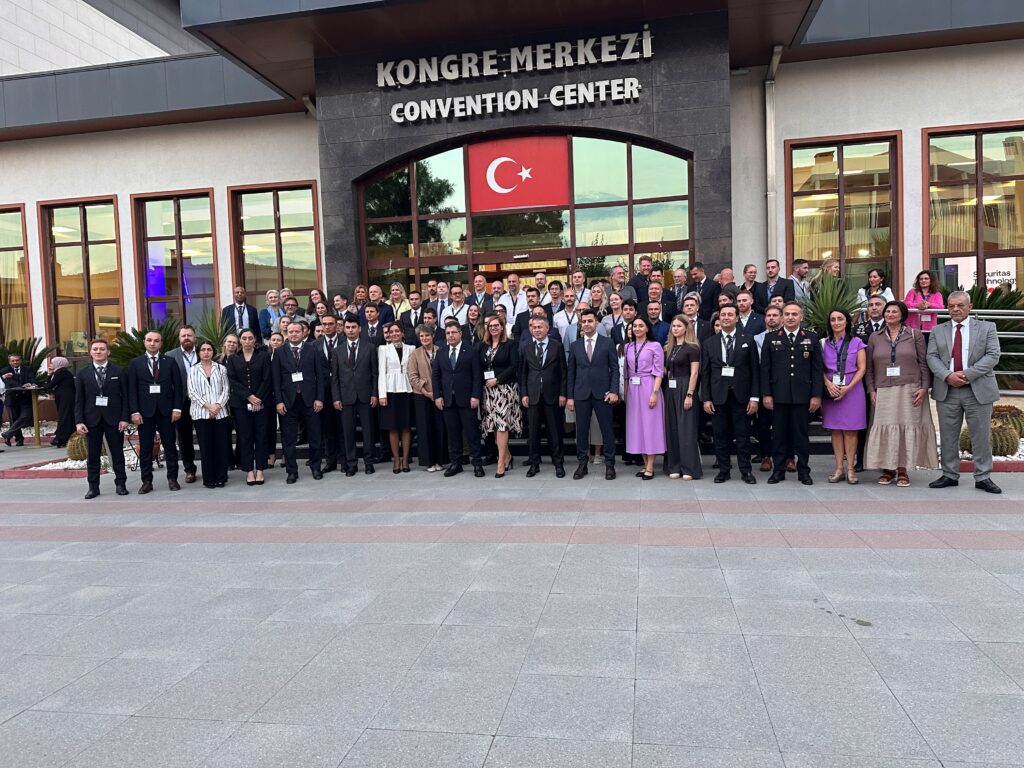
On 6-8 October 2026, Antalya hosted the 14th Electronic Monitoring Conference “Electronic Monitoring in a Changing World – Perception vs Reality”. More than 350 participants coming from 32 countries across Europe and worldwide representing probation services, Ministries of Justice, victims´ services, EM providers, researchers as well as local participants representing the Turkish Prison and Probation Service gathered to discuss how electronic monitoring (EM) is understood by all stakeholders involved including the victims and the public, and how these perceptions compare to the evidence and experiences of those affected. While the gap between perception and reality in electronic monitoring has been recognised for over a decade, the rapid expansion of EM into areas such as victim protection, high-risk supervision and digital innovation has brought new challenges and questions to the forefront.
Recap

ITSCCS
Core Correctional Skills in Digital Probation: highlights from the 6th ITSCCS in Barcelona
05/10/2026
The sixth International Training School on Core Correctional Skills (ITSCCS) took place in Barcelona from 28 September to 2 October 2026, bringing together 26 participants for a week of learning, practical training and international exchange. Organised by the Confederation of European Probation (CEP) and the Centre for Legal Studies and Specialised Training (CEJFE), the programme focused on “Clicks and Empathy: Core Correctional Skills in Digital Probation.”
Recap

Framework Decisions
Recap: ERA workshop on Framework Decisions 829 and 947 in Bucharest
02/10/2026
CEP Vice-President Daniel Danglades, Ambassador Gerry McNally and Policy Officer Mirka Jakesova participated in the Seminar on Framework Decisions 829 and 947 and their Impact on Alternatives in the EU organized under the EU project run by the Academy of European Law on 28-29 September in Bucharest, Romania. The seminar brought together judges, prosecutors, probation practitioners, academics, and policy experts to discuss the growing role of alternatives to detention within European criminal justice systems.
New

CEP
CEP and Catalan justice leaders reaffirm longstanding cooperation
29/09/2026
Representatives of the Confederation of European Probation (CEP) met with senior officials from the Catalan Department of Justice and Democratic Quality in Barcelona on 28 September 2026, alongside the opening of the sixth International Training School on Core Correctional Skills. The meeting offered an opportunity to recognise a longstanding partnership and discuss its continued development.
Updated

Mental Health
DEADLINE EXTENDED: Call for Pilot Implementation of the European Mental Health Training Curriculum
29/09/2026
Good news for CEP members! Following requests from our members, CEP has extended the deadline to apply for the pilot implementation of the European Mental Health Training Curriculum for Probation Officers.
Recap

ITSCCS, Technology
6th International Training School opens in Barcelona with a focus on digital probation
28/09/2026
How can probation professionals use new technologies in their interactions while building trust, showing empathy and supporting change? This question is at the heart of the sixth International Training School on Core Correctional Skills, which opened in Barcelona on 28 September 2026.
Subscribe to our bi-monthly email newsletter!
"*" indicates required fields
- Keep up to date with important probation developments and insights.