

Previous Article
News
Probation work during corona: “My contact with clients is more frequent and intense than ever”
An article written by Fréderique, behavioral trainer and supervisor at the Dutch Probation Service for Addicted Offenders (SVG)
To carry out probation work during the corona pandemic requires creativity and adaptability. Fortunately there are many colleagues who were able to adapt themselves extremely quickly to the new situation and to continue their work in an innovative way, or even help out others in places where support was urgently needed.
“Before the corona virus came to the Netherlands I had just begun giving the BORG training (on stopping violence in relations, red.) to four clients”, Fréderique starts. “A small, nice group. However now because of the Covid-19 measures the group trainings cannot take place I try my best to keep in touch with all four participants. Especially in these times there is an increased risk of domestic violence, so I do not want to lose sight of them. I regularly call them by phone and remind them of the tools we used in the BORG trainings. During these moments of contact I can feel that they do not experience this as “control”, but appreciate the support very much.”
From the attic
Besides BORG Fréderique also gives Lifestyle trainings. “I regularly deliver these sessions individually and tailor-made”, she explains. “Like recently for a client who had just started and was very motivated to make something out of it. After talking to the supervisor in charge I asked this client if he would be willing to follow the training online? His answer was positive so I now give these video-call trainings from my – fortunately classically styled – attic at home.”
Keep motivated
“I have a flipchart here and a small desk – in that way I can make notes for him. I send my instructions via email or whatsapp and that goes really well. The giving of online trainings is quite intensive – you constantly see yourself and have to invest in keeping the conversation going. But on the other hand it gives me a lot of satisfaction, because by doing so I can keep my client’s motivation alive – something that might not have been possible if the training would have stopped for a long period. My client is now able to keep his drug and alcohol abuse under control even during this difficult time.”
Hotline via telephone
“Also regarding supervision matters I am in frequent contact with clients. Every Monday morning I have a telephone hotline with them as they all want to talk. These are very difficult times for them, with the risk of falling back on drugs or alcohol again. They speak to me openly about this – in fact during this period my contact with clients is more frequent and intense than ever. Where normally I spoke them once every two weeks, we are now in contact via telephone twice a week. It really brings you closer to one another.”
Working alliance
“Even though we work from home there is fortunately still a lot of contact between colleagues. We discuss our work cases and share questions and experiences. Naturally there are also whatsapp groups for more light-hearted things and jokes.
My advice to best deal with the actual situation would be: keep in mind your own needs and feel grateful for small things like a “thank you” from a client. And ask others something like “Hey, are you still holding on?” . Also in a difficult time like this the working alliance is of great importance – even though we are not sitting physically together.”

Related News
Keep up to date with the latest developments, stories, and updates on probation from across Europe and beyond. Find relevant news and insights shaping the field today.
New
CEP Board
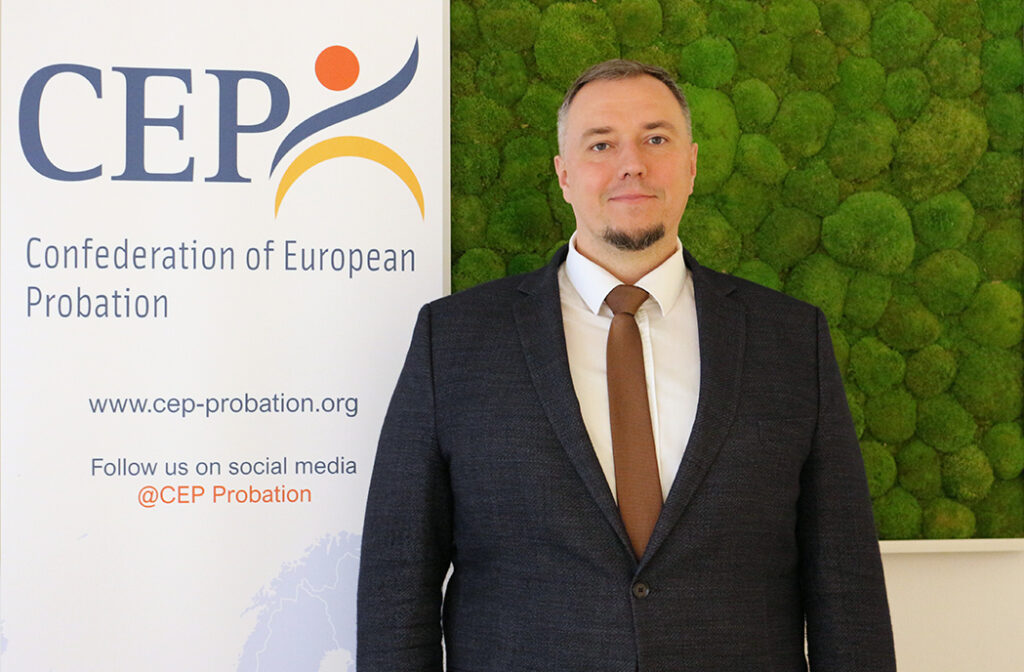
Interview with new CEP board member Žilvinas Miliauskas
17/03/2026
During the General Assembly in Austria, a new CEP Board got elected for the upcoming three years. In the coming weeks we will publish interviews with all newly-elected board members where they will share information on their professional background, how they would like to contribute, what challenges lie ahead and many more.
Enjoy reading!
Recap

Violent Extremism
Recap: Expert Group meeting on Violent Extremism
16/03/2026
On 12–13 March 2026, the Expert Group on Violent Extremism convened for an in‑person meeting in Bucharest, Romania. Hosted at the University of Bucharest, the meeting brought together practitioners and representatives from across Europe to finalise the overview of best practices for preventive interventions targeting juveniles and young adults up to the age of 26 under probation. Building on the extensive discussions and progress made in 2025, the group worked collaboratively to bring the document to completion.
Recap
Electronic monitoring
Recap: CEP Expert Group meeting at ATGV Antalya
12/03/2026
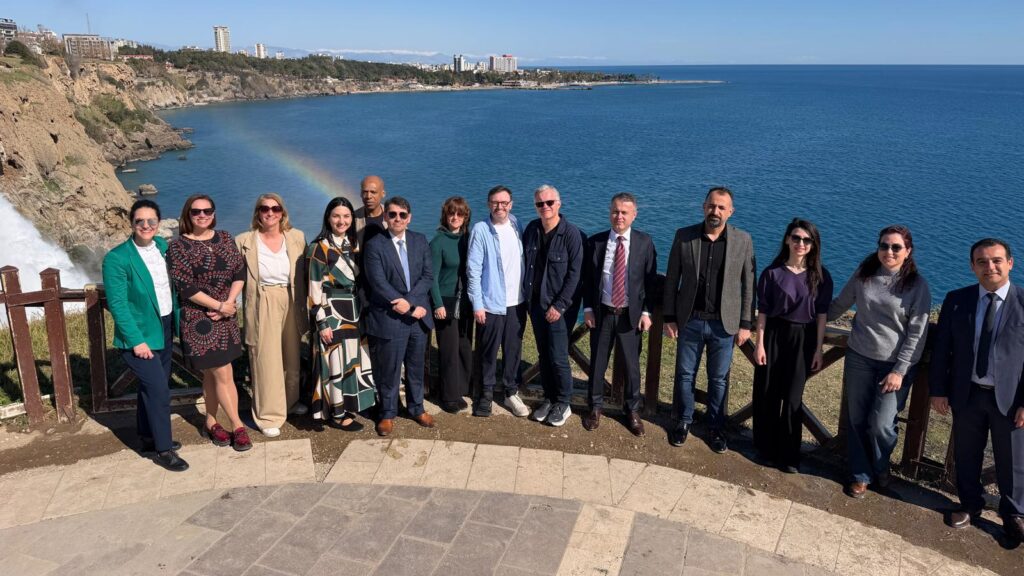
The CEP Expert Group on Electronic Monitoring, along with representatives of the CEP Office led by Mr. Daniel Danglades, CEP Vice-President, visited the Education and Social Facility of the Ministry of Justice in Türkiye – ATGV Antalya. The host country was represented by a high-level delegation, including Deputy Director General Mr. Fatih Güngör, Head of the Turkish Probation Department Dr. Hüseyin Şık, Member of the CEP EM Expert Group Ms. Elçin Kilecioğlu, as well as the Director and representatives of the ATGV facility, and officials from the courts, prosecution, and probation services in Antalya.
Recap
Education and Training
Recap: CEP Expert Network on Education and Training in Probation meets with the European Commission to discuss the EU Judicial Training Strategy
11/03/2026
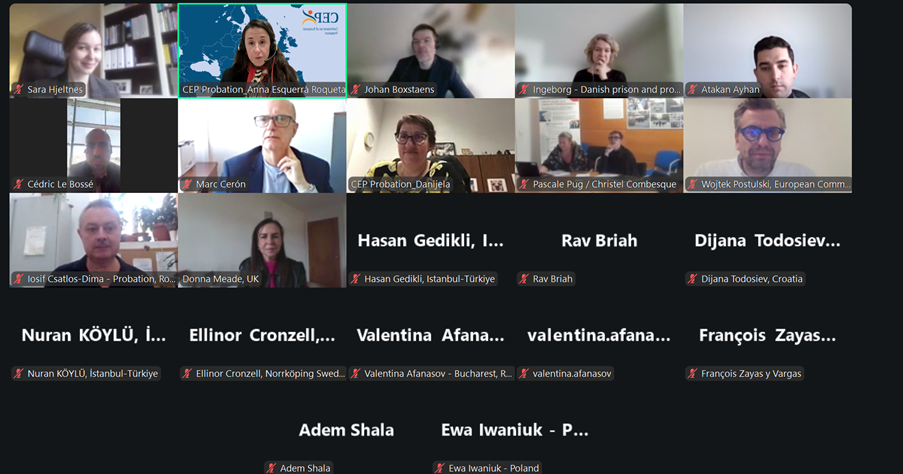
On 11 March 2026, the CEP Expert Network on Education and Training in Probation met online with more than 20 participants from Belgium, Denmark, Sweeden, France, Romania, Croatia, Catalonia, Poland, United Kingdom and Türkiye to exchange views with the European Commission on the newly adopted EU Judicial Training Strategy 2025–2030.
The meeting provided a valuable opportunity for representatives of probation training institutions across Europe to engage directly with European Commission officials and discuss how the strategy may impact the training of probation and prison staff in the coming years.
Probation Journal

Women, youth
Understanding the needs of girls and young women in youth justice
10/03/2026
New research highlights the underlying needs that influence girls’ and young women’s contact with youth justice systems and calls for more gender responsive approaches in policy and practice. Drawing on a review of recent studies, the authors identify several factors shaping girls’ pathways into the justice system, including persistent abuse, trauma, gendered expectations, and systemic failures. Girls involved in youth justice are often affected by multiple forms of victimisation, such as sexual abuse, neglect, and domestic violence, with experiences frequently beginning in early childhood.
New
CEP Board
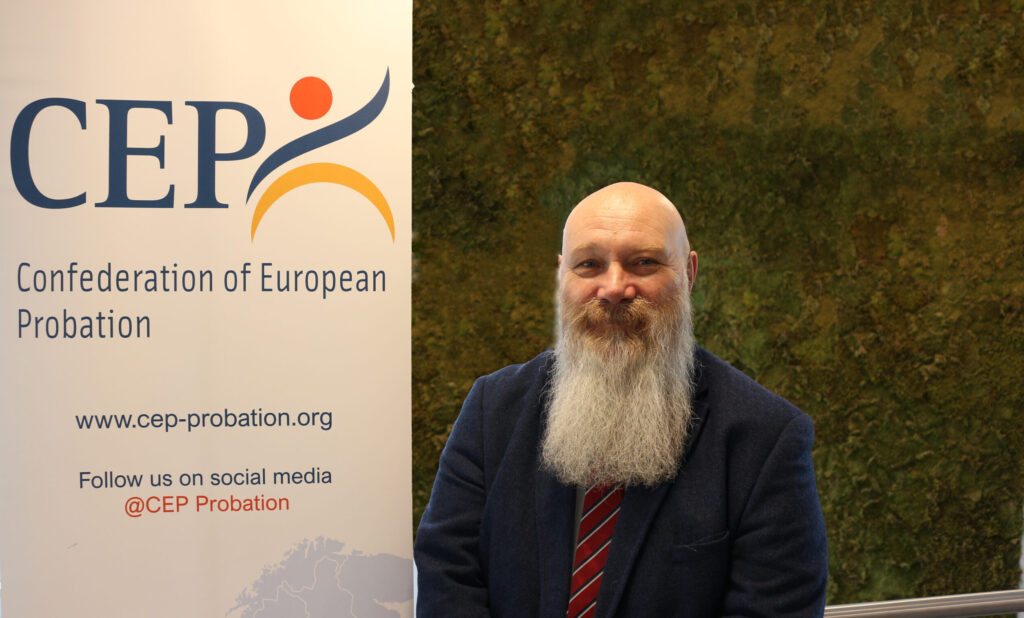
Interview with new CEP board member Ian Barrow
09/03/2026
During the General Assembly in Austria, a new CEP Board got elected for the upcoming three years. In the coming weeks we will publish interviews with all newly-elected board members where they will share information on their professional background, how they would like to contribute, what challenges lie ahead and many more.
Enjoy reading!
Subscribe to our bi-monthly email newsletter!
"*" indicates required fields
- Keep up to date with important probation developments and insights.