














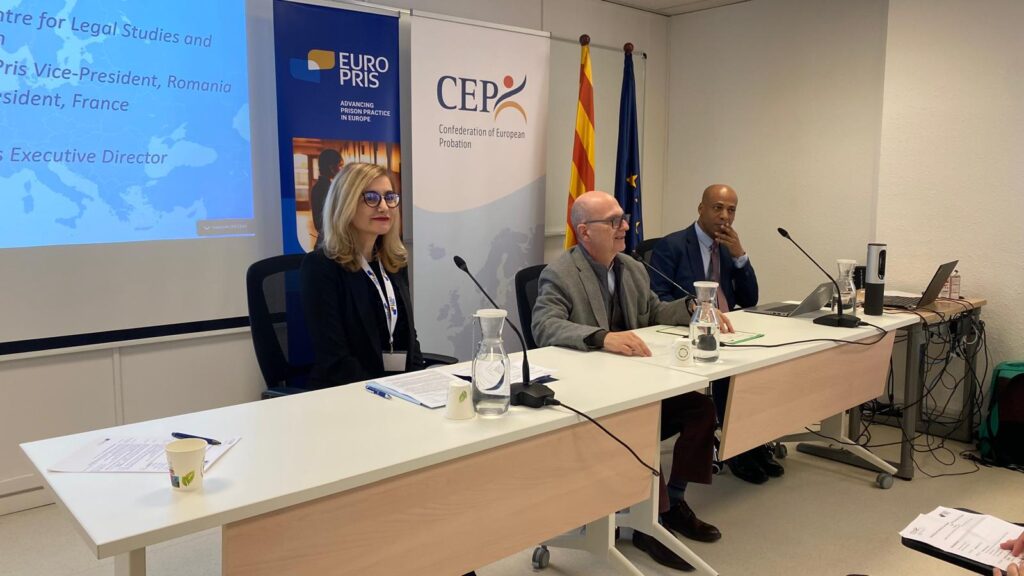
The event opened with warm remarks from Marc Cerón i Riera, Director of the Centre for Legal Studies and Judicial Training (Catalonia), Dr. Ioana-Mihaela Morar, Vice-President of EuroPris (Romania), and Daniel Danglades, Vice-President of CEP (France). Their messages highlighted the critical need for coordinated support and oversight of clients during the transition period, as the risk of reoffending is highest without continuity of care. Strong cooperation between prisons, probation services, and other professionals in the field forms the cornerstone of an effective criminal justice system.
Day 1 featured keynote presentations exploring the desistance journeys of prison-leavers—from the moment they prepare to leave prison through the first 18 months after release. These discussions left participants with a crucial question: What counts as success, and for whom? Who should be responsible for judging, measuring, and evaluating successful desistance? Another presentation focused on restorative approaches to support transition, emphasizing the importance of dialogue, considering all perspectives, and undertaking the restorative justice process regardless of the outcome. The session on challenges in releasing older prisoners engaged participants in a discussion about the main hurdles in preparing older prisoners for release. It also examined the rationale behind keeping older prisoners in prison versus granting early release. Last presentation introduced the small-scaled detention houses emphasizing the need for ecosystem-based continuity rather than traditional institutional continuity.
Day 2 began with presentations on national practices from Estonia, Croatia, and Germany, showcasing three distinct models of collaboration among prisons, probation services, and other criminal justice stakeholders. This was followed by interactive workshops on trauma-informed homes and networking between prison and probation services. The day concluded with presentations on the Catalan Social Participation Board, research exploring the boundaries between the penal voluntary organizations and correctional services, and the role of criminal justice social workers to the desistance process.
The event closed with a strong message: continuity of care and control is not just a policy goal—it’s a shared responsibility for safer, more inclusive communities across Europe.
CEP and EuroPris would like to thank the Center for Legal Studies and Specialized Training (Barcelona, Catalonia-Spain) for the support with organization of the workshop.
Presentations
They All Come Out: Mapping the Desistence Journeys of 150 Prison-Leavers over 18 Months
by Helen Kosc, United Kingdom

Restorative Approaches to Support the Transition from Prison to Probation
by Edit Törzs, Belgium
Old prisoners and Release: Rethinking Continuity of Care and Control in the Transition from Prison to Probation
by Dr. Marion Vannier and Daniel Danglades, France
Detention Houses & Ecosystems of Social (Re)Integration
by Veronique Aicha, Belgium
TUKO – Estonia’s framework for secure collaboration to support community reintegration and enhance safety in the transition from prison to probation
by Jana Elken, Estonia
Croatian model - Puzzle for a safer society
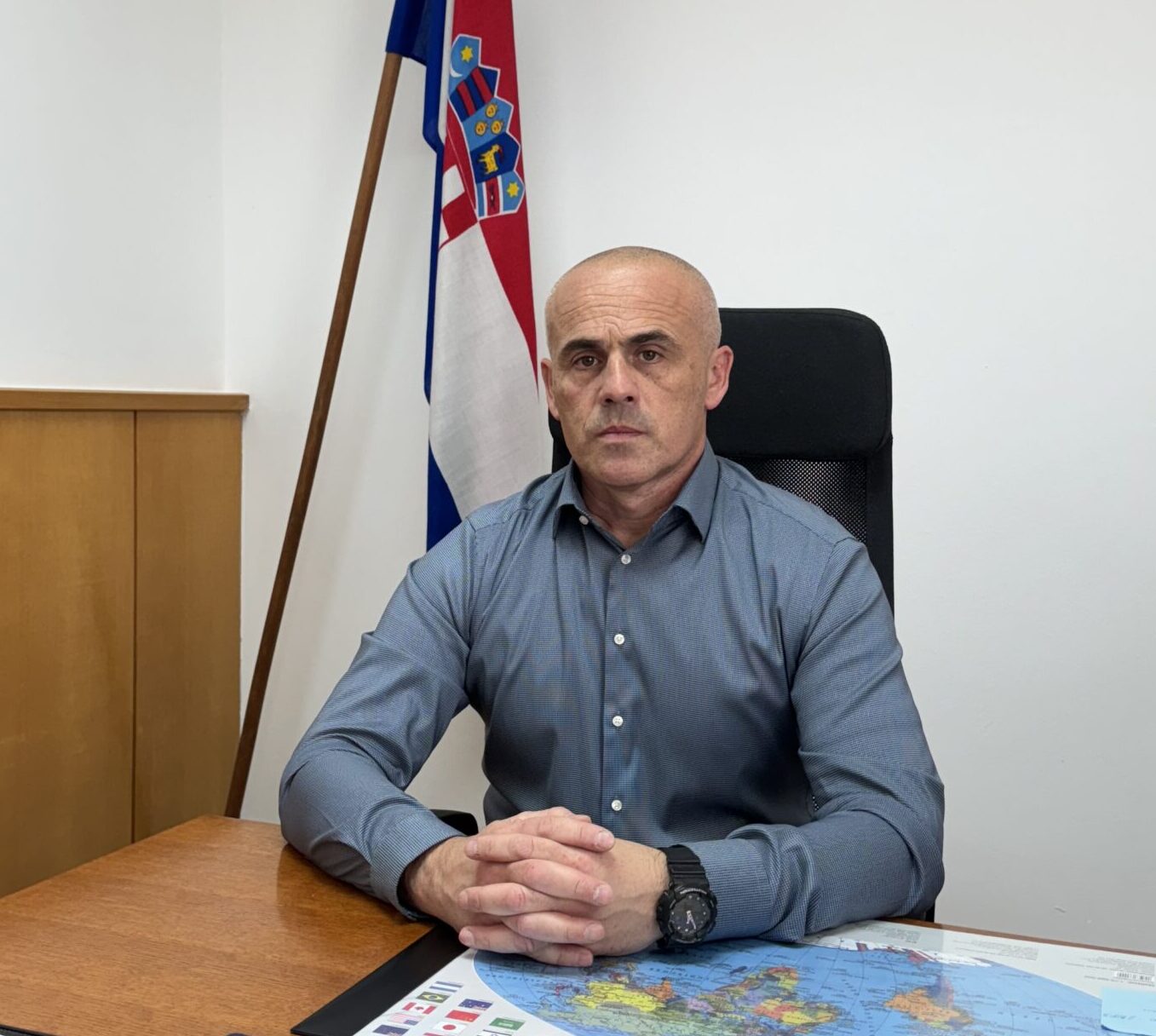
by Petar Rukavina, Croatia
Integrated Offender Management in Mecklenburg-Western Pomerania: The InStar-Approach and the LaStar-Structure
by Kay Gau, Germany
Trauma-Informed Homes: Balancing Care and Control in the Journey from Custody to Community
by Ellie MacCarter, Charmaine Smart, Claire Jones, United Kingdom
Networking between prison and probation services in Baden-Württemberg – Common database
by Julia Audick, Germany
Social Participation Board and Impact in the Transition between Prison and Community
by Domingo Estepa Camacho, Catalonia-Spain
by Domingo Estepa Camacho, Catalonia-Spain
The blurring of boundaries between penal voluntary organizations and the correctional Services - Lived experiences of desistance support during resettlement
by Sylvia Koffeld-Hamidane
The Role of Criminal Justice Social Workers in the Desistance Process
by Olga Dominguez Sorribes