

Previous Article
News
Cyber-offenders versus traditional offenders
Cybercrimes, especially cyber-dependent crimes (like hacking, web defacement, and malware), challenge the way we traditionally explain and prevent offending. The anonymous digital context in which these crimes take place may have changed, for example, situations in which opportunities for committing crime occur, skills and personality characteristics needed to commit these crimes, and perceptions of consequences of offending. In my dissertation research I empirically compared cyber-dependent offenders with traditional offenders on four criminological domains: 1. offending over the life-course (family life and employment/education), personal and situational risk factors for offending, deviance of social ties, and motives for offending. In this text I briefly discuss results and practical implications.
For offending over the life-course I used longitudinal Dutch registration data for the period of 2000-2012. The longitudinal nature allowed me to look at the effect of changes in life-circumstances within one person, which means that the results are stronger than when comparisons are made between people with different life-circumstances. For family life I found that, in comparison to living alone, living with a family reduces the likelihood of cyber-offending. These estimates were in the same direction and even stronger for cybercrime compared to traditional crime. With respect to employment and education, however, there was no statistically significant effect of employment or enrollment in education, while these did reduce traditional offending. Within this study’s offender population, general employment reduced the likelihood of cyber-offending, but IT-sector employment and enrollment in education increased this likelihood. These results seem to indicate that social control of others may reduce the likelihood of cyber-offending, but traditionally protective life circumstances like employment can increase opportunities.
Victim-offenders
For the other three domains of research, I collected cross-sectional survey data. Respondents in this survey had been suspected of a cybercrime or a traditional crime in the past. The survey included questions about their current behavior and personal and situational characteristics. For the second domain, I compared patterns in personal and situational risk factors for separate groups of offenders-only, victims-only and victim-offenders, between cybercrime and traditional crime. I used these three groups, as offenders are often also victims and vice versa. Results indicated that this victim-offender overlap also exists for cybercrime. For both cybercrime and traditional crime, victim-offenders had more risk factors than offenders-only. Differences were mostly found in situational risk factors, as online activities are more important for cybercrime, while offline activities are more important for traditional crime. Cybercrime offenders-only were most different from traditional offenders. They committed relatively more technically sophisticated crimes. This was also reflected in their risk factors like high IT-skills, higher self-control, and online activities in which they could increase criminal IT-skills. For victim-offenders, on the other hand, IT-skills were also a risk factor, but less so compared to offenders-only. In addition, low self-control and more general online routine activities, in which both opportunities for offending and risks for victimisation could emerge, were related to victimisation-offending.
Deviance and social ties
Third, I compared the relation between deviance of an individual and deviance of social ties. A statistically significant similarity in deviance was found for cybercrime, but comparison with traditional crime indicated that this similarity was much weaker for cybercrime. Subsequently, I found that both for cybercrime and traditional crime the similarity is stronger for daily-contacted ties of the same gender. However, for cybercrime the relation is strongest for older ties, while for traditional crime the relation is strongest for same-aged ties. Therefore, older role models may be relatively more important for cybercrime compared to traditional crime.
Committing the crime
Lastly, I found that cyber-dependent crime is seldom committed by offenders who also commit traditional crime. Cybercrimes often committed by the same offender appeared to be part of the same modus operandi or to be related because they require the same skill set and context. In addition, I examined self-reported motives for committing these offenses. Cyber-offenders in this sample almost never indicated financial motives. Intrinsic motives, like curiosity and learning from committing crimes, were most important. Extrinsic motives were less important for cybercrime compared to traditional crime, but hacking and internet related crimes were also committed to put things straight or deliver a message, and internet related crimes were also committed out of revenge, anger or to bully someone. Impressing others or gaining power was rarely indicated as a motive for cyber-offending.
Conclusions
For a discussion of limitations of this study and future research suggestions I refer to the discussion of my dissertation. With regard to practical implications, authorities that are responsible for designing and executing prevention and intervention programs, are advised to carefully design and implement evaluation studies. When using interventions designed for traditional offenders, empirically identified differences and similarities between cyber-offenders and traditional offenders should be kept in mind.
Based on my results it is to be expected that interventions for cybercrime may benefit from stimulating offenders to satisfy their curiosity in legitimate ways. One way may be to help them find employment in which they could use their skills. It is, however, important that cyber-offenders are offered ethical guidance in their path to a legitimate profession and both strong formal and informal social control should be established. Another promising way may be to assign them to a mentor. It could also be useful to know that more skilled offenders may behave more rational and they may be able to assess different ways in which they could act responsibly after discovering a vulnerability.
Click on the link to read the full research report “Cyber-offenders versus traditional offenders: An empirical comparison“.

Related News
Keep up to date with the latest developments, stories, and updates on probation from across Europe and beyond. Find relevant news and insights shaping the field today.
Recap

Electronic monitoring, Technology
14th Electronic Monitoring Conference, Electronic Monitoring in a Changing World – Perception vs Reality
08/10/2026
On 6-8 October 2026, Antalya hosted the 14th Electronic Monitoring Conference “Electronic Monitoring in a Changing World – Perception vs Reality”. More than 350 participants coming from 30 countries across Europe and worldwide representing probation services, Ministries of Justice, victims´ services, EM providers, researchers as well as local participants representing the Turkish Prison and Probation Service gathered to discuss how electronic monitoring (EM) is understood by all stakeholders involved including the victims and the public, and how these perceptions compare to the evidence and experiences of those affected. While the gap between perception and reality in electronic monitoring has been recognised for over a decade, the rapid expansion of EM into areas such as victim protection, high-risk supervision and digital innovation has brought new challenges and questions to the forefront.
Recap

ITSCCS
Core Correctional Skills in Digital Probation: highlights from the 6th ITSCCS in Barcelona
05/10/2026
The sixth International Training School on Core Correctional Skills (ITSCCS) took place in Barcelona from 28 September to 2 October 2026, bringing together 26 participants for a week of learning, practical training and international exchange. Organised by the Confederation of European Probation (CEP) and the Centre for Legal Studies and Specialised Training (CEJFE), the programme focused on “Clicks and Empathy: Core Correctional Skills in Digital Probation.”
Recap
Framework Decisions
Recap: ERA workshop on Framework Decisions 829 and 947 in Bucharest
02/10/2026
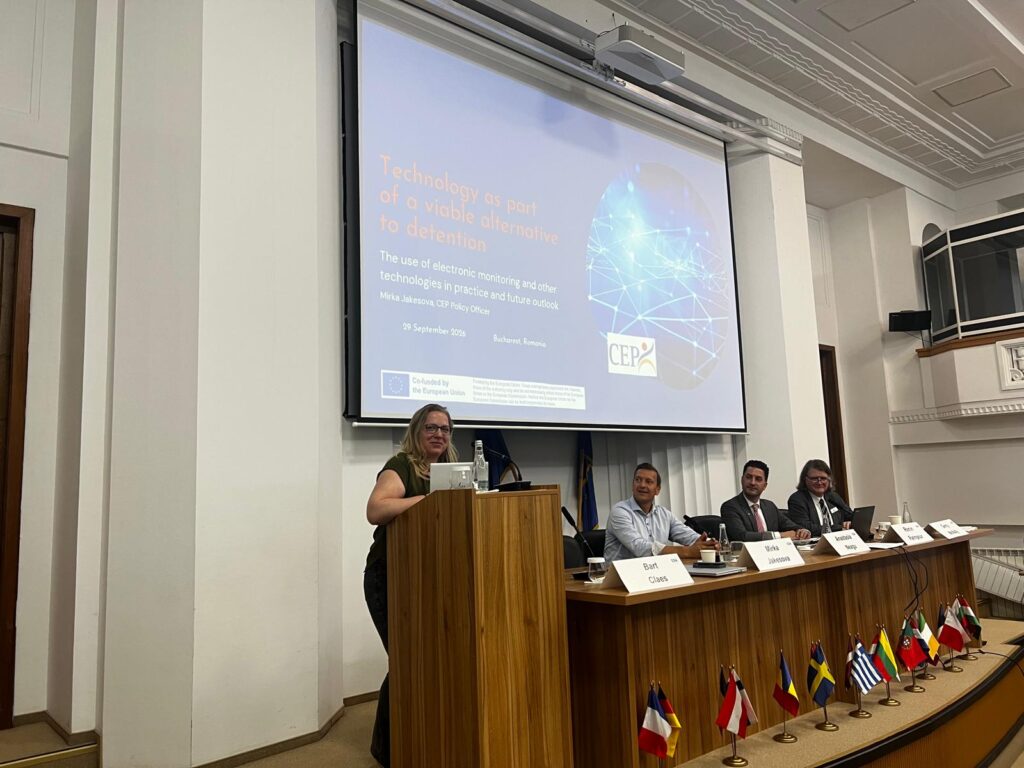
CEP Vice-President Daniel Danglades, Ambassador Gerry McNally and Policy Officer Mirka Jakesova participated in the Seminar on Framework Decisions 829 and 947 and their Impact on Alternatives in the EU organized under the EU project run by the Academy of European Law on 28-29 September in Bucharest, Romania. The seminar brought together judges, prosecutors, probation practitioners, academics, and policy experts to discuss the growing role of alternatives to detention within European criminal justice systems.
New
CEP
CEP and Catalan justice leaders reaffirm longstanding cooperation
29/09/2026
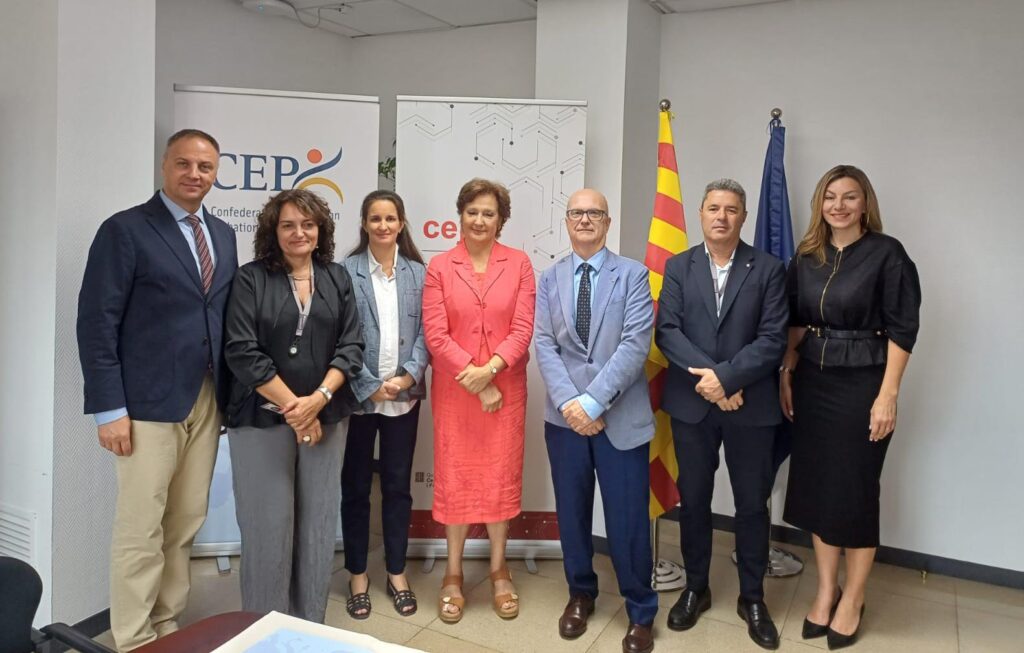
Representatives of the Confederation of European Probation (CEP) met with senior officials from the Catalan Department of Justice and Democratic Quality in Barcelona on 28 September 2026, alongside the opening of the sixth International Training School on Core Correctional Skills. The meeting offered an opportunity to recognise a longstanding partnership and discuss its continued development.
Updated

Mental Health
DEADLINE EXTENDED: Call for Pilot Implementation of the European Mental Health Training Curriculum
29/09/2026
Good news for CEP members! Following requests from our members, CEP has extended the deadline to apply for the pilot implementation of the European Mental Health Training Curriculum for Probation Officers.
Recap

ITSCCS, Technology
6th International Training School opens in Barcelona with a focus on digital probation
28/09/2026
How can probation professionals use new technologies in their interactions while building trust, showing empathy and supporting change? This question is at the heart of the sixth International Training School on Core Correctional Skills, which opened in Barcelona on 28 September 2026.
Subscribe to our bi-monthly email newsletter!
"*" indicates required fields
- Keep up to date with important probation developments and insights.