

Previous Article
News
CEP interview: Hazel Kemshall on the SOMEC project
“This issue is a serious one”. SOMEC researcher Hazel Kemshall of the Demontfort University (UK) marks in a few words the scale of harm posed to the EU community by serious violent or sexual offenders who travel across EU borders. The EU funded project SOMEC (Serious Offending by Mobile European Criminals) aims to improve information exchange and cross-border supervision. An interview with Hazel Kemshall on the findings and recommendations of the SOMEC project.
Can you explain the importance of the SOMEC project?
“How do you measure a problem? By impact or by numbers? In the case of serious violent or sexual offenders, it’s only a small group of offenders, but their crimes have a tremendous impact on both the victims and their families and society. At the final SOMEC conference, the unbelievable harm done by a mobile serious offender was made painfully clear by the mother of a woman named Moira Jones. At the conference opening, she open-heartedly spoke of her daughter who was raped and murdered only 100 yards from her home by a Slovakian man who had previous violence convictions in his home-country. The story of Moira does not stand alone. More European countries have their own horrific stories of crimes committed by serious offenders who are known to be (sexually) violent in their home country. Seeking for new crime opportunities, they travel to other European states. With an increasing number of people travelling throughout Europe, we can assume that the problem of mobile offenders is increasing as well. Most Member States acknowledge the threat of travelling by violent offenders and are willing to take action. The SOMEC project responds by exploring practical, most likely to be implemented steps for the prevention of crime by travelling serious offenders.”
The project has three main aims:
- To assess the threat posed to European citizens when serious violent or sexual offenders travel between EU Member States.
- To identify the methods and effectiveness of mechanisms used by EU Member States in the management of serious violent or sexual offenders travelling across borders.
- To explore critical success factors and provide recommendations to facilitate the improved exchange of information for the prevention of crime.
How was the research conducted?
We conducted fieldwork research, interviewing law enforcement and offender management personnel across Europe on the approach to information exchange on serious violent or sexual offenders taken by operational staff. Participants were asked to comment on the process and effectiveness of current methods for information exchange across the EU. In addition, we organized a series of task group discussions, mainly comprising the same professionals that were interviewed. This ensured a highly dedicated group of participants who can be ambassadors for the project within their own organization.
This research is the heart of the project, because we needed to do a lot checking and collecting good evidence on the weaknesses and required changes in the current mechanisms. The questions focused on a range of possible circumstances:
- Mandatory exchange of conviction data under ECRIS (European Criminal Record Information System)
- Exchanges occurring as part of current investigation and criminal proceedings
- Exchange information on a serious violent or sexual offender who was not currently subject to any form of investigation or formal sanction, but who was thought to be mobile across Europe, posing a high likelihood of serious harm to others.
Another part of the research was the management, monitoring and information exchange, including restrictions, post-custody supervision, community supervision.”
Did any of the participants experience the research of the effectiveness of their used mechanisms as criticism?
“Not at all. All participants were very open and willing to contribute to this project. There is a lot of variation in the way Member States handle the management and monitoring of serious offenders and record and exchange conviction data and intelligence information. But it is no matter of right or wrong. The way to approach this specific issue with a very specific target group is about finding the most effective mechanisms and systems. It is also a matter of ethics and costs. How much precautions are you willing to make? What are the costs? What about privacy and basic human rights? The views of the different Member States vary. For example, some countries advocate the restoration of the full rights of liberty and privacy to a citizen following the completion of any formal sanction. Then, it is very difficult to monitor the whereabouts of the offender or ex-offender.”
What are the key findings of the research?
“As to be expected, the biggest challenge lies in the proactive and preventive exchanges of information. For many Member States, the available information simply becomes intelligence data which is not acted upon until another offence occurs. And when relevant information is exchanged, the timeline and quality are key for the receiving country to respond effectively. Serious violent or sexual offenders are relatively few in number and need to be appropriately identified in the first instance. Professionals should determine and assess the information on a case by case basis. And any information on ongoing travel by the offender should be communicated.”
What are the main recommendations, specifically in the field of offender management?
“On a very practical level, all law enforcement and offender management personnel should have a comprehensive overview of existing methods of information exchange across EU borders. Also, guidelines for risk assessment and templates for exchange will directly contribute to the prevention of crime. Other recommendations ask for more time and effort, for example the adoption of an EU wide position on post custody release, monitoring and supervision for this group of offenders. Keeping the speech of Moira Jones’s mother in mind, every step we take, small or profound, is one step closer to prevent these serious crimes.”
Other members of the Somec research team:
Sarah Hilder (DMU), Michael Scott (ACRO), Tony Grapes (DMU), Gill Kelly (DMU), Bernadette Wilkinson (DMU), Jo Chilvers (DMU), Sue Westwood (DMU) and Chris Alcott (DMU).

Related News
Keep up to date with the latest developments, stories, and updates on probation from across Europe and beyond. Find relevant news and insights shaping the field today.
New

Electronic monitoring
Electronic Monitoring in Europe: Insights from the 13th Electronic Monitoring conference Questionnaire
30/03/2026
The 13th Electronic Monitoring (EM) conference Questionnaire has now been released, offering a comprehensive overview of how EM is applied across Europe today.ion.
New
CEP members
New CEP member: Guernsey Probation Service
25/03/2026
In recent weeks, CEP has interviewed individual members and representatives of the new member organisations that joined CEP at the beginning of 2026. In these interviews, the new member organisations or individual members will share information on why they decided to become members, how they would like to contribute to the development of CEP and many more.
Enjoy reading!
Recap

Probation outside Europe
Recap: CEP and APPA webinar
25/03/2026
Confederation of European Probation (CEP) and American Probation and Parole Association (APPA) hosted the second joint webinar on 24 March 2026, this time on “Integrity of Performance: Ensuring Meaningful and Ethical Outcomes”.
The overarching theme of integrity of performance was explored through two distinct perspectives on this fundamental concept.
Recap
Communication and Awareness-Raising
Recap: Opening Doors to Second Chances: The Mission and Impact of Yellow Ribbon Run
25/03/2026
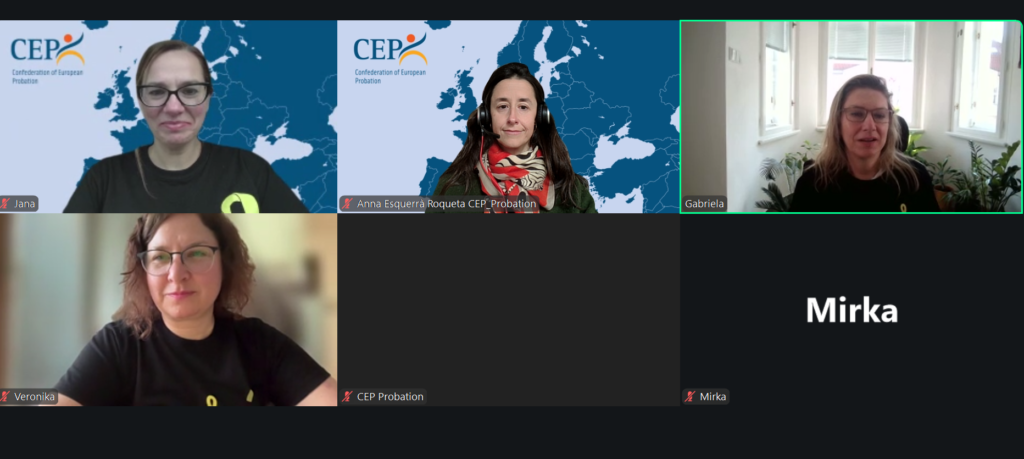
On Thursday 19 March, CEP hosted the second webinar of 2026 on the topic of Alternatives to Detention. The session led by Dr. Gabriela Slovakova from the Czech Probation and Mediation Service titled „Opening Doors to Second Chances: The Mission and Impact of Yellow Ribbon Run“ introduced the Yellow Ribbon project with a powerful message of second chances and fair opportunities.
New
CEP Board
Interview with new CEP board member Žilvinas Miliauskas
17/03/2026
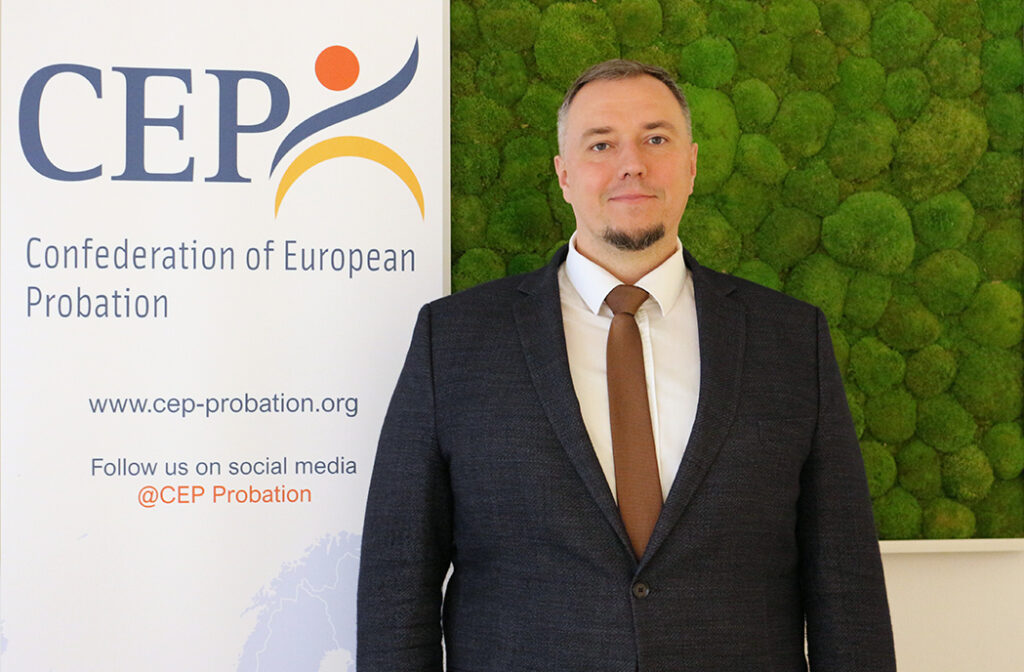
During the General Assembly in Austria, a new CEP Board got elected for the upcoming three years. In the coming weeks we will publish interviews with all newly-elected board members where they will share information on their professional background, how they would like to contribute, what challenges lie ahead and many more.
Enjoy reading!
Recap
Violent Extremism
Recap: Expert Group meeting on Violent Extremism
16/03/2026
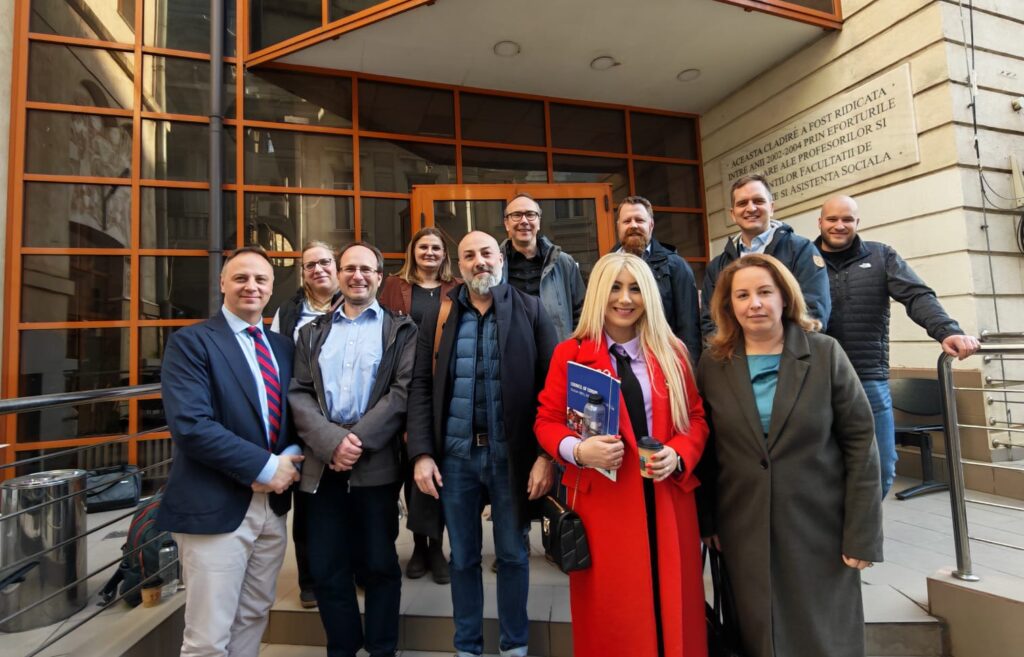
On 12–13 March 2026, the Expert Group on Violent Extremism convened for an in‑person meeting in Bucharest, Romania. Hosted at the University of Bucharest, the meeting brought together practitioners and representatives from across Europe to finalise the overview of best practices for preventive interventions targeting juveniles and young adults up to the age of 26 under probation. Building on the extensive discussions and progress made in 2025, the group worked collaboratively to bring the document to completion.
Subscribe to our bi-monthly email newsletter!
"*" indicates required fields
- Keep up to date with important probation developments and insights.