

News
DEADLINE EXTENDED | Call for nominations | CEP Expert Group on Technology in Probation
We are looking for a new colleague/expert interested to join the CEP Expert Group on Technology. The deadline to send your nomination is extended to Sunday 30 June 2024. Send your submission to: mirka@cep-probation.org
The expert group on technology has currently been finishing the practice recommendations regarding technologies in probation that will be presented during the Webinar on Technology (3rd series) on 19 September 2024. A new expert is expected to join in the group as of the autumn 2024.
Background
The Expert Group meeting on Technology was held for the first time in March 2017 in Stockholm, Sweden. The aim of the Expert Group is to improve co-ordination and co-operation between CEP members regarding the wide specter of ongoing technological innovation projects in probation. It provides the opportunity for lead experts of CEP members (policy developers, project managers, ICT specialists, practitioners etc.) to meet and discuss today’s challenges, solutions and share ideas for further development of the technological domain in probation.
Membership
The Expert Group consists of 8 members and the membership takes 2 years (2024-2026) with possible extension for another 2 years. We are looking for a steady member of the Expert Group that will be part of the team and bring new knowledge, expertise, experience, and will, at the same time, be committed to the work of the Expert Group. The meetings take place annually (combination of face-to-face, online or hybrid).
Travel and accommodation
Travel and accommodation costs for participating in the face-to-face meeting once a year are reimbursed by CEP. Other costs related to the Expert Group shall be borne by the Expert Group member’s organization or by the expert.
Basic criteria
- CEP membership (full, individual, associate) or in case you are not a CEP member the recommendation letter from the CEP member is required;
- a CV (preferably Europass format);
- a short letter of motivation (150 words maximum) including relevance of this topic for your country, your expertise and experience, and optionally, a recommendation letter from your organization (150 words max);
- an expertise and experience in dealing with the topic of technology in probation (please specify this in your motivation letter);
- commitment to international working groups, appropriate time allocation for the tasks;
- not being a current member of another CEP Expert group/network.
Responsibilities of expert group members are to:
- attend and actively participate at the expert group meetings (face-to-face or online);
- represent their jurisdiction on the topic of the expert group and benefit from broader European knowledge and expertise;
- report back to their agency / share knowledge, expertise, and information within their own jurisdiction (dissemination and promotion of the work and results);
- stay updated on the latest trends on the topic of the expert group and actively contribute to development, implementation and optimization of the meetings, action plan during and in-between the meetings;
- work between meetings to produce a specific common outcome such as guidelines, mapping, among others – if needed;
- contribute to the professional development in the given topic;
- develop their professional skills and expertise;
- contribute to the development of specific topic-related events within the CEP work programme (webinars, workshops, conferences).
Please note that in the composition of an expert group aspects such as geography, gender, background and other relevant aspects shall be taken into consideration.
For more information please contact Ms. Mirka Jakesova (mirka@cep-probation.org).

Related News
Keep up to date with the latest developments, stories, and updates on probation from across Europe and beyond. Find relevant news and insights shaping the field today.
Technology
Registration deadline approaching: Join CEP’s final workshop of 2026 on technology in probation
22/10/2026
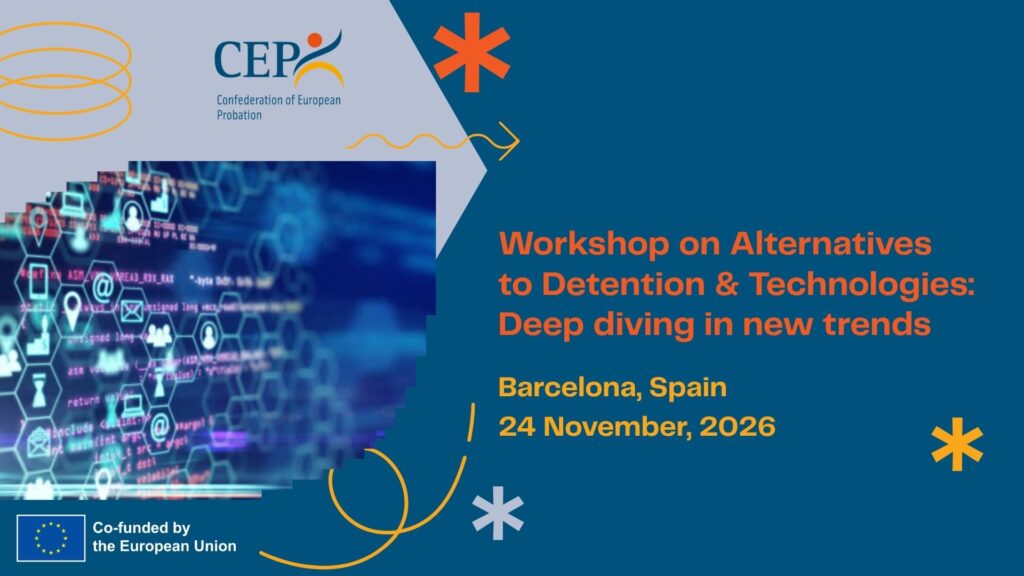
📢 Have you registered yet? CEP’s final workshop of 2026 takes place on 24 November in Barcelona, bringing together professionals to explore how technology is being used across probation services in Europe.
The Workshop on Alternatives to Detention and Technologies: Deep Diving into New Trends will look beyond artificial intelligence to examine the different ways technology is shaping probation practice, from staff training to working with clients and collaborating with other criminal justice partners.

Directors General Meetings
CEP Leadership Excellence Training: strengthening leadership and cooperation across Europe
22/10/2026
The CEP Leadership Excellence Training, held on 20–21 October in Zagreb, Croatia, brought together Directors General and senior probation managers from 11 European countries for a two-day interactive programme focused on leadership, communication, staff development, and international cooperation.

CEP
Call for Proposals: Evaluation of CEP Expert Groups
21/10/2026
On behalf of Ms. Jana Špero Kamenjarin, CEP Secretary General, it is my pleasure to invite you to submit a proposal to conduct an evaluation within the CEP work programme.

Uncategorized
CEP at UNODC: Contributing to the Development of Probation Services Worldwide
19/10/2026
The Confederation of European Probation (CEP) was represented by its Secretary General, Jana Špero Kamenjarin, at the Expert Group Meeting on the Establishment of Probation Services and Probation Practices, organised by the United Nations Office on Drugs and Crime (UNODC) and held at the Vienna International Centre (VIC) from 12 to 14 October 2026.
Electronic monitoring, Technology
14th Electronic Monitoring Conference, Electronic Monitoring in a Changing World – Perception vs Reality
08/10/2026
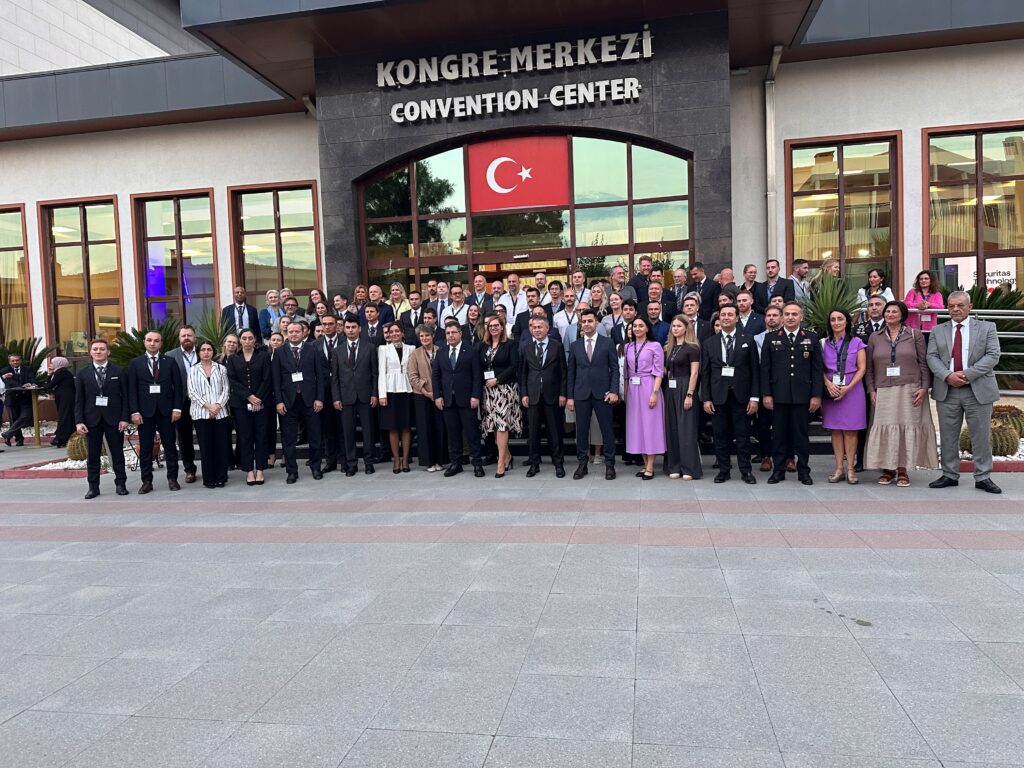
On 6-8 October 2026, Antalya hosted the 14th Electronic Monitoring Conference “Electronic Monitoring in a Changing World – Perception vs Reality”. More than 350 participants coming from 32 countries across Europe and worldwide representing probation services, Ministries of Justice, victims´ services, EM providers, researchers as well as local participants representing the Turkish Prison and Probation Service gathered to discuss how electronic monitoring (EM) is understood by all stakeholders involved including the victims and the public, and how these perceptions compare to the evidence and experiences of those affected. While the gap between perception and reality in electronic monitoring has been recognised for over a decade, the rapid expansion of EM into areas such as victim protection, high-risk supervision and digital innovation has brought new challenges and questions to the forefront.
ITSCCS
Core Correctional Skills in Digital Probation: highlights from the 6th ITSCCS in Barcelona
05/10/2026
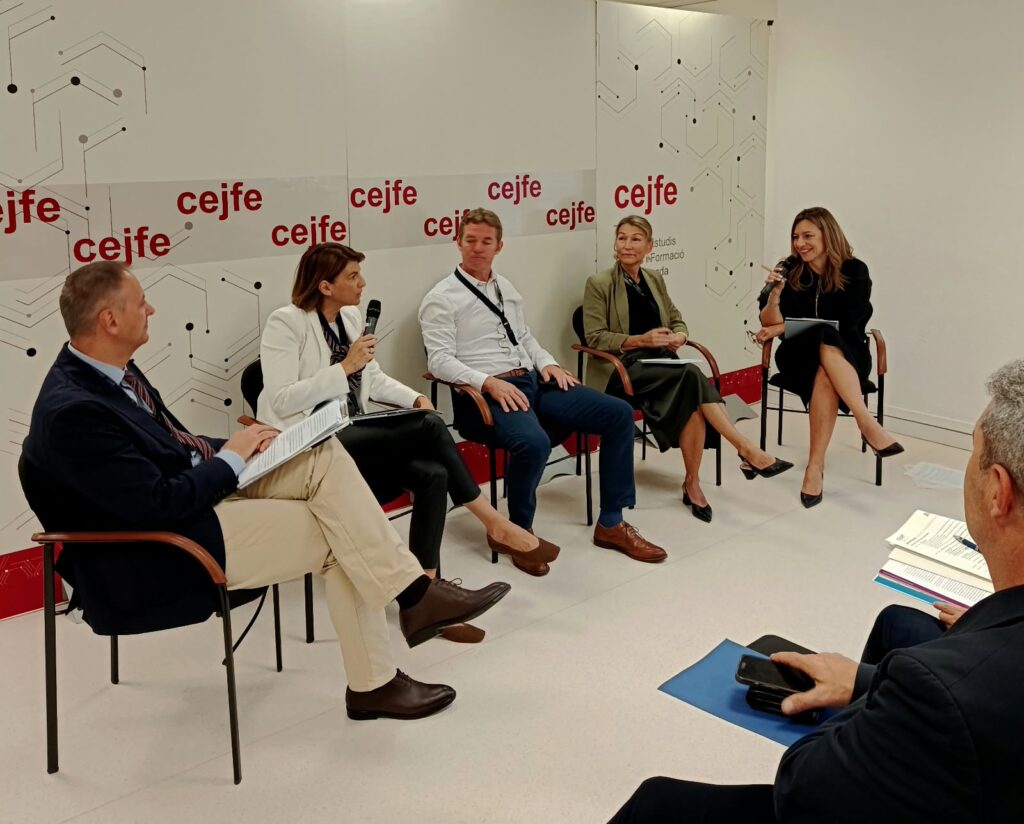
The sixth International Training School on Core Correctional Skills (ITSCCS) took place in Barcelona from 28 September to 2 October 2026, bringing together 26 participants for a week of learning, practical training and international exchange. Organised by the Confederation of European Probation (CEP) and the Centre for Legal Studies and Specialised Training (CEJFE), the programme focused on “Clicks and Empathy: Core Correctional Skills in Digital Probation.”
Subscribe to our bi-monthly email newsletter!
"*" indicates required fields
- Keep up to date with important probation developments and insights.