

Previous Article
News
An interview with Ursula Fernée about Dublin’s play ”Stronger” by Geoff Power
Assistant Principal Probation Officer Ursula Fernée, Irish Probation Service in conversation with the CEP, on a Restorative Justice based play which will feature as a reading/webinar in Dublin Theatre Festival Programme on the 7th October 2020.
My role and the organisation
I have worked in the Probation Service for what might best be described a as, well substantial number of years. My experience in practitioner and management roles has ranged across prison and community work, staff training and project development. I am currently based in the Operations Directorate with responsibility for the Restorative Justice and Victim Services Unit. Established in October 2019 with a national remit, the Unit oversees and supports the delivery of restorative justice in probation practice. It provides a central point of contact to respond to a range of victim requests that may include a request for mediation. I am a core member of the cross- European project entitled “Strategies for Change” that emanated from the 10th conference of the European Forum for Restorative Justice and commenced for a four-year period in 2019.
The Probation Service works collaboratively with criminal justice stakeholders as well as our partner community agencies to reduce reoffending and support rehabilitation and community reintegration. In July, this year we were delighted to welcome the appointment of the new Probation Service Director, Mark Wilson. This summer also saw the launch of the new Programme for Government – Our Shared Future, which includes a commitment to working with all criminal justice agencies to build a capacity that delivers Restorative Justice safely and effectively.
Can you tell me something about the storyline of the play and what is the meaning of the title “Stronger”
The play revolves around a woman whose life is thrown into a sea of pain and turmoil when she is sexually assaulted by a young man, someone she knows and cares about. The writer draws us in to her everyday normal routine. When that normality is shattered, we follow the twists and turns of this woman’s journey through the criminal justice system. We have access to her uniquely personal quest for understanding, meaning and ultimately a form of resolution that makes sense to her. I may have said too much now……. You know in all the time that I have known the writer Geoff Power I have never discussed why he chose that title so, that is his story! For me, it always felt like the right title. Strength, in its various manifestations, is visible across all the characters. Staying strong is the challenge and getting stronger is the ultimate goal. I like that it is a dynamic word particularly as it seems to capture something of the essence of restorative justice.
Why did the Probation Service get involved and what is your role?
Geoff Power contacted us some years ago when he was working on the early drafts. We had some really interesting conversations about the script. How the play could contribute to an increased awareness of the impact of sexual violence on those harmed? How restorative justice can respond to victim needs that are unmet in traditional justice procedure? At the time the Service had produced a strategy to guide and inform restorative justice practice in probation supervision. It was also responding to a small number of requests from victims who wished to consider if not pursue restorative approaches. Following consultation with the Department of Justice and recognising the important role of the Arts in highlighting and promoting discussion on social issues, the Probation Service committed resources to support the staging of the play. Geoff also secured funding from Dublin City Council and long established theatre company, Guna Nua, also came on board as producers. That commitment and determination bore fruit when the production received additional funding from the Arts Council and Dublin Theatre Festival accepted the play for its 2020programme.My colleague and I from the Unit have collaborated with Geoff and Guna Nua Theatre Company to respond to their questions on the theory and practice of RJ. This included attendance at a script development workshop. We were involved in the planning for a constellation of community events, attached to the production, that unfortunately cannot proceed this year because of government restrictions.
How did the idea for a reading come about? Why combine with a webinar?
By May of this year it was becoming increasingly clear that theatrical performances would continue to be curtailed and the Dublin Theatre festival had to revise its planned schedule. As part of that revision, the festival suggested a reading of the play by the designated actors which could be live streamed. The Probation Service were pleased that an alternative was available and welcomed further discussion with the company. From that discussion, we agreed that we might still be able to salvage something of the interactivity which was originally intended. The option of a webinar to follow the reading, that enabled reflection by panellists from a range of disciplines and that facilitated engagement from the audience seemed to be the answer.
Who is the intended audience and why should people come to see the play?
The reading cannot do justice to the full play, but the selected scenes will promote reflection on the challenges for those harmed by sexual crime. The narrative is engaging, interesting and it will impact. It will prompt questions around the possibility/impossibility of restorative justice approaches. While the play will be of particular interest to those who work across criminal justice and agencies who provide restorative interventions, it will also be of interest to anyone who is interested in issues of social justice.
What do you want the audience to remember from this event?
I think we must all remember and connect with the harm that crime causes. To recover from that harm is a struggle and each struggle is different. The reading should leave us in no doubt about the importance of the victim’s voice and the dangers of making assumptions about what is best for that person. I believe the reading will prompt further questions and generate ideas, some of which may feed into the panel discussion.
Booking: To register for this event and receive further details, please fill in the google form here

Related News
Keep up to date with the latest developments, stories, and updates on probation from across Europe and beyond. Find relevant news and insights shaping the field today.
Recap

Electronic monitoring, Technology
14th Electronic Monitoring Conference, Electronic Monitoring in a Changing World – Perception vs Reality
08/10/2026
On 6-8 October 2026, Antalya hosted the 14th Electronic Monitoring Conference “Electronic Monitoring in a Changing World – Perception vs Reality”. More than 350 participants coming from 32 countries across Europe and worldwide representing probation services, Ministries of Justice, victims´ services, EM providers, researchers as well as local participants representing the Turkish Prison and Probation Service gathered to discuss how electronic monitoring (EM) is understood by all stakeholders involved including the victims and the public, and how these perceptions compare to the evidence and experiences of those affected. While the gap between perception and reality in electronic monitoring has been recognised for over a decade, the rapid expansion of EM into areas such as victim protection, high-risk supervision and digital innovation has brought new challenges and questions to the forefront.
Recap
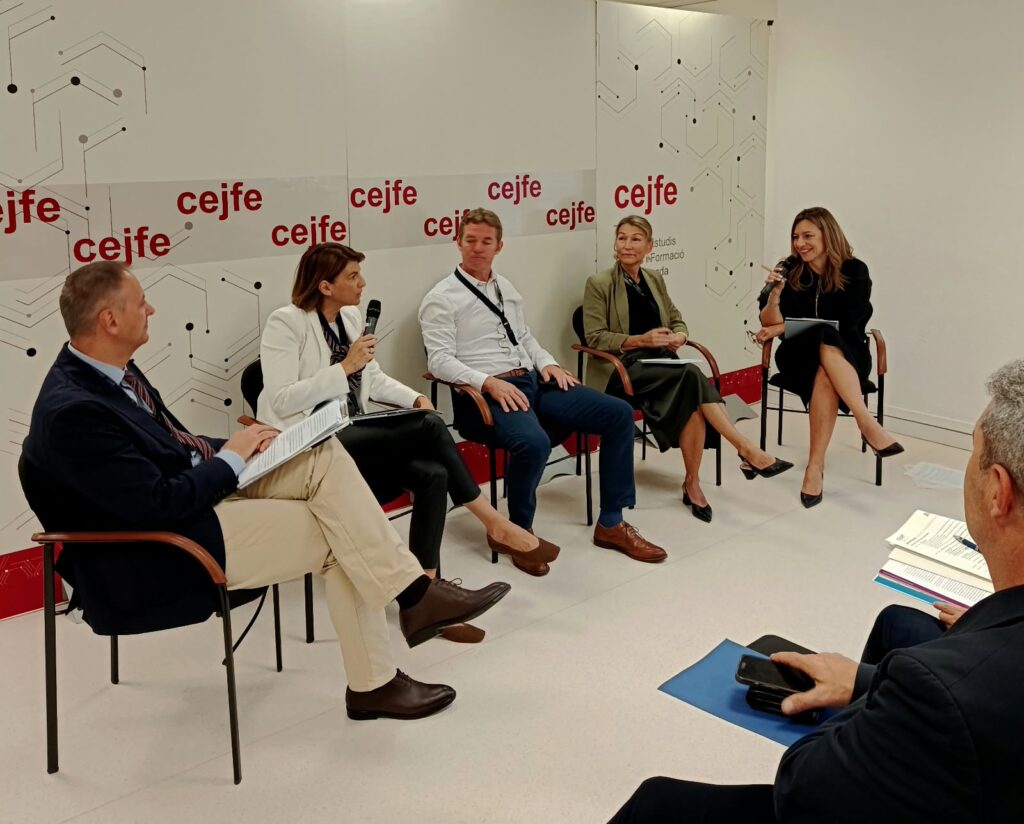
ITSCCS
Core Correctional Skills in Digital Probation: highlights from the 6th ITSCCS in Barcelona
05/10/2026
The sixth International Training School on Core Correctional Skills (ITSCCS) took place in Barcelona from 28 September to 2 October 2026, bringing together 26 participants for a week of learning, practical training and international exchange. Organised by the Confederation of European Probation (CEP) and the Centre for Legal Studies and Specialised Training (CEJFE), the programme focused on “Clicks and Empathy: Core Correctional Skills in Digital Probation.”
Recap
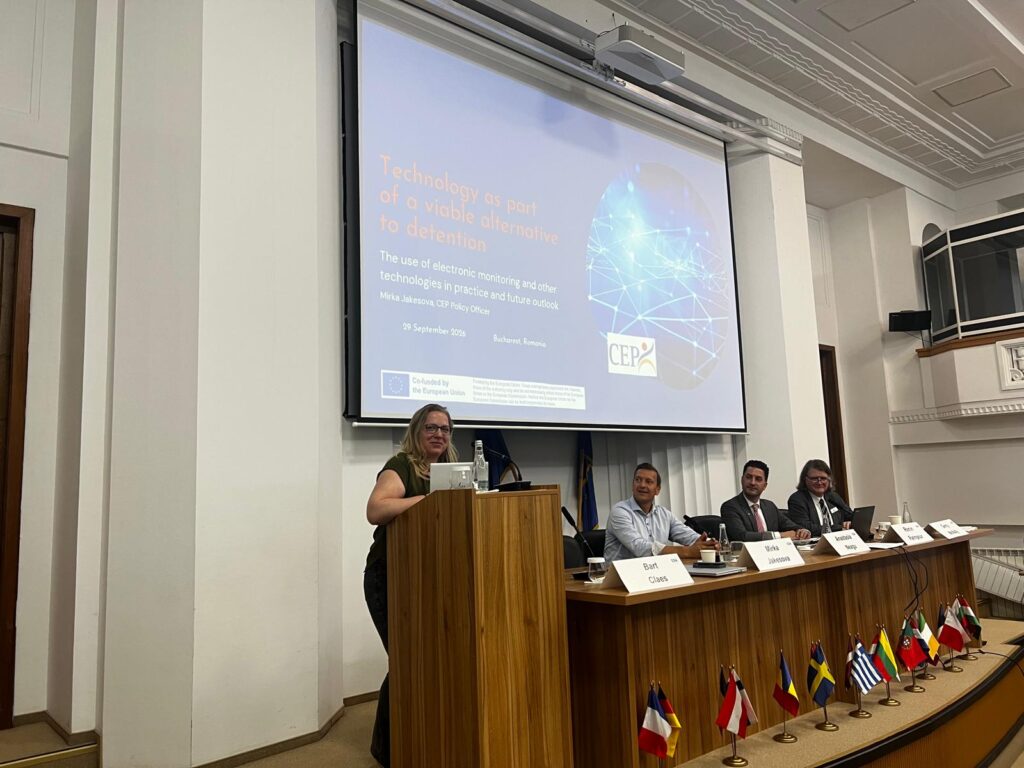
Framework Decisions
Recap: ERA workshop on Framework Decisions 829 and 947 in Bucharest
02/10/2026
CEP Vice-President Daniel Danglades, Ambassador Gerry McNally and Policy Officer Mirka Jakesova participated in the Seminar on Framework Decisions 829 and 947 and their Impact on Alternatives in the EU organized under the EU project run by the Academy of European Law on 28-29 September in Bucharest, Romania. The seminar brought together judges, prosecutors, probation practitioners, academics, and policy experts to discuss the growing role of alternatives to detention within European criminal justice systems.
New
CEP
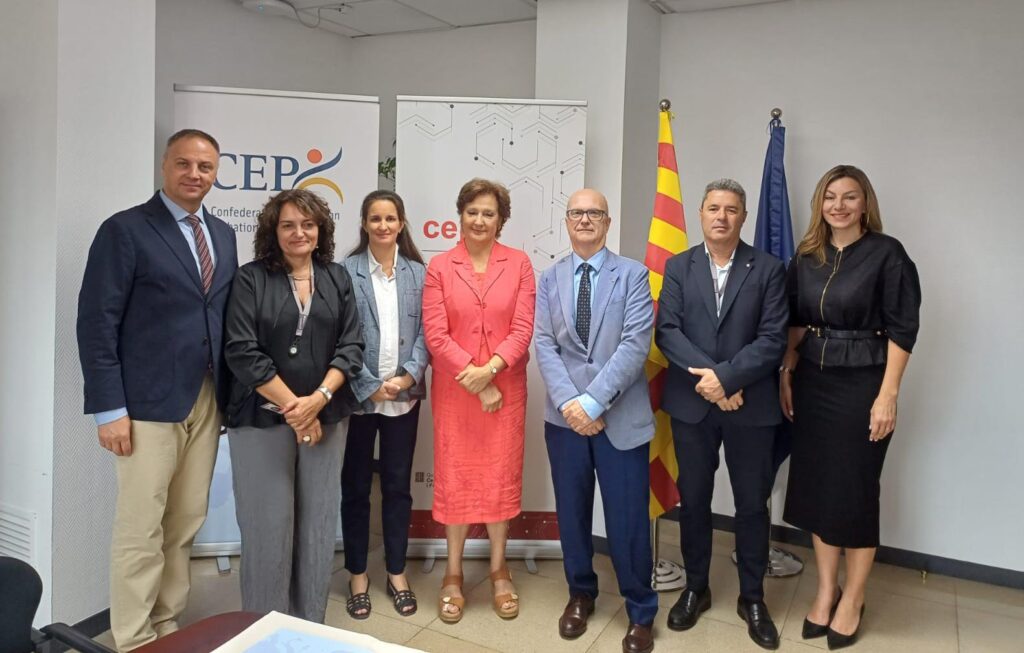
CEP and Catalan justice leaders reaffirm longstanding cooperation
29/09/2026
Representatives of the Confederation of European Probation (CEP) met with senior officials from the Catalan Department of Justice and Democratic Quality in Barcelona on 28 September 2026, alongside the opening of the sixth International Training School on Core Correctional Skills. The meeting offered an opportunity to recognise a longstanding partnership and discuss its continued development.
Updated
Mental Health
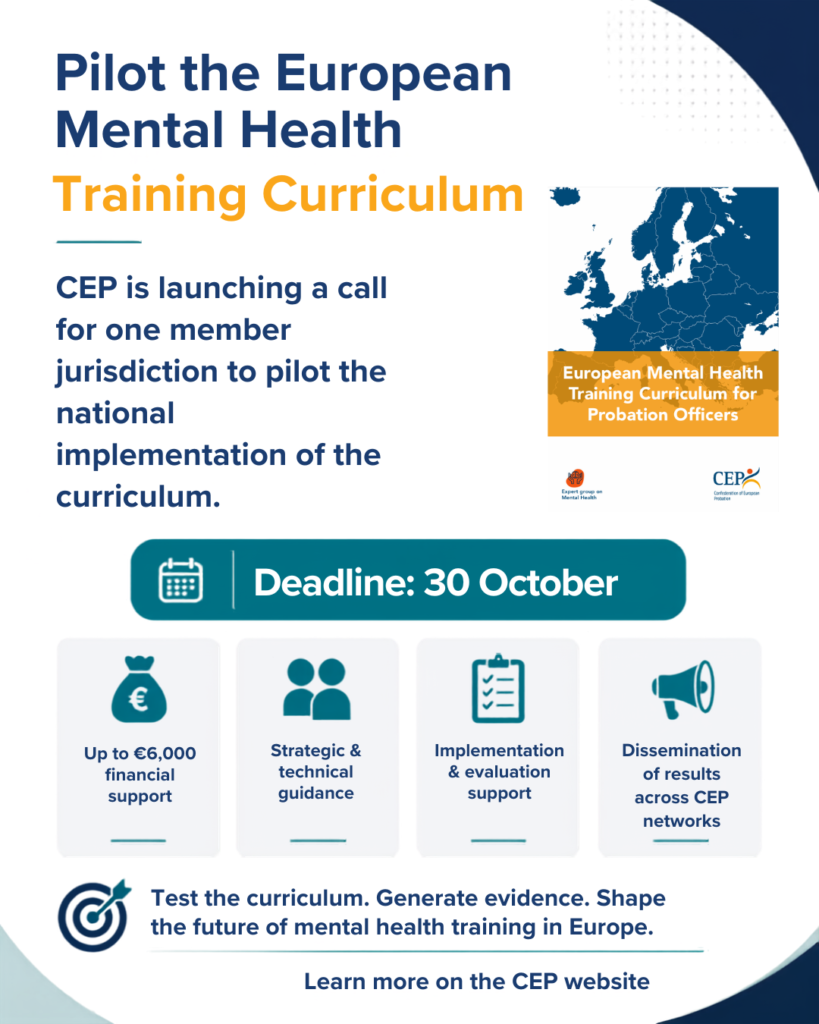
DEADLINE EXTENDED: Call for Pilot Implementation of the European Mental Health Training Curriculum
29/09/2026
Good news for CEP members! Following requests from our members, CEP has extended the deadline to apply for the pilot implementation of the European Mental Health Training Curriculum for Probation Officers.
Recap
ITSCCS, Technology
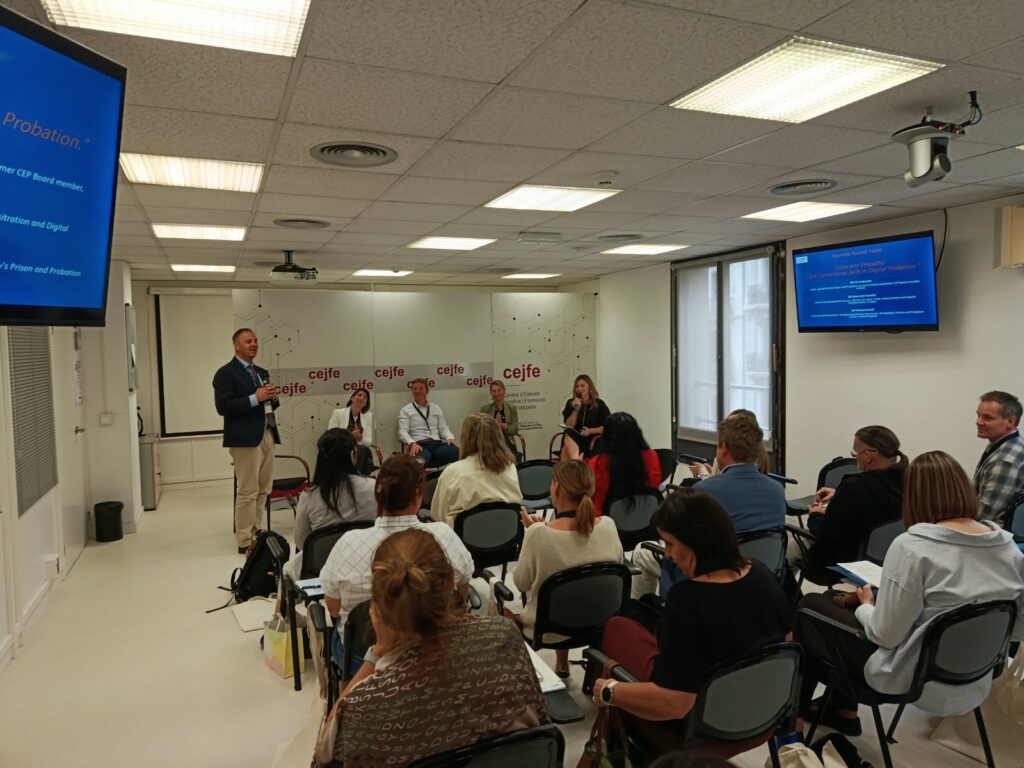
6th International Training School opens in Barcelona with a focus on digital probation
28/09/2026
How can probation professionals use new technologies in their interactions while building trust, showing empathy and supporting change? This question is at the heart of the sixth International Training School on Core Correctional Skills, which opened in Barcelona on 28 September 2026.
Subscribe to our bi-monthly email newsletter!
"*" indicates required fields
- Keep up to date with important probation developments and insights.