

Previous Article
News
Social Enterprise in the Irish Criminal Justice system – ‘A New Way Forward’
In 2017, the Irish Department of Justice and Equality launched, ‘A New Way Forward – social enterprise strategy 2017 -2019’ in partnership with the Probation Service and Irish Prison Service. In doing so, it became the first government department in Ireland to set out their innovative plan for supporting social enterprises as a way of increasing employment for people with criminal records.
Uniquely, the strategy is co-owned by the Department of Justice and Equality and its executive agencies, the Probation Service and the Irish Prison Service. It is overseen by a Social Enterprise Steering Committee, which is chaired by the Director of the Probation Service, Vivian Geiran. A social enterprise (SE) project manager, Siobhán Cafferty, was appointed to develop and drive out the strategy on behalf of the steering committee. This role is jointly supported by both agencies.
Social Enterprise – definition
‘Social enterprises are businesses whose core objective is to achieve a social, societal or environmental impact. Like other businesses, social enterprises trade in goods or services on an ongoing basis. However, any surpluses they generate are re-invested into achieving a social impact.’
Strategic vision
The development of a vibrant social enterprise sector supported by the Department of Justice and Equality, resulting in people with convictions securing sustainable employment leading to active citizenship, safer communities and fewer victims.
Strategic mission
This initiative engages multiple stakeholders and supports them to work together to develop social enterprises in Ireland to support the employment of people with convictions. It is committed to trialing new ways of working, changing systems to work in line with good practice and encouraging entrepreneurship and innovation.
The impact of an employer to employer work reference cannot be under-estimated. Coupled with skills, training and the right attitude to work, a recent employer reference plays a significant role in increasing opportunities to access the mainstream labour market for people with a history of offending behaviour. SEs play a key role in an individuals’ journey to long term, well paid, sustainable employment. By creating a much needed buffer between prison, or engagement in a community based probation project, and the mainstream labour market, they create a pathway which for many does not exist outside of these developments.
Key achievements to date:
Since the strategy was launched two years ago, there have been a number of key achievements which are outlined below:
- In excess of 50 social enterprises nationwide now employing people with convictions and growing;
- Over 100 people employed or on training in these SEs;
- Probation Service KickStart Fund launched to support SEs. Round Two of €1m will be open to applications from January 2020;
- Social enterprise Meet & Greet events, hosted by the Probation Service, maximise awareness of SEs by professionals supporting people with criminal convictions;
- New insurance scheme for SEs negotiated and made available;
- National Manufacturing Network of SEs established;
- First social enterprise pop-up shop opens;
- Brand new Business Planning & Mentoring Programme created in partnership with UCD Innovation Academy and the Rotary Clubs, Ireland.
With the unemployment rate in Ireland at its lowest in over a decade, the rollout of this initiative works toward ensuring that no-one is left behind because of their criminal record.
Why is this work important?
The Department of Justice and Equality strategy on social enterprise demonstrates forward thinking and an openness to ‘think differently’ about the role and responsibilities that the Department and its executive agencies can play in supporting people with convictions into employment, to make real and sustainable change for themselves, their families and the communities within which they live.
Despite being in its third and final year of implementation, the National Social Enterprise Policy was only just launched three weeks ago by Minister Ring. The many achievements and lessons learned from the implementation of the criminal justice strategy paved the way for the development of the National Policy on Social Enterprise.
The positive outcomes for individuals who have experienced barriers to securing employment due to their criminal records, as a result of this initiative, has also helped shape a similar approach to other marginalised groups such as members of the Traveller and Roma communities.
Uniquely, this social enterprise initiative targets all people with criminal records who have experienced barriers to securing employment regardless of how long ago their last conviction was. Individuals do not have to be just released from prison or currently on a probation bond in order to apply for a position in a social enterprise. The following quote from a person who secured employment in a social enterprise sums up succinctly what this initiative is all about. Despite it being nearly 18 years since his last conviction, this employee only managed to secure short-term seasonal work until being employed in a social enterprise.
‘I wanted to make a change but I didn’t think anybody would give me a chance’.
(Full-time employee of a social enterprise, Co. Cork)
Winning the CEP Social Inclusion award is a great honour and recognition of what we have achieved to date. However, we are still at the beginning of our journey. We look forward to learning from other well established social enterprises across Europe to take our initiative to the next level.
Should you require further information or would like to share your own experiences with us, please get in touch:
Siobhán Cafferty
T: +353 87 2026441
E: siobhan@bridge.ie
Twitter: @JustSocEnt

Related News
Keep up to date with the latest developments, stories, and updates on probation from across Europe and beyond. Find relevant news and insights shaping the field today.
Recap
Electronic monitoring, Technology
14th Electronic Monitoring Conference, Electronic Monitoring in a Changing World – Perception vs Reality
08/10/2026
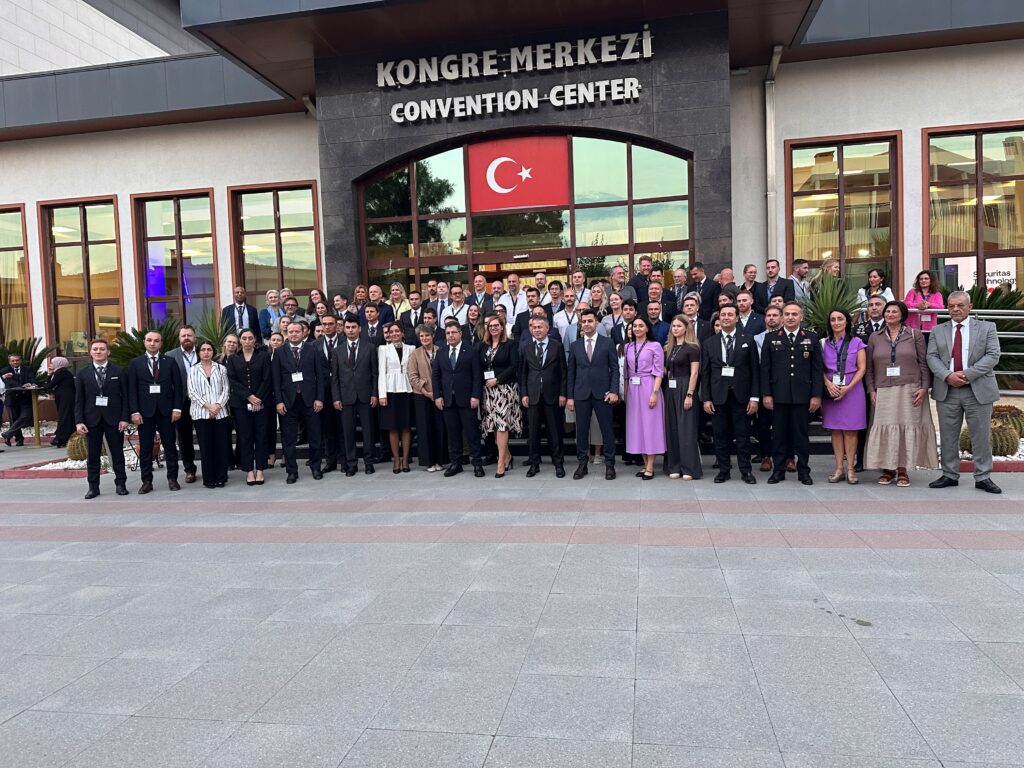
On 6-8 October 2026, Antalya hosted the 14th Electronic Monitoring Conference “Electronic Monitoring in a Changing World – Perception vs Reality”. More than 350 participants coming from 30 countries across Europe and worldwide representing probation services, Ministries of Justice, victims´ services, EM providers, researchers as well as local participants representing the Turkish Prison and Probation Service gathered to discuss how electronic monitoring (EM) is understood by all stakeholders involved including the victims and the public, and how these perceptions compare to the evidence and experiences of those affected. While the gap between perception and reality in electronic monitoring has been recognised for over a decade, the rapid expansion of EM into areas such as victim protection, high-risk supervision and digital innovation has brought new challenges and questions to the forefront.
Recap
ITSCCS
Core Correctional Skills in Digital Probation: highlights from the 6th ITSCCS in Barcelona
05/10/2026
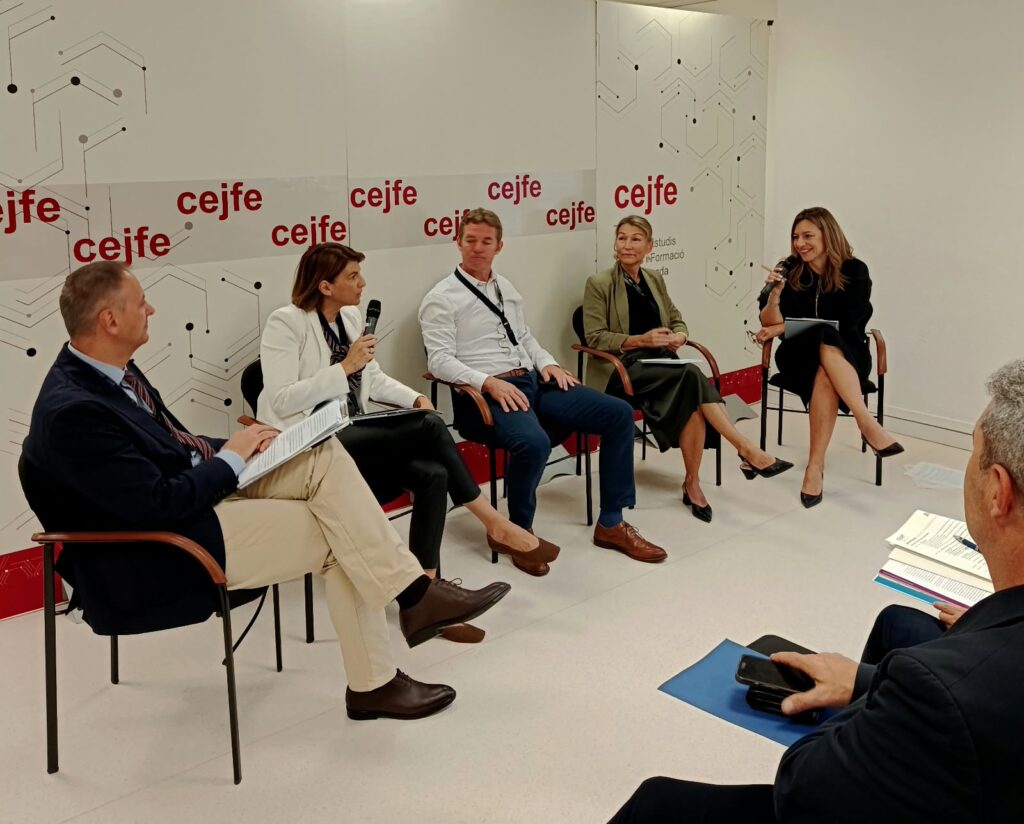
The sixth International Training School on Core Correctional Skills (ITSCCS) took place in Barcelona from 28 September to 2 October 2026, bringing together 26 participants for a week of learning, practical training and international exchange. Organised by the Confederation of European Probation (CEP) and the Centre for Legal Studies and Specialised Training (CEJFE), the programme focused on “Clicks and Empathy: Core Correctional Skills in Digital Probation.”
Recap
Framework Decisions
Recap: ERA workshop on Framework Decisions 829 and 947 in Bucharest
02/10/2026
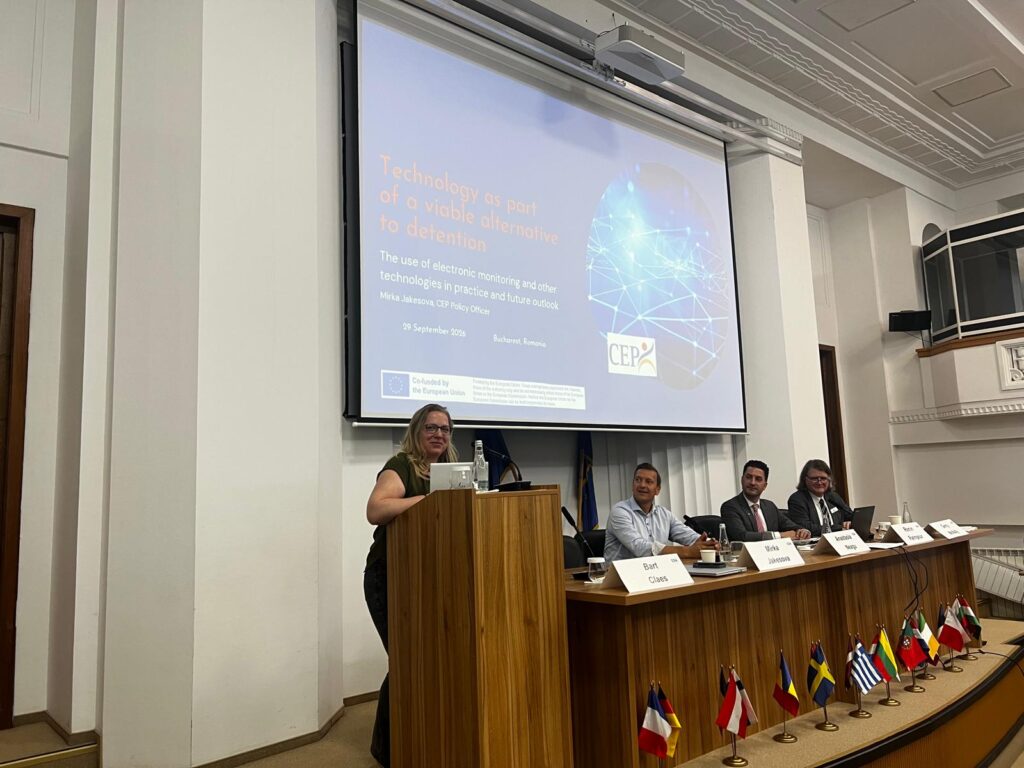
CEP Vice-President Daniel Danglades, Ambassador Gerry McNally and Policy Officer Mirka Jakesova participated in the Seminar on Framework Decisions 829 and 947 and their Impact on Alternatives in the EU organized under the EU project run by the Academy of European Law on 28-29 September in Bucharest, Romania. The seminar brought together judges, prosecutors, probation practitioners, academics, and policy experts to discuss the growing role of alternatives to detention within European criminal justice systems.
New
CEP
CEP and Catalan justice leaders reaffirm longstanding cooperation
29/09/2026
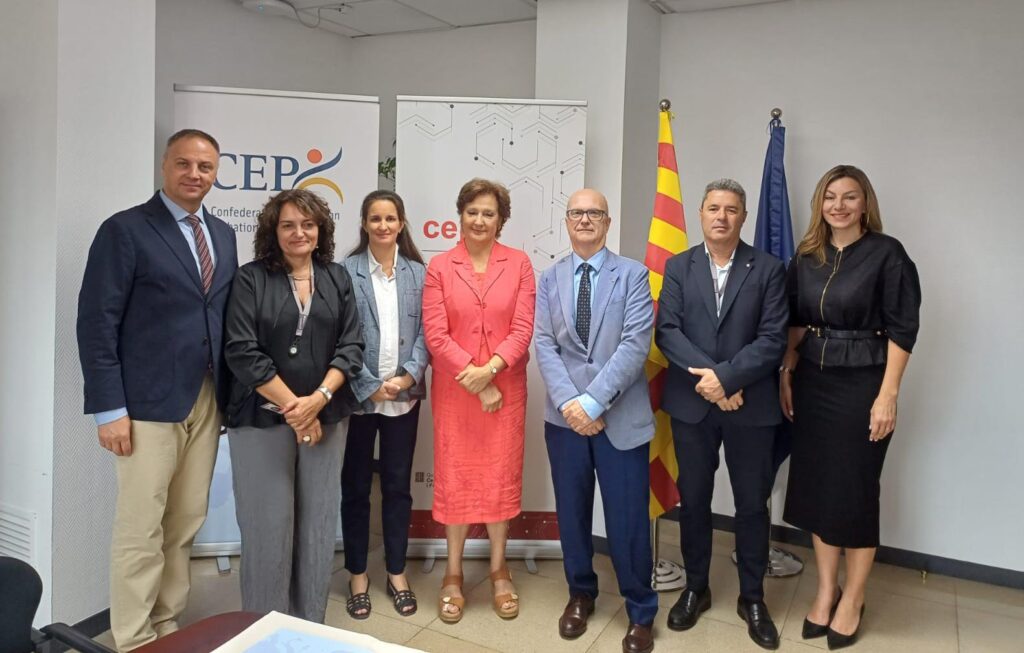
Representatives of the Confederation of European Probation (CEP) met with senior officials from the Catalan Department of Justice and Democratic Quality in Barcelona on 28 September 2026, alongside the opening of the sixth International Training School on Core Correctional Skills. The meeting offered an opportunity to recognise a longstanding partnership and discuss its continued development.
Updated
Mental Health
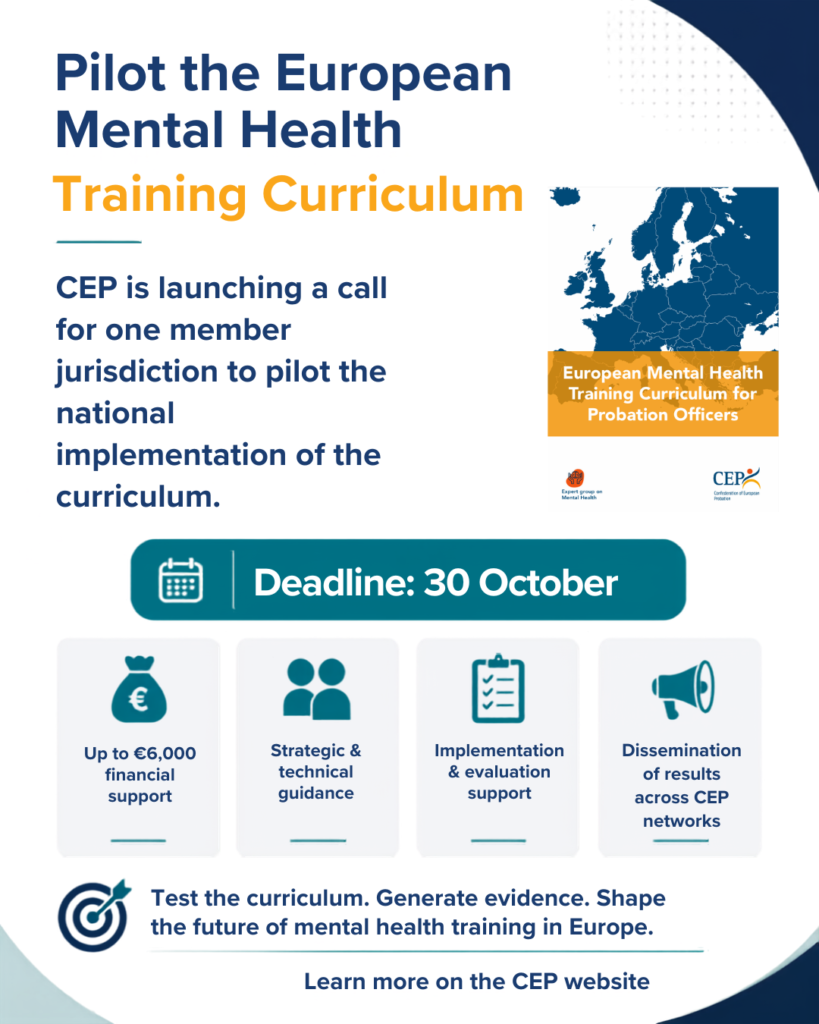
DEADLINE EXTENDED: Call for Pilot Implementation of the European Mental Health Training Curriculum
29/09/2026
Good news for CEP members! Following requests from our members, CEP has extended the deadline to apply for the pilot implementation of the European Mental Health Training Curriculum for Probation Officers.
Recap
ITSCCS, Technology
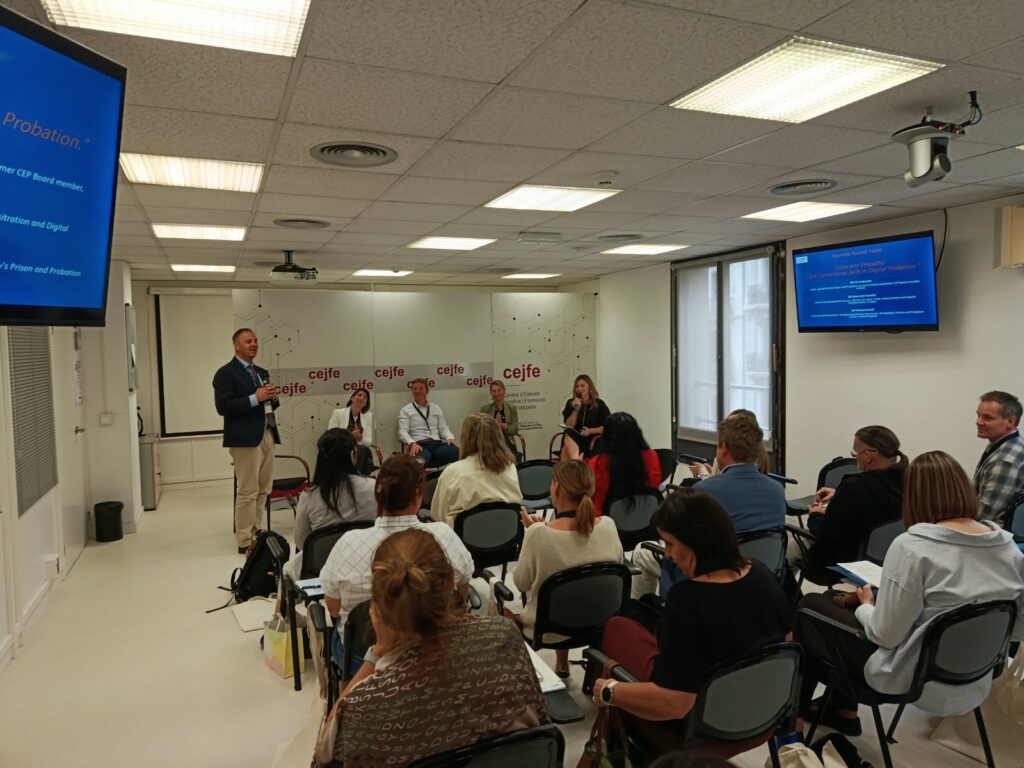
6th International Training School opens in Barcelona with a focus on digital probation
28/09/2026
How can probation professionals use new technologies in their interactions while building trust, showing empathy and supporting change? This question is at the heart of the sixth International Training School on Core Correctional Skills, which opened in Barcelona on 28 September 2026.
Subscribe to our bi-monthly email newsletter!
"*" indicates required fields
- Keep up to date with important probation developments and insights.