Previous Article
News
Update on the PONT Project
In the last article we wrote for the CEP Newsletter, the PONT project team made significant progress in finalising the literature review, training gap analysis and the first version of the training e-manual. This article will reflect mainly on the training gap analysis and the draft e-manual. Just to remind the readers: PONT is a project funded by DG Justice to enhance the use of the mutual recognition tools, in particular for FD 947 on probation transfer and FD 829/2009 on the European Supervision Order.
Short interview with Gisella Conrad (International Office, Dutch Probation Service) about the PONT project and the use of the framework decisions in the Netherlands.
Training gap analysis
The training gap analysis is aimed at identifying the training needs of the competent authorities and probation staff from their own perspective. In this respect, a questionnaire was uploaded on the EU survey platform. European Judicial Network assisted with the dissemination of the questionnaire to the contact points and competent authorities. 35 respondents uploaded their answers and the conclusions were that indeed FD 829/2009 in particular is quite difficult to implement due to not knowing the legal options in the executing State, not being familiar with the procedure and not receiving the documents in an accessible language. Some participants also reported a certain level of anxiety regarding the trust in another jurisdiction to monitor the supervisory measure.
Interview with CEP Secretary General Willem van der Brugge about the advantages of the FDs and his views on the PONT project.
As far as the difficulties related to the implementation of the FD 947/2008, the respondents mentioned not being sure about the legal options in the executing State, not being sure that the obligations will be carried out in the executing State and not having clear standards on how to measure the rehabilitation prospects.
Apart from these difficulties, some competent authorities reported not knowing how to fill in the certificate, how to adapt the sentence and how to identify the competent authority in the executing State as other practical obstacles in the implementation on the FD 947/2008. Transferring probationers with medical treatment obligations was also mentioned as difficult in practice.
Interview with Tony Marguery about his book ‘Mutual Trust Under Pressure, the Transferring of Sentenced Persons in the EU’ and his thoughts on the PONT project.
The training e-manual
Based on these findings and also on the literature review, the project team put together an e-manual that will serve as a resource for the future trainings for the competent authorities and probation staff. The manual exists of two parts: one theoretical (focusing on mutual trust, normative context of the partners involved in PONT and so on) and a practice related one, where all the difficulties discussed above are debated and practical solutions are offered.
The e-manual also provides a list of all relevant case-law of the European Court of Human Rights and the Court of Justice of EU. Case examples are offered to illustrate different ways of responding to challenges.
The e-manual was discussed with colleagues taking part in the CEP Expert meeting, that took place in Leuven, 24-25th of October 2019. The general impression regarding the format and the content of the e-manual can be observed in the picture below.

We would like to take this opportunity to thank them publicly for their useful comments and suggests for improvement.
We are still collecting case examples for transfer (either under FD 947/2008 or FD 829/2009), dilemmas and other materials that can be used for the training. We would be grateful for your contribution (e.monteroperezdetudela@gmail.com).
For more information, please visit our project website.
Esther Montero Perez de Tudela
Universidad de Loyola Andalucía

Related News
Keep up to date with the latest developments, stories, and updates on probation from across Europe and beyond. Find relevant news and insights shaping the field today.
New
CEP Board
Interview with new CEP board member Žilvinas Miliauskas
17/03/2026
During the General Assembly in Austria, a new CEP Board got elected for the upcoming three years. In the coming weeks we will publish interviews with all newly-elected board members where they will share information on their professional background, how they would like to contribute, what challenges lie ahead and many more.
Enjoy reading!
Recap
Violent Extremism
Recap: Expert Group meeting on Violent Extremism
16/03/2026
On 12–13 March 2026, the Expert Group on Violent Extremism convened for an in‑person meeting in Bucharest, Romania. Hosted at the University of Bucharest, the meeting brought together practitioners and representatives from across Europe to finalise the overview of best practices for preventive interventions targeting juveniles and young adults up to the age of 26 under probation. Building on the extensive discussions and progress made in 2025, the group worked collaboratively to bring the document to completion.
Recap
Electronic monitoring
Recap: CEP Expert Group meeting at ATGV Antalya
12/03/2026
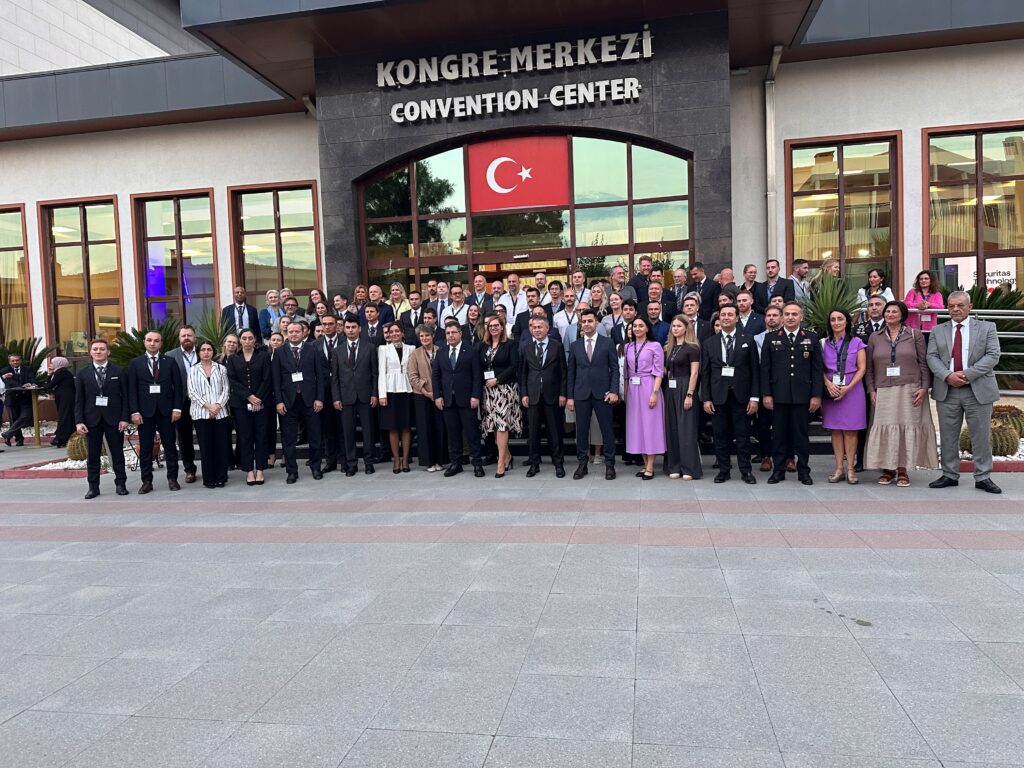
The CEP Expert Group on Electronic Monitoring, along with representatives of the CEP Office led by Mr. Daniel Danglades, CEP Vice-President, visited the Education and Social Facility of the Ministry of Justice in Türkiye – ATGV Antalya. The host country was represented by a high-level delegation, including Deputy Director General Mr. Fatih Güngör, Head of the Turkish Probation Department Dr. Hüseyin Şık, Member of the CEP EM Expert Group Ms. Elçin Kilecioğlu, as well as the Director and representatives of the ATGV facility, and officials from the courts, prosecution, and probation services in Antalya.
Recap
Education and Training
Recap: CEP Expert Network on Education and Training in Probation meets with the European Commission to discuss the EU Judicial Training Strategy
11/03/2026
On 11 March 2026, the CEP Expert Network on Education and Training in Probation met online with more than 20 participants from Belgium, Denmark, Sweeden, France, Romania, Croatia, Catalonia, Poland, United Kingdom and Türkiye to exchange views with the European Commission on the newly adopted EU Judicial Training Strategy 2025–2030.
The meeting provided a valuable opportunity for representatives of probation training institutions across Europe to engage directly with European Commission officials and discuss how the strategy may impact the training of probation and prison staff in the coming years.
Probation Journal
Women, youth
Understanding the needs of girls and young women in youth justice
10/03/2026
New research highlights the underlying needs that influence girls’ and young women’s contact with youth justice systems and calls for more gender responsive approaches in policy and practice. Drawing on a review of recent studies, the authors identify several factors shaping girls’ pathways into the justice system, including persistent abuse, trauma, gendered expectations, and systemic failures. Girls involved in youth justice are often affected by multiple forms of victimisation, such as sexual abuse, neglect, and domestic violence, with experiences frequently beginning in early childhood.
New
CEP Board
Interview with new CEP board member Ian Barrow
09/03/2026
During the General Assembly in Austria, a new CEP Board got elected for the upcoming three years. In the coming weeks we will publish interviews with all newly-elected board members where they will share information on their professional background, how they would like to contribute, what challenges lie ahead and many more.
Enjoy reading!
Subscribe to our bi-monthly email newsletter!
"*" indicates required fields
- Keep up to date with important probation developments and insights.