

Previous Article
News
Reintegrating Terrorists in the Netherlands: Evaluating the Dutch approach
Terrorism remains a key security concern for societies across the globe, with threats ranging from returned foreign fighters who joined jihadist extremists in Syria or Iraq, ‘homegrown’ elements inspired by groups like Islamic State (IS), and internationally operating terrorist networks such as those responsible for the 2015 Bataclan attacks in France (EUROPOL, 2018; Miller, 2018). There is also the underappreciated but highly problematic rise of rightwing extremism and terrorism to contend with (Koehler, 2017b; Mudde, 2017).
by Liesbeth van der Heide and Bart Schuurman
Against this background, reintegration programs for terrorists and extremists are likely to remain a key element within states’ counterterrorism repertoires (Crelinsten, 2014). Such programs are not without the detractors, and a case can be made that the principal response to these issues should focus on criminal prosecution, not reintegration. However, given prosecutors’ difficulties with securing sufficient evidence for crimes committed in warzones to ensure lengthy prison sentences (Paulussen & Pitcher, 2018) reintegration initiatives are likely to continue to play a central role in efforts to minimize terrorism-related recidivism (Holmer & Shtuni, 2017).
Independent evaluations of these initiatives are a prerequisite for assessing and improving the design, implementation and effectiveness of reintegration efforts. The enduring scarcity of such assessments, particularly those based on first-hand information, remains a particularly pressing issue (Koehler, 2017a; Silke & Veldhuis, 2017; Sim, 2012; Soufan et al., 2010; Weeks, 2018). The complexity of the issues at stake, the obstacles surrounding the collection of first-hand data and the difficulties of measuring success, mean that considerable work remains to be done. This article contributes to the evidence-based literature on terrorist reintegration programs by detailing the results of a 27-month evaluation of a specialized reintegration initiative run by ‘team TER’ (Terrorism, Extremism and Radicalization) within the Dutch Probation Service (Reclassering Nederland, RN).
Using multiple rounds of interviews with team TER staff and partner agencies such as the Dutch police and public prosecution service, this article evaluates the development of the Dutch reintegration approach between January 2016 and April 2018. It builds on work by Schuurman and Bakker (2016), who evaluated the team’s first year of operations in 2012 and 2013. The central research question is to what extent team TER’s activities have contributed to a lower chance of recidivism among clients with an extremist or terrorist background. To address it, the evaluation first of all covers the soundness of the assumptions underlying the program’s theory of change, in the sense that it critically reflects on those assumptions by comparing them to the academic literature. Subsequently, the evaluation turns to the initiative’s practical implementation and provides a qualified impact assessment.
Click on the link to read the full report ‘Reintegrating Terrorists in the Netherlands: Evaluating the Dutch approach‘.

Related News
Keep up to date with the latest developments, stories, and updates on probation from across Europe and beyond. Find relevant news and insights shaping the field today.
New

Technology
Registration deadline approaching: Join CEP’s final workshop of 2026 on technology in probation
22/10/2026
📢 Have you registered yet? CEP’s final workshop of 2026 takes place on 24 November in Barcelona, bringing together professionals to explore how technology is being used across probation services in Europe.
The Workshop on Alternatives to Detention and Technologies: Deep Diving into New Trends will look beyond artificial intelligence to examine the different ways technology is shaping probation practice, from staff training to working with clients and collaborating with other criminal justice partners.
Recap

Directors General Meetings
CEP Leadership Excellence Training: strengthening leadership and cooperation across Europe
22/10/2026
The CEP Leadership Excellence Training, held on 20–21 October in Zagreb, Croatia, brought together Directors General and senior probation managers from 11 European countries for a two-day interactive programme focused on leadership, communication, staff development, and international cooperation.
New

CEP
Call for Proposals: Evaluation of CEP Expert Groups
21/10/2026
On behalf of Ms. Jana Špero Kamenjarin, CEP Secretary General, it is my pleasure to invite you to submit a proposal to conduct an evaluation within the CEP work programme.
Recap

Uncategorized
CEP at UNODC: Contributing to the Development of Probation Services Worldwide
19/10/2026
The Confederation of European Probation (CEP) was represented by its Secretary General, Jana Špero Kamenjarin, at the Expert Group Meeting on the Establishment of Probation Services and Probation Practices, organised by the United Nations Office on Drugs and Crime (UNODC) and held at the Vienna International Centre (VIC) from 12 to 14 October 2026.
Recap
Electronic monitoring, Technology
14th Electronic Monitoring Conference, Electronic Monitoring in a Changing World – Perception vs Reality
08/10/2026
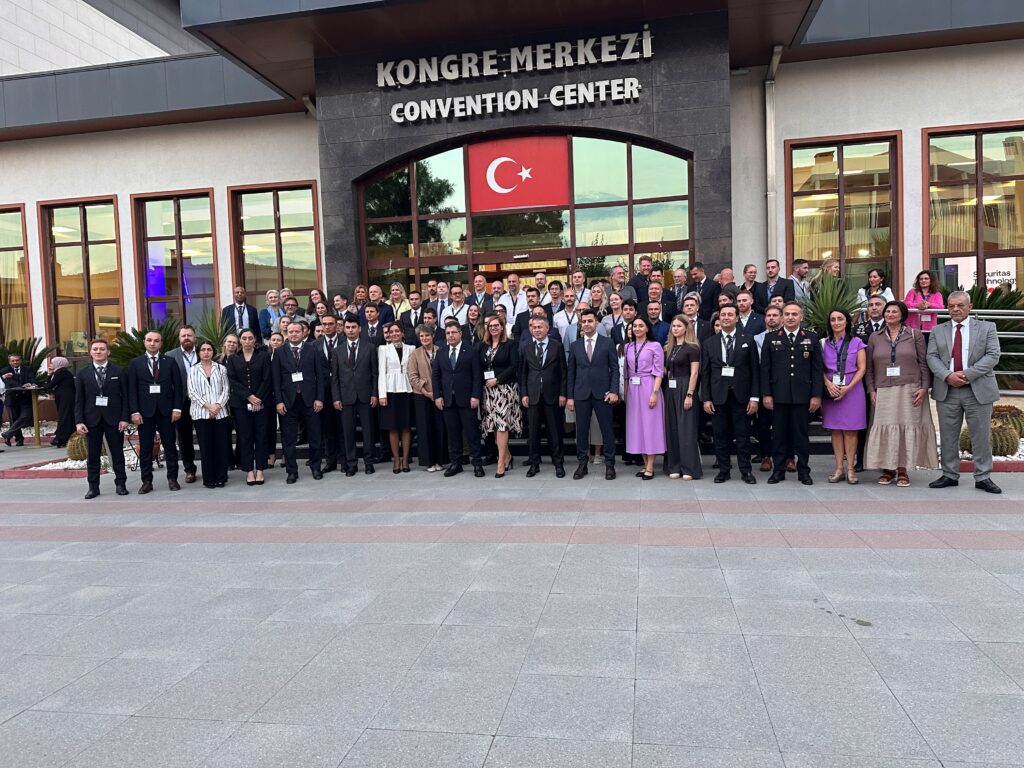
On 6-8 October 2026, Antalya hosted the 14th Electronic Monitoring Conference “Electronic Monitoring in a Changing World – Perception vs Reality”. More than 350 participants coming from 32 countries across Europe and worldwide representing probation services, Ministries of Justice, victims´ services, EM providers, researchers as well as local participants representing the Turkish Prison and Probation Service gathered to discuss how electronic monitoring (EM) is understood by all stakeholders involved including the victims and the public, and how these perceptions compare to the evidence and experiences of those affected. While the gap between perception and reality in electronic monitoring has been recognised for over a decade, the rapid expansion of EM into areas such as victim protection, high-risk supervision and digital innovation has brought new challenges and questions to the forefront.
Recap

ITSCCS
Core Correctional Skills in Digital Probation: highlights from the 6th ITSCCS in Barcelona
05/10/2026
The sixth International Training School on Core Correctional Skills (ITSCCS) took place in Barcelona from 28 September to 2 October 2026, bringing together 26 participants for a week of learning, practical training and international exchange. Organised by the Confederation of European Probation (CEP) and the Centre for Legal Studies and Specialised Training (CEJFE), the programme focused on “Clicks and Empathy: Core Correctional Skills in Digital Probation.”
Subscribe to our bi-monthly email newsletter!
"*" indicates required fields
- Keep up to date with important probation developments and insights.