

Previous Article
News
Probation in Europe: 32 probation services in almost 1200 pages
No less than 32 European probation services are presented in Probation in Europe. “We needed almost 1200 pages”, says professor Van Kalmthout, the main editor of the very comprehensive comparative study. “The printer had to use thinner paper, otherwise we wouldn’t have been able to bind it in one volume.” Its predecessor Probation and probation services, a European perspective, which was published in 2000, has been highly successful in the development of probation services in Europe, especially Central and Eastern Europe. “I am convinced that Probation in Europe will even have more impact.”
It was just a small article in a Dutch newspaper 37 years ago. “An English judge convicted a student to 120 hours of community service for the possession of hashish”, recalls Anton van Kalmthout, professor at the criminal law department of the University of Tilburg. “So instead of going to prison, which rarely makes somebody a better person, he had to swipe the streets. I was fascinated. There was punishment, more than just a fine, but there was no imprisonment.”
Professor Van Kalmthout was a law student himself in 1971. “But I was also editor of a law journal. So I wrote an article about the case. It provoked a lot of reactions, almost exclusively negative. The Dutch Probation Service wasn’t in favor either. They thought community service had too little to do with social work, which was what the organization focused on these days. On the national level the discussion on the desirability of community sanctions lingered on for years. But on the local level people were interested. So, within the framework of the existing legislation, we just started to experiment. That is how I got involved in the world of probation. I still am.”
Risk assessment
At the end of the 1980s the law enforcement climate in the Netherlands hardened. “Before that the motto of the probation service had been to advice, befriend and assist clients”, says professor Van Kalmthout. “Now the emphasis was put on risk assessment. Clients became offenders, whose behavior had to be controlled. The Netherlands were following the United Kingdom in this. The funny thing was that the new democracies in Central and Eastern Europe took a completely different course this same period. There, social work became the main focus of the newly set up probation services. Quite remarkable. By the way, recently the climate in the Netherlands swings back to what I think to be a more realistic course. Apparently it has finally become clear that it wasn’t really that smart to cut all kinds of educational programs within the prison system, to abolish conditional release, to stop financing after-care delivered by the Probation Service to released prisoners, etcetera.”
First comparative study
In 1981 the first comparative study on probation services in 14 European countries was published. “I was still a novice on probation in those days, so I wasn’t involved”, professor Van Kalmthout looks back. “But the Netherlands were one of the initiating countries, together with France and the UK. The foreign desk of the Dutch Probation Service felt better cooperation with other probation services was needed in order to improve the assistance to foreign national prisoners. The first step towards this better cooperation was, as always, providing basic information about the different organizations, hence the book. The closer contacts between the probation services also led to the founding of CEP.”
In the 1990s several attempts were made to produce an updated edition. Due to financial and other problems these were not successful. Eventually the assignment was given to professor Van Kalmthout, by then an internationally renowned expert on probation. This resulted in the book Probation and probation services, a European perspective, which was published in 2000. “Since CEP had been functioning for almost two decades, it was easier than in 1981 to select competent people to write to the country reports. I also insisted on an elaborate discussion on the structure of the chapters before we all started writing. Still, it was a terrible amount of work. Some country reports had to be sent back as much as three times.”
Central and Eastern Europe
The 2000 edition of Probation in Europe was a success. “Not just in the 19 western European countries, whose probation services were described in the book, but especially in Central and Eastern Europe”, recalls professor Van Kalmthout. “It really had an impact there, as policy makers in all those countries were revising their legal and practical framework for criminal sanctions. So all of them were struggling with the question how to set up a well functioning probation service. In 2001 I lectured at a conference in Warsaw on alternatives to imprisonment, organized by the Open Society Institute (the Soros Foundation). It was felt that the probation services in Central and Eastern Europe better learn from one another if there were an overview on their history, tasks, organization and legal basis, similar to the 2000 overview of the Western European probation services.”
The Open Society Institute was willing to finance this project. “Two years later this resulted in Probation and probation services in the EU accession countries. It has been used a lot in all kinds of trainings and conferences, that were organized in Central and Eastern Europe in those years. The book had, I think, quite an impact on improving the work of the probation services in those countries. And in convincing stakeholders like judges and policymakers that probation was the modern and ‘European’ way to do with lesser crime. In Romania/Moldova and Bulgaria just a few policy makers were capable of reading English. On the other hand, they were very enthusiastically reforming their penal system. So we translated the most relevant parts of the two books and distributed it among politicians, civil servants, universities, legal organizations and penal institutions in those countries. In doing so we gave them access to information, which they otherwise would not have had. Quite rewarding.”
Comparative overview
After being the main editor of by then four books on European probation services in five years, CEP knew where to look when they needed somebody to coordinate the latest edition of Probation in Europe. Professor Van Kalmthout: “I did the job in close cooperation with Ioan Durnescu, lecturer at the University of Bucharest, faculty of sociology and social work. Together we also wrote the comparative overview of European probation service systems. In this chapter Europe of the book we tried to outline similarities and differences between probation services in Europe. It shows where countries are, positively or negatively, out of line with what most European probation services do. The chapter also contains an diagram-like overview showing which tasks and activities are carried out by which probation services. I don’t expect anybody to read the more than 1200 pages of the book. Most people will use it as a reference book, exactly how we meant it to be used. But I think quite some people will read the comparative chapter, the ‘European’ chapter as it were. And hopefully it will give them ideas on how to improve the functioning of their own probation service.”

Related News
Keep up to date with the latest developments, stories, and updates on probation from across Europe and beyond. Find relevant news and insights shaping the field today.
Recap
Electronic monitoring, Technology
14th Electronic Monitoring Conference, Electronic Monitoring in a Changing World – Perception vs Reality
08/10/2026
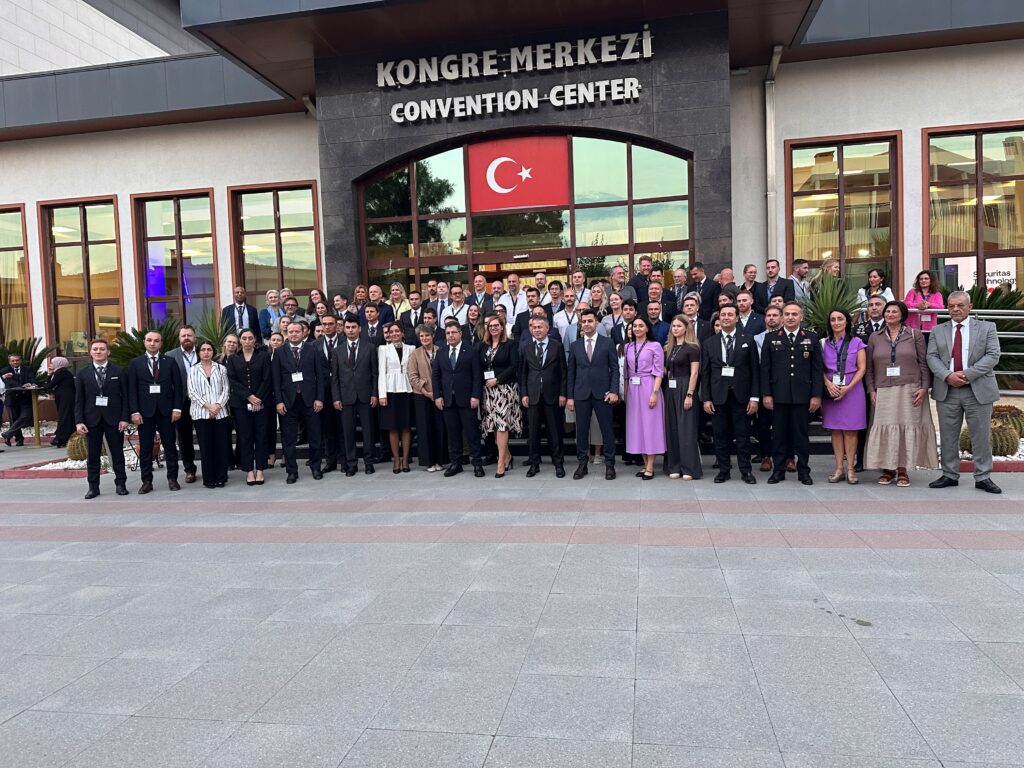
On 6-8 October 2026, Antalya hosted the 14th Electronic Monitoring Conference “Electronic Monitoring in a Changing World – Perception vs Reality”. More than 350 participants coming from 30 countries across Europe and worldwide representing probation services, Ministries of Justice, victims´ services, EM providers, researchers as well as local participants representing the Turkish Prison and Probation Service gathered to discuss how electronic monitoring (EM) is understood by all stakeholders involved including the victims and the public, and how these perceptions compare to the evidence and experiences of those affected. While the gap between perception and reality in electronic monitoring has been recognised for over a decade, the rapid expansion of EM into areas such as victim protection, high-risk supervision and digital innovation has brought new challenges and questions to the forefront.
Recap

ITSCCS
Core Correctional Skills in Digital Probation: highlights from the 6th ITSCCS in Barcelona
05/10/2026
The sixth International Training School on Core Correctional Skills (ITSCCS) took place in Barcelona from 28 September to 2 October 2026, bringing together 26 participants for a week of learning, practical training and international exchange. Organised by the Confederation of European Probation (CEP) and the Centre for Legal Studies and Specialised Training (CEJFE), the programme focused on “Clicks and Empathy: Core Correctional Skills in Digital Probation.”
Recap
Framework Decisions
Recap: ERA workshop on Framework Decisions 829 and 947 in Bucharest
02/10/2026
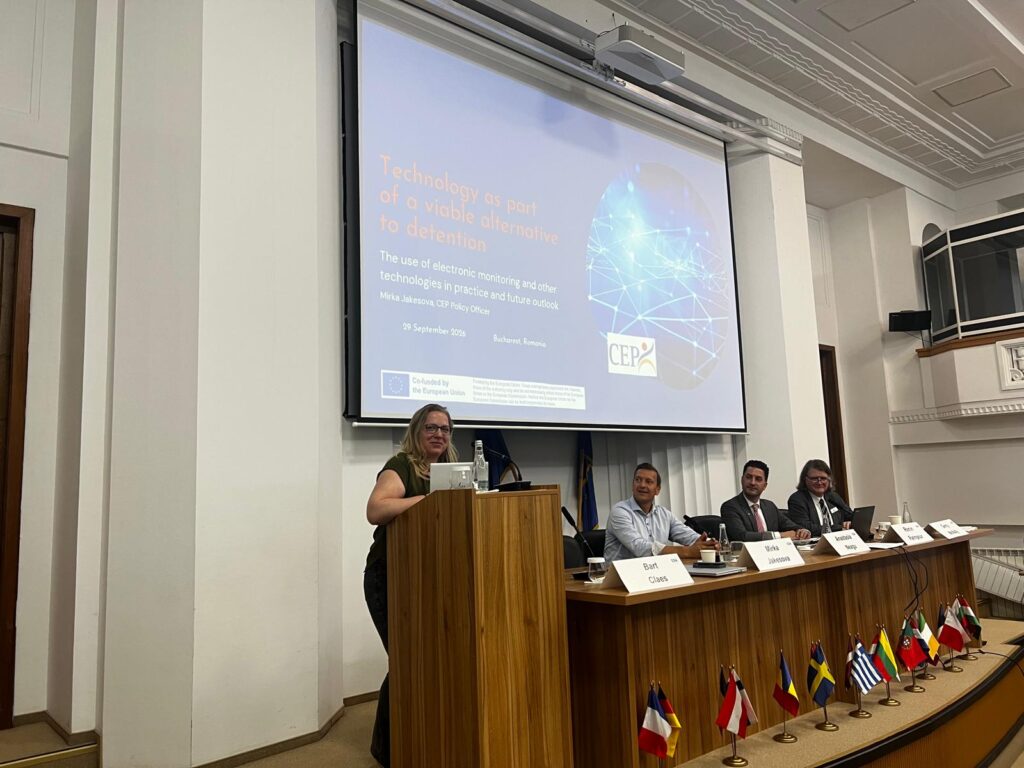
CEP Vice-President Daniel Danglades, Ambassador Gerry McNally and Policy Officer Mirka Jakesova participated in the Seminar on Framework Decisions 829 and 947 and their Impact on Alternatives in the EU organized under the EU project run by the Academy of European Law on 28-29 September in Bucharest, Romania. The seminar brought together judges, prosecutors, probation practitioners, academics, and policy experts to discuss the growing role of alternatives to detention within European criminal justice systems.
New
CEP
CEP and Catalan justice leaders reaffirm longstanding cooperation
29/09/2026
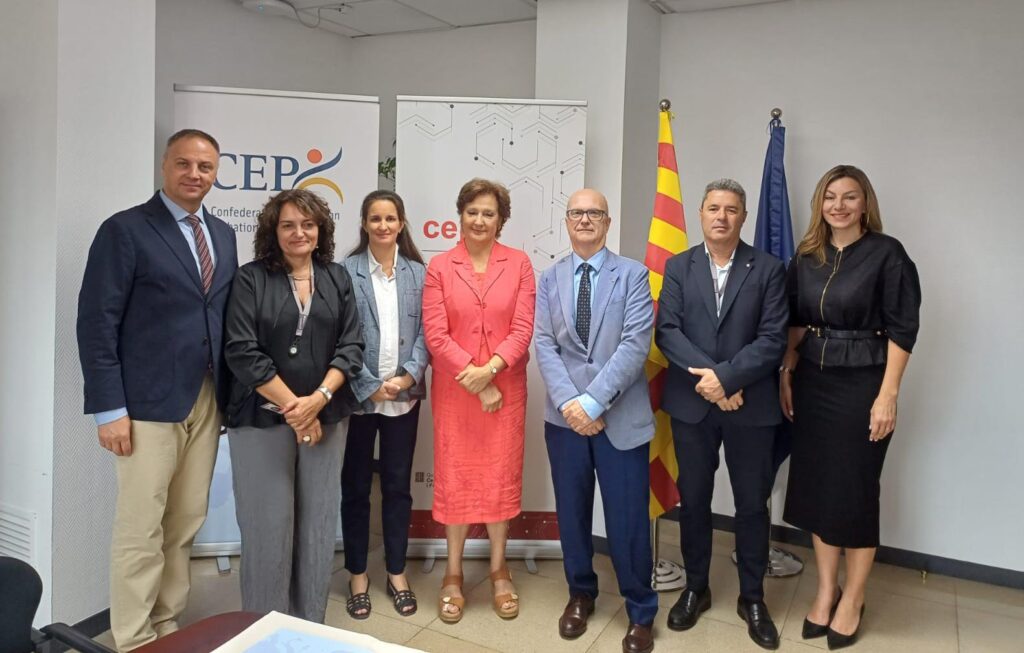
Representatives of the Confederation of European Probation (CEP) met with senior officials from the Catalan Department of Justice and Democratic Quality in Barcelona on 28 September 2026, alongside the opening of the sixth International Training School on Core Correctional Skills. The meeting offered an opportunity to recognise a longstanding partnership and discuss its continued development.
Updated

Mental Health
DEADLINE EXTENDED: Call for Pilot Implementation of the European Mental Health Training Curriculum
29/09/2026
Good news for CEP members! Following requests from our members, CEP has extended the deadline to apply for the pilot implementation of the European Mental Health Training Curriculum for Probation Officers.
Recap

ITSCCS, Technology
6th International Training School opens in Barcelona with a focus on digital probation
28/09/2026
How can probation professionals use new technologies in their interactions while building trust, showing empathy and supporting change? This question is at the heart of the sixth International Training School on Core Correctional Skills, which opened in Barcelona on 28 September 2026.
Subscribe to our bi-monthly email newsletter!
"*" indicates required fields
- Keep up to date with important probation developments and insights.