

Previous Article
News
Therapeutic programmes for drivers – the case of the Czech Republic
Therapeutic programmes for drivers were introduced into the Czech legal system as part of the amendment to Act No 361/2000 on road traffic with effect from 1 April 2024. From this date, they will become a new obligation for at-risk drivers, who will have to provide proof of completion of a therapeutic programme in addition to the existing prerequisites for the return of a revoked driving licence.
Specifically, these programmes target three groups of problem drivers – a) those who have been banned from driving for 18 months or more in administrative or criminal proceedings; b) those who refuse to submit to a roadside test for alcohol or other narcotic and psychotropic substances; and c) those who are ordered to do so by a judge or prosecutor as part of their sentence. There may be some overlap between these three groups, but preliminary calculations suggest that this new blanket obligation will affect 10-20 thousand persons per year.
The therapeutic programmes themselves are already a well-proven tool thanks to a number of international evaluations, and have been shown to have the potential to reduce recidivism of undesirable driving behaviour by 50-90%. The Czech concept, which has also been subjected to a number of research studies, draws inspiration from best international practice and thanks to extensive piloting we can expect similarly good results.
The therapeutic programmes are conducted in group form, with a total of 20 hours of direct work with participants divided into five sessions. Individual runs of the programmes will be delivered by accredited trainers for 3-12 participants. The content of the sessions focuses on, for example, offence analysis, the topic of alcohol or drugs behind the wheel, the risks of breaking traffic rules (for example, speeding or talking on the phone while driving) or the consequences of aggressive driving behaviour. At the end of the programme, each participant develops a personal change strategy to avoid getting into a similar situation that brought them to the programme again.
As far as the lecturers are concerned, they are most often experts who are professionally involved in therapy, traffic psychology and so on. In order to be licensed as a trainer, they must have completed accredited psychotherapy training or at least 3 years of therapeutic experience, as well as a professional course for trainers of therapeutic programmes, culminating in an examination.
The entire system of the therapeutic programmes will be supervised by the Transport Research Centre, which, in its role as a Methodological Centre, grants or withdraws accreditation from individual lecturers, monitors their activities and provides methodological guidance. The Methodology Centre will also coordinate the financing of the system and guarantee the availability of the programmes for users throughout the country.
The key processes will be provided through an information web portal, which is a public administration information system. Here, trainers will apply for accreditation, list individual courses of therapeutic programmes or apply for regular courses of so-called continuing education, which they will have to complete annually. Those interested in participating in a therapeutic programme will be able to find a database of courses, register for one of them and make the obligatory payment in the system.
With the introduction of therapeutic programmes in the Czech Republic, we will compensate for a long-standing deficit. Our country is the last country in the European Union in which such a measure has not yet been introduced across the board. The result, on which traffic experts already agree, should be a substantial reduction in dangerous behaviour by drivers on the road and, ultimately, increased health protection and life of road users.
Contacts and links:
Veronika Kurečková, expert guarantor of the Methodology Centre: veronika.kureckova@cdv.cz
Tomáš Rosenberg, Coordinator for the Methodology Centre: tomas.rosenberg@cdv.cz
Website: https://www.metodickecentrum.cz/

Related News
Keep up to date with the latest developments, stories, and updates on probation from across Europe and beyond. Find relevant news and insights shaping the field today.
New
Technology
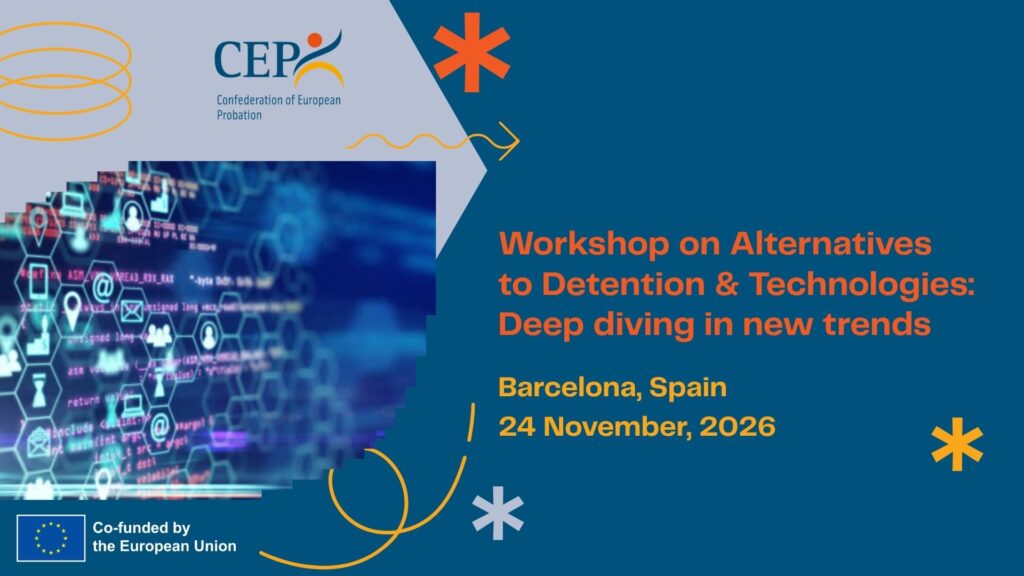
Registration deadline approaching: Join CEP’s final workshop of 2026 on technology in probation
22/10/2026
📢 Have you registered yet? CEP’s final workshop of 2026 takes place on 24 November in Barcelona, bringing together professionals to explore how technology is being used across probation services in Europe.
The Workshop on Alternatives to Detention and Technologies: Deep Diving into New Trends will look beyond artificial intelligence to examine the different ways technology is shaping probation practice, from staff training to working with clients and collaborating with other criminal justice partners.
Recap

Directors General Meetings
CEP Leadership Excellence Training: strengthening leadership and cooperation across Europe
22/10/2026
The CEP Leadership Excellence Training, held on 20–21 October in Zagreb, Croatia, brought together Directors General and senior probation managers from 11 European countries for a two-day interactive programme focused on leadership, communication, staff development, and international cooperation.
New

CEP
Call for Proposals: Evaluation of CEP Expert Groups
21/10/2026
On behalf of Ms. Jana Špero Kamenjarin, CEP Secretary General, it is my pleasure to invite you to submit a proposal to conduct an evaluation within the CEP work programme.
Recap

Uncategorized
CEP at UNODC: Contributing to the Development of Probation Services Worldwide
19/10/2026
The Confederation of European Probation (CEP) was represented by its Secretary General, Jana Špero Kamenjarin, at the Expert Group Meeting on the Establishment of Probation Services and Probation Practices, organised by the United Nations Office on Drugs and Crime (UNODC) and held at the Vienna International Centre (VIC) from 12 to 14 October 2026.
Recap
Electronic monitoring, Technology
14th Electronic Monitoring Conference, Electronic Monitoring in a Changing World – Perception vs Reality
08/10/2026
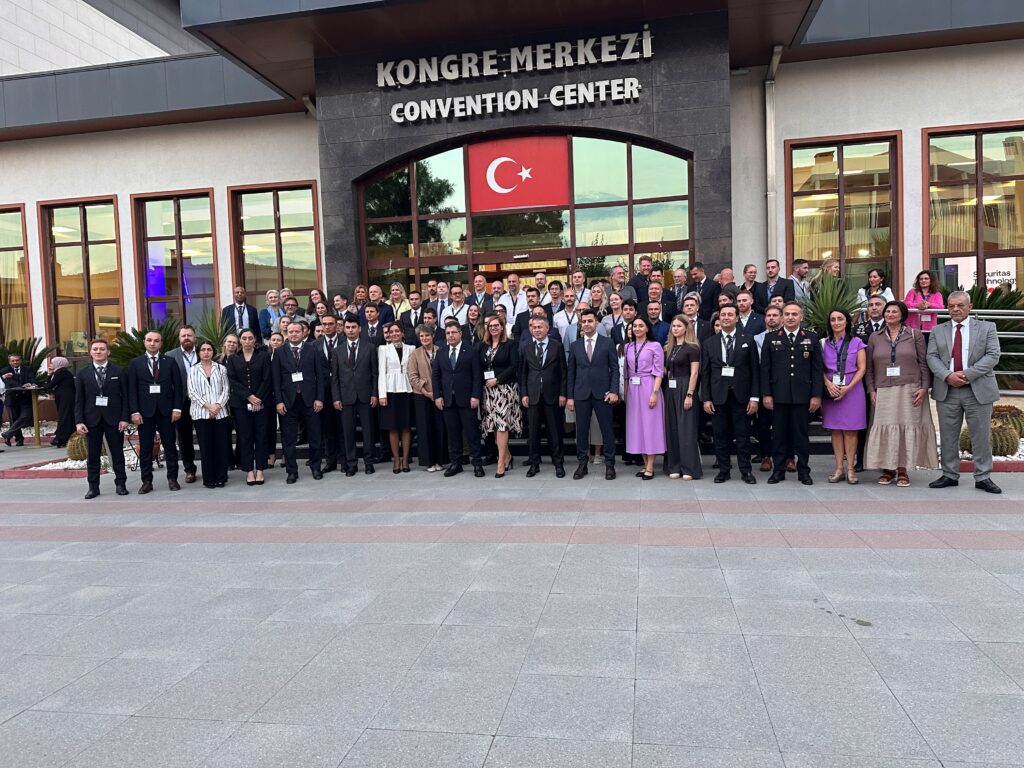
On 6-8 October 2026, Antalya hosted the 14th Electronic Monitoring Conference “Electronic Monitoring in a Changing World – Perception vs Reality”. More than 350 participants coming from 32 countries across Europe and worldwide representing probation services, Ministries of Justice, victims´ services, EM providers, researchers as well as local participants representing the Turkish Prison and Probation Service gathered to discuss how electronic monitoring (EM) is understood by all stakeholders involved including the victims and the public, and how these perceptions compare to the evidence and experiences of those affected. While the gap between perception and reality in electronic monitoring has been recognised for over a decade, the rapid expansion of EM into areas such as victim protection, high-risk supervision and digital innovation has brought new challenges and questions to the forefront.
Recap

ITSCCS
Core Correctional Skills in Digital Probation: highlights from the 6th ITSCCS in Barcelona
05/10/2026
The sixth International Training School on Core Correctional Skills (ITSCCS) took place in Barcelona from 28 September to 2 October 2026, bringing together 26 participants for a week of learning, practical training and international exchange. Organised by the Confederation of European Probation (CEP) and the Centre for Legal Studies and Specialised Training (CEJFE), the programme focused on “Clicks and Empathy: Core Correctional Skills in Digital Probation.”
Subscribe to our bi-monthly email newsletter!
"*" indicates required fields
- Keep up to date with important probation developments and insights.