

Previous Article
News
Back on track, preventing radicalization among prison immates
In 2012 started the pilot project Back on Track, aiming on preventing radicalization among prison inmates. A very current issue, which will also be on the agenda of the International expert event on radicalisation and violent extremism on 14 October in Barcelona. Annette Esdorf from Kriminal Forsorgen, the Danish Prison and Probation Service, shares the insights of the project.
In the special environment of prisons, inmates often face a difficult task of establishing their identity, building a social network and relations. Experience shows that there is a risk that some prison inmates have a negative influence on others. Thus, persons convicted of terrorism, or who exhibit some other form of extremist behaviour, may influence their fellow inmates adversely, and thereby contribute to the emergence of an extremist environment. With the pilot project ”Deradicalisation – Back on track” from 2012, the Danish Ministry of Social Affairs and Integration collaborated with the Danish Prison and Probation Service in developing and testing a mentoring scheme that may help to prevent and counteract crime related to extremism, whether it is right-wing, left-wing or religious forms of extremism. The mentoring scheme was specifically targeted at inmates and remand prisoners who are charged with or convicted of terrorism, or whose offence is subject to aggravating circumstances, because of hate crimes motivated by the victim’s ethnicity, political persuasion, sexual orientation or similar. The target group also comprised inmates or remand prisoners who are deemed vulnerable to radicalisation.
The purpose of the mentoring effort
The aim of the mentoring scheme is to help inmates become better at tackling everyday situations, problems and conflicts. The role of the mentor will be to support and strengthen the inmate’s motivation to opt for a lifestyle free of crime, and to build new relations in non-criminal and non-extremist environments. In the course of the mentorship, focus is on involving the inmate’s family and social network outside of prison, giving them an active role, both during remand, during prison sentence and in connection with the inmate’s re-entry into society. In the re-entry phase, the mentor must furthermore assist the mentee in dealing with concrete challenges surrounding the release. This could be by helping the mentee find a place to live, an education or job, and in the form of support to build new social relations.
Training of mentors
An important element in the project is training of the mentors and hereby strengthening their competencies in relation to various dialogue techniques, coaching and conflict management skills. The mentors must possess the necessary insight and tools for planning and tailoring a mentorship that also accommodates the fact that the mentee is in prison or remanded in custody. To a large extent, the training also focuses on how the mentee’s family and network can be actively involved in the mentorship.
Organisation of the project and the mentoring scheme
The mentoring effort has been organised within the framework of an existing mentoring scheme under the Danish Prison and Probation Service. The project has been carried out as a collaboration between the Danish Prison and Probation Service and the Danish Ministry of Social Affairs and Integration. The Danish Security and Intelligence Service participated in a working group, whose purpose was to ensure the coordination of the effort. A group of 10 mentors have been trained, and among these, 2 persons have been trained as mentor coaches, who can support and supervise the other mentors throughout the project. The mentors and mentor coaches have primarily been recruited from the existing mentor corps of the Danish Prison and Probation Service, and from the existing mentoring project “Deradicalisation – targeted intervention”, which is supported by the EU. In the mentorships, the coaches act as supervisors to the mentors. In the recruitment of the mentors it has been emphasised that they have previous experience with mentoring, with the prison service or similar types of efforts. The training of the mentors has been carried out primarily by psychologist Malene Windfeldt and the consultancy firm Navigent. The Danish Ministry of Social Affairs and Integration has provided teaching in subjects related to extremism and radicalisation.
Learning from Back on Track
The aim of the mentoring effort is to contribute to preventing extremist forms of crime among the target group of prison inmates. The experiences gathered from the project have been used in the expansion of the special mentoring scheme within the Danish Prison and Probation Service that is targeted individuals at special risk, especially relating to extremism. It is the overall assessment that individual and specialized interventions such as this type of mentorship scheme for this target group is much needed and of great value, when it is part of a larger and structured scheme of rehabilitation, and when is it established in cooperation with the relevant authorities.

Related News
Keep up to date with the latest developments, stories, and updates on probation from across Europe and beyond. Find relevant news and insights shaping the field today.
Reading corner

Probation in Europe
Dohľad
08/07/2026
The authentic world of probation and mediation, in which professional work intersects with human destinies, is brought to you by the publication through case studies revealing the diverse life stories of convicts and the dynamics of their relationship with probation and mediation officers.
Probation Journal

CEP
New Publication: CEP, Probation and the Digital Future
02/07/2026
The latest issue of the Journal of Offender Monitoring features an English version of Gerry McNally’s chapter, CEP, Probation and the Digital Future, first published in 2023 as part of the Portuguese book Execução das Penas e Medidas na Comunidade no Futuro Digital, edited by Nuno Caiado.
New

Calls and funding oppertunities
European Commission | Call for proposals to support transnational projects in the fields of e-Justice, victims’ rights, and procedural rights.
02/07/2026
The European Commission has launched a new call for proposals to support transnational projects in the fields of e-Justice, victims’ rights, and procedural rights.
With a total budget of €9.4 million, the call aims to fund projects that contribute to the digitalisation and effectiveness of justice systems, strengthen the protection of victims, and promote access to justice and judicial cooperation across Europe.
New

Education and Training
Launch of 40 e-Capsules: Training on EU Law for Justice Professionals
29/06/2026
The European Judicial Training Team of the European Commission is pleased to announce the launch of 40 e-capsules (each available in all EU languages) within civil law, criminal law and fundamental rights.
New
CEP
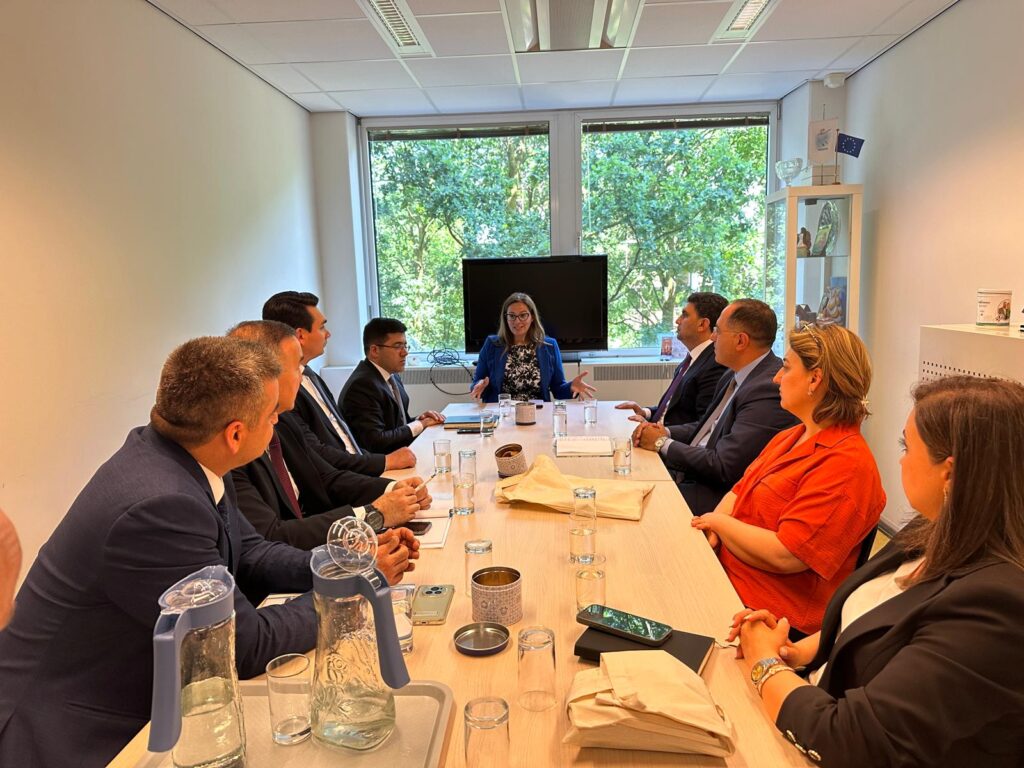
Delegation from Azerbaijan visits CEP Office in Utrecht
25/06/2026
On 23 June, a delegation from Azerbaijan visited the CEP office in Utrecht, the Netherlands. The delegation included representatives of the Probation Service, Ministry of Justice of the Republic of Azerbaijan, a judge of the Supreme Court of the Republic of Azerbaijan and representatives of the Embassy of the Republic of Azerbaijan in the Netherlands. The visit to the CEP office was part of a broader learning programme with Reclassering Nederland.
New

CEP
Newsletter June 2026 out now
25/06/2026
CEP’s latest newsletter is out now! It includes:
- Recap of the Workshop on Caseload and Workload
- Save the date: Workshop on Technology and Alternatives to Detention
- New publications and outputs from Expert Groups
- Call for a new Expert Group on Overcrowding and Net-Widening
- Call for participation in DG training
- and much more!
Subscribe to our bi-monthly email newsletter!
"*" indicates required fields
- Keep up to date with important probation developments and insights.