

Previous Article
News
Research: Supervision Skills for Probation Practitioners
Her Majesty’s Inspectorate of Probation for England and Wales, recently published new research conducted by Prof. Peter Raynor: ‘Supervision Skills for Probation Practitioners’. This short report was produced at the request of Dr Robin Moore, Head of Research in The HM Inspectorate of Probation. It is partly based on a longer article in the European Journal of Probation in 2018 co-authored by Peter Raynor and Maurice Vanstone (‘What matters is what you do: the rediscovery of skills in probation practice’, European Journal of Probation 10(3) 199-214), and draws particularly on the Jersey Supervision Skills Study which received the CEP’s Research Award in 2016. The development of practice skills appears to be a promising focus for evidence-based improvement in the effectiveness of probation, and we hope this will encourage further research and practical projects.
The use of evidence-based practice in the attempt to improve probation’s impact on reoffending became a mainstream policy following the ‘Underdown report’ produced by HM Inspectorate of Probation in 1998. Initial efforts were largely based on cognitive-behavioural group programmes. However, most people supervised by probation officers experience supervision as one-to-one contacts most or all of the time, and some of those who participate in programmes also need preparation, support and follow-up on an individual basis. The identification of practitioners’ skills in individual supervision as an important component in effective practice came late to England and Wales in comparison with work done in other countries. This ‘Academic Insight’ offers a brief summary of key findings from research on probation staff’s practice skills (known in North American research as Core Correctional Practices) and considers some of the practical implications. In the well-known Risk-Need-Responsivity (RNR) framework for effective practice, research on skills contributes to understanding responsivity, which has until recently received less research attention than risks and needs.
Please click on the link to read ‘Supervision Skills for Probation Practitioners’ by Peter Raynor.

Related News
Keep up to date with the latest developments, stories, and updates on probation from across Europe and beyond. Find relevant news and insights shaping the field today.
Recap

ITSCCS
Core Correctional Skills in Digital Probation: highlights from the 6th ITSCCS in Barcelona
05/10/2026
The sixth International Training School on Core Correctional Skills (ITSCCS) took place in Barcelona from 28 September to 2 October 2026, bringing together 26 participants for a week of learning, practical training and international exchange. Organised by the Confederation of European Probation (CEP) and the Centre for Legal Studies and Specialised Training (CEJFE), the programme focused on “Clicks and Empathy: Core Correctional Skills in Digital Probation.”
Recap
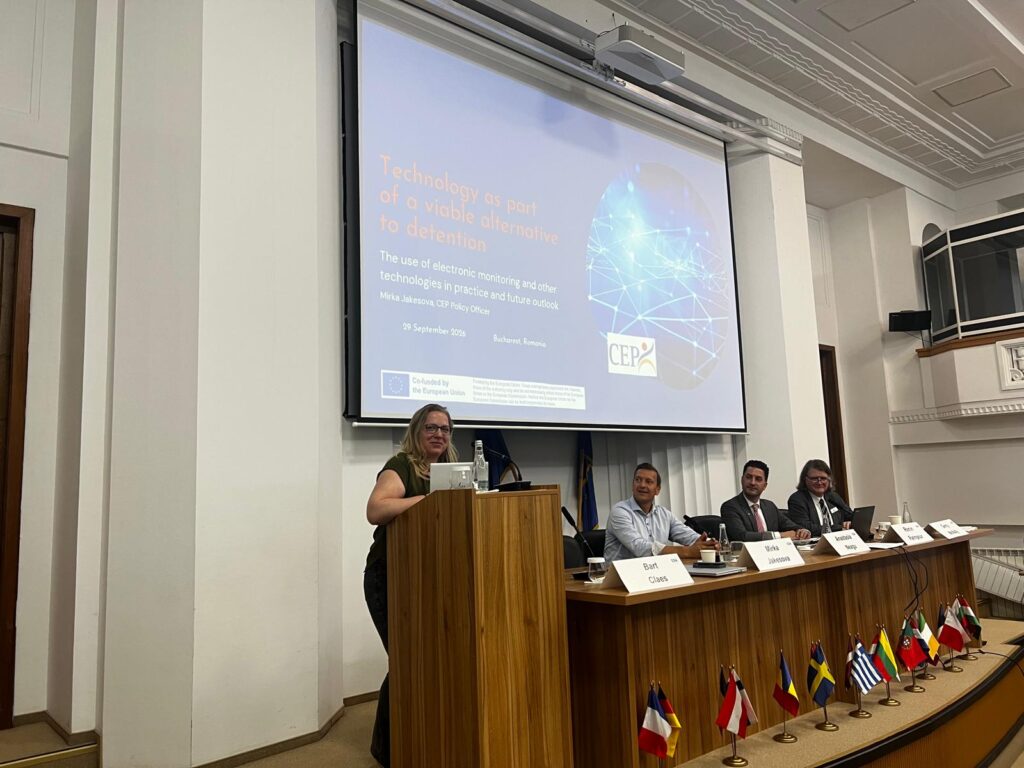
Framework Decisions
Recap: ERA workshop on Framework Decisions 829 and 947 in Bucharest
02/10/2026
CEP Vice-President Daniel Danglades, Ambassador Gerry McNally and Policy Officer Mirka Jakesova participated in the Seminar on Framework Decisions 829 and 947 and their Impact on Alternatives in the EU organized under the EU project run by the Academy of European Law on 28-29 September in Bucharest, Romania. The seminar brought together judges, prosecutors, probation practitioners, academics, and policy experts to discuss the growing role of alternatives to detention within European criminal justice systems.
New
CEP
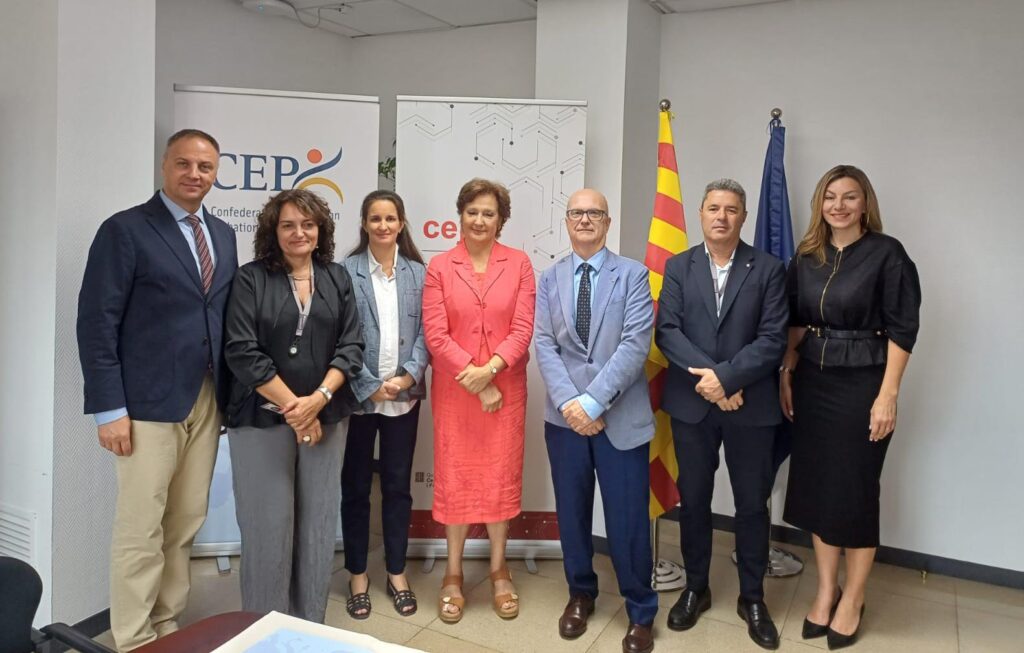
CEP and Catalan justice leaders reaffirm longstanding cooperation
29/09/2026
Representatives of the Confederation of European Probation (CEP) met with senior officials from the Catalan Department of Justice and Democratic Quality in Barcelona on 28 September 2026, alongside the opening of the sixth International Training School on Core Correctional Skills. The meeting offered an opportunity to recognise a longstanding partnership and discuss its continued development.
Updated
Mental Health
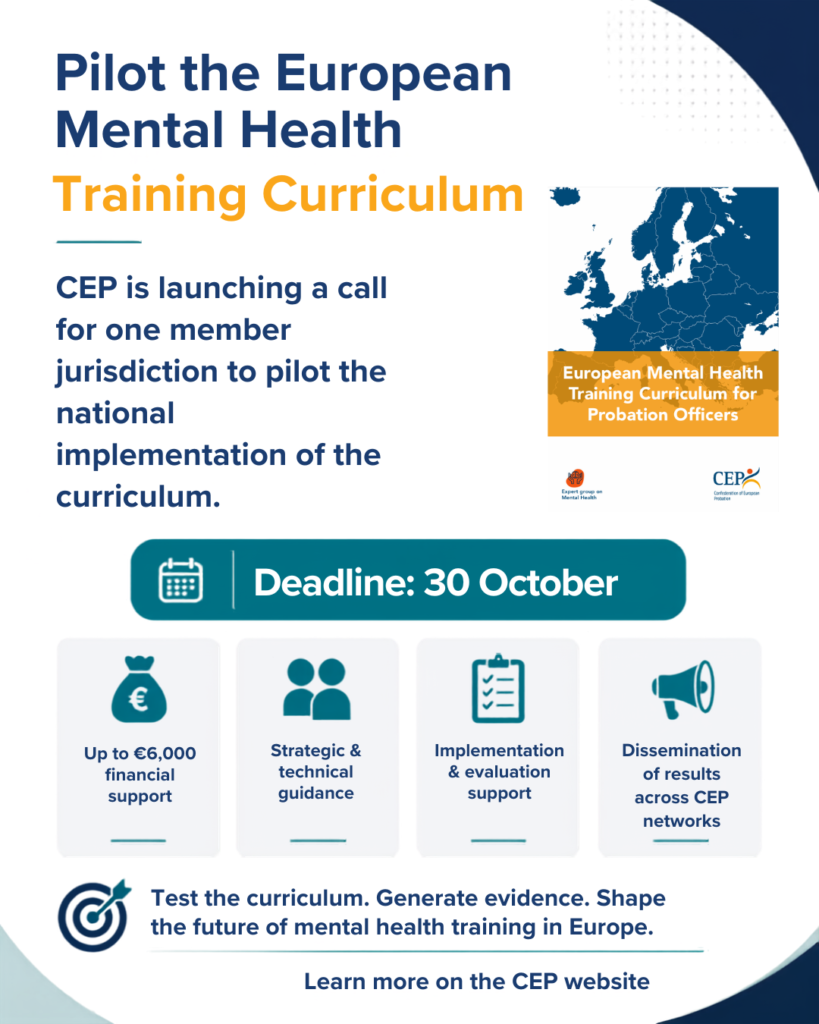
DEADLINE EXTENDED: Call for Pilot Implementation of the European Mental Health Training Curriculum
29/09/2026
Good news for CEP members! Following requests from our members, CEP has extended the deadline to apply for the pilot implementation of the European Mental Health Training Curriculum for Probation Officers.
Recap
ITSCCS, Technology
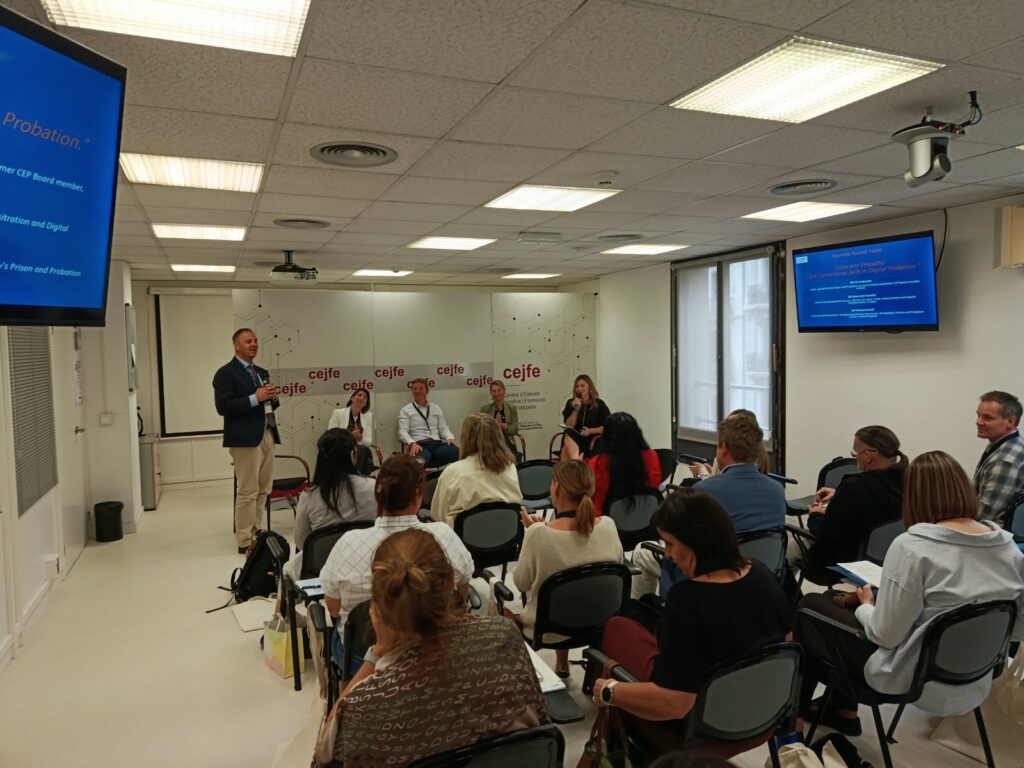
6th International Training School opens in Barcelona with a focus on digital probation
28/09/2026
How can probation professionals use new technologies in their interactions while building trust, showing empathy and supporting change? This question is at the heart of the sixth International Training School on Core Correctional Skills, which opened in Barcelona on 28 September 2026.
Recap
Probation in Europe
CEP at 42nd PC-CP Working Group Meeting
23/09/2026
The Council for Penological Co-operation (PC-CP) Working Group held its 42nd meeting from 15–17 September 2026 in Strasbourg. CEP was represented by Secretary General Jana Špero Kamenjarin.
Subscribe to our bi-monthly email newsletter!
"*" indicates required fields
- Keep up to date with important probation developments and insights.