

Previous Article
News
Recap: Conference ‘Resettling Adult Offenders’, Glasgow
Which title would you give a conference that is about desistance and inclusion in the community of offenders? Something like “The essential success factors in probation” may be obvious, but the organisers of the CEP conference held in Glasgow on the 25th and 26th of April 2008 chose for the more modest ‘Resettling Adult Offenders”. More than ninety participants from sixteen countries attended this important conference. “I think that one of the lesson learned is that our service-led way of thinking about reintegration should be challenged; we need to start with how offenders experience change”, suggests Fergus McNeill, Senior Lecturer in the Glasgow School of Social Work and one of the organisers of the conference.
In the conference programme, Fergus McNeill took up the task of do the summing up of the conference. “The general purpose of the conference was to broaden the participants’ horizon on how to overcome problems in the resettlement of offenders. I think that that goal has been achieved. Many of the elements which contribute to successful resettlement were discussed at the conference. Moreover, the conference was an opportunity to engage with delegates from a broad range of countries and develop an appreciation of how in each country the problems of resettlement are being tackled. It was interesting to learn that despite all the different social, cultural and juridical contexts there are common problems that probation services in every country encounter when trying to resettle ex-criminals successfully. And every service is producing slightly different ways of resolving those problems.”
Although many good practice ideas were exchanged, almost every speaker at the conference recognized the limitations of working only to change the offender. Fergus McNeill: “The ‘What Works approach” which has been developed in many jurisdictions is principally about making offenders better at thinking and solving problems themselves. Everybody at the conference recognized the importance of that task and the importance of doing rehabilitative work and programs. In the UK, in the last fifteen years we have been preoccupied with making the programs and systems evidence based. That is good, but when it leads to shoehorning offenders into a set of programs and processes that we have designed not around individuals but around generalizations about needs and risks then things go wrong. Desistance research emphasises individual trajectories of change and suggests that successful resettlement is about individualized support. Therefore we need systems and practices that are more able to personalize the interventions in the process.”
With that conclusion, probation services all around Europe face an enormous intellectual and practical challenge. Fergus McNeill continues: “Its upsets or overturns our service-led way of thinking and compels us to have an offender centered way of thinking about reintegration. So the first question is not ‘what do we do’, but ‘what is the offender experiencing as an individual and what can we build around that to support them’. Such a change has of course serious cost and resource implications. The more we personalize and individualize our approaches, the more space we need to give to practitioners to adapt and develop and make each intervention distinctive. That is very labor-intensive and very time-intensive – and it requires highly skilled staff. Nevertheless, I think the common message at the conference was that this is a necessary part of successful resettlement. Resettlement also needs to look beyond the ex-prisoner to include work with the family, with employers and with communities; without employers and communities being supported to accept returning ex-offenders, the prospects for desistance will be much diminished. That means that there still is a lot of work to do. However, the positive news is that we are moving in the right way. It is going to be an exciting time in criminal justice.”
The report of the conference “Resettling Adult Offenders” is available here.

Related News
Keep up to date with the latest developments, stories, and updates on probation from across Europe and beyond. Find relevant news and insights shaping the field today.
Recap
Electronic monitoring, Technology
14th Electronic Monitoring Conference, Electronic Monitoring in a Changing World – Perception vs Reality
08/10/2026
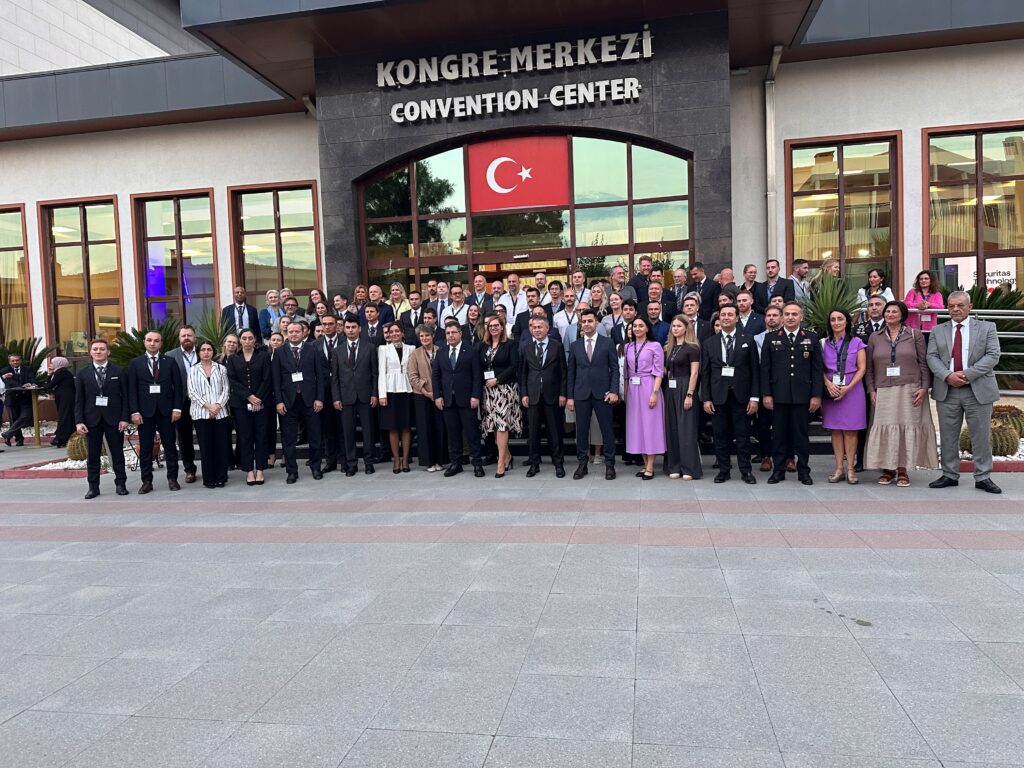
On 6-8 October 2026, Antalya hosted the 14th Electronic Monitoring Conference “Electronic Monitoring in a Changing World – Perception vs Reality”. More than 350 participants coming from 30 countries across Europe and worldwide representing probation services, Ministries of Justice, victims´ services, EM providers, researchers as well as local participants representing the Turkish Prison and Probation Service gathered to discuss how electronic monitoring (EM) is understood by all stakeholders involved including the victims and the public, and how these perceptions compare to the evidence and experiences of those affected. While the gap between perception and reality in electronic monitoring has been recognised for over a decade, the rapid expansion of EM into areas such as victim protection, high-risk supervision and digital innovation has brought new challenges and questions to the forefront.
Recap

ITSCCS
Core Correctional Skills in Digital Probation: highlights from the 6th ITSCCS in Barcelona
05/10/2026
The sixth International Training School on Core Correctional Skills (ITSCCS) took place in Barcelona from 28 September to 2 October 2026, bringing together 26 participants for a week of learning, practical training and international exchange. Organised by the Confederation of European Probation (CEP) and the Centre for Legal Studies and Specialised Training (CEJFE), the programme focused on “Clicks and Empathy: Core Correctional Skills in Digital Probation.”
Recap
Framework Decisions
Recap: ERA workshop on Framework Decisions 829 and 947 in Bucharest
02/10/2026
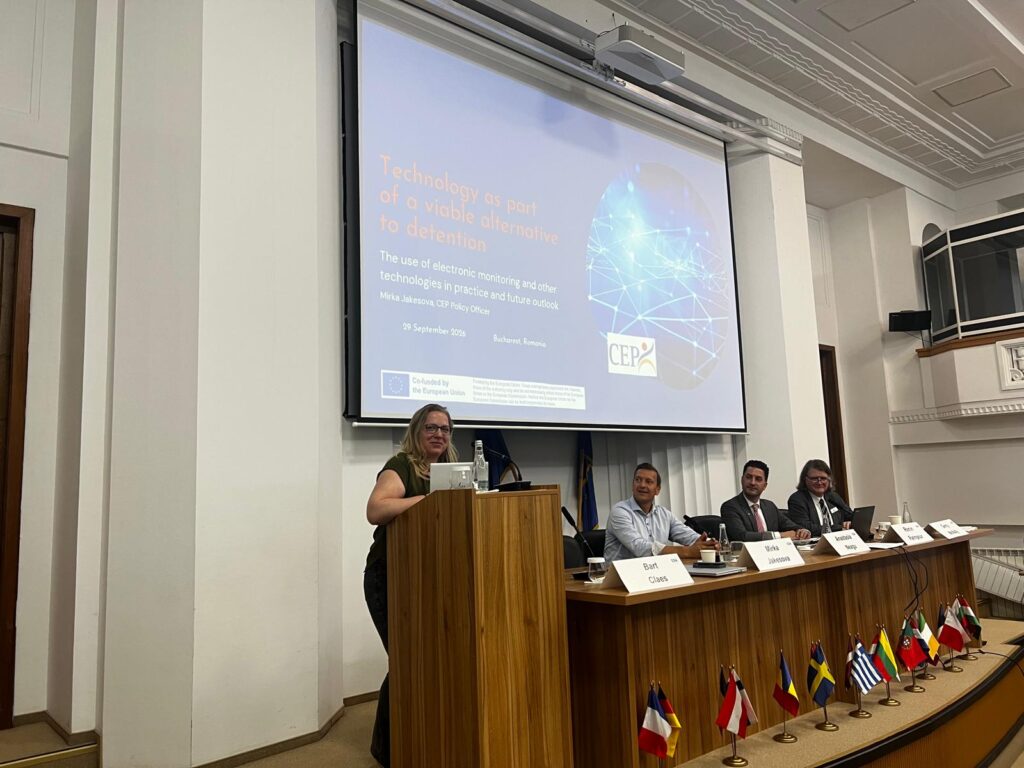
CEP Vice-President Daniel Danglades, Ambassador Gerry McNally and Policy Officer Mirka Jakesova participated in the Seminar on Framework Decisions 829 and 947 and their Impact on Alternatives in the EU organized under the EU project run by the Academy of European Law on 28-29 September in Bucharest, Romania. The seminar brought together judges, prosecutors, probation practitioners, academics, and policy experts to discuss the growing role of alternatives to detention within European criminal justice systems.
New

CEP
CEP and Catalan justice leaders reaffirm longstanding cooperation
29/09/2026
Representatives of the Confederation of European Probation (CEP) met with senior officials from the Catalan Department of Justice and Democratic Quality in Barcelona on 28 September 2026, alongside the opening of the sixth International Training School on Core Correctional Skills. The meeting offered an opportunity to recognise a longstanding partnership and discuss its continued development.
Updated

Mental Health
DEADLINE EXTENDED: Call for Pilot Implementation of the European Mental Health Training Curriculum
29/09/2026
Good news for CEP members! Following requests from our members, CEP has extended the deadline to apply for the pilot implementation of the European Mental Health Training Curriculum for Probation Officers.
Recap

ITSCCS, Technology
6th International Training School opens in Barcelona with a focus on digital probation
28/09/2026
How can probation professionals use new technologies in their interactions while building trust, showing empathy and supporting change? This question is at the heart of the sixth International Training School on Core Correctional Skills, which opened in Barcelona on 28 September 2026.
Subscribe to our bi-monthly email newsletter!
"*" indicates required fields
- Keep up to date with important probation developments and insights.