

Previous Article
News
Michelle S. Phelps on Supporting the Wellbeing of Adults on Probation
Supporting the Wellbeing of Adults on Probation
Findings from the U.S.
Michelle S. Phelps
Associate Professor of Sociology, University of Minnesota
Over the past several decades, Western countries have embarked on a dramatic proliferation of community sanctions–including probation, parole, community service, and fines and fees. This expansion of mass supervision, or what Fergus McNeill describes as pervasive punishment, is nowhere clearer than in the U.S. In 2018, one in every 72 adults was on probation (compared to one in 120 adults incarcerated in jails and prisons). Individuals on probation in the U.S. are under the supervision of a probation officer and required to meet a set of conditions of supervision, including abstaining from alcohol and substance use, reporting regularly, finding or maintaining employment and adequate housing, and paying supervision fees and court fines.
Despite the scale and severity of probation in the U.S., research on it’s consequences for individual, family, and community wellbeing are poorly understood, especially compared to the voluminous literature on mass incarceration. The Mass Probation and Health project was designed to map these connections, to better understanding how the criminal legal system and healthcare systems intersect. We situated our project in Hennepin County, Minnesota, a jurisdiction known for both its high rate of probation supervision and relatively moderate (by U.S. standards) incarceration rate.
In 2019, we interviewed 166 adults on probation, asking about a wide range of topics, including criminal justice histories; physical health, mental health, and substance use; employment and housing stability; and family dynamics. In our new report, Mass Probation and Health: Supporting the Wellbeing of Adults on Probation, we show that adults on probation face stark medical and social needs. Over 90% of our sample reported ever being diagnosed with one or more health conditions. Additionally, 75% of our sample reported that drug or alcohol use had ever been a problem for them, and just under half had participated in substance use treatment during the past year.
Social and economic needs were also acute. Almost half of our sample (40%) reported being uninsured or having gaps in their health insurance over the past year. The majority of participants (64%) were not employed at the time of the interview and 30% reported food insecurity. In addition, only 24% were living in their own apartment or home at the time of the interview.
For some participants, their arrest and supervision had helped connect them to health and social services, including substance use treatment and supportive housing. Still others continued to struggle with untreated health needs as well as stark social needs—including food insecurity, unstable housing, and other challenges.
Whether or not these needs were met shaped how participants experienced supervision–as we show through a series of profiles. While nearly all (roughly 90%) of participants described their experiences with their probation officers as respectful and fair, only 75% reported that they receive support from their probation officers when needed. In addition, over half (58%) agreed or strongly agreed that their experience on supervision had been stressful. The stress of supervision was often connected to the fear of revocation, with participants worried about how any technical violation, no matter how minor, could lead to their incarceration. Together, the stress of supervision often harmed participants’ ability to succeed in the community.
We end the report with four policy recommendations, which are oriented towards jurisdictions in the U.S. but some of which will apply more broadly. These recommendations include:
- Facilitating access to needed supportive services, including healthcare and assistance programs.
- Reducing the number of people on probation and/or active supervision.
- Narrowing the criteria for violations of supervision.
- Limiting drug testing and moving toward a desistance model of support.
We hope the report will better focus attention on the health needs of marginalized people and communities. Healthy families and communities need all of the other supports that enable people to thrive, including access to affordable housing, income support, responsive healthcare, and social inclusion. These health-promoting interventions make our communities safer for all.
To access the full report click here.

Related News
Keep up to date with the latest developments, stories, and updates on probation from across Europe and beyond. Find relevant news and insights shaping the field today.
Recap

Electronic monitoring, Technology
14th Electronic Monitoring Conference, Electronic Monitoring in a Changing World – Perception vs Reality
08/10/2026
On 6-8 October 2026, Antalya hosted the 14th Electronic Monitoring Conference “Electronic Monitoring in a Changing World – Perception vs Reality”. More than 350 participants coming from 30 countries across Europe and worldwide representing probation services, Ministries of Justice, victims´ services, EM providers, researchers as well as local participants representing the Turkish Prison and Probation Service gathered to discuss how electronic monitoring (EM) is understood by all stakeholders involved including the victims and the public, and how these perceptions compare to the evidence and experiences of those affected. While the gap between perception and reality in electronic monitoring has been recognised for over a decade, the rapid expansion of EM into areas such as victim protection, high-risk supervision and digital innovation has brought new challenges and questions to the forefront.
Recap

ITSCCS
Core Correctional Skills in Digital Probation: highlights from the 6th ITSCCS in Barcelona
05/10/2026
The sixth International Training School on Core Correctional Skills (ITSCCS) took place in Barcelona from 28 September to 2 October 2026, bringing together 26 participants for a week of learning, practical training and international exchange. Organised by the Confederation of European Probation (CEP) and the Centre for Legal Studies and Specialised Training (CEJFE), the programme focused on “Clicks and Empathy: Core Correctional Skills in Digital Probation.”
Recap
Framework Decisions
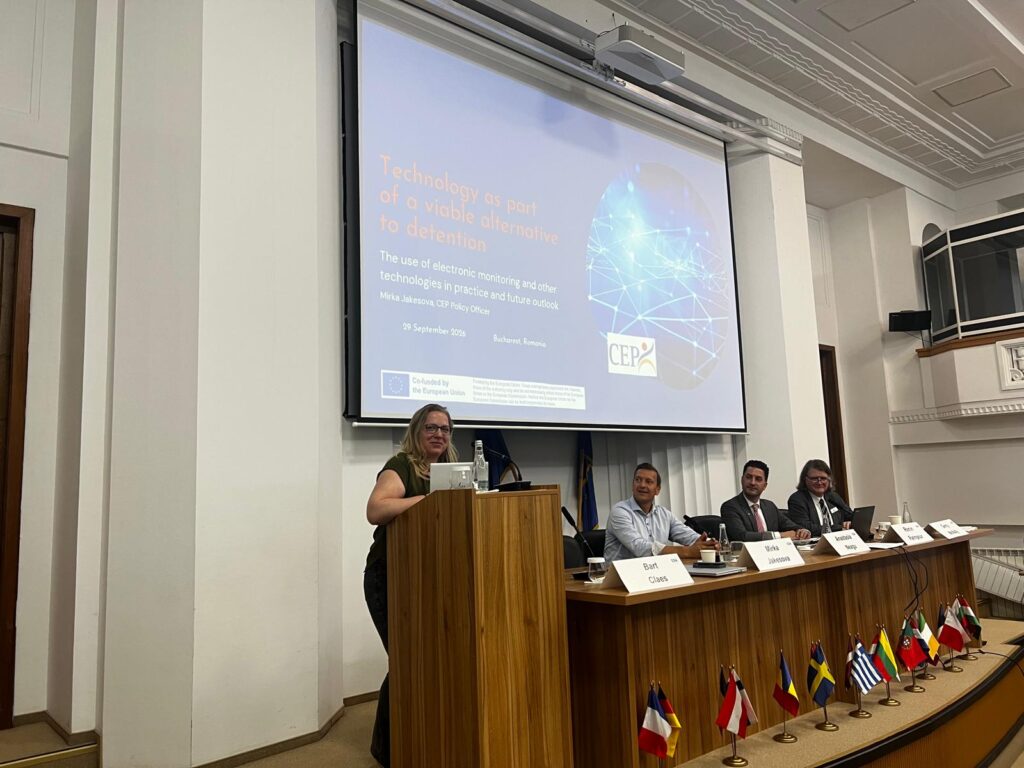
Recap: ERA workshop on Framework Decisions 829 and 947 in Bucharest
02/10/2026
CEP Vice-President Daniel Danglades, Ambassador Gerry McNally and Policy Officer Mirka Jakesova participated in the Seminar on Framework Decisions 829 and 947 and their Impact on Alternatives in the EU organized under the EU project run by the Academy of European Law on 28-29 September in Bucharest, Romania. The seminar brought together judges, prosecutors, probation practitioners, academics, and policy experts to discuss the growing role of alternatives to detention within European criminal justice systems.
New

CEP
CEP and Catalan justice leaders reaffirm longstanding cooperation
29/09/2026
Representatives of the Confederation of European Probation (CEP) met with senior officials from the Catalan Department of Justice and Democratic Quality in Barcelona on 28 September 2026, alongside the opening of the sixth International Training School on Core Correctional Skills. The meeting offered an opportunity to recognise a longstanding partnership and discuss its continued development.
Updated

Mental Health
DEADLINE EXTENDED: Call for Pilot Implementation of the European Mental Health Training Curriculum
29/09/2026
Good news for CEP members! Following requests from our members, CEP has extended the deadline to apply for the pilot implementation of the European Mental Health Training Curriculum for Probation Officers.
Recap
ITSCCS, Technology
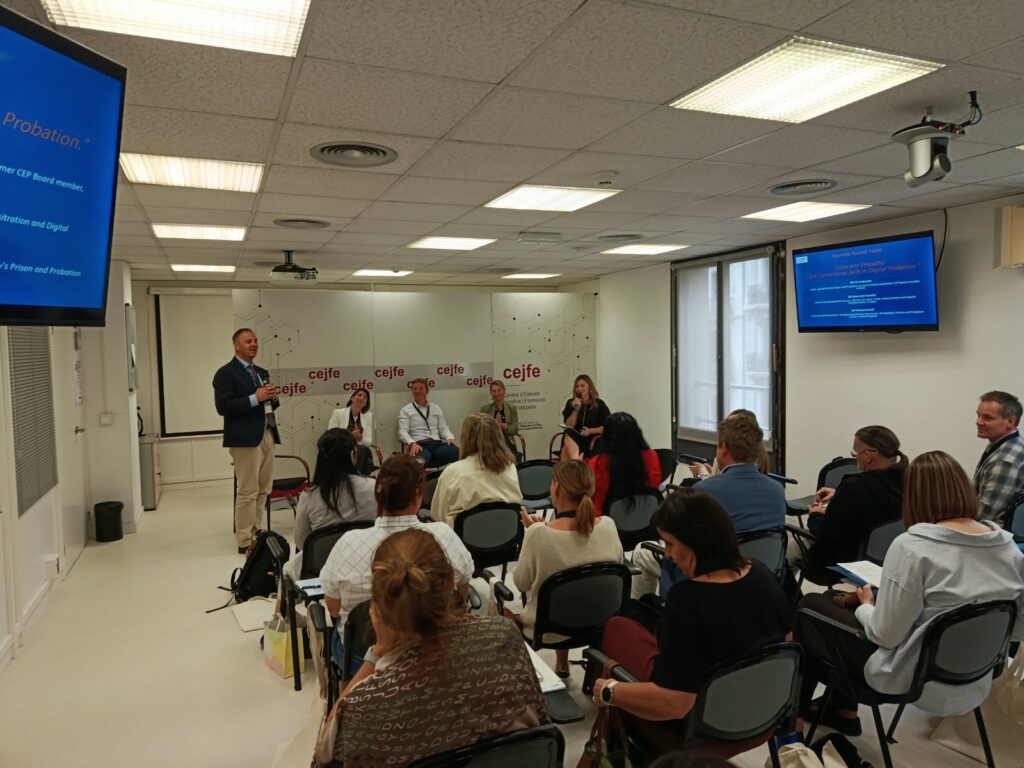
6th International Training School opens in Barcelona with a focus on digital probation
28/09/2026
How can probation professionals use new technologies in their interactions while building trust, showing empathy and supporting change? This question is at the heart of the sixth International Training School on Core Correctional Skills, which opened in Barcelona on 28 September 2026.
Subscribe to our bi-monthly email newsletter!
"*" indicates required fields
- Keep up to date with important probation developments and insights.