

Previous Article
News
James P. Organ, the ‘Irish System’ and the Origins of Parole
Sir Walter Crofton, following his appointment as Director of the Irish Convict Prisons in 1854, introduced what has become known as the Irish System in the governance of Convict Prisons in Ireland and the management of convict serving penal servitude sentences. Following the effective ending of transportation to Australia as a sentence in the early 1850s there were serious concerns regarding how to manage the previously transported convicts as numbers grew rapidly.
An article by Gerry McNally.
Based on experimental and innovative work in sentence management on Norfolk Island Prison Colony and innovative systems in France, Germany and Spain as well as the United Kingdom, Crofton devised a system of staged sentence management, intermediate prisons and supervision after release in Ireland, now known as the Irish System.
In the later stages of their sentences convicts who had met behaviour standards in their sentence were transferred to Intermediate prisons at Smithfield and Lusk where they underwent further education and training for release, were tested on short releases or tasks outside of the prison and finally, could be allowed full release to employment under supervision.
James Patrick Organ, a Dublin adult education teacher, was appointed as lecturer at Smithfield and Lusk Prisons with responsibility for preparation for release and supervision of the released convicts. He was appointed as Inspector of Released Convicts in 1855, providing work placements as well as individual support and supervision in the Dublin area. The Irish System, especially the Intermediate Prison, preparation for release and post-custody supervision elements, was extremely successful and lauded internationally. It was a major influence in the development of parole systems in Europe and in America.
James Organ published his lectures in 1858, wrote copious reports on his activities and, with Walter Crofton, published papers for meetings and international conferences. As the first Inspector of Discharged Convicts James Patrick Organ is recognised as the world’s first official Parole Officer (and possibly Probation Officer) and ‘father‘ of the parole systems based on his practice. James Patrick Organ continued very successfully as lecturer at Smithfield and Lusk Prisons and as Inspector of Discharged Convicts until his early death in 1869.
During the 1860’s there was also a significant focus shift in criminal justice policy and practice in the UK and Ireland from reform to punishment. While the Irish System flourished internationally, it withered and died in Ireland following the retirement of Sir Walter Crofton in 1862 and the death of James Organ in 1869; its champions and leaders. Smithfield Prison, the first Intermediate prison closed in 1871.
2019 is the 150th anniversary of the death of James Patrick Organ.
An article titled James P. Organ, the ‘Irish System’ and the Origins of Parole by Gerry McNally will feature in Irish Probation Journal 2019 to be published on November 29th 2019. The article will be available to read and download, for free, on the Irish Probation Service and PBNI (Probation Board for Northern Ireland) websites from November 29th.

Related News
Keep up to date with the latest developments, stories, and updates on probation from across Europe and beyond. Find relevant news and insights shaping the field today.
Recap
Electronic monitoring, Technology
14th Electronic Monitoring Conference, Electronic Monitoring in a Changing World – Perception vs Reality
08/10/2026
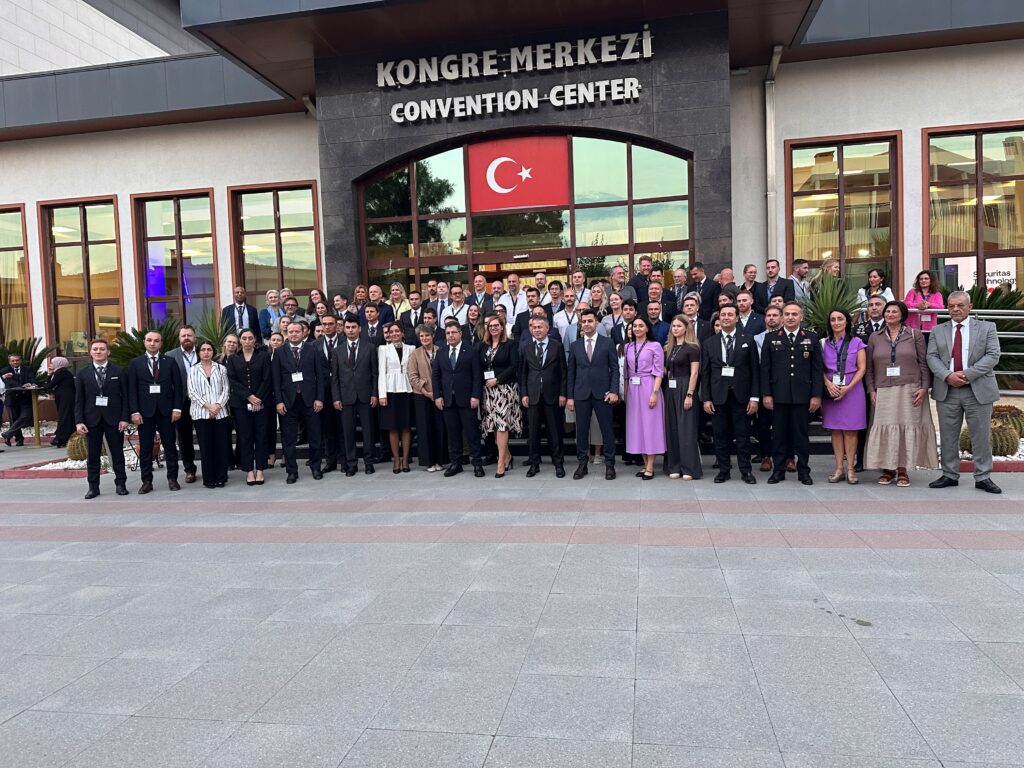
On 6-8 October 2026, Antalya hosted the 14th Electronic Monitoring Conference “Electronic Monitoring in a Changing World – Perception vs Reality”. More than 350 participants coming from 30 countries across Europe and worldwide representing probation services, Ministries of Justice, victims´ services, EM providers, researchers as well as local participants representing the Turkish Prison and Probation Service gathered to discuss how electronic monitoring (EM) is understood by all stakeholders involved including the victims and the public, and how these perceptions compare to the evidence and experiences of those affected. While the gap between perception and reality in electronic monitoring has been recognised for over a decade, the rapid expansion of EM into areas such as victim protection, high-risk supervision and digital innovation has brought new challenges and questions to the forefront.
Recap
ITSCCS
Core Correctional Skills in Digital Probation: highlights from the 6th ITSCCS in Barcelona
05/10/2026
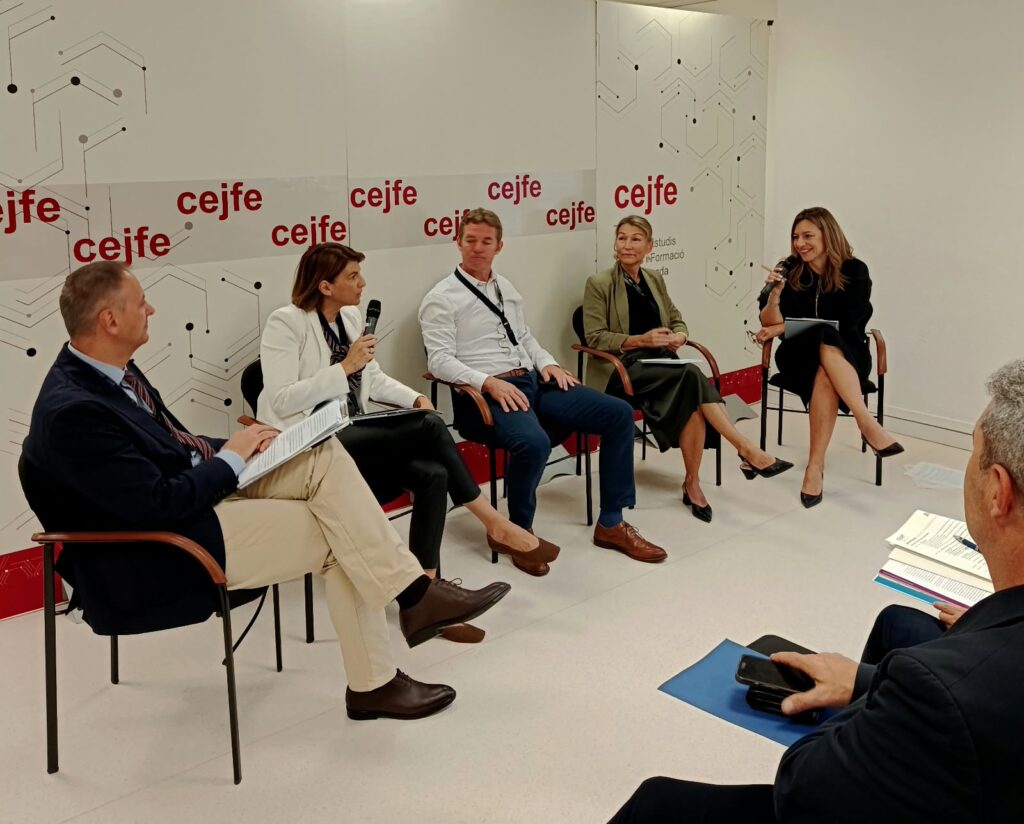
The sixth International Training School on Core Correctional Skills (ITSCCS) took place in Barcelona from 28 September to 2 October 2026, bringing together 26 participants for a week of learning, practical training and international exchange. Organised by the Confederation of European Probation (CEP) and the Centre for Legal Studies and Specialised Training (CEJFE), the programme focused on “Clicks and Empathy: Core Correctional Skills in Digital Probation.”
Recap
Framework Decisions
Recap: ERA workshop on Framework Decisions 829 and 947 in Bucharest
02/10/2026
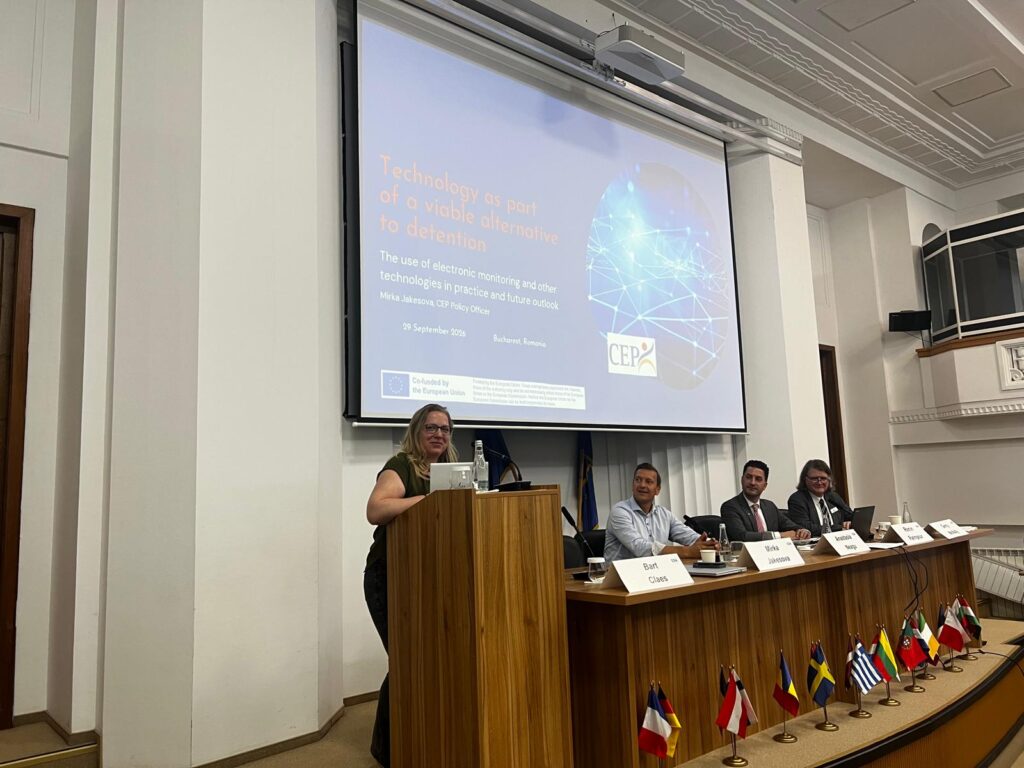
CEP Vice-President Daniel Danglades, Ambassador Gerry McNally and Policy Officer Mirka Jakesova participated in the Seminar on Framework Decisions 829 and 947 and their Impact on Alternatives in the EU organized under the EU project run by the Academy of European Law on 28-29 September in Bucharest, Romania. The seminar brought together judges, prosecutors, probation practitioners, academics, and policy experts to discuss the growing role of alternatives to detention within European criminal justice systems.
New
CEP
CEP and Catalan justice leaders reaffirm longstanding cooperation
29/09/2026
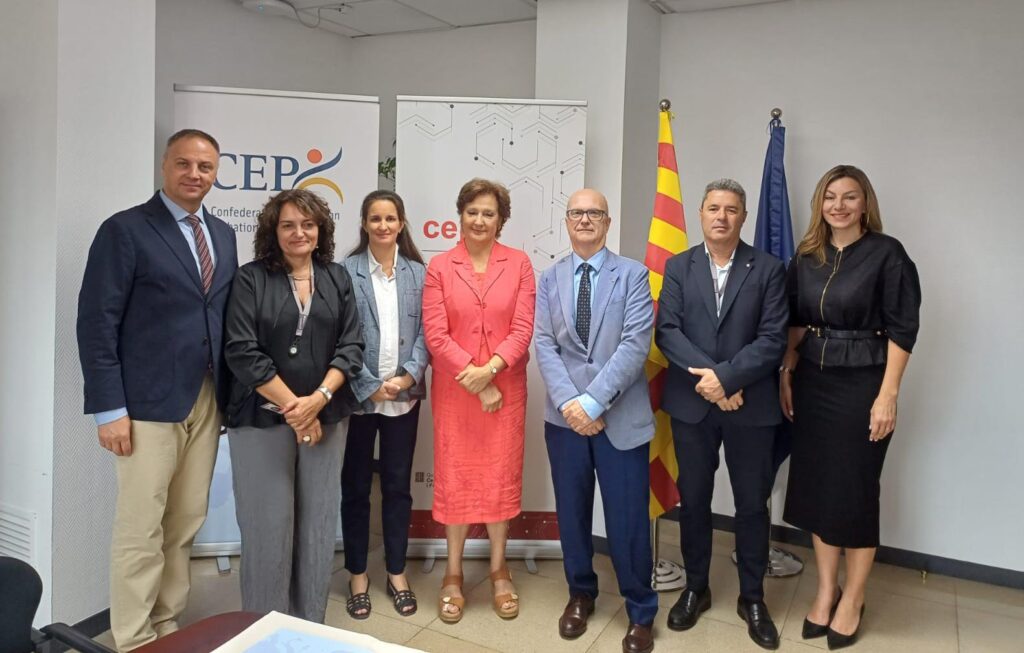
Representatives of the Confederation of European Probation (CEP) met with senior officials from the Catalan Department of Justice and Democratic Quality in Barcelona on 28 September 2026, alongside the opening of the sixth International Training School on Core Correctional Skills. The meeting offered an opportunity to recognise a longstanding partnership and discuss its continued development.
Updated
Mental Health
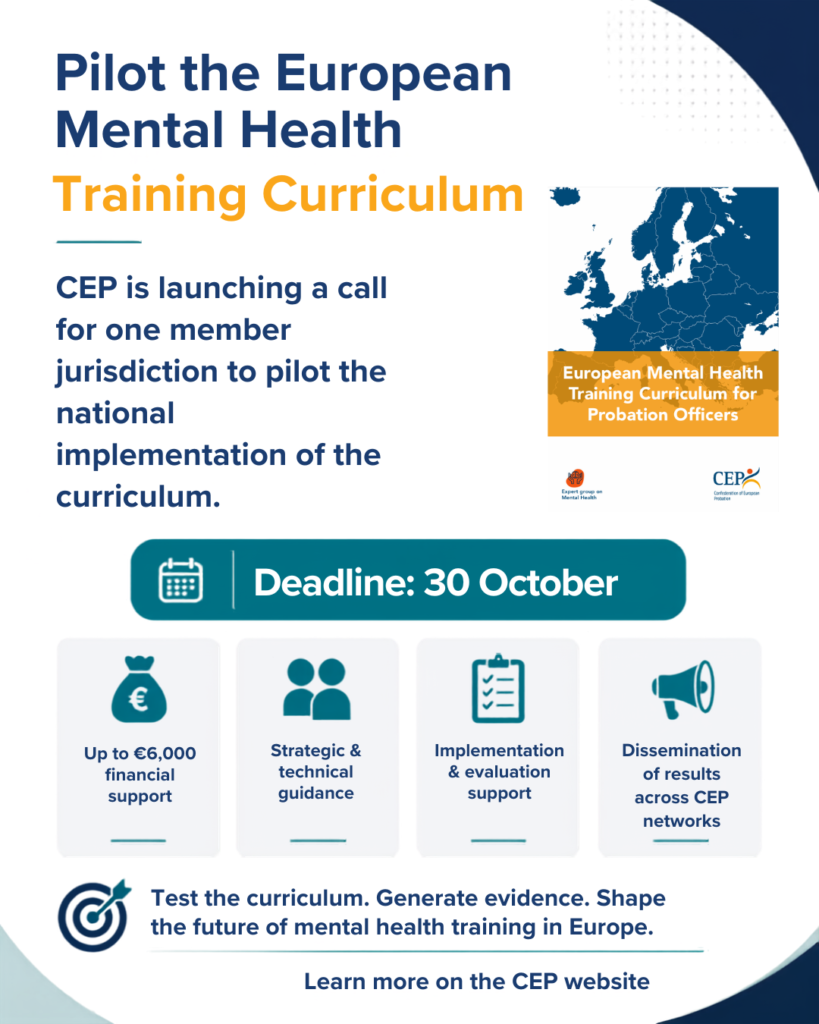
DEADLINE EXTENDED: Call for Pilot Implementation of the European Mental Health Training Curriculum
29/09/2026
Good news for CEP members! Following requests from our members, CEP has extended the deadline to apply for the pilot implementation of the European Mental Health Training Curriculum for Probation Officers.
Recap
ITSCCS, Technology
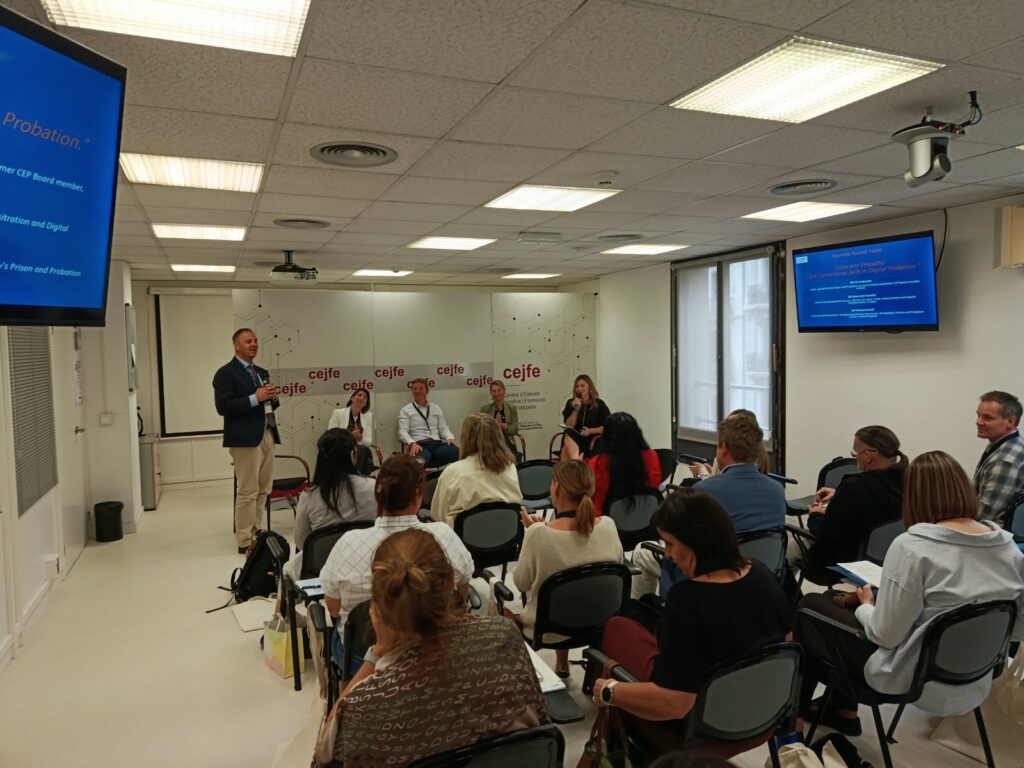
6th International Training School opens in Barcelona with a focus on digital probation
28/09/2026
How can probation professionals use new technologies in their interactions while building trust, showing empathy and supporting change? This question is at the heart of the sixth International Training School on Core Correctional Skills, which opened in Barcelona on 28 September 2026.
Subscribe to our bi-monthly email newsletter!
"*" indicates required fields
- Keep up to date with important probation developments and insights.