

Previous Article
News
HELP project: preventing radicalisation through international cooperation and training
The phenomenon of terrorism and the rise of radicalisation leading to violent extremism continues to constitute a global threat that, in recent years, has particularly targeted European countries. These actions are not always caused exclusively by hierarchical organisations but also by lone actors, small cells, cross-border terrorist travel, terrorist training or financing of terrorism. Furthermore, many terrorists planning and perpetrating attacks on European soil are themselves European citizens.
An article by Eva Massa Arranz, Radicalisation Prevention Project Coordinator, Council of Europe HELP Programme.
While states have been responding to terrorist attacks at both national and supranational level, it is not enough to fight terrorism. We must prevent it by addressing and stopping terrorist radicalisation and recruitment.
Radicalisation is not a single fact or event, but a path that a person follows for a period of time that may be triggered by both internal (motivation, frustration, deprivation, manipulation, discrimination etc.) and external factors (lack of socioeconomic opportunities, marginalisation and discrimination, etc.), which leave a profound print on the human soul. For this reason, a wide range of preventive actions is needed to address the problem. Countering radicalisation requires international cooperation between states, as well as co-operative work of all involved key legal actors, through an inter-agency methodology.
Action against radicalisation should aim at preventing it in places where it is currently taking place such as schools, prisons or on the Internet.
A priority for the EU and the Council of Europe
Tackling terrorist radicalisation and recruitment is a priority for both the EU and the Council of Europe (CoE), which must work together to ensure a balance between guaranteeing the safety and security of member states and the respect of fundamental rights of citizens across Europe.
Security-based counter-terrorism measures have proven to be insufficient against radicalisation, after two decades of a solely security-approach. It is therefore essential to face this problem from a human rights and rule of law perspective. In this regard, the CoE has been particularly active, setting international standards and adopting legal instruments in the counter-terrorism field, namely, the 2005 Convention on the Prevention of Terrorism to further strengthen the efforts to prevent and suppress terrorism in all its forms, while respecting human rights and the rule of law, and its Additional Protocol addressing criminal law aspects of the phenomenon of foreign terrorist fighters and returnees. The Council has also renewed its counter-terrorism strategy for the period 2018-2022 based on prevention, prosecution and protection, including assistance to victims. It also has established the Committee on Counter-Terrorism (CDCT), to oversee and ensure the successful implementation of relevant CoE legal instruments.
It is also important to highlight the case law of the European Court of Human Rights (ECtHR) related to the fight against terrorism, which establishes the general principles applicable, resulting from each particular case.
EU-CoE HELP project on Radicalisation Prevention
The EU-CoE “HELP Radicalisation Prevention” project aims at improving the criminal justice response in the EU to prevent radicalisation leading to terrorism and violent extremism by increasing the capacities and mutual trust of justice practitioners dealing with this problem, through training, inter-agency and cross-border cooperation. With EU funding, the two-year project is implemented by the CoE under the HELP Programme and targets judges, prosecutors, prison and probation staff. HELP is the CoE Programme “Human Rights Education for Legal Professionals” and develops courses online accessible for free on its e-learning platform.
Under the project, a series of seminars have been organised with the objective of sharing mutual learning, exchange of good practices and cooperation. The first seminar was held on 15 and 16 March 2018 in the CoE premises in Strasbourg with a focus on (penitentiary and judiciary) risk assessment tools, mainly to evaluate practices and use. The second seminar, held on 20 and 21 September 2018 in Brussels, hosted by the Belgium Institute of Judicial Training, aimed at sharing views and best practices on preventing and tackling radicalisation. The third seminar will be held in Strasbourg on 23 and 24 September 2019.
The project also includes the development and implementation of a course under the CoE-HELP Programme in cooperation with key European partners (i.e. European Organisation of Prison and Correctional Services (EUROPRIS) and National Training Institutions from relevant EU Member States). Probation staff can participate in this free online course which, due to the large number of countries interested, will be launched in two separate venues:
- Athens, for prison and probation staff from Greece, Germany and a multi-national group gathered by the Confederation of European Probation (CEP);
- Brussels, for prison and probation staff from Belgium, Spain and Austria.
Educating and training law enforcement agencies, including probation and prison leadership and staff, on these matters is of the utmost importance in order to provide a complete and coherent response to radicalisation and to help preventing it. Participants in the HELP course will greatly benefit in their daily job from the relevant and practical content of this course.
This is a relatively new and evolving area where international cooperation will be crucial in the future in terms of joining efforts, sharing best practices and setting standards and guidelines. The EU-CoE Project “HELP Radicalisation Prevention” provides a unique opportunity to do so.
For more information about the HELP project, please visit their website.

Related News
Keep up to date with the latest developments, stories, and updates on probation from across Europe and beyond. Find relevant news and insights shaping the field today.
New
Technology
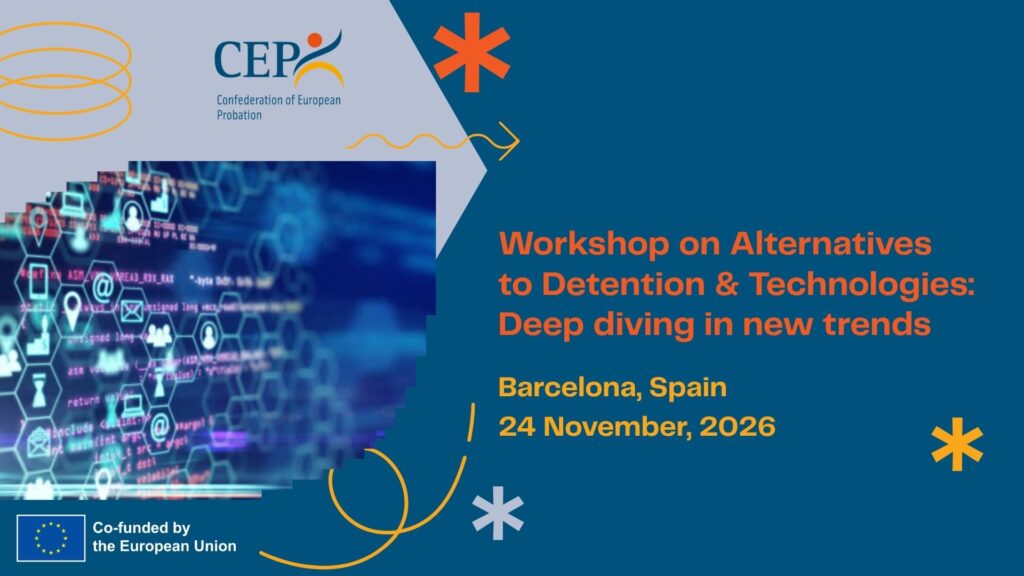
Registration deadline approaching: Join CEP’s final workshop of 2026 on technology in probation
22/10/2026
📢 Have you registered yet? CEP’s final workshop of 2026 takes place on 24 November in Barcelona, bringing together professionals to explore how technology is being used across probation services in Europe.
The Workshop on Alternatives to Detention and Technologies: Deep Diving into New Trends will look beyond artificial intelligence to examine the different ways technology is shaping probation practice, from staff training to working with clients and collaborating with other criminal justice partners.
Recap

Directors General Meetings
CEP Leadership Excellence Training: strengthening leadership and cooperation across Europe
22/10/2026
The CEP Leadership Excellence Training, held on 20–21 October in Zagreb, Croatia, brought together Directors General and senior probation managers from 11 European countries for a two-day interactive programme focused on leadership, communication, staff development, and international cooperation.
New

CEP
Call for Proposals: Evaluation of CEP Expert Groups
21/10/2026
On behalf of Ms. Jana Špero Kamenjarin, CEP Secretary General, it is my pleasure to invite you to submit a proposal to conduct an evaluation within the CEP work programme.
Recap

Uncategorized
CEP at UNODC: Contributing to the Development of Probation Services Worldwide
19/10/2026
The Confederation of European Probation (CEP) was represented by its Secretary General, Jana Špero Kamenjarin, at the Expert Group Meeting on the Establishment of Probation Services and Probation Practices, organised by the United Nations Office on Drugs and Crime (UNODC) and held at the Vienna International Centre (VIC) from 12 to 14 October 2026.
Recap
Electronic monitoring, Technology
14th Electronic Monitoring Conference, Electronic Monitoring in a Changing World – Perception vs Reality
08/10/2026
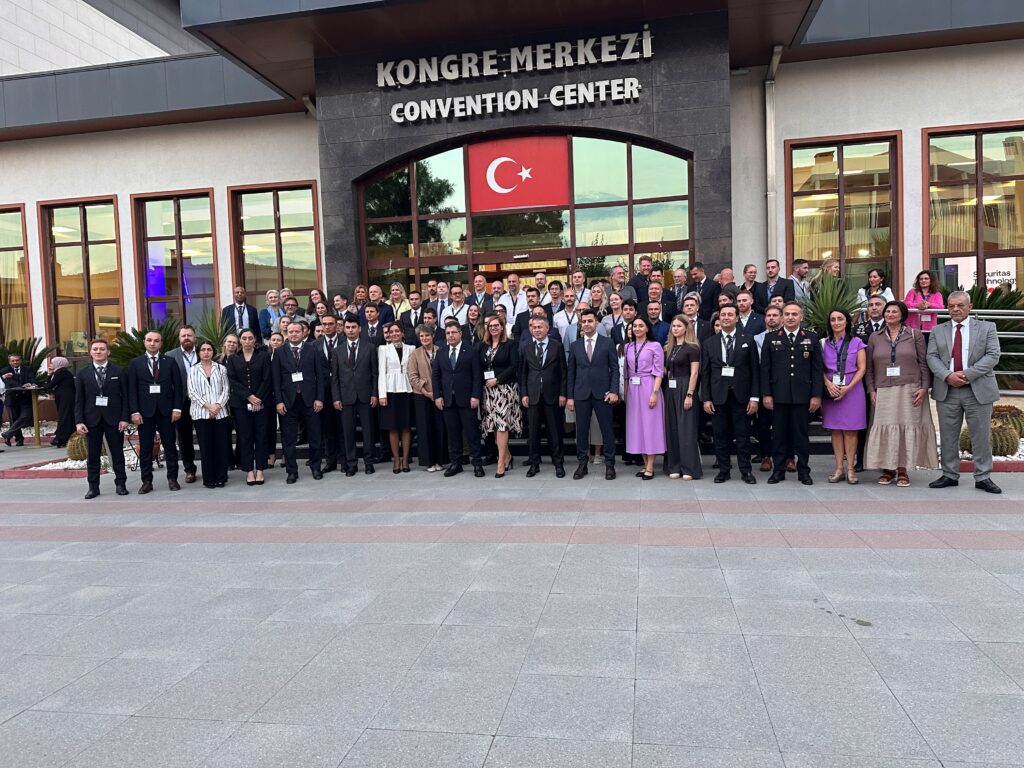
On 6-8 October 2026, Antalya hosted the 14th Electronic Monitoring Conference “Electronic Monitoring in a Changing World – Perception vs Reality”. More than 350 participants coming from 32 countries across Europe and worldwide representing probation services, Ministries of Justice, victims´ services, EM providers, researchers as well as local participants representing the Turkish Prison and Probation Service gathered to discuss how electronic monitoring (EM) is understood by all stakeholders involved including the victims and the public, and how these perceptions compare to the evidence and experiences of those affected. While the gap between perception and reality in electronic monitoring has been recognised for over a decade, the rapid expansion of EM into areas such as victim protection, high-risk supervision and digital innovation has brought new challenges and questions to the forefront.
Recap

ITSCCS
Core Correctional Skills in Digital Probation: highlights from the 6th ITSCCS in Barcelona
05/10/2026
The sixth International Training School on Core Correctional Skills (ITSCCS) took place in Barcelona from 28 September to 2 October 2026, bringing together 26 participants for a week of learning, practical training and international exchange. Organised by the Confederation of European Probation (CEP) and the Centre for Legal Studies and Specialised Training (CEJFE), the programme focused on “Clicks and Empathy: Core Correctional Skills in Digital Probation.”
Subscribe to our bi-monthly email newsletter!
"*" indicates required fields
- Keep up to date with important probation developments and insights.