

Previous Article
News
Domestic Violence trainings in times of corona: “with this couple we really needed to start working”.
Now that due to the corona crisis people are much more at home, closer together and with children who cannot go to school, there is an increase of domestic violence cases. Gerte is probation officer in Zwolle and has been giving the BORG training (Beëindiging Relationeel Geweld – Stop Violence in Relations, red.) for already seven years to men involved in domestic violence. Because of corona it is at the moment not possible to meet clients physically, but she tries to find other ways to deliver the training. “I really see that also the online trainings are useful and valuable.”
It was by coincidence that Gerte 20 years ago took up the job. Being a hard worker and allround probation officer she made long days without taking breaks, which led to a severe RSI (Repetitive Strain Injury). She went through a long period of rehabilitation. “Why not have a look if behavioural training would be something for you?”, a colleague had asked. It turned out to be the perfect match.
Gerte started giving trainings in prison. “How to find a house, the important aspects when applying for a job, how to arrange your finances – these kind of things I teached the inmates, all very practical matters.” She still delivers several kinds of trainings, but the BORG is her favourite one. “This training can be given both in a group and one to one. Because of corona I almost only do individual sessions now, but that works very well.”
Remain active despite corona
When the trainings were put on hold, this was a difficult moment for Gerte. “You are aware of the fact that many people need help, and that a training would really be beneficial for them. One of my colleagues had just received a severe case of domestic violence and asked me “What should I do with this now?” I also work for an organization imposing educational sanctions on minors, and here they made a lot of use of video calling. They gave me several advices and I thought: if they can do it, why shouldn’t we? This severe case – with this one my colleague and I would give it a try.”
Consultation with the prosecutor
The first thing to do was to see if giving a training to this man and his wife would be possible at all. Gerte called the prosecutor in charge and asked for a temporary dismissal with mandatory treatment, training and supervision. The prosecutor agreed and then the work could start. “This was such a severe case, it would simply be impossible to wait until the end of the corona crisis. Luckily the prosecutor thought so as well.”
Gerte and her colleague made an appointment with the client for a video call. “He and his wife weren’t allowed to be in touch for 90 days, but it was of great importance to have them together in this session. So in cooperation with the police we managed to get them together and have them sit on the same sofa, after not having seen each other for 30 days. Of course this was strange for everyone, but we managed.”
Focus on a time-out
A training consists of 12 sessions plus an introductory meeting, an in-between evaluation and a final evaluation. Gerte: “For the introductory meeting and the evaluations I prefer to have the partner there as well. I want to know to what extent agreements are being followed – actually this is one of the first things that I bring up during my start of the process. Also with these two people my colleague and I have set up agreements, especially about a time-out: what happens when you get angry? What happens when the other one gets angry? And how do you decide on taking a time-out or not? Then what would you do during such a time-out, what would your wife do? And when the time-out is over, how would you start up the conversation again?
For many people this is a new way of thinking: not continuing to annoy and irritate the other, but to split up for a while and talk things over at a later moment. Many partners find it difficult to have confidence in the other one coming back after the time-out. That is why there need to be concrete agreements so the situation remains safe, both for them and for their children. We want to have everything written down: the more concrete and clear the arrangements are, the better it is.”
Gerte is very happy to be able to work with these people and to help them. “Now that the training has started, we as Probation Service have a much better (over)view on the relation and the prevention of agression, and we can work towards more and more contact between the two partners. It has been agreed that first the man follows two parts of the training and then an in-between evaluation is done together with his wife, in order to identify the possibilities of widening the contacts between them. During the in-between evaluation the offense is thoroughly analyzed and I try to take away the tension that comes with it . The complex thing here is that the woman suffers from PTSS, but luckily a treatment for that has started now. By going through the time-out with them and have them follow a joint training on body language and how to reduce this tension, the woman is also active in not always going into conflict.”
Busier than ever
Gerte is busier than ever. “All my group trainings I now deliver as one-to-one sessions, which takes much more time. Besides that I am often in contact with my clients as they have questions on how things are going now things only take place online. And of course everything has to be done by phone. When normally I would walk over to a colleague with a question, now I have to ring him or her up. It is a bit less efficient than what we are used to.”
Also Gerte’s work for the Education department has changed. “We talk a lot about delivering online trainings”, says Gerte. “For which ones is this possible, for which ones not? And what to do with those? Another thing is that many colleagues have started helping others and therefore need to learn new things. How to train someone to make the step from an advisory role to a supervision role? This is why we are re-writing many trainings.”
Doe she consider this a heavy period? “We all have to get used to the new situation, both our clients and ourselves. However if you continue to be creative and think in solutions, then everything will come to a good end.”

Related News
Keep up to date with the latest developments, stories, and updates on probation from across Europe and beyond. Find relevant news and insights shaping the field today.
Recap
Electronic monitoring, Technology
14th Electronic Monitoring Conference, Electronic Monitoring in a Changing World – Perception vs Reality
08/10/2026
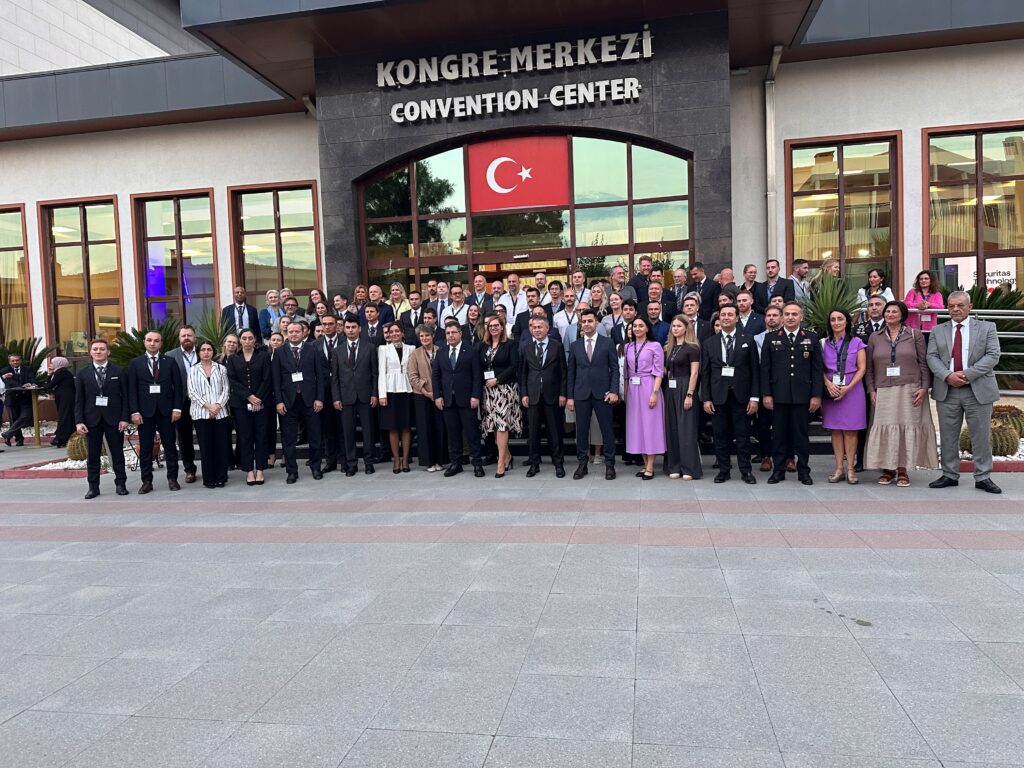
On 6-8 October 2026, Antalya hosted the 14th Electronic Monitoring Conference “Electronic Monitoring in a Changing World – Perception vs Reality”. More than 350 participants coming from 30 countries across Europe and worldwide representing probation services, Ministries of Justice, victims´ services, EM providers, researchers as well as local participants representing the Turkish Prison and Probation Service gathered to discuss how electronic monitoring (EM) is understood by all stakeholders involved including the victims and the public, and how these perceptions compare to the evidence and experiences of those affected. While the gap between perception and reality in electronic monitoring has been recognised for over a decade, the rapid expansion of EM into areas such as victim protection, high-risk supervision and digital innovation has brought new challenges and questions to the forefront.
Recap
ITSCCS
Core Correctional Skills in Digital Probation: highlights from the 6th ITSCCS in Barcelona
05/10/2026
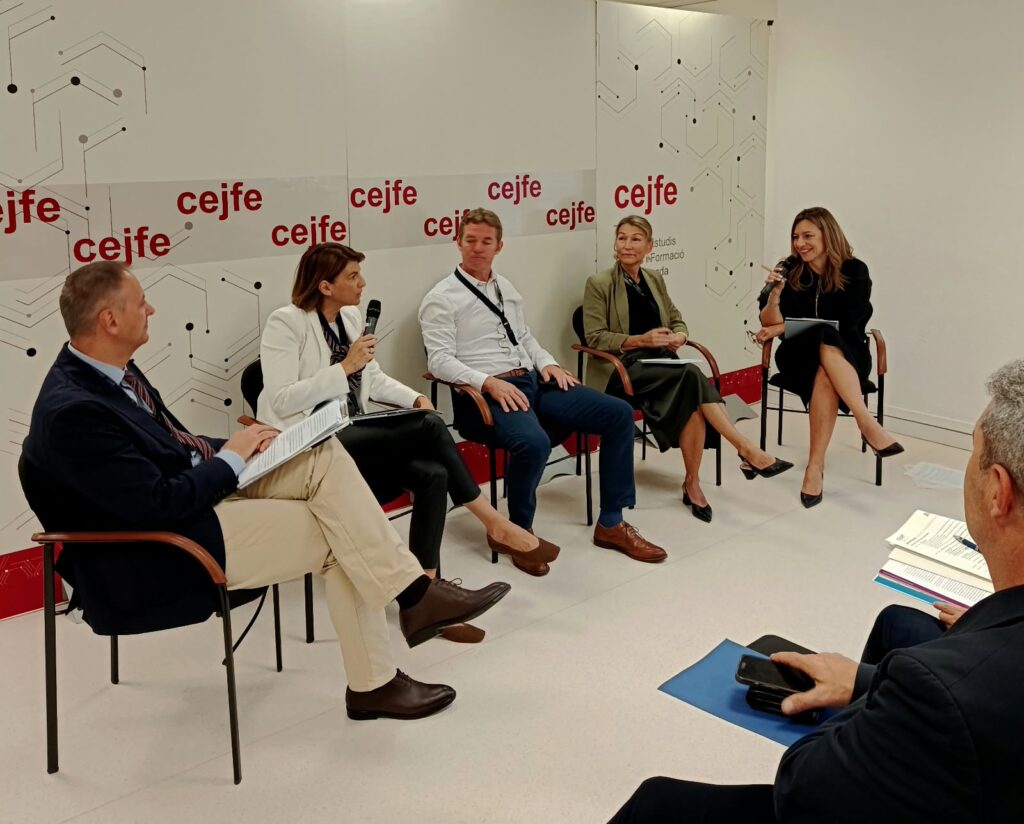
The sixth International Training School on Core Correctional Skills (ITSCCS) took place in Barcelona from 28 September to 2 October 2026, bringing together 26 participants for a week of learning, practical training and international exchange. Organised by the Confederation of European Probation (CEP) and the Centre for Legal Studies and Specialised Training (CEJFE), the programme focused on “Clicks and Empathy: Core Correctional Skills in Digital Probation.”
Recap
Framework Decisions
Recap: ERA workshop on Framework Decisions 829 and 947 in Bucharest
02/10/2026
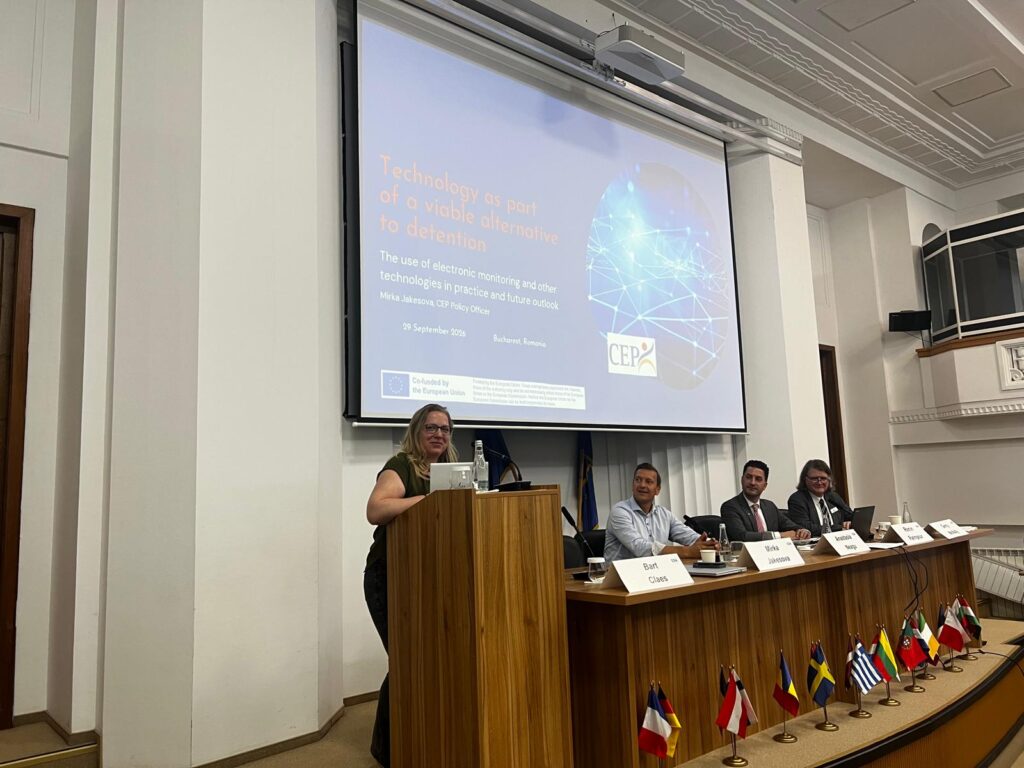
CEP Vice-President Daniel Danglades, Ambassador Gerry McNally and Policy Officer Mirka Jakesova participated in the Seminar on Framework Decisions 829 and 947 and their Impact on Alternatives in the EU organized under the EU project run by the Academy of European Law on 28-29 September in Bucharest, Romania. The seminar brought together judges, prosecutors, probation practitioners, academics, and policy experts to discuss the growing role of alternatives to detention within European criminal justice systems.
New

CEP
CEP and Catalan justice leaders reaffirm longstanding cooperation
29/09/2026
Representatives of the Confederation of European Probation (CEP) met with senior officials from the Catalan Department of Justice and Democratic Quality in Barcelona on 28 September 2026, alongside the opening of the sixth International Training School on Core Correctional Skills. The meeting offered an opportunity to recognise a longstanding partnership and discuss its continued development.
Updated

Mental Health
DEADLINE EXTENDED: Call for Pilot Implementation of the European Mental Health Training Curriculum
29/09/2026
Good news for CEP members! Following requests from our members, CEP has extended the deadline to apply for the pilot implementation of the European Mental Health Training Curriculum for Probation Officers.
Recap
ITSCCS, Technology
6th International Training School opens in Barcelona with a focus on digital probation
28/09/2026
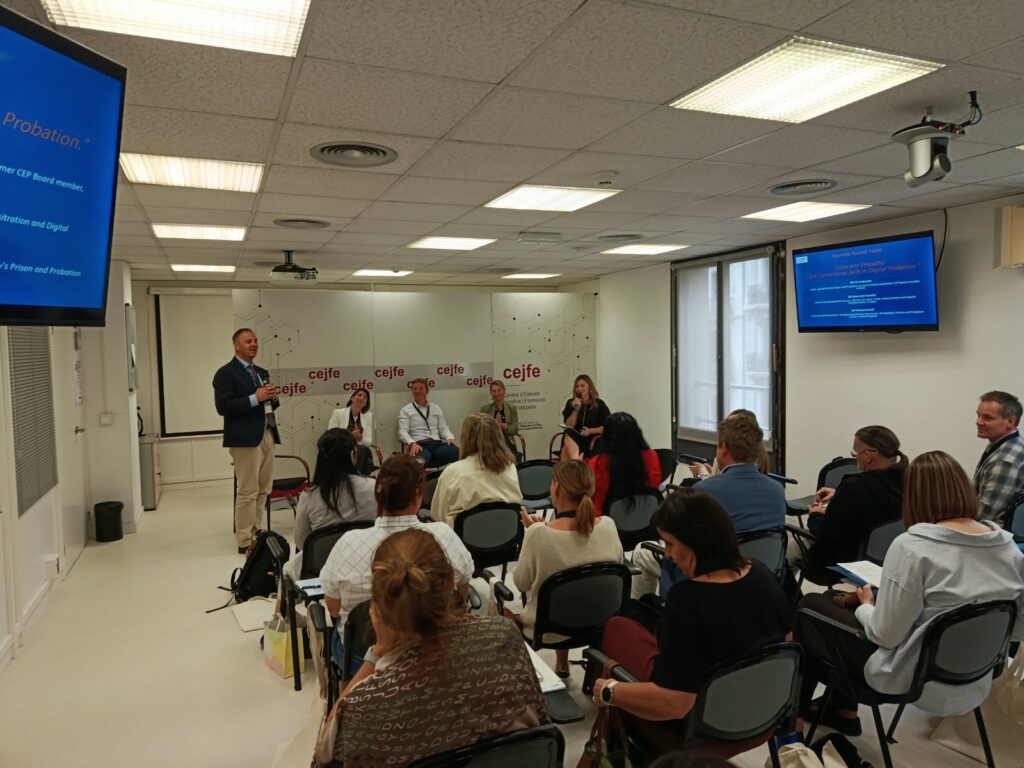
How can probation professionals use new technologies in their interactions while building trust, showing empathy and supporting change? This question is at the heart of the sixth International Training School on Core Correctional Skills, which opened in Barcelona on 28 September 2026.
Subscribe to our bi-monthly email newsletter!
"*" indicates required fields
- Keep up to date with important probation developments and insights.