Skip to content

News

Building Core Skills, Building Connections: V edition of the ITSCCS 2025 in Barcelona

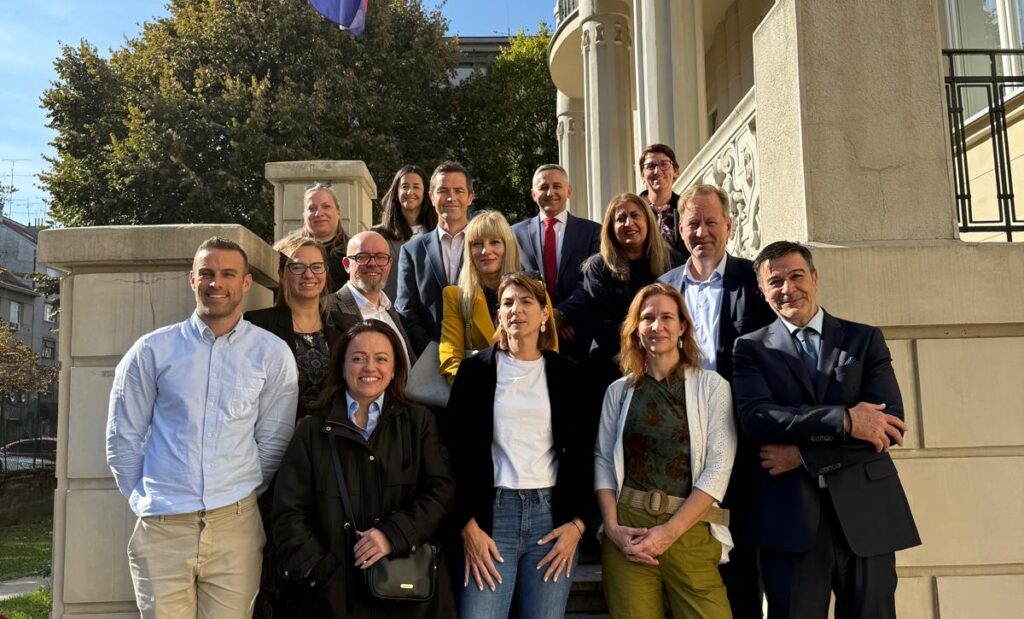
Barcelona was the stage for the CEP International Training School on Core Correctional Skills (ITSCCS) 2025, held from 29 September to 3 October. Over five days, the Centre d’Estudis Jurídics i Formació Especialitzada became a hub for practitioners eager to sharpen the practical tools that define effective work in the criminal justice field.

The programme combined theory, skills practice and peer learning, focusing on essential Core correctional skills such as relationship skills, problem-solving, motivational interviewing, pro-social modelling and cognitive restructuring. Participants worked in small groups, learning not just from expert trainers but also from each other’s professional experience.

The school opened with a round table on Leadership in Probation and Parole, bringing together distinguished voices from across Europe and beyond. The panel featured Annie Devos (CEP President and Director-General, Wallonia-Brussels Federation Probation Service), Imants Jurevicius (Head, State Probation Service of Latvia), Jochum Wildeman (Head of International Department, Dutch Probation, the Netherlands), and Marta Ferrer (CEP Vice-President and Deputy Director of Catalan Probation and Restorative Justice Services, Catalonia). A special highlight of the session was the participation of Veronica Ballard Cunningham, Executive Director of the American Probation and Parole Association (APPA, USA), whose presence underscored the transatlantic dimension of the training school and the importance of global dialogue on probation practice. After the round table, Veronica summed up the spirit of the exchange: “We face the same struggles, embrace our differences, and work towards the same goal.”

Midway through the programme, the group took part in a study visit to the City of Justice in Barcelona. Participants had the opportunity to see the courts, probation teams’ offices, victims’ offices and other key facilities. The visit concluded with a round table interview with the leaders of the three organisations delivering probation services in Catalonia, offering an inside view of how different agencies cooperate to provide effective community-based justice.

A total of 22 participants joined this edition, travelling from Estonia, Czech Republic, Germany, United States, Scotland,  United Kingdom, Latvia, Belgium, Catalonia and Korea. The mix of European and international perspectives created lively discussions and offered a unique chance to compare approaches across different systems.
Beyond the classroom, the training was also about connection: building a community of professionals who can continue to exchange knowledge long after the Barcelona course has ended. One participant summed it up: “The training gave me not only new skills but also colleagues I can reach out to when facing challenges in my practice.”

With its blend of intensive learning and international networking, the V edition of ITSCCS once again showed why it has become a landmark event in CEP’s calendar — strengthening both the people and the partnerships that shape Probation practice across the world.


view the recap video below!


View more pictures here

Related News

Keep up to date with the latest developments, stories, and updates on probation from across Europe and beyond. Find relevant news and insights shaping the field today.

New

Caseload and workload

Include Practitioner’s Voice: EPJ Special Edition on Workload in Probation

24/08/2026

As part of its long-standing cooperation with research, CEP invites its members to contribute to a special edition of the European Probation Journal on the topic of Workload in Probation.

New

Alternatives to pre-trial detention, Foreign Nationals in Prison and Probation, Gender Equality, Probation in Europe

SPACE II report is now available

24/08/2026

The use of community sanctions and measures that allow individuals to remain in the community – also known as alternatives to imprisonment – continues to grow overall in Europe, although at a moderate pace, according to the latest Council of Europe annual penal statistics on persons under the supervision of probation agencies (2025 SPACE II survey).

Read more

Read the report

New

Victims rights

Adoption of the revised Victims’ Rights Directive and call for evidence on EU strategy on victims’ rights

05/08/2026

The Council of the European Union has formally approved a new directive strengthening the rights of victims of crime across the EU. The updated law improves access to information, support, and protection by introducing an EU-wide victim support helpline (116 006), making it easier to report crimes through digital tools, strengthening safeguards for victims’ personal data, expanding child-friendly support services, improving access to legal aid, and helping ensure that victims receive compensation more quickly.

This directive updates the 2012 EU Victims’ Rights Directive and aims to ensure that victims receive more consistent and effective support across all Member States. Following its publication in the Official Journal, Member States will have 24 months to transpose the new rules into national law. For more information, see the Council of the European Union’s press release: Council greenlights law reinforcing protection of victims’ rights and check out the revised Victims’ Rights.

Probation Journal

juvenile offenders, Probation in Europe

Overview of Probation Procedures for Juveniles and Adults in Albania

22/07/2026

The Albanian Probation Service plays an important role in the implementation of alternative sanctions and measures for both juveniles and adults. Through supervision, assessment, and rehabilitation-oriented interventions, the Service aims to support compliance with court decisions, reduce the risk of reoffending, and promote the successful reintegration of individuals into society.

Community Sanctions and Measures

Nelson Mandela day

18/07/2026

Nelson Mandela Day reminds us that justice is not only about accountability – it is also about hope. Mandela believed in the dignity of every person and in the possibility of change. These principles are at the heart of probation.

Across Europe, probation professionals work every day to support people in taking responsibility for their actions, rebuilding their lives and successfully reintegrating into their communities. By promoting rehabilitation, social inclusion and human dignity, probation helps reduce reoffending and contributes to safer, more resilient societies.

New

CEP

Meet Ruth Armstrong, CEP’s new Research Policy Officer

14/07/2026

In early July 2026, Ruth Armstrong joined CEP as a Research Policy Officer. This is a new part-time role supporting the implementation of CEP’s Research and Development Strategy. Working with the Secretary General and the Expert Group on Research, Ruth will coordinate CEP’s research activities, exploring and building partnerships in research between academics and practitioners across Probation in Europe where members access, question and use evidence in their everyday work.

Subscribe to our bi-monthly email newsletter!