
Skip to content

News

A day in the life of a Moldovan Probation Officer

Is the day of a probation officer in Germany similar to the one of someone working in Romania? In the series ‘A day in the life of a probation officer’, we publish articles written by probation officers from different countries in Europe to see if their days look a like or are very different from each other. This article is written by Iulia Terpan, Probation Officer for the Moldovan Probation Service.


My name is Iulia Terpan and I am a probation counsellor within Moldovan probation service, territorial probation bureau Chisinau (Centre sector).

I have been working within the probation system since 2013. I was informed about probation activity when being a student at the Law Faculty, Moldova State University. Moreover, I carried out an internship within Penitentiary Institution No. 13, Chisinau. At that time, I interacted for the first time with professionals dealing with enforcement of criminal punishments, I learned about their life stories and felt in love with this occupation: to change the lives in a better way.

Beginning of the day

I start my day in a good mood, by checking my emails. In compliance with the probation counselor’s job description, there are a lot of activities to be accomplished: supervision of the enforcement of non-deprivation of liberty punishments, drafting pre-sentence reports, conducting probation programs, providing assistance to probation beneficiaries, as well monitoring of persons exempted from criminal liability by means of conviction with a conditional suspension of execution of punishment or conditional exemption from punishment prior to the term of expiration.

Each probation counsellor has a preset agenda, for instance: court hearings, appointments with probation beneficiaries, conducting probation programs. It is hard to follow a daily working plan because, an unpredictable situation can appear and it is necessary to be immediately connected.

Afternoon

The most important challenge of our activity is the work with beneficiaries. Within our territorial probation bureau there are 300 beneficiaries, among them are addicted persons, victims of domestic violence, persons with sad and tough destines, and our mission is to direct them to the appropriate specialized services. The counseling appointment with a beneficiary lasts about 40 minutes and during this time we try to find out the changes regarding personal data, work; we discuss about the obligations established by court and the necessity to respect them, etc. The frequency of the appointments depends on the estimated risk of recidivism and the necessities of each beneficiary apart.

During the day we can have home visits, discussions with relatives, phone discussions, police requests concerning the convict’s behavior, case file work, etc.

In our country the probation service is a young institution and the involvement of civil society is benefic for the development of probation activities. We benefit from NGO-s assistance, in particular, trainings for probation counsellors, methodological guides, support for re-socialising the inmates and many other types of assistance.

Many beneficiaries are angry about the established obligations, therefore it is difficult to ensure and maintain a good co-operation. However, there are persons who are grateful to us for the provided services and assistance and that makes us happy.

When working within the probation service it is important to acknowledge that it is an activity which involves interaction with people, while successful results can be achieved by being patient, well-balanced, without stereotypes and by having a non-discriminatory attitude.

End of the day

I verify the activities to be accomplished the next day and prepare the agenda. The volume of work is too big for five probation counsellors working within our probation bureau. Nevertheless, after five years I see myself working as well within the probation system, conducting probation programs and trying to change the lives in a better way.

If probation was a person, I would ask her to be more humane, putting accent on reintegration, to be more flexible and modern.

Related News

Keep up to date with the latest developments, stories, and updates on probation from across Europe and beyond. Find relevant news and insights shaping the field today.

New

Partners

Memorandum of Understanding Signed Between CEP and RESCALED

11/12/2025

On 10 December 2025, at the CEP Headquarters in Utrecht, CEP and RESCALED signed a Memorandum of Understanding (MoU) aimed at strengthening cooperation in areas of mutual interest. The MoU was signed by Rogier Elshout, Chair of Rescaled and Jana Špero Kamenjarin, CEP Secretary General, with the signing ceremony attended by Helen De Vos, Rescaled Executive Director and Daniel Danglades, CEP Vice-President.

Through this partnership, both organizations will work together to develop joint activities, exchange expertise, and support initiatives that advance their shared objectives.

This MoU reflects a commitment to transparent communication and the creation of new opportunities for joint projects and broader community impact.

New

Human rights and ethics

10 December – Human Rights Day

10/12/2025

CEP champions human rights because protecting dignity, fairness and equality is at the heart of effective probation. On 10 December, Human Rights Day, CEP celebrates the principle that everyone deserves respect and justice. Across Europe, CEP promotes social inclusion and supports the reintegration of people in contact with the criminal justice system. CEP strengthens community-based alternatives to imprisonment that reduce reoffending and build safer societies, advances professional and ethical probation practice, and connects practitioners, policymakers and researchers to share knowledge and promote humane justice. For CEP, justice is not only about punishment but also about opportunity, rehabilitation and respect for all.

Recap

CEP Events

Recap: First face-to-face meeting of the Expert Group Chairs

10/12/2025

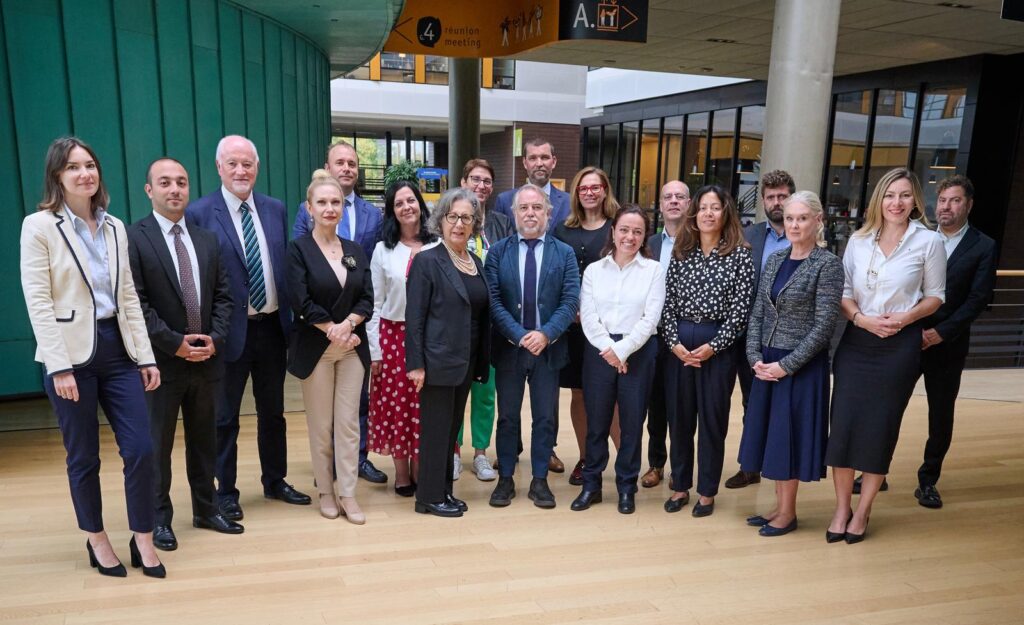
On 9 December 2025, the CEP Office in Utrecht hosted the first face-to-face meeting of the Expert Group Chairs. The purpose of this meeting was to reintroduce the work of the Expert Groups and explore connections between work plans, opportunities for cooperation, and areas of common interest.

Recap

Framework Decisions

Recap: ERA seminar “Framework Decisions 2008/947/JHA and 2009/829/JHA and their Impact on Alternatives in the EU”

09/12/2025

On 4–5 December 2025, CEP representatives Gerry McNally, Danijela Mrhar Prelić and Pia Andersson attended the ERA seminar “Framework Decisions 2008/947/JHA and 2009/829/JHA and their Impact on Alternatives in the EU” in Vilnius.

Recap

Probation in Europe, Probation outside Europe

20th anniversary of Probation Service in Türkiye

08/12/2025

CEP had the privilege of participating in the Turkish Probation System 20th Year International Congress, marking the 20th anniversary of the Probation Service in Türkiye, held from 1–3 December 2025 at ATGV in Antalya.

Recap

CEP-Europris, Probation in Europe

Recap of CEP and EuroPris Meeting with Catalan Authorities

04/12/2025

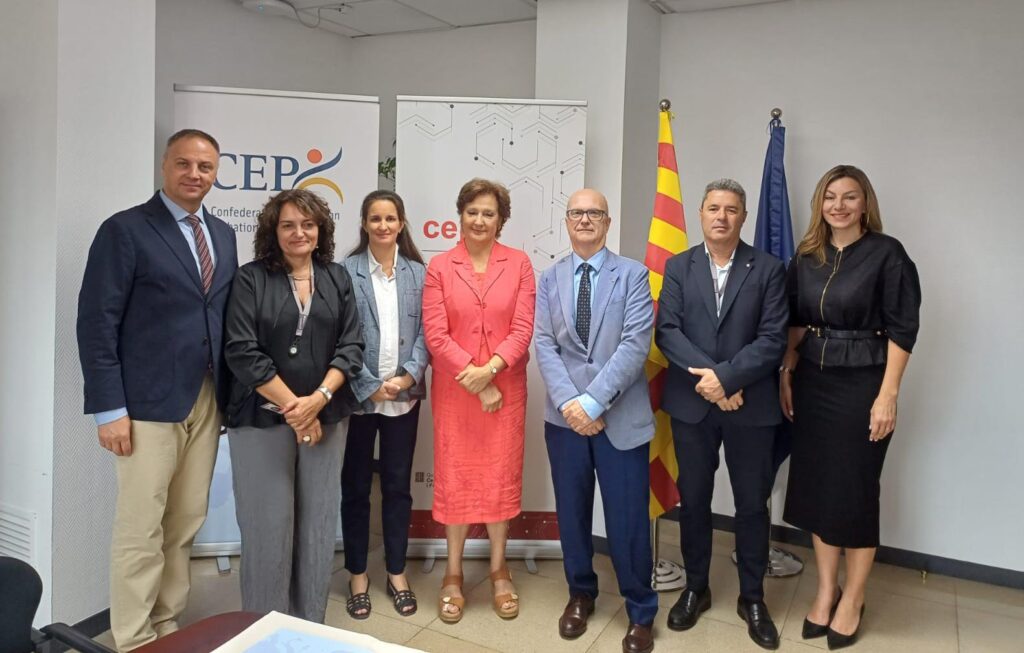
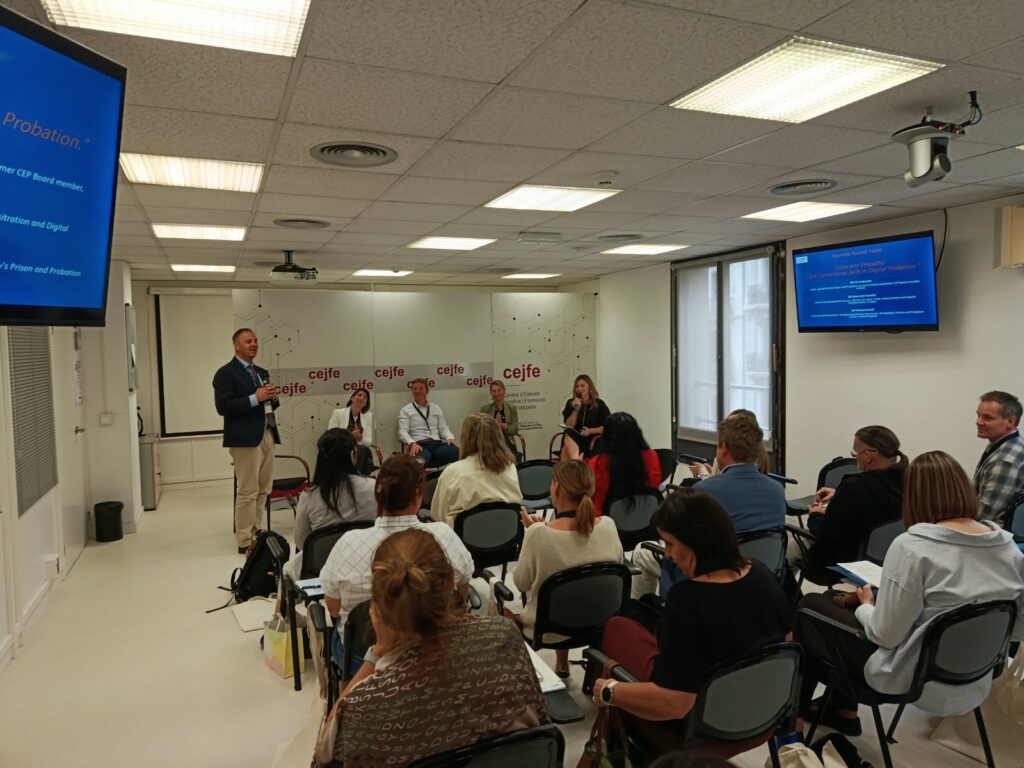
On 3 December, on the occasion of the joint CEP and EuroPris Workshop on Transition from Prison to Probation held at the Centre for Legal Studies and Judicial Training (CEJFE) in Barcelona, representatives from both international organisations met with senior officials from the Catalan Ministry of Justice to present their current work, reflect on ongoing cooperation, and explore shared priorities for future collaboration.

Subscribe to our bi-monthly email newsletter!