

Previous Article
News
A portrait of a small probation organisation: Service Central d’Assistance Sociale Luxembourg
Every probation organisation in Europe is different from the other, although most of them have a lot of similarities. There are some that are different from all the others. I’m talking about the smallest member organisations of the CEP. In this special series of articles, you can read about what makes them special, how they function, about the positives of working in a small organisation and about the difficulties that are sometimes faced. In this edition we take a look at Service Central d’Assistance Sociale Luxemburg. Probation Officer Claude Kettel tells us about the organisation.
Luxemburg, also named the Grand Duchy Luxemburg, is a small country in between Germany, France and Belgium. The probation service exists of nineteen probation officers and three secretaries. The team also includes two craftsman that take care of the offenders serving community sanctions.
The probation service is part of a bigger organisation named Service Central d’Assistance Sociale (SCAS). In this organisation all the social services in Luxemburg are gathered, for example the child protection service, probation service, victim support and the “tutorship” service for persons placed under protective measures/guardianship.
Positives
Claude Kettel describes his country as a “small village”. According to him it has a lot of positives working in a team with only a few co-workers: “In a small organisation it is possible to work with a very personal approach. Our continuous care (end-to-end) model is efficient and very thorough, considering the closeness of the relationship. This is generally a very positive aspect, but sometimes you get to close to the person, so you have to preserve your impartiality. But there are more advantages: “We are surrounded by big neighbour countries, that often make us realise how small we actually are. This leads naturally to having an open mind regarding different or new thinking and practice.”
In Luxemburg probation officers also get the opportunity to pick up many different tasks. Claude Kettel is for example in charge of electronic monitoring, prison treatment groups/meetings, pardon commissions and financial aid to released prisoner. “When you work in a small team like ours, you have to be very flexible.”
Challenges
Working for the Luxemburg Probation Service also comes with some challenges. One of these challenges for Claude Kettel is building up a network of volunteers. “The public often tends to be not so open-minded and even avoidant when it comes to ex-detainees. We need to see if this model can be used in Luxemburg.”
The population of Luxemburg is getting more diverse and multicultural through the years, according to Claude Kettel this unfortunately also results in a high rate of foreign prisoners in Luxemburg. “This is not an easy challenge. The reintegration of some of these offenders tends to be very difficult here.”
Differences
Although the probation officers in Luxemburg do work that is very comparable to the work of probation officers in other countries, there are also many differences. “Some topics, like radicalisation, are not an issue for Luxemburg. It does not mean that those subjects do not attract our interest, but I have to admit that it certainly has not got as much attention as in other countries, like France or Germany.”
Luxemburg is too small to have training facilities for probation officers, which is, according to Claude Kettel, not a bad difference. “The lack of such programmes had the advantage that we were forced to reach out to other countries and participate in their training programmes, which had the positive effect that we got wider perspectives, and insight in different national systems.”
Another important difference between the Luxemburg Probation Service and bigger organisations is the fact that they have been rather free to develop their own internal organisational structure. “Big countries have ministerial divisions in charge of the theoretical and practical organisation of the work, we had to develop most of our methodology by ourselves. This was only done in agreement with our hierarchic chief, the Delegate of the Prosecutor General.”

Related News
Keep up to date with the latest developments, stories, and updates on probation from across Europe and beyond. Find relevant news and insights shaping the field today.
New

Others
Applications for the Cambridge MSt in Applied Criminology, Penology and Management are now open
16/09/2026
The Institute of Criminology, Cambridge, have opened up applications for the MSt in Applied Criminology, Penology and Management in the next academic year.
Recap
Probation in Europe
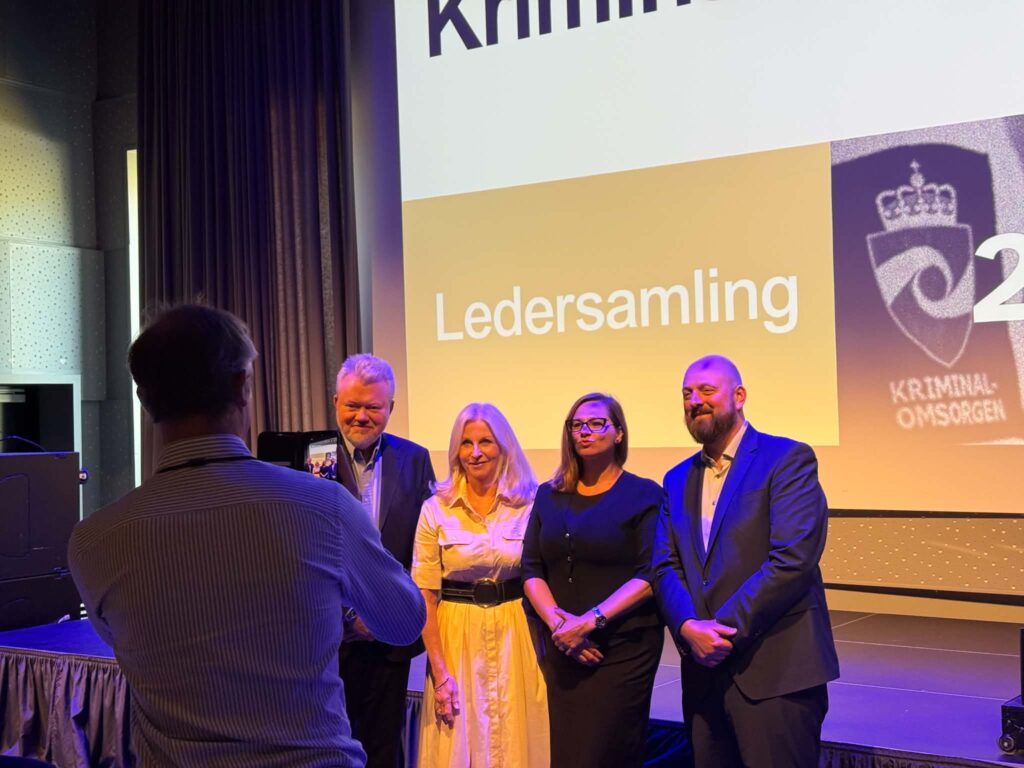
CEP at the Leadership Conference 2026
14/09/2026
CEP Secretary General Jana Špero Kamenjarin was delighted to participate in the Leadership Conference 2026 of the Norwegian Correctional Service, held on 9–10 September in Oslo.
Recap

Foreign Nationals in Prison and Probation
Recap: Expert Group of CEP and EuroPris, on Foreign Nationals in Prison and Probation (FNPP)
14/09/2026
On 7 and 8 September 2026 the joint Expert Group of CEP and EuroPris, on Foreign Nationals in Prison and Probation (FNPP), came together in The Hague for a valuable exchange of ideas, experiences, and expertise on one of the most important challenges facing prison and probation services across Europe.
New

CEP
Newsletter August 2026 out now
27/08/2026
CEP’s latest newsletter is out now! It includes:
- Approaching deadlines for upcoming events (ITSCCS26, 14th EM and DG leadership training) and the Mental Health curriculum pilot)
- Call for European Probation Journal on the topic of Workload in Probation
- EU documents like SPACE II, revised Victims’ Rights directive and so on
- and much more!
New

Caseload and workload
Do you work in probation? We need your voice!
24/08/2026
As part of its long-standing cooperation with research, CEP invites its members to contribute to a special edition of the European Probation Journal on the topic of Workload in Probation.
New

Alternatives to pre-trial detention, Foreign Nationals in Prison and Probation, Gender Equality, Probation in Europe
SPACE II report is now available
24/08/2026
The use of community sanctions and measures that allow individuals to remain in the community – also known as alternatives to imprisonment – continues to grow overall in Europe, although at a moderate pace, according to the latest Council of Europe annual penal statistics on persons under the supervision of probation agencies (2025 SPACE II survey).
Subscribe to our bi-monthly email newsletter!
"*" indicates required fields
- Keep up to date with important probation developments and insights.