
Interview with new CEP board member Danijela Mrhar Prelić

Can you shortly introduce yourself?
I have started my career in the field of enforcement of criminal sanctions 20 years ago. I hold a Bachelor’s Degree in Social Pedagogy, a Master of Science in Criminology and a Doctorate in Law (the field of Criminology). From the beginning of my career, I have been working in the field of enforcement of criminal sanctions. I started as a Senior Advisor – Counselor for juvenile offenders, then continued as Director of a Women’s Prison and as a Project Manager – Secretary at the Ministry of Justice. As a Project Manager, I was responsible for the preparation of an action plan for the establishment of the Probation Service in Slovenia with all necessary normative and legal changes. When the action plan was adopted by Slovenian Government, I became the Head of the Probation Service at the Ministry of Justice, responsible for establishing the new state body. In December 2017 I became an Acting Director of the Slovenian Probation Administration, followed by the position of Director General in 2018. For more than 10 years I am also involved in education training carried out by the Slovenian Prison Administration while holding a position of a University Assistant Professor (Criminology, Penology).
Why did you decide to run for the CEP Board?
In the early years of my career, when I worked as a counselor for juvenile offenders, I had the opportunity to get involved in the international field of execution of criminal sanctions. Involvement in the international field made me realize that enforcement of criminal sanctions can be developed if professionals share knowledge, experience and build a network. Then one day I was asked to accompany the Secretary General of CEP, Leo Tigges, to the Ministry of Justice. As a consultant in the prison system, I had followed the development of community sanctions and measures in Europe, but it was during his visit to Slovenia that I really got to know the CEP’s work, vision, aims, orientations and plans for the development of community sanctions and measures. As I took over the management of the women’s prison, my ties with the CEP grew stronger, I participated in various working groups and conferences, met highly respected professionals and participated in the development of work with offenders. I had the opportunity to learn that CEP brings together a wide network of professionals, services and institutions, selflessly disseminates and shares knowledge, and strives to strengthen and develop the field of community sanctions and measures in Europe. Last but not least, CEP has played an extremely important role in the development of Slovenian probation. During the preparation of the action plan for the establishment of probation in Slovenia, the drafting of the Probation Act and in all subsequent activities for the development of probation in Slovenia, CEP and its network provided all the necessary support and assistance, linking us with various probation services and experts across Europe. This made it possible for Slovenia to establish a national service responsible for the community sanctions and measures and thus to put itself on the “probation map”. With the selfless support of CEP, we have succeeded to develop a modern probation service in Slovenia. This is what made me decide to run for the board – because CEP, with its vision and mission, its work and its networking, is an important co-creator of the development of probation in Europe.
How would you like to contribute to the development of CEP in the upcoming three years and what impact do you hope to have on CEP?
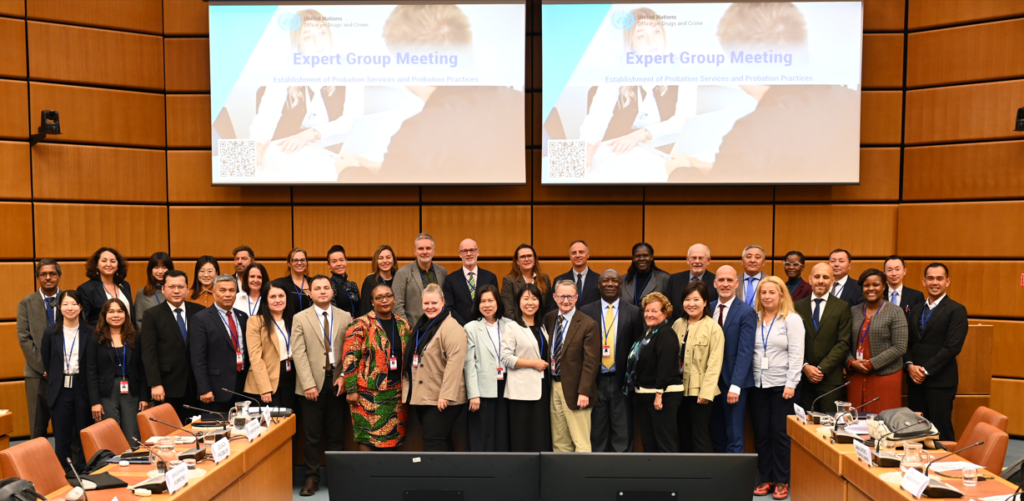
The CEP works in many areas, all of which are very important for the development of community sanctions and measures. Among other things, the CEP has also set up expert groups, in which I am involved. As a member of the Board, I would like to be active in the formation and functioning of the expert groups and to contribute with my knowledge and experience to the development of the specific areas of probation, particularly I would like to participate in the fields of education, training and research.
There is also a need to raise public awareness about the purpose and role of probation in society, and I would like to offer my knowledge and skills in communicating with different stakeholders to the CEP.
What are your main priorities/topics you would like to open while serving as the CEP Board member and how would you like to make use of your knowledge to the development of CEP?
Given that many countries are facing the problem of an overload, I believe that this is an area that needs to be addressed. The CEP is currently conducting a study on workload and caseload and will present an assessment of the situation in the member states. However, as we do not have a single definition of caseload and workload, I believe that the CEP could take a lead in developing one. A common definition would allow more accurate analyses and comparisons between countries. In addition to the above, standards and normative for the work of a probation officer could also be developed. Comparisons and analyses of the situation allow countries to take a reasoned approach to the development of community sanctions and measures and to human resource policies.
What are the challenges that lie ahead of CEP in the future?
As said above CEP should address the standards and normative. It is important to liaise with the Council of Europe and to embed the standards and norms in the CoE recommendations.
Quality and well-trained staff (both at the level of probation officers and managers) are also crucial for the positive development of probation. It is therefore essential for the CEP to further develop its network of experts and to link them up by involving them in various activities (expert groups, research, education and training, conferences, etc.). Linking up experts allows for the transfer of knowledge and experience, and thus also for the development of probation and its role in the system of enforcement of criminal sanctions. Systematic carrying out of various research activities can highlight key problems in the implementation of community sanctions and measures and influence the integration of probation into penal policy.